Industrial Electric Units Explore: Components, Electrical Functions, Uses and System Designs
Industrial electric units are groups of electrical components and equipment used to receive, control, distribute, convert, monitor, and use electrical energy in industrial environments. They can include motors, transformers, switchgear, circuit breakers, control panels, drives, sensors, cables, meters, relays, and protective devices. Together, these elements form electrical systems that support manufacturing machines, pumps, compressors, conveyors, heating equipment, automation systems, and other industrial processes.
The development of industrial electrical systems followed the wider expansion of electrical power generation and distribution. As factories became more dependent on electric motors and automated equipment, electrical units became more organized and specialized. Modern installations may combine power distribution with electronic controls, programmable controllers, sensors, monitoring equipment, and communication networks.
The term industrial electric units can therefore describe different groups of equipment rather than one specific machine. A small production line may have a motor control panel and several drives, while a large industrial facility can contain transformers, switchboards, generators, motor-control centers, automation cabinets, and multiple distribution circuits.
Main Components of Industrial Electric Units
An industrial electrical system normally contains several interconnected parts. Common components include:
- Transformers: Change electrical voltage from one level to another for distribution or equipment use.
- Switchgear: Controls and isolates electrical circuits while providing protection during abnormal conditions.
- Circuit breakers: Interrupt electrical current when a detected condition requires the circuit to be disconnected.
- Motors: Convert electrical energy into mechanical movement for machines, pumps, fans, compressors, and conveyors.
- Variable frequency drives: Control motor speed and operating characteristics by adjusting electrical frequency and voltage.
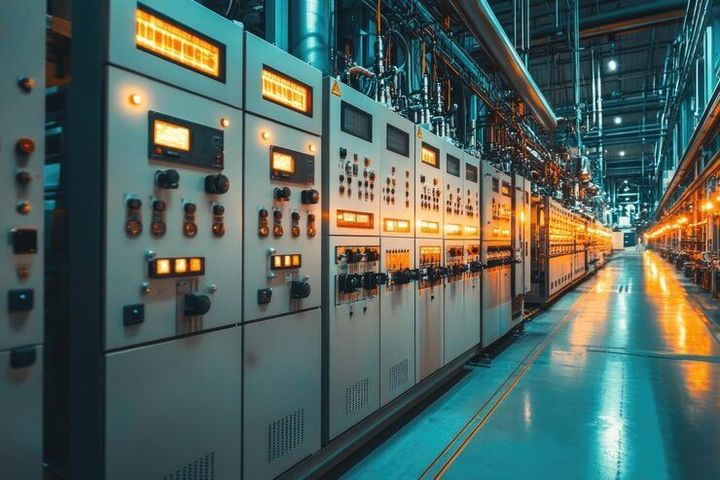
- Control panels: Bring switching, protection, measurement, and control components together in an organized enclosure.
- Relays and contactors: Control circuits and allow lower-power control signals to operate larger electrical loads.
- Sensors and meters: Measure conditions such as current, voltage, temperature, pressure, speed, or energy use.
- Cables and busbars: Carry electrical power between sources, distribution equipment, and loads.
- Earthing and protective equipment: Provide paths and protective arrangements intended to reduce electrical hazards.
The exact combination depends on voltage levels, equipment ratings, production requirements, environmental conditions, and the type of industrial process.
Importance
Industrial electric units are important because electrical energy must be delivered to equipment in a controlled and organized manner. A production machine may require a specific voltage, current, motor speed, or control signal. Electrical equipment helps coordinate these requirements while incorporating protection and monitoring functions.
Industrial facilities also contain different types of loads. Motors can create starting currents, heating equipment can require continuous power, and electronic equipment can be sensitive to voltage disturbances. Proper system design helps separate and manage these different electrical characteristics.
Where Industrial Electric Units Are Used
Industrial electrical systems appear across many sectors, including:
- Manufacturing and assembly plants
- Food and beverage processing facilities
- Chemical and material-processing plants
- Automotive production
- Textile and paper manufacturing
- Warehouses and automated material-handling facilities
- Water and wastewater treatment plants
- Mining and mineral-processing operations
- Energy and utility facilities
- Commercial buildings containing large mechanical systems
The equipment affects operators, maintenance personnel, electrical engineers, facility managers, and people working around industrial machinery. Electrical safety also matters because faults involving high voltage or high current can create serious hazards.
Electrical Functions
Different industrial electric units perform different functions within a system.
| Electrical function | Common equipment | Main purpose |
|---|---|---|
| Voltage conversion | Transformer | Changes voltage level |
| Circuit protection | Circuit breaker, fuse | Interrupts abnormal current |
| Motor control | Contactor, drive | Controls motor operation |
| Measurement | Meter, sensor | Monitors electrical or physical conditions |
| Distribution | Switchboard, busbar | Routes electrical power |
| Automation | PLC, control panel | Coordinates machine operations |
| Power conversion | Rectifier, inverter | Changes electrical form |
| Safety | Earthing, protective device | Helps reduce electrical hazards |
These functions normally work together rather than independently. For example, a motor may receive power through a distribution panel, pass through protective equipment, and operate through a variable frequency drive controlled by an automation system.
Recent Updates
Industrial electrical systems have increasingly incorporated digital monitoring, automation, energy measurement, and connected control equipment. From 2024 through 2026, the broader industrial trend has been toward integrating electrical infrastructure with automation and data systems rather than treating power equipment as a completely separate layer.
Digital Monitoring and Automation
Modern control panels may collect information about current, voltage, temperature, motor condition, operating hours, and other parameters. This information can be displayed locally or transferred to supervisory systems for analysis.
Industrial facilities are also combining programmable logic controllers, variable frequency drives, sensors, and industrial communication networks. These arrangements can help operators understand how equipment is operating and identify abnormal conditions through monitored data.
Energy Efficiency
Energy efficiency has also become an important consideration in industrial electrical design. The Bureau of Energy Efficiency reports industrial energy-efficiency activity through the Perform, Achieve and Trade framework, which covers energy-intensive industries. Its current dashboard identifies 1,333 covered energy-intensive industries for the 2025 program information.
Motor systems, pumps, fans, compressors, and other electrically driven equipment are areas where electrical design and operating practices can influence energy use. BEE also maintains efficiency-related information for equipment categories that include general-purpose industrial motors and other electrical equipment.
Safety and Regulatory Development
Electrical safety requirements continue to be updated. The Central Electricity Authority maintains the Measures Relating to Safety and Electric Supply regulations, including the 2023 regulations and a 2026 amendment listed in its current regulatory archive.
The CEA also maintains inspection and electrical-safety activities through its Chief Electrical Inspectorate Division. Its responsibilities include statutory inspection of applicable electrical installations and investigation of electrical accidents.
Laws or Policies
In India, industrial electrical installations are influenced by the Electricity Act, Central Electricity Authority regulations, Bureau of Indian Standards publications, and applicable state-level electrical inspection requirements. Specific obligations can vary according to the installation, voltage level, location, and type of facility.
Central Electricity Authority Requirements
The Central Electricity Authority's Measures relating to Safety and Electric Supply Regulations, 2023 establish requirements covering electrical safety and supply-related matters. The regulations include provisions concerning earthing, protective equipment, electrical installations, inspection, and other safety measures.
The CEA's current information also describes statutory inspection of applicable installations and approval processes for certain installations, including specified higher-voltage systems and generating plants.
National Electrical Code of India
The Bureau of Indian Standards publishes the National Electrical Code of India. BIS describes the code as guidance for electrical installation practices, including equipment selection, wiring safety, general electrical work practices, and precautions for hazardous environments.
The code includes sections covering industrial buildings, outdoor installations, hazardous areas, and solar photovoltaic power supply systems.
Electrical installations must be designed and assessed according to the rules and standards applicable to the particular facility. This article provides general information and does not replace applicable engineering documents, statutory requirements, or professional assessment.
Tools and Resources
Several resources can help readers understand industrial electric units and electrical system designs.
Electrical Calculation Tools
Electrical calculators can help explain basic relationships involving voltage, current, power, resistance, energy, and three-phase systems. Engineers and technicians may also use specialized calculation software for cable sizing, voltage-drop analysis, short-circuit studies, protection coordination, and load calculations.
Manufacturer Documentation
Technical manuals, wiring diagrams, equipment datasheets, installation instructions, and control-panel documentation can explain how individual electrical units are connected and operated. These documents are particularly useful because equipment ratings and connection requirements differ between models.
Government and Standards Resources
The Central Electricity Authority website provides access to electrical safety regulations and related inspection information.
The Bureau of Indian Standards provides information about the National Electrical Code and Indian Standards related to electrical installations. BIS materials include references such as the National Electrical Code of India and wiring-installation standards.
The Bureau of Energy Efficiency provides information about industrial energy efficiency, equipment efficiency, and related programs.
System Design Documentation
A basic industrial electrical design may include a single-line diagram, load schedule, equipment list, cable schedule, protection information, panel drawings, earthing arrangement, and control-system documentation. These documents allow different parts of an electrical installation to be understood as one coordinated system.
FAQs
What are industrial electric units?
Industrial electric units are groups of electrical equipment used for power distribution, protection, control, conversion, measurement, and machine operation in industrial environments. Examples include transformers, motors, switchgear, control panels, drives, relays, meters, and protective equipment.
What components are commonly found in industrial electric units?
Common components include transformers, circuit breakers, contactors, relays, motors, variable frequency drives, sensors, meters, cables, busbars, control panels, and earthing equipment. The combination depends on the electrical system and industrial application.
How do industrial electric units support electrical functions?
They distribute electrical power, convert voltage or current characteristics, operate motors, control machines, measure operating conditions, and disconnect circuits during specified abnormal conditions. These functions work together to form an organized electrical system.
Where are industrial electric units used?
They are used in manufacturing plants, processing facilities, warehouses, water-treatment facilities, energy installations, mining operations, and many other locations where electrical equipment operates continuously or intermittently.
What should an industrial electrical system design include?
An industrial electrical system design commonly considers electrical loads, voltage levels, equipment ratings, protection, earthing, cable selection, control requirements, environmental conditions, energy use, and applicable Indian regulations and standards.
Conclusion
Industrial electric units bring together equipment that distributes, controls, protects, measures, and converts electrical energy for industrial applications. Their components can range from transformers and circuit breakers to motors, drives, sensors, and automation equipment. Current industrial development is increasingly connecting electrical systems with digital monitoring, automation, and energy-efficiency programs. In India, applicable electrical installations are also shaped by CEA regulations and BIS standards.