Labeling Machines Details: Types, Functions, Label Placement Methods and Industrial Applications
Labeling machines are packaging machines designed to place labels on containers, products, packages, or other items in a controlled and repeatable way. They are used across industries where product identification, information display, tracking, and packaging presentation are part of the production process. A labeling machine can apply paper, plastic, adhesive, pressure-sensitive, wrap-around, or other types of labels depending on the product and packaging format.
Before automated equipment became common, labels were often positioned manually. Manual labeling can be suitable for small production volumes, but maintaining consistent placement becomes more difficult as the number of packages increases. Labeling machines were developed to improve consistency and coordinate label application with packaging lines.
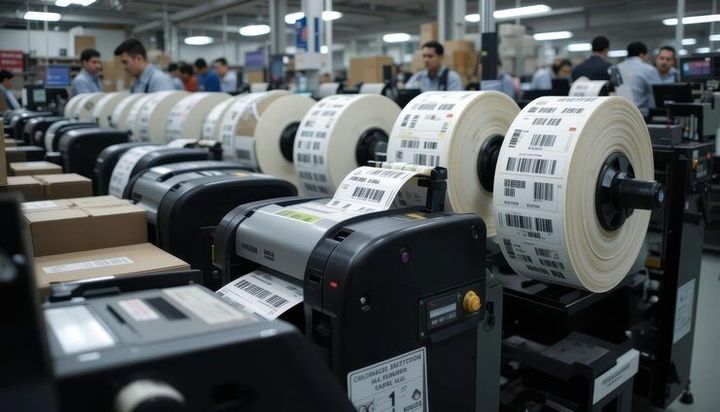
Modern systems can detect a container, position it, dispense a label, and apply it to a selected surface. Some systems can also integrate printing, coding, inspection, and data capture. The exact arrangement depends on the product shape, container material, label design, production process, and required information.
Basic working process
A typical labeling machine follows several connected steps. First, products enter the machine through a conveyor or feeding mechanism. Sensors identify the position of each item and help coordinate the label application.
The label is then separated from its backing material and moved toward the product. An applicator places the label on the selected surface while rollers, belts, brushes, or other mechanisms help press it into position. The labeled product then continues through the packaging line.
Main components
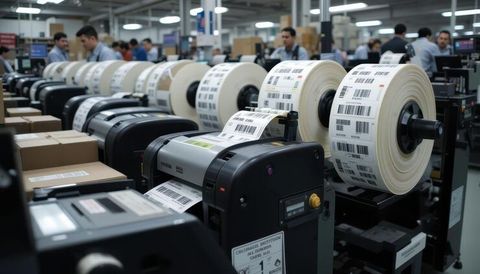
Common components include a product conveyor, label roll holder, label dispensing mechanism, sensors, control panel, drive system, and application unit. Some systems also include printers or coding devices for information such as batch identification, production information, or traceability codes.
The combination of these components allows the machine to perform labeling tasks repeatedly while maintaining a defined application position.
Importance
Labeling is important because product labels communicate information that people and businesses may need before handling, storing, transporting, or using a packaged product. Depending on the industry, a label can contain product identification, quantity information, ingredients, handling instructions, manufacturing information, tracking codes, or other required details.
For manufacturers, consistent label placement can also help maintain organized packaging processes. Incorrect positioning, wrinkles, missing labels, or poor adhesion can create packaging problems and may require additional inspection.
Problems addressed by labeling machines
A labeling machine can address several practical production challenges:
- Consistent placement: Automated positioning helps maintain a defined location on repeated packages.
- Production coordination: Label application can be synchronized with conveyors and filling or packing equipment.
- Reduced manual handling: Automated application reduces the number of repetitive positioning tasks performed by workers.
- Product identification: Labels can carry names, codes, instructions, dates, and other information.
- Traceability: Printed codes and labels can help connect products with production or distribution records.
- Multiple package formats: Certain machines can accommodate bottles, cartons, boxes, jars, pouches, tubes, and other shapes.
Industries that use labeling machines
Labeling machines are found in many manufacturing and packaging environments. Food and beverage production uses them for containers, jars, bottles, cans, and packaged goods. Cosmetics and personal-care products may use labels on bottles, tubes, and containers.
Other applications include chemicals, household products, electronics, agricultural products, logistics packaging, and industrial components. The machine configuration varies according to the material being labeled and the information that must appear on the package.
Recent Updates
From 2024 through 2026, labeling technology has continued moving toward greater automation, digital control, inspection, and integration with packaging lines. Rather than operating as isolated equipment, labeling systems are increasingly connected with conveyors, printers, vision inspection systems, and production-control software.
Automation and digital controls
Touchscreen control panels and programmable systems are becoming common features in modern equipment. Operators can configure label position, product detection, conveyor speed, and other operating parameters through digital interfaces.
Automation can also support faster changeovers between product formats. Stored machine settings can reduce the amount of repeated manual adjustment when a production line handles several package sizes.
Vision inspection
Camera-based inspection is another developing area. Vision systems can examine whether a label is present and whether its position falls within a defined range. Depending on the configuration, they may also inspect printed characters, barcodes, QR codes, or other visual information.
This type of inspection can be particularly useful where labeling accuracy is connected with traceability or regulatory information.
Data and traceability
Digital production systems increasingly connect labels with manufacturing records. Variable information can be printed on individual packages, including serial numbers, batch identifiers, dates, or machine-readable codes.
This supports product tracking across different stages of manufacturing and distribution. The exact data requirements depend on the industry and applicable regulations.
Flexible packaging formats
Packaging formats continue to vary, creating demand for machines that can handle different container shapes and label positions. Equipment may be configured for cylindrical containers, flat surfaces, tapered packages, cartons, pouches, or other shapes.
This has encouraged the development of adjustable applicators, sensors, and control systems that can accommodate changing production requirements.
Laws or Policies
In India, labeling requirements depend on the type of product and the applicable regulatory framework. For packaged commodities, the Legal Metrology Act, 2009 and the Legal Metrology (Packaged Commodities) Rules, 2011 establish requirements for certain declarations on packages.
These rules cover information such as the name and address of the manufacturer, packer, or importer; country of origin for imported products; generic product name; net quantity; manufacturing information; applicable date information; retail sale price; and consumer-related details. Specific requirements can vary according to the product category and circumstances.
Food labeling requirements
Food products have additional requirements under the Food Safety and Standards Authority of India. The Food Safety and Standards (Labelling and Display) Regulations, 2020 establish requirements for pre-packaged foods, including information that must be presented to consumers.
Food labels can include information such as product name, ingredient information, nutritional details, allergen declarations where applicable, date information, instructions, and other prescribed particulars. The regulations also require labeling information to be clear and legible and prohibit presentations that are false, misleading, or deceptive.
Placement and readability
Label placement is therefore more than a visual packaging decision. The location, size, clarity, and durability of required information can affect whether consumers can read it and whether the package complies with applicable rules.
Manufacturers should determine the applicable requirements for their specific product category and confirm current rules with the relevant Indian authority or qualified regulatory professional.
Tools and Resources
Several tools can help readers understand or plan labeling processes. The Government of India's Department of Consumer Affairs provides information related to Legal Metrology and packaged commodity requirements. FSSAI provides regulations and guidance concerning food labeling and display.
Label design tools
Graphic design and label-layout software can be used to create label artwork. These tools allow users to define dimensions, text areas, barcodes, QR codes, symbols, and other visual elements before production.
Barcode and QR code tools
Barcode generators, QR code creation platforms, and scanning applications can help with machine-readable identification. Businesses commonly use these technologies for inventory management, product tracking, and information access.
Measurement tools
Rulers, digital calipers, measuring tapes, and packaging templates can help determine the available labeling area. Accurate measurements are useful because container dimensions influence the required label size and placement method.
Production monitoring tools
Production-management software and machine monitoring systems can collect information about production counts, machine status, errors, and labeling activity. When connected with inspection equipment, these systems can provide additional information about labeling consistency.
Common label placement methods
Different products require different application methods:
| Label Placement Method | Typical Product Shape | General Application |
|---|---|---|
| Front labeling | Flat or broad surfaces | Label placed on the main visible face |
| Wrap-around labeling | Cylindrical containers | Label wraps around part or all of the container |
| Top labeling | Boxes, trays, containers | Label applied to the upper surface |
| Bottom labeling | Selected containers | Label placed on the underside |
| Front-and-back labeling | Bottles and containers | Separate labels applied to two surfaces |
| Side labeling | Boxes and irregular packages | Label positioned on a side panel |
| Tamper-evident labeling | Containers and closures | Label connects the container and opening area |
The correct method depends on the package geometry, label material, adhesive characteristics, surface condition, and required information.
FAQs
What is a labeling machine?
A labeling machine is equipment that automatically or semi-automatically applies labels to products, containers, packages, or other surfaces. It can use sensors and applicators to position labels consistently.
What are the main types of labeling machines?
Common types include pressure-sensitive labeling machines, wrap-around labelers, front-and-back labelers, top labeling machines, rotary systems, and inline labeling machines. Selection depends on container shape, label type, production arrangement, and required placement.
How does a labeling machine place labels accurately?
A labeling machine generally uses sensors to detect the product and coordinate its movement with the label dispenser. The applicator then transfers the label to a predetermined position, while rollers or other mechanisms can press the label against the surface.
Where are labeling machines used?
Labeling machines are used in food and beverage packaging, cosmetics, household products, chemicals, electronics, agriculture, logistics, and industrial manufacturing. The machine configuration varies according to the product and packaging format.
What factors affect label placement?
Container shape, surface material, label dimensions, adhesive characteristics, product speed, sensor position, and applicator design can all affect placement. Label artwork and regulatory information requirements can also influence where a label can be positioned.
Conclusion
Labeling machines automate the process of applying identification and information labels to products and packages. Their functions range from basic label dispensing to coordinated application, printing, inspection, and digital traceability. Different labeling machines and placement methods are suited to different package shapes, materials, and production environments. In India, labeling processes must also account for applicable Legal Metrology and product-specific regulations, including food labeling requirements where relevant.