3D Printing Materials Details: Filament Types, Resin Options, Powders and Material Properties
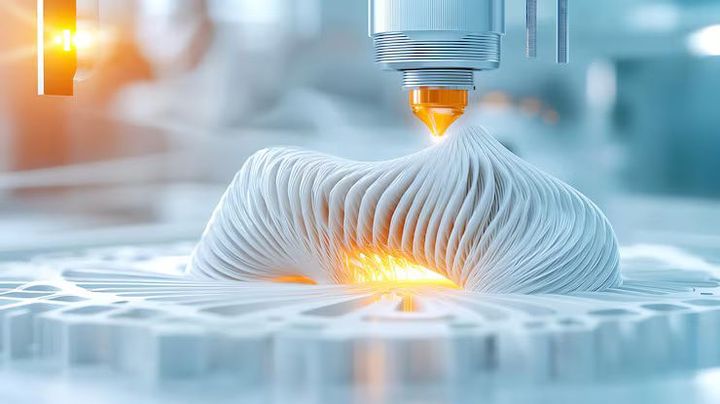
3D printing is a manufacturing method in which a digital design is converted into a physical object by adding material layer by layer. Unlike traditional manufacturing, which can remove material through cutting, drilling, or machining, additive manufacturing builds an object from its digital geometry. The process is used for prototypes, educational models, product development, customized components, architectural models, and various industrial applications.
The materials used in 3D printing depend largely on the printing technology. Common categories include thermoplastic filaments, liquid resins, metal and polymer powders, and specialized materials for construction or industrial applications. Each category has different characteristics related to strength, flexibility, heat resistance, surface appearance, chemical resistance, and processing requirements.
Understanding 3D Printing Materials
Filament is commonly used with fused filament fabrication (FFF) or fused deposition modeling (FDM) printers. A solid plastic strand is heated and deposited through a nozzle. PLA, ABS, PETG, TPU, nylon, and composite filaments are examples of materials used in this category.
Resin is used mainly in vat photopolymerization technologies such as stereolithography (SLA), digital light processing (DLP), and masked stereolithography (MSLA). Liquid resin is selectively cured using light to create individual layers.
Powder-based systems use finely divided material rather than filament or liquid resin. Polymer powders can be used in selective laser sintering (SLS), while metal powders are used in technologies such as selective laser melting or laser powder bed fusion. These systems are generally associated with industrial production and engineering applications.
Importance
The choice of material has a direct effect on how a printed object behaves during and after printing. Two objects with the same shape can have very different characteristics if they are produced from different materials or printing technologies.
Material selection can affect several practical factors:
- Strength: Determines how well an object handles physical loads.
- Flexibility: Indicates how much a material can bend before permanent deformation or failure.
- Heat resistance: Matters when a printed component is exposed to elevated temperatures.
- Chemical resistance: Can be important for parts exposed to oils, solvents, cleaning agents, or other chemicals.
- Surface appearance: Influences texture, transparency, smoothness, and visible layer lines.
- Dimensional stability: Describes how consistently the printed object retains its intended dimensions.
- Moisture sensitivity: Some materials absorb moisture from the surrounding environment, which can affect printing and final properties.
Why Material Properties Matter
For household models, appearance and ease of printing may receive greater attention. For functional components, strength, temperature resistance, fatigue behavior, and dimensional stability can become more important.
Material properties also interact with printer settings. Layer height, nozzle temperature, chamber temperature, exposure settings, print orientation, cooling, infill, and post-processing can all influence the final result. Therefore, a material specification should not be considered separately from the printing process.
Common Material Categories
| Material Category | Examples | General Characteristics | Common Uses |
|---|---|---|---|
| Basic Filament | PLA | Easy processing, rigid, widely used | Models, prototypes, educational parts |
| Engineering Filament | ABS, ASA, Nylon | Higher functional performance in selected conditions | Functional components, housings |
| Flexible Filament | TPU | Elastic and flexible | Grips, seals, flexible components |
| Resin | Standard, tough, flexible, high-temperature | Fine detail and smooth surfaces vary by formulation | Detailed models, prototypes |
| Polymer Powder | PA12 and related materials | Functional parts and complex geometries | Industrial prototypes and components |
| Metal Powder | Stainless steel, aluminum, titanium alloys | High-performance engineering applications | Industrial components and specialized parts |
Recent Updates
3D printing materials have continued to develop alongside advances in additive manufacturing equipment. From 2024 through 2026, attention has increasingly focused on engineering-grade polymers, composite materials, recyclable material systems, metal powders, and materials designed for specific performance requirements.
More Specialized Filaments
Filament development has moved beyond basic plastics. Materials reinforced with carbon fiber, glass fiber, minerals, or other additives are used for applications where increased stiffness or particular mechanical characteristics are required. These materials may also require printer components and settings suited to their composition.
High-temperature polymers have also gained attention for applications that require resistance to elevated operating temperatures. Materials such as PEEK, PEKK, and related high-performance polymers require specialized equipment and controlled processing conditions.
Development of Resin Options
Resin systems have expanded into several categories, including tough, flexible, high-temperature, castable, dental, and engineering formulations. The intended application determines which mechanical and thermal properties are relevant.
Resin printing has also continued to develop around faster curing, improved dimensional control, and more specialized formulations. Because uncured resin requires careful handling, ventilation, protective equipment, and appropriate disposal practices remain important considerations.
Growth of Powder-Based Materials
Powder-based additive manufacturing continues to support complex polymer and metal components. Material development is increasingly connected with applications involving lightweight structures, intricate internal geometries, tooling, and specialized industrial components.
India has also continued developing its additive manufacturing ecosystem. Government material from MeitY describes ongoing work through development and deployment centers, including research involving machines, materials, software, and applications. A 2026 government publication describes additive manufacturing as part of India's broader advanced manufacturing development activities.
More Attention to Material Efficiency
Material efficiency and recycling have also become important topics. Different printing technologies generate different amounts of unused material, support structures, failed prints, and post-processing waste. Recycling possibilities depend on the material, contamination level, additives, and processing method.
For plastics, Indian Standard IS 14534:2023 provides guidelines concerning recovery and recycling of plastic waste, with an amendment listed in 2025.
Laws or Policies
In India, 3D printing is part of the wider additive manufacturing and advanced manufacturing ecosystem. The Government of India released the National Strategy on Additive Manufacturing through the Ministry of Electronics and Information Technology (MeitY). The strategy addresses areas including machines, materials, software, research, skills, and industrial adoption.
The policy framework does not create one universal material rule covering every 3D-printed object. Requirements can vary according to the material, intended application, product category, manufacturing environment, and applicable Indian Standards.
Standards and Product Requirements
The Bureau of Indian Standards (BIS) provides access to Indian Standards through its standards resources. Its "Know Your Standard" platform allows users to search standards using an IS number or keyword.
For products that fall under applicable mandatory standards or certification requirements, manufacturers may need to meet the relevant conformity requirements. BIS explains that certification processes can involve manufacturing controls, quality control, testing, and conformity assessment depending on the applicable standard.
Construction-related 3D printing is also receiving attention. A BIS draft guideline published in 2025 addressed 3D-printed concrete structures, including material printability, buildability, mechanical properties, durability, testing, and conformity with applicable standards for equivalent components.
The regulatory situation can therefore differ significantly between a decorative household object, an industrial component, a construction element, and a product used in a regulated sector. Applicable requirements should be checked against the specific product and intended use.
Tools and Resources
Several tools can help users understand and manage 3D printing materials.
Slicing Software
Slicing software converts a three-dimensional model into instructions that a printer can follow. Common settings include layer height, infill, printing temperature, cooling, support structures, print speed, and material profile.
Examples include Cura, PrusaSlicer, OrcaSlicer, and resin-focused slicers. Material profiles can provide starting parameters, but actual printer and material combinations may require adjustments.
Material Data Sheets
Manufacturers generally provide technical data sheets for specific materials. These documents can contain information about tensile strength, elongation, density, heat-related properties, moisture absorption, and recommended processing conditions.
For resin and chemical-based materials, safety data sheets can also provide information about handling, storage, exposure controls, and disposal considerations.
Material Comparison Tables
A simple comparison table can help organize material properties before selecting a material:
| Property | What It Describes | Why It Matters |
|---|---|---|
| Tensile Strength | Resistance to pulling forces | Useful for load-bearing parts |
| Elongation | Ability to stretch before breaking | Relevant to flexible components |
| Density | Mass per unit volume | Influences part weight |
| Heat Resistance | Behavior at elevated temperatures | Important for heat-exposed parts |
| Moisture Absorption | Amount of environmental moisture absorbed | Can affect processing and properties |
| Chemical Resistance | Response to particular chemicals | Relevant to industrial environments |
| Surface Finish | Appearance and texture | Important for visible models |
| Impact Resistance | Ability to withstand sudden forces | Useful for functional objects |
Calculators and Reference Resources
Online calculators can help estimate material usage, object weight, printing time, and dimensional changes. Government and standards websites can also help users identify applicable regulations and technical requirements in India.
For professional or regulated applications, laboratory testing and technical documentation may be necessary because general material specifications do not always represent the exact performance of a printed component.
FAQs
What are the main 3D printing materials?
The main 3D printing materials include thermoplastic filaments, photopolymer resins, polymer powders, and metal powders. The appropriate category depends on the printer technology and the required properties of the final object.
Which filament types are commonly used?
Common filament types include PLA, ABS, PETG, TPU, nylon, ASA, and various reinforced or high-temperature polymers. Each has different characteristics relating to flexibility, strength, temperature behavior, moisture sensitivity, and processing requirements.
What are the main resin options for 3D printing?
Resin options include standard, tough, flexible, high-temperature, castable, and application-specific formulations. Resin selection depends on the desired combination of detail, hardness, flexibility, thermal performance, and other material properties.
How are 3D printing powders used?
Powders are used in technologies such as selective laser sintering and metal powder bed fusion. Polymer powders can be used to create complex functional parts, while metal powders can produce components from materials such as stainless steel, aluminum, and titanium alloys.
Why are material properties important in 3D printing?
Material properties determine how a printed object behaves under physical, thermal, environmental, and chemical conditions. Properties such as tensile strength, flexibility, heat resistance, density, and moisture absorption help describe whether a material is appropriate for a particular application.
Conclusion
3D printing materials include filament types, resin options, polymer powders, metal powders, and specialized formulations for particular applications. Material properties such as strength, flexibility, heat resistance, density, and chemical resistance can significantly influence the behavior of a printed object. From 2024 through 2026, material development has continued toward more specialized polymers, composites, resins, powders, and advanced manufacturing applications. In India, additive manufacturing development is supported by national strategies, technical programs, and standards-related work, while specific requirements depend on the product and its intended application.