Industrial Welding Machines Information: Types, Power Systems, Welding Applications and Features
Industrial welding machines are equipment used to join metal components through heat, pressure, or a combination of both. Industrial welding machines are found in manufacturing plants, construction work, metal fabrication, vehicle production, infrastructure projects, and equipment assembly. Understanding their types, power systems, welding applications, and key features helps readers understand how different machines are used for different materials and working conditions.
What Are Industrial Welding Machines?
Welding is a metal-joining process that creates a permanent connection between two or more components. Depending on the welding method, heat may come from an electric arc, resistance, gas flame, laser, or another controlled energy source. Some processes also use pressure to form the joint.
Industrial welding machines provide the controlled energy required for these processes. A typical system can include a power source, welding torch or electrode holder, cables, controls, grounding equipment, shielding arrangements, and other accessories.
The development of industrial welding has been closely connected with modern manufacturing. As factories began working with steel, aluminum, stainless steel, and specialized alloys, welding became an important method for producing structures and assemblies with repeatable joints.
How Industrial Welding Developed
Early metal joining methods included forging and heating metals until they could be joined mechanically. Electric arc welding later introduced a more controllable approach, while gas welding provided another method for heating and joining metal.
Modern industrial welding includes processes such as Shielded Metal Arc Welding (SMAW), Gas Metal Arc Welding (GMAW), Gas Tungsten Arc Welding (GTAW), Flux-Cored Arc Welding (FCAW), resistance welding, and laser welding. Each process has different equipment requirements and characteristics.
Main Parts of a Welding System
An industrial welding setup normally contains several connected components:
- Power source: Converts electrical input into the form of energy required by the welding process.
- Welding torch or electrode holder: Directs the welding current or heat toward the joint.
- Work clamp: Establishes the electrical connection between the workpiece and welding circuit.
- Cables: Carry electrical current between the power source and welding equipment.
- Controls: Allow settings such as current, voltage, wire feed rate, or operating mode to be adjusted.
- Shielding arrangement: Uses gas, flux, or another method to protect the molten weld area from unwanted atmospheric effects.
Importance
Why Industrial Welding Matters
Industrial welding supports the construction and assembly of many products and structures used in everyday life. Metal frames, pipelines, storage systems, agricultural equipment, vehicles, machinery, bridges, and industrial structures can contain welded joints.
The choice of welding process affects joint characteristics, production methods, material compatibility, and operator requirements. A process suitable for thick structural steel may not be appropriate for thin aluminum sheet or precision stainless-steel components.
Welding also addresses practical manufacturing challenges. Components can be joined into larger assemblies without requiring every part to be manufactured as one piece. This allows complex structures to be fabricated from separate metal sections.
Welding Applications Across Industries
Industrial welding machines are used across several fields:
- Construction: Structural steel, support frames, tanks, gates, and metal assemblies.
- Automotive manufacturing: Vehicle frames, body components, exhaust assemblies, and structural parts.
- Heavy equipment: Frames, buckets, brackets, chassis components, and machine structures.
- Shipbuilding: Hull sections, decks, structural components, and piping assemblies.
- Energy infrastructure: Pipelines, pressure-related components, towers, and equipment structures.
- General fabrication: Metal furniture, enclosures, frames, brackets, and custom assemblies.
- Manufacturing: Machine components, production equipment, housings, and fabricated assemblies.
Common Welding Process Comparison
| Welding Process | Typical Energy Source | Common Materials | Typical Applications |
|---|---|---|---|
| SMAW | Electric arc | Carbon steel, alloy steel | Structural work and repairs |
| GMAW | Electric arc with wire electrode | Steel, stainless steel, aluminum | Fabrication and production |
| GTAW | Electric arc with tungsten electrode | Stainless steel, aluminum, alloys | Precision welding |
| FCAW | Electric arc with flux-cored wire | Carbon and alloy steels | Structural and heavy fabrication |
| Resistance Welding | Electrical resistance and pressure | Sheet metals | Automotive and production assemblies |
| Laser Welding | Concentrated laser energy | Various metals | Precision manufacturing |
Recent Updates
Greater Use of Digital Controls
Recent developments in industrial welding machines have included increased use of digital control systems. Modern equipment can provide electronic adjustment of welding parameters, operating modes, monitoring functions, and programmable settings.
Digital interfaces can make it easier to maintain consistent parameters between welding operations. Some systems also record process information for production monitoring and quality documentation.
Inverter-Based Power Systems
Inverter technology has become common in many modern welding machines. Instead of relying only on traditional transformer-based designs, inverter systems use electronic components to convert and control electrical energy.
These systems can provide compact equipment designs and precise control over welding current. Their characteristics vary according to the machine design, welding process, electrical input, and operating conditions.
Automation and Robotic Welding
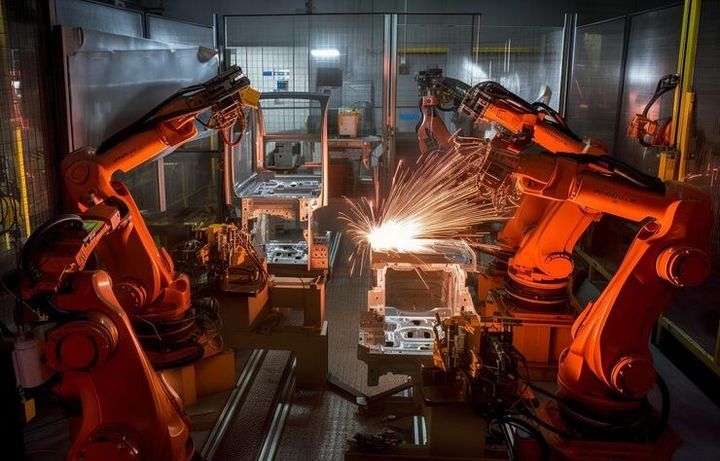
Automation continues to expand in manufacturing environments where repeated welding operations are performed. Robotic welding systems can coordinate a welding torch, workpiece positioning, sensors, and programmed movement.
Automated systems are particularly relevant when the same welding sequence is repeated across many components. Human operators remain important for setup, inspection, programming, maintenance, and process supervision.
Improved Monitoring and Safety Features
Modern welding equipment increasingly incorporates monitoring functions and protective systems. Examples include thermal protection, overload detection, voltage monitoring, current control, and automatic shutdown functions.
Safety remains an important consideration because welding can involve intense heat, ultraviolet radiation, fumes, electrical energy, sparks, and pressurized gases. The Bureau of Indian Standards identifies welding and cutting as activities requiring attention to hazards such as fumes, radiation, hot materials, sparks, and gases.
Laws or Policies
Welding Safety Requirements in India
In India, industrial welding activities can be affected by occupational safety requirements, factory rules, electrical safety provisions, fire-safety requirements, and relevant Indian Standards. The exact requirements depend on the workplace, equipment, industry, state rules, and nature of the welding operation.
The Occupational Safety, Health and Working Conditions Code, 2020 provides a national framework covering occupational safety and working conditions. The Code contains provisions concerning workplace safety, health, welfare, and related responsibilities.
The Ministry of Labour and Employment has also published draft factory-related rules under the Code as part of the regulatory framework. Their applicability depends on the relevant commencement notifications and rules in force.
Indian Standards for Welding Safety
Bureau of Indian Standards publications include standards relevant to welding and cutting operations. IS 8520:2023 is identified by BIS as a code of practice covering safety and health requirements in electric and gas welding and cutting operations.
Other Indian Standards address particular welding materials, equipment, electrical components, protective equipment, and manufacturing processes. BIS provides a searchable standards portal where users can check Indian Standards, amendments, and related information.
Workplaces may also need appropriate ventilation, protective clothing, eye and face protection, electrical grounding, fire precautions, and controls for compressed gases. The exact requirements should be determined from applicable regulations, workplace assessments, and relevant technical standards.
Tools and Resources
Welding Parameter References
Welding parameter charts and manufacturer documentation can help explain relationships between current, voltage, electrode type, wire feed rate, shielding gas, material thickness, and welding process. These references are generally specific to the process and equipment.
Welding Calculators
Online welding calculators can assist with basic technical estimates such as electrical power relationships, material dimensions, weld measurements, or shielding-gas requirements. Results should be treated as calculations rather than substitutes for engineering specifications or workplace procedures.
Standards Databases
The BIS standards portal provides information about Indian Standards and allows users to search by standard number or keyword. This can help readers locate standards related to welding, electrical safety, machine safety, materials, and protective equipment.
Welding Documentation
Useful technical resources can include:
- Welding procedure specifications
- Equipment manuals
- Electrode and filler-metal data sheets
- Safety data sheets for relevant consumables
- Inspection checklists
- Welding parameter records
- Equipment maintenance records
- Workplace risk-assessment documents
These documents help establish consistent procedures and provide technical information about the materials and equipment involved.
FAQs
What are the main types of industrial welding machines?
Common types include SMAW, GMAW, GTAW, FCAW, resistance welding, and laser welding equipment. Each type uses a different method of generating or applying heat and is associated with particular materials and welding applications.
How do industrial welding machine power systems work?
Power systems convert electrical input into controlled welding energy. Transformer, rectifier, and inverter-based systems are examples of technologies used to regulate welding current and voltage. The actual configuration depends on the welding process and machine design.
What are common welding applications for industrial machines?
Welding applications include structural fabrication, vehicle manufacturing, machinery production, pipeline construction, shipbuilding, equipment assembly, and general metal fabrication. The appropriate process depends on material type, thickness, joint design, and production requirements.
What features are commonly found in industrial welding machines?
Common features include adjustable current and voltage, digital displays, thermal protection, overload protection, process selection, wire-feed controls, programmable settings, and monitoring functions. Not every machine includes all of these features.
What safety standards apply to industrial welding in India?
Relevant requirements can include the Occupational Safety, Health and Working Conditions Code, applicable factory rules, electrical and fire-safety requirements, and Indian Standards such as IS 8520:2023 for safety and health requirements in electric and gas welding and cutting operations.
Conclusion
Industrial welding machines use controlled energy to join metals across manufacturing, construction, transportation, infrastructure, and fabrication applications. Their main differences relate to welding process, power system, materials, controls, and operating characteristics. Recent developments include greater use of inverter technology, digital controls, automation, monitoring, and integrated safety functions. Indian workplaces must also consider applicable occupational safety requirements and relevant BIS standards when welding equipment is used.