Circuit Breakers Explained: Types, Components, Functions, Applications and Safety Considerations
Circuit breakers are electrical switching devices designed to interrupt the flow of electricity when a circuit experiences conditions such as an overload or short circuit. They are used in homes, offices, commercial buildings, factories, electrical panels, and power distribution systems. Unlike a basic switch, a circuit breaker can automatically open a circuit when an abnormal electrical condition is detected.
The development of circuit breakers came from the need to control electrical circuits while reducing the risks associated with excessive current. Early electrical systems relied on fuses and manual switching arrangements. Modern circuit breakers introduced automatic interruption, allowing electrical circuits to be disconnected when current exceeds a specified level or when another protected fault condition occurs.
How Circuit Breakers Work
Electric current normally travels through a circuit along a defined path. A circuit breaker remains closed during ordinary operation, allowing electricity to reach connected equipment. When the current reaches a level that the protection system identifies as abnormal, the breaker mechanism separates its contacts.
Different circuit breakers use different methods to detect faults. Thermal mechanisms respond to heat created by excessive current, while magnetic mechanisms respond rapidly to high fault currents. Some electronic breakers use sensors and electronic control systems to monitor electrical conditions.
The basic process can be summarized as:
- Normal current: The contacts remain closed and electricity flows.
- Overload: Excessive current activates the protection mechanism.
- Short circuit: A rapid fault current can trigger fast interruption.
- Tripping: Internal contacts separate to interrupt the circuit.
- Resetting: After the cause has been identified and the circuit is considered safe, the breaker can generally be returned to its operating position.
Circuit breakers therefore combine switching and protective functions within an electrical system.
Main Components
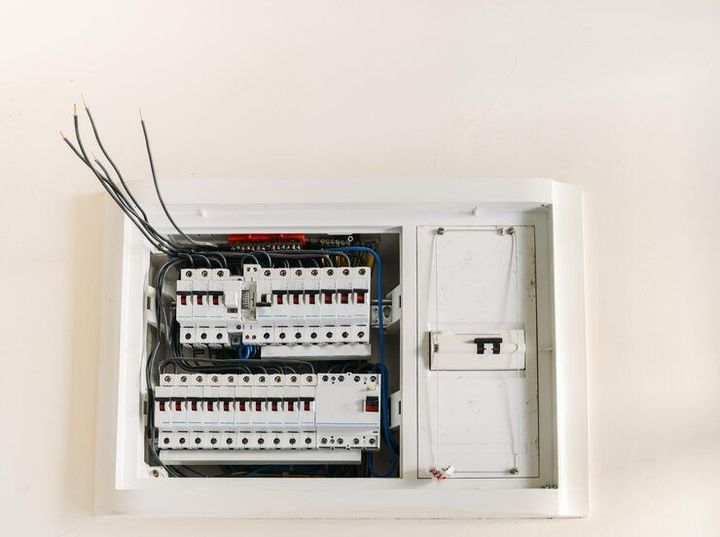
Although construction varies between designs, many circuit breakers contain several common components. These include fixed and moving contacts, an operating mechanism, a trip mechanism, an arc-control arrangement, terminals, insulation, and an enclosure.
The contacts carry current during normal operation. When the breaker trips, the contacts separate. Because electricity can continue to arc between separating contacts, circuit breakers use specific methods to control and extinguish the electrical arc.
The trip mechanism determines when the breaker opens. In a simple thermal-magnetic breaker, a thermal element responds to sustained overloads while a magnetic element responds to high fault currents.
Importance
Circuit breakers matter because electrical systems can experience conditions that exceed the intended capacity of wiring and equipment. Excessive current can produce heat, damage insulation, interrupt equipment operation, and create conditions associated with electrical fires or electric shock.
A properly designed protection system helps separate a faulted circuit from the rest of an installation. This can limit the effect of a fault and allow other parts of an electrical system to continue operating, depending on the design.
Everyday Applications
Circuit breakers are found in many electrical environments:
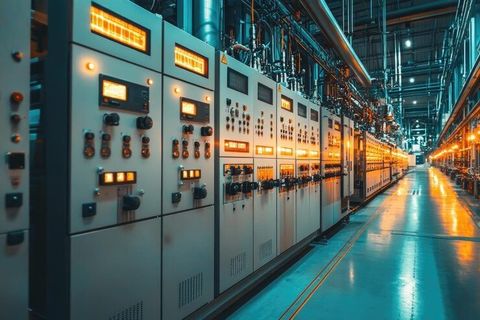
- Residential distribution boards
- Office electrical panels
- Retail and commercial buildings
- Manufacturing facilities
- Data centers
- Pumping and water-treatment installations
- Construction equipment
- Motor-control systems
- Electrical distribution networks
- Renewable-energy installations
The type of breaker used depends on factors such as voltage, current, fault level, circuit configuration, operating environment, and the equipment being protected.
Common Circuit Breaker Types
Different circuit breaker types are designed for different applications. Common examples include miniature circuit breakers, molded case circuit breakers, air circuit breakers, residual-current devices, and specialized high-voltage breakers.
| Circuit breaker type | General purpose | Typical application |
|---|---|---|
| MCB | Protects lower-current circuits from overloads and short circuits | Homes and small commercial panels |
| MCCB | Handles higher currents with configurable protection features | Commercial and industrial systems |
| ACB | Used for high-current low-voltage distribution | Large electrical panels |
| RCCB/RCD | Detects residual or leakage current | Shock protection applications |
| RCBO | Combines overcurrent and residual-current protection | Individual protected circuits |
| Vacuum circuit breaker | Interrupts current using a vacuum interrupter | Medium-voltage distribution |
| SF6 circuit breaker | Uses sulfur hexafluoride in certain high-voltage designs | High-voltage electrical systems |
The exact ratings and applications vary by equipment design and applicable standards.
Recent Updates
Circuit breaker technology continues to develop alongside changes in electrical distribution, automation, renewable energy, and digital monitoring. From 2024 through 2026, developments in India have included continuing implementation and adjustment of conformity requirements for low-voltage switchgear and circuit breakers.
The Bureau of Indian Standards identifies IS/IEC 60947-2:2016 as the Indian Standard for low-voltage switchgear and controlgear, Part 2 covering circuit breakers. The standard addresses areas such as performance, testing, current ratings, breaking capacity, and other operating requirements.
BIS documentation also shows continuing updates to the implementation framework for the Electrical Equipment Quality Control Order. Requirements relating to different categories and ratings of AC circuit breakers have been associated with implementation phases and amendments through 2025 and 2026.
Digital Monitoring and Electrical Systems
Modern electrical installations increasingly combine circuit breakers with monitoring equipment. Digital trip units can provide information about current, voltage-related conditions, fault events, and protection settings, depending on the equipment.
Smart electrical panels can also integrate monitoring and communication functions. These developments are relevant to facilities where operators need information about electrical loads and abnormal conditions without relying only on manual inspection.
Changing Power Systems
The growth of solar generation, battery storage, electric vehicles, industrial automation, and other electrically powered equipment is creating additional requirements for circuit protection. These systems can have different current characteristics from traditional loads, so protection equipment must be selected according to the electrical design and applicable standards.
Laws or Policies
In India, electrical safety is shaped by national regulations, Indian Standards, conformity requirements, and rules applicable to particular installations. The Central Electricity Authority maintains the Central Electricity Authority (Measures relating to Safety and Electric Supply) Regulations, 2023, along with subsequent regulatory developments.
For building wiring and electrical installations, BIS identifies IS 732:2019 as a code covering the design, selection, erection, and verification of electrical installations in residential, commercial, public, industrial, agricultural, and horticultural premises.
BIS also lists IS/IEC 60947-2 under its product-specific information for low-voltage switchgear and controlgear circuit breakers. The Electrical Equipment Quality Control Order covers specified categories of low-voltage switchgear and controlgear, including circuit breakers, with amendments affecting implementation requirements.
Electrical installations can also be subject to requirements from state authorities, electricity distribution organizations, building regulations, and other applicable rules. Therefore, the precise requirements for a particular installation depend on its location, voltage level, building type, and electrical configuration.
Tools and Resources
Several resources can help readers understand circuit breakers and electrical protection without requiring advanced electrical knowledge.
Standards and Regulatory Resources
The Bureau of Indian Standards provides information about Indian Standards and conformity-assessment requirements. Its material on IS/IEC 60947-2 is particularly relevant when studying low-voltage circuit breakers.
The Central Electricity Authority publishes regulations and regulatory information related to electrical safety and electric supply in India. Its regulations section provides access to the 2023 safety regulations and subsequent updates.
Electrical Calculation Tools
Electrical load calculators can help estimate the approximate current associated with a known power demand and voltage. A basic relationship for single-phase systems is:
Current = Power ÷ Voltage
For example, a 2,000-watt load operating at 230 volts would have an approximate current of 8.7 amperes under simplified conditions. Real installations can involve power factor, starting current, efficiency, temperature, cable characteristics, and other factors, so such calculations do not by themselves determine the appropriate circuit breaker rating.
Product Documentation
Manufacturer datasheets and technical manuals can provide information about rated current, voltage, breaking capacity, trip characteristics, terminal arrangements, environmental conditions, and installation requirements. These details are useful for understanding how a particular circuit breaker is intended to operate.
Safety Inspection Resources
Electrical inspection checklists can help organize observations such as damaged enclosures, loose connections, unusual heating, repeated tripping, exposed conductors, and labeling. Any work involving energized electrical equipment should be handled according to applicable safety procedures and by appropriately qualified personnel.
FAQs
What is a circuit breaker and how does it work?
A circuit breaker is a protective electrical switching device that interrupts current when an abnormal condition such as an overload or short circuit is detected. Its internal mechanism separates electrical contacts to interrupt the circuit.
What are the main types of circuit breakers?
Common types include MCBs, MCCBs, ACBs, RCCBs or RCDs, RCBOs, vacuum circuit breakers, and certain high-voltage circuit breakers. Their applications depend on electrical ratings, protection requirements, and system design.
What components are found inside a circuit breaker?
Typical components include electrical contacts, an operating mechanism, a trip mechanism, terminals, insulation, an enclosure, and an arrangement for controlling the electrical arc created when contacts separate.
Why does a circuit breaker keep tripping?
Repeated tripping can be associated with an overloaded circuit, a short circuit, leakage current, equipment faults, incorrect protection settings, or other electrical conditions. The underlying cause should be identified rather than repeatedly resetting the breaker.
What standards apply to circuit breakers in India?
IS/IEC 60947-2 is an important Indian Standard for low-voltage circuit breakers. Electrical installations are also covered by standards such as IS 732:2019, while electrical safety requirements are addressed through Central Electricity Authority regulations and other applicable rules.
Conclusion
Circuit breakers are important components of electrical systems because they can interrupt abnormal current conditions and help protect wiring and connected equipment. Different circuit breaker types serve different electrical applications, ranging from household distribution boards to industrial and high-voltage systems. Indian electrical installations are influenced by BIS standards, Central Electricity Authority regulations, and other applicable requirements. Understanding breaker types, components, functions, and operating limits provides useful background for interpreting electrical protection systems.