Manufacturing Trends Guide: Smart Factories, Robotics, Artificial Intelligence and Digital Transformation
Manufacturing trends describe the technologies, processes, and working methods that are changing how products are designed, produced, inspected, and delivered. Modern manufacturing combines traditional industrial equipment with digital systems, robotics, artificial intelligence (AI), and connected machines. These developments are part of a wider shift toward smart factories and digital transformation across industries.
Context
Manufacturing trends describe the technologies, processes, and working methods that are changing how products are designed, produced, inspected, and delivered. Modern manufacturing combines traditional industrial equipment with digital systems, robotics, artificial intelligence (AI), and connected machines. These developments are part of a wider shift toward smart factories and digital transformation across industries.
Manufacturing has evolved through several stages, from manual production and mechanized equipment to computer-controlled machines and automated production lines. Today, many manufacturers are connecting machines, software, sensors, and data platforms to coordinate operations and understand production conditions. The pace of adoption differs according to industry, factory size, available infrastructure, and technical requirements.
Understanding Smart Factories
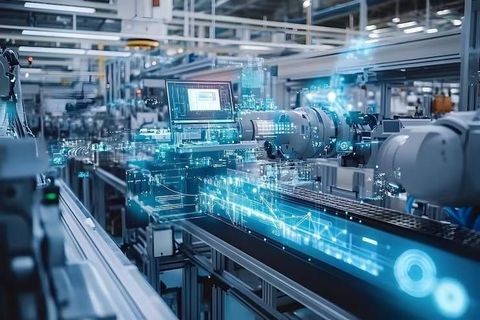
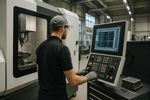
A smart factory uses connected equipment, software, sensors, and data analysis to monitor and coordinate manufacturing activities. These systems can collect information about machine performance, product quality, material movement, and energy use. Workers and managers can use the information to identify production problems and make operational decisions.
Smart factories may include programmable logic controllers, industrial sensors, manufacturing execution systems, and industrial networks. Not every factory requires every technology, and a facility can introduce digital tools gradually rather than replacing all existing equipment.
The Role of Robotics and Artificial Intelligence
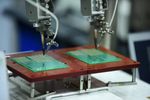
Industrial robots perform repetitive, precise, or physically demanding tasks, such as welding, painting, packaging, assembly, and material handling. Collaborative robots, commonly called cobots, are designed to work near people under specified safety conditions. Their actual suitability depends on the task, equipment configuration, and risk assessment.
Artificial intelligence adds capabilities such as image-based inspection, production forecasting, pattern recognition, and equipment-failure analysis. AI systems can process large amounts of operational data, but their results depend on data quality, system design, and appropriate human oversight.
Importance
Manufacturing trends matter because factories influence the availability, quality, and reliability of products used in everyday life. Industries such as automotive production, electronics, food processing, pharmaceuticals, construction materials, and industrial machinery depend on consistent manufacturing processes. Changes in factory technology can affect production planning, product inspection, equipment maintenance, and workplace safety.
Manufacturers also face challenges involving supply disruptions, changing demand, energy use, equipment downtime, and quality control. Digital systems can provide better visibility into these issues, although technology alone cannot resolve every operational problem. Successful implementation also requires trained workers, clear procedures, reliable infrastructure, and suitable management practices.
Main Benefits and Practical Challenges
Smart manufacturing can support several operational goals:
Production monitoring: Connected sensors can provide information about machine status, output, and operating conditions.
Quality inspection: Computer vision and other automated methods can help identify visible defects and irregularities.
Predictive maintenance: Equipment data can help estimate when maintenance may be needed, reducing reliance on fixed schedules alone.
Production flexibility: Programmable equipment can support changes in product design, production volume, or manufacturing sequences.
Energy management: Monitoring tools can help identify energy-intensive processes and unusual consumption patterns.
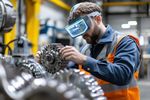
Worker support: Automation can reduce exposure to certain repetitive, hazardous, or physically demanding tasks.
However, implementation may involve equipment integration, cybersecurity risks, staff training, data-management difficulties, and interruptions during installation. Older machines may not support modern communication standards, requiring additional sensors or interface equipment. Smaller manufacturers may also need to introduce changes in stages to manage technical and operational demands.
Comparing Key Manufacturing Technologies
| Technology | Main function | Example application |
|---|---|---|
| Industrial robotics | Automated physical tasks | Welding and assembly |
| Artificial intelligence | Pattern analysis and prediction | Defect detection |
| Industrial IoT | Connected sensors and equipment | Machine monitoring |
| Digital twins | Digital models of physical systems | Production simulation |
| Cloud manufacturing software | Remote data storage and processing | Production reporting |
| Additive manufacturing | Building objects layer by layer | Prototypes and complex parts |
| Autonomous mobile robots | Moving materials within facilities | Warehouse transport |
These technologies often work together, but they are not interchangeable. Their usefulness depends on the production process, required accuracy, safety conditions, and the information available to the system.
Recent Updates
Manufacturing developments during 2024–2026 have increasingly focused on combining AI, robotics, connected equipment, and industrial data systems. Manufacturers are exploring ways to improve operational visibility, automate selected tasks, and make production systems more adaptable. Adoption remains uneven, and many facilities continue to combine conventional machinery with newer digital technologies.
AI-Enabled Manufacturing and Industrial Automation
AI applications are expanding beyond basic data analysis into visual inspection, process optimization, technical assistance, and production planning. Some systems can analyze images from production lines to identify irregularities, while others examine machine data to detect patterns associated with performance changes. These applications still require testing, monitoring, and clear procedures for handling incorrect results.
Generative AI is also being explored for technical documentation, maintenance support, production knowledge retrieval, and communication between workers and industrial software. In physical manufacturing, AI-enabled robotics may help machines respond to changing conditions, but dependable operation requires suitable sensors, controlled environments, and safety validation.
Digital Twins and Connected Production
A digital twin is a digital representation of a physical machine, process, or facility that can use operational data to reflect its condition. Depending on its design, it may help engineers simulate production changes, examine equipment behavior, or evaluate maintenance scenarios before applying changes in a real environment.
Industrial Internet of Things (IIoT) systems connect sensors, machines, and software to exchange information. Manufacturers are also adopting edge computing, which processes selected data near the equipment instead of sending everything to a distant platform. This can support faster responses where timing and network reliability matter.
Sustainability and Flexible Production
Energy monitoring, material efficiency, waste reduction, and equipment optimization remain important manufacturing priorities. Digital systems can help identify inefficient operating patterns, but actual environmental improvements depend on how the information is used and the energy sources involved.
Flexible production is another ongoing trend. Modular automation, programmable robotics, and digital production planning can help some factories adjust to different products or changing demand. Such flexibility depends on machine capabilities, product complexity, and the time required to change tools, materials, and production settings.
Laws or Policies
Manufacturing technologies are affected by industrial safety rules, environmental regulations, data protection requirements, cybersecurity expectations, and product-specific standards. The applicable requirements depend on the country, industry, equipment, and intended use. Automation does not remove the manufacturer's responsibility to operate equipment safely or comply with relevant regulations.
Manufacturing Policies and Safety in India
In India, industrial operations may fall under the Factories Act, 1948, and applicable state rules, alongside newer occupational safety legislation and implementation arrangements. The Occupational Safety, Health and Working Conditions Code, 2020, is part of India's labor-law framework; its applicability depends on commencement provisions and relevant rules in force. Manufacturers need to verify the current legal requirements applicable to their facilities.
Environmental requirements may arise under laws such as the Environment (Protection) Act, 1986, and applicable pollution-control rules. Facilities may need relevant approvals or consent from state pollution control authorities, depending on their activities and environmental impact.
Data Protection and Industrial Cybersecurity
Connected factories may collect production information, employee records, access logs, and other data. India's Digital Personal Data Protection Act, 2023, and related rules and commencement arrangements are relevant to the country's developing personal-data framework. Requirements depend on the provisions in force and the type of information being processed.
Industrial cybersecurity is also important because connected equipment can create pathways for unauthorized access or operational disruption. Manufacturers commonly use network segmentation, access controls, software updates, backups, and incident-response plans to reduce risks. Standards such as the IEC 62443 series provide guidance for industrial automation and control system security, although the appropriate requirements depend on the system and regulatory context.
Tools and Resources
Manufacturers can use several categories of software and technical resources to plan digital transformation, monitor production, and evaluate automation options. The appropriate tool depends on the factory's processes, existing equipment, data requirements, and technical expertise.
Manufacturing Software and Data Platforms
Manufacturing execution systems (MES) help manage and record production activities, while enterprise resource planning (ERP) systems coordinate functions such as materials, inventory, purchasing, and financial records. Supervisory control and data acquisition (SCADA) systems monitor and control industrial processes through connected equipment and operator interfaces.
Industrial data platforms can combine information from machines, sensors, and production software. Examples of technology ecosystems include Siemens industrial automation products, Rockwell Automation platforms, and Microsoft Azure industrial and IoT capabilities. Their functions differ, and compatibility with existing equipment should be evaluated before implementation.
Learning and Planning Resources
The National Institute of Standards and Technology (NIST) publishes manufacturing and cybersecurity resources, including guidance relevant to industrial control systems. India's Ministry of Heavy Industries and government manufacturing initiatives provide information about industrial development and technology adoption. Technical standards organizations also publish documents on automation, equipment safety, and industrial communications.
A manufacturing assessment spreadsheet can help document current equipment, production bottlenecks, maintenance history, energy use, and potential automation projects. Useful fields include the process name, current performance measure, identified issue, proposed change, safety considerations, expected downtime, and review date.
FAQs
What are the main manufacturing trends in 2026?
Important manufacturing trends include AI-enabled inspection, industrial robotics, smart factories, connected sensors, digital twins, predictive maintenance, and energy monitoring. Adoption varies across industries and factory sizes.
How does artificial intelligence improve smart manufacturing?
AI can analyze production data, identify patterns, assist with visual quality inspection, and help predict equipment problems. Its effectiveness depends on reliable data, suitable system design, and human oversight.
What is the difference between robotics and industrial automation?
Robotics uses programmable machines to perform physical tasks, while industrial automation includes the wider systems that control and coordinate manufacturing processes. Robotics is therefore one part of industrial automation.
What challenges affect manufacturing digital transformation?
Common challenges include integration with older machinery, cybersecurity, data quality, employee training, implementation interruptions, and limited technical resources. Planning and testing are important when introducing new systems.
Which technologies are used in a smart factory?
Smart factories may use industrial sensors, robotics, AI software, MES platforms, SCADA systems, IIoT networks, and digital twins. The combination depends on production requirements and the factory's existing infrastructure.
Conclusion
Manufacturing trends are reshaping production through smart factories, robotics, artificial intelligence, connected equipment, and digital transformation. These technologies can support monitoring, quality control, maintenance planning, and more flexible operations, but they also introduce technical, safety, and cybersecurity challenges. Regulations and industrial standards influence how manufacturing systems are designed, installed, and operated. The pace and results of adoption depend on each facility's requirements, resources, and implementation approach.