Forklift Manufacturer Guide: Production Processes, Equipment Types, Safety and Quality Standards
A forklift manufacturer guide explains how industrial lifting vehicles are designed, assembled, tested, and evaluated for workplace use. Forklifts developed as industries needed practical ways to move heavy materials within factories, warehouses, ports, and distribution centers. Early material-handling equipment gradually evolved into powered vehicles with lifting masts, forks, counterweights, and different energy systems.
Context
A forklift manufacturer guide explains how industrial lifting vehicles are designed, assembled, tested, and evaluated for workplace use. Forklifts developed as industries needed practical ways to move heavy materials within factories, warehouses, ports, and distribution centers. Early material-handling equipment gradually evolved into powered vehicles with lifting masts, forks, counterweights, and different energy systems.
Today, a forklift manufacturer may produce electric, diesel, liquefied petroleum gas (LPG), or other types of industrial trucks. Manufacturing involves mechanical engineering, electrical systems, hydraulic components, structural materials, and safety controls. Understanding these processes helps warehouse operators, industrial buyers, maintenance teams, and general readers understand how forklift equipment is produced and how quality is assessed.
Understanding Forklift Equipment Types
Forklifts are designed for different working environments, load requirements, and travel surfaces. Their structure and operating features depend on the intended application.
Common types include:
Electric forklifts: Use rechargeable batteries and electric motors. They are commonly used in indoor warehouses and other environments where exhaust emissions from the vehicle need to be avoided.
Diesel forklifts: Use diesel engines and are often configured for outdoor industrial applications requiring substantial lifting capacity.
LPG forklifts: Use liquefied petroleum gas as fuel. Their suitability depends on ventilation, emissions requirements, and workplace conditions.
Reach trucks: Use extending mechanisms to position loads within warehouse racking systems, particularly in narrow aisles.
Rough-terrain forklifts: Have configurations designed for uneven outdoor surfaces, subject to the manufacturer's operating limits.
Pallet stackers and specialized industrial trucks: Handle particular material movement and stacking tasks, although their design and classification may differ from conventional counterbalanced forklifts.
A forklift's rated capacity depends on factors such as load weight, load center, lift height, mast configuration, and attachments. Equipment selection therefore requires more than comparing engine type or overall dimensions.
Importance
Forklift manufacturing matters because industrial trucks support material movement throughout manufacturing, construction, warehousing, retail distribution, and transport facilities. Their design influences how loads are lifted, positioned, transported, and stored. Equipment that does not match its intended environment or operating requirements can create risks for operators, pedestrians, products, and infrastructure.
Manufacturing quality also affects reliability and the consistency of equipment performance. Structural defects, faulty hydraulic components, electrical problems, or ineffective braking systems may contribute to equipment failure. Production controls and safety testing help identify defects before a forklift enters regular operation.
Key Components and Their Functions
A forklift combines several systems that must work together.
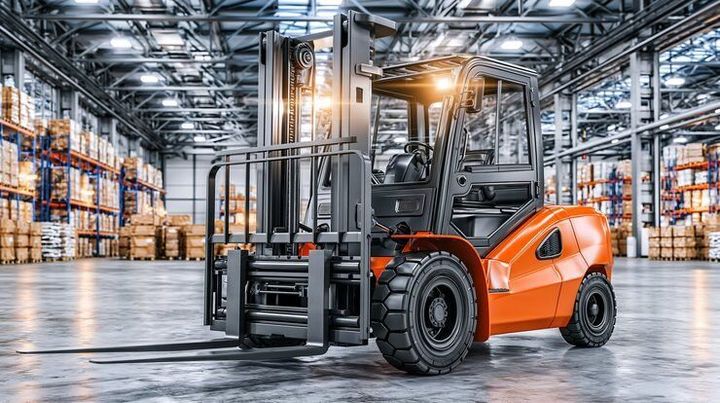
Mast and forks: The mast guides the lifting movement, while the forks support loads according to the specified configuration and capacity.
Hydraulic system: Hydraulic pumps, cylinders, valves, and hoses provide controlled lifting and tilting functions.
Powertrain: An electric motor or combustion engine supplies the energy required for movement and lifting.
Counterweight and chassis: The chassis supports the vehicle structure, while the counterweight helps balance loads within the rated operating limits.
Steering and braking: These systems control direction and help the operator slow or stop the vehicle.
Operator controls and protective structures: Controls enable vehicle operation, while overhead guards and other protective features address particular workplace hazards.
The performance of each component depends on its design, materials, assembly, and maintenance. Changes to attachments or other equipment configurations can affect load capacity and stability.
Forklift Types and Manufacturing Considerations
| Forklift type | Main power or design feature | Manufacturing consideration |
|---|---|---|
| Electric forklift | Battery and electric motor | Battery integration, electrical protection, thermal management |
| Diesel forklift | Diesel engine | Engine integration, exhaust controls, cooling |
| LPG forklift | LPG-powered engine | Fuel-system integrity, ventilation requirements |
| Reach truck | Extending load mechanism | Mast precision, reach geometry, stability |
| Rough-terrain forklift | Outdoor-oriented chassis and tires | Ground clearance, traction, structural strength |
| Specialized industrial truck | Application-specific configuration | Attachment compatibility and task requirements |
These are general descriptions. Actual manufacturing specifications vary by model, lifting capacity, market, and applicable safety standards.
Recent Updates
Forklift manufacturing has continued to evolve through electrification, battery development, electronic control systems, and factory automation. Developments from 2024 through 2026 reflect broader industrial efforts to improve energy efficiency, equipment monitoring, manufacturing consistency, and workplace safety. The extent of adoption varies among manufacturers and markets.
Electric Forklifts and Battery Technology
Electric forklift production has become increasingly relevant to warehouses and facilities seeking to reduce direct exhaust emissions indoors. Lithium-ion and lead-acid batteries remain important options, each with different charging, maintenance, handling, and operating characteristics.
Lithium-ion systems may support opportunity charging and battery monitoring, depending on the equipment design. Manufacturing and quality checks must account for battery installation, electrical insulation, thermal protection, charging compatibility, and safe handling procedures. Battery technology does not eliminate every operational hazard, and ventilation, fire protection, and charging arrangements remain important considerations.
Automation and Digital Manufacturing
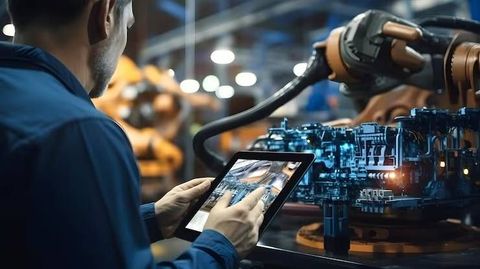
Some forklift production facilities use industrial robots, computer-controlled machining, automated welding, and digital inspection systems. These technologies can help maintain repeatable manufacturing processes when correctly configured and monitored.
Electronic sensors and connected equipment can also support fleet monitoring, maintenance planning, and operating data collection. However, connected systems introduce considerations involving software reliability, cybersecurity, data access, and compatibility. Automation does not replace the need for trained personnel, physical inspections, or established quality procedures.
Energy Efficiency and Lifecycle Planning
Manufacturers may evaluate energy use, component durability, repairability, and material recovery across a forklift's lifecycle. Electric powertrains, efficient hydraulic systems, and improved control strategies can affect energy consumption, although results depend on workload, charging practices, operating conditions, and equipment design.
Lifecycle planning also includes battery replacement, parts availability, scheduled maintenance, and eventual equipment retirement. These considerations help organizations understand the longer-term resource requirements associated with different forklift types.
Laws or Policies
Forklift manufacturing and workplace operation are governed by different rules depending on the country, product category, and intended use. Regulations may cover machinery safety, electrical systems, emissions, workplace training, lifting capacity, manufacturing quality, and conformity assessment. A standard is not automatically a legal requirement in every country; its status depends on applicable regulations and contracts.
Forklift Manufacturing Requirements in India
In India, relevant requirements may include applicable industrial safety legislation, factory rules, machinery-related regulations, environmental requirements, and standards issued by the Bureau of Indian Standards (BIS). The Occupational Safety, Health and Working Conditions Code, 2020, is part of India's labour-law framework, with applicability depending on its commencement and the relevant implementing provisions.
Manufacturers and operators must determine which requirements apply to their products and facilities. These may address safe equipment design, workplace conditions, inspection procedures, and the handling of industrial machinery. Applicable emissions requirements may also affect forklifts using combustion engines.
International Safety and Quality Standards
International standards provide technical guidance for forklift design, stability, testing, and safe operation. ISO 3691 is a relevant series addressing safety requirements and verification for industrial trucks, with different parts covering particular truck categories and applications.
Other standards may address electrical safety, machinery risk assessment, battery systems, and quality management. ISO 9001, for example, describes requirements for quality management systems; it is not, by itself, proof that an individual forklift is safe or suitable for every application.
In the United States, Occupational Safety and Health Administration (OSHA) requirements address powered industrial truck operation in covered workplaces. Requirements can include operator training, evaluation, safe operating practices, and equipment maintenance. Manufacturers and users must follow the rules applicable to their jurisdiction rather than assuming one country's standards apply worldwide.
Tools and Resources
Technical references and manufacturing tools help engineers, quality teams, equipment operators, and industrial organizations understand forklift design and production. The appropriate resource depends on whether the task involves engineering, compliance, inspection, or equipment selection.
Engineering and Manufacturing Tools
Computer-aided design (CAD) software helps engineers develop component drawings, three-dimensional assemblies, and manufacturing specifications. Computer-aided engineering tools can support structural analysis, load calculations, and simulations, although results depend on model assumptions and validation.
Manufacturing execution systems and production planning software can track assembly stages, component records, and inspection results. Calibration equipment, torque tools, dimensional measuring instruments, and welding inspection methods support checks during production. Their use depends on the component, process, and applicable inspection plan.
Standards and Safety Resources
The following resources provide technical and regulatory information:
Bureau of Indian Standards: Information about Indian standards and relevant conformity requirements.
International Organization for Standardization (ISO): Published standards relating to industrial trucks, quality management, and machinery safety.
Occupational Safety and Health Administration (OSHA): US guidance and regulations concerning powered industrial trucks and workplace safety.
Manufacturer manuals: Model-specific instructions for rated capacity, approved attachments, inspections, and operating limits.
Inspection and maintenance records: Documents that track equipment condition, repairs, component replacement, and recurring defects.
Production Quality Checklist
A forklift manufacturing quality plan may include material verification, weld inspection, dimensional checks, hydraulic leak testing, electrical testing, braking checks, and functional evaluation. Load and stability tests must follow the relevant procedures, approved equipment configurations, and applicable standards.
Traceability records can connect components and assemblies with inspection results and production batches. Final documentation may include rated capacity information, operating instructions, maintenance requirements, and applicable conformity records. Testing should be carried out by qualified personnel using suitable procedures and equipment.
FAQs
What does a forklift manufacturer produce?
A forklift manufacturer designs and assembles industrial trucks, including electric, diesel, LPG, reach, and specialized models. Production may involve chassis fabrication, mast assembly, hydraulic systems, powertrain integration, electrical installation, and final testing.
What are the main forklift manufacturing processes?
Typical processes include engineering design, material preparation, cutting, welding, machining, painting, component assembly, electrical and hydraulic installation, and final inspection. The sequence varies according to the model and production facility.
Which safety standards apply to forklift manufacturers?
Applicable standards depend on the market and equipment category. ISO 3691 covers safety requirements for industrial trucks, while national regulations may impose additional design, testing, documentation, and conformity obligations.
How do manufacturers test forklift quality?
Quality testing may include structural and weld inspections, hydraulic checks, braking tests, electrical verification, functional trials, and assessments of rated capacity and stability. Specific tests depend on the design and applicable requirements.
What is the difference between electric and diesel forklifts?
Electric forklifts use batteries and electric motors, while diesel forklifts use combustion engines. Electric models avoid direct exhaust emissions during operation, whereas diesel models produce exhaust and require suitable controls for their operating environment.
Conclusion
Forklift manufacturing combines mechanical design, power systems, hydraulics, structural fabrication, assembly, and quality testing. Equipment types vary according to load requirements, working environments, energy sources, and specialized tasks. Applicable regulations and technical standards shape manufacturing procedures, documentation, and workplace safety. Electrification, automation, and digital monitoring continue to influence production methods, while inspection and maintenance remain important throughout the equipment lifecycle.