Smart Factory Tools Guide: Automation Technologies, Functions, Uses and Selection Factors
A Smart Factory Tools Guide explains the automation technologies, digital systems, industrial equipment, and software used to monitor and improve manufacturing operations. Smart factories developed from traditional production facilities that relied on manual work, mechanical equipment, and separate control systems. As computers, industrial sensors, and network technologies advanced, manufacturers began connecting machines and production data to coordinate activities more effectively.
Context
A Smart Factory Tools Guide explains the automation technologies, digital systems, industrial equipment, and software used to monitor and improve manufacturing operations. Smart factories developed from traditional production facilities that relied on manual work, mechanical equipment, and separate control systems. As computers, industrial sensors, and network technologies advanced, manufacturers began connecting machines and production data to coordinate activities more effectively.
A smart factory combines physical machinery with digital technologies to collect information, monitor production, and support operational decisions. These systems may include programmable logic controllers, industrial robots, machine vision, manufacturing software, and connected sensors. The exact combination depends on the products being manufactured, the size of the facility, and its production requirements.
Understanding Smart Factory Tools
Smart factory tools perform different functions across a manufacturing process. Some control machine movements, while others collect measurements, organize production schedules, inspect product quality, or identify equipment problems.
Common smart factory technologies include:
Industrial sensors: Measure temperature, pressure, vibration, position, or other operating conditions.
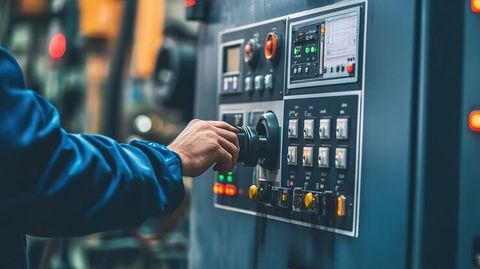
Programmable logic controllers (PLCs): Control machines and automated processes according to programmed instructions.
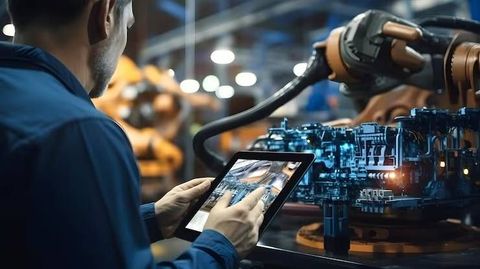
Industrial robots: Perform repetitive operations such as material handling, welding, assembly, and packaging.
Machine vision systems: Use cameras and image-processing software to inspect components, identify defects, or guide robotic movements.
Manufacturing execution systems (MES): Track production activities, material movement, and work orders on the factory floor.
Industrial Internet of Things (IIoT) platforms: Connect equipment and gather operational information for monitoring and analysis.
Supervisory control and data acquisition (SCADA) systems: Monitor industrial processes and provide operators with information about equipment and process conditions.
These tools can operate independently or work together through compatible industrial networks. Their integration determines how effectively information moves between machines, operators, and production management systems.
Importance
Smart factory tools matter because manufacturers must coordinate equipment, materials, workers, quality checks, and production schedules. When information is stored in separate systems or collected manually, identifying delays and recurring problems can become difficult. Connected technologies can provide a clearer view of production activities and help operators respond to changing conditions.
These tools affect manufacturers across industries, including automotive production, electronics, food processing, pharmaceuticals, metalworking, and packaging. Their practical value depends on the operating environment, the accuracy of collected information, and the ability of staff to interpret it correctly.
Main Functions of Smart Factory Automation
Smart factory automation supports several important manufacturing activities. The functions can be grouped into the following areas:
Process control: PLCs and industrial control systems manage machine sequences, operating conditions, and production steps.
Equipment monitoring: Sensors and monitoring platforms track operating conditions and identify unusual changes.
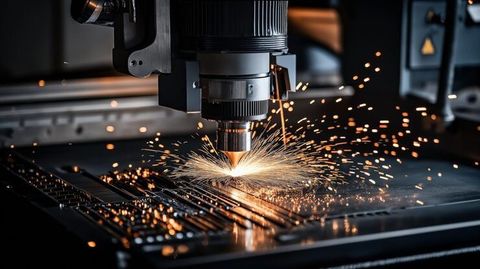
Quality inspection: Machine vision and measurement instruments examine products for visible defects or dimensional differences.
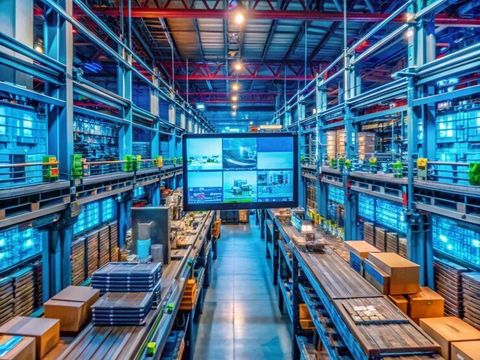
Production coordination: MES platforms organize work orders, track progress, and record production information.
Predictive maintenance: Data analysis helps identify patterns that may indicate developing equipment problems.
Material movement: Robots, conveyors, and automated guided vehicles move components between production areas.
Energy monitoring: Connected meters and analytics tools help facilities understand electricity consumption and equipment usage.
Automation does not remove the need for human oversight. Operators, engineers, and maintenance teams remain important for interpreting results, managing exceptions, and responding to safety concerns.
Comparing Smart Factory Tools
The following table summarizes common technologies and their primary uses.
| Tool | Main function | Typical application |
|---|---|---|
| Industrial sensors | Measure operating conditions | Temperature and vibration monitoring |
| PLCs | Control automated sequences | Machine operation |
| Industrial robots | Perform programmed movements | Welding and assembly |
| Machine vision | Analyze images | Product inspection |
| MES software | Track production activities | Work-order monitoring |
| SCADA systems | Supervise industrial processes | Process monitoring |
| IIoT platforms | Connect equipment data | Factory-wide monitoring |
| Digital twins | Represent physical systems digitally | Process simulation and analysis |
A digital twin may use equipment data and computer models to represent a machine, production line, or facility. Its accuracy depends on the quality of the model and the information available. Not every factory requires all these technologies, and smaller facilities may begin with a limited number of connected machines.
Recent Updates
Smart factory development from 2024 through 2026 has increasingly focused on artificial intelligence, connected industrial data, cybersecurity, and flexible automation. Manufacturers are exploring ways to combine existing control systems with newer analytics platforms rather than replacing every machine at once. Adoption varies according to technical requirements, available infrastructure, workforce capabilities, and investment priorities.
Artificial Intelligence and Industrial Automation
Artificial intelligence is being applied to manufacturing tasks such as visual inspection, equipment monitoring, production forecasting, and analysis of machine performance. Models can identify patterns in large datasets that may be difficult to detect through manual review. However, their accuracy depends on representative data, appropriate testing, and ongoing monitoring.
Some manufacturers are also exploring AI agents that can assist with information retrieval, workflow coordination, and analysis of production events. Such systems require suitable access controls and human oversight, particularly when their outputs influence machine settings or operational decisions.
Edge Computing and Digital Twins
Edge computing processes data close to the equipment that generates it. This can reduce dependence on sending every measurement to a distant computing platform and may support applications that require timely responses. The choice between local processing and cloud computing depends on latency, connectivity, security, and data-management requirements.
Digital twins are also being used to model production equipment and processes. Engineers can use these models to examine operating scenarios, assess design changes, or study production bottlenecks. The results remain dependent on the assumptions and data used to build each model.
Industrial Cybersecurity
Connected factories face cybersecurity risks because production equipment and business networks may exchange information. Current industrial security practices emphasize network separation, controlled remote access, secure configurations, software updates, and continuous monitoring. Manufacturers increasingly consider cybersecurity during system design rather than treating it as a separate issue after installation.
Laws or Policies
Smart factory tools are influenced by workplace safety requirements, electrical and machinery standards, environmental regulations, cybersecurity practices, and data-protection rules. The applicable requirements depend on the country, industry, equipment type, and intended use of the technology.
Industrial Safety and Machinery Standards in India
In India, manufacturing facilities must consider applicable occupational safety, factory, electrical, and environmental requirements. The Occupational Safety, Health and Working Conditions Code, 2020, forms part of India's labour-law framework, while the requirements applicable to a particular facility depend on implementation arrangements and relevant rules.
Machinery installation and operation may also involve applicable Bureau of Indian Standards (BIS) standards, electrical safety requirements, and industry-specific regulations. Standards concerning industrial robot safety, machinery guarding, emergency stops, and risk assessment can help guide safe system design. The precise standard or legal obligation depends on the machinery and its operating context.
Data Protection and Industrial Cybersecurity
Smart factory systems may collect operational records, employee information, maintenance logs, and access credentials. India's Digital Personal Data Protection Act, 2023, and its associated rules and commencement arrangements are relevant when systems process personal data within the scope of the applicable provisions. Industrial equipment data that does not identify an individual may raise different legal considerations.
Cybersecurity frameworks such as the National Institute of Standards and Technology (NIST) Cybersecurity Framework and the ISA/IEC 62443 series provide guidance for managing information security risks in industrial environments. These frameworks can support risk assessment and technical planning, but their use does not automatically establish compliance with every applicable law.
Manufacturers should evaluate safety, data handling, system access, and maintenance requirements before integrating new automation technologies. Regulatory obligations should be checked against current national and local requirements.
Tools and Resources
Several technical platforms and reference resources help manufacturers understand, evaluate, and manage smart factory tools. Their suitability depends on equipment compatibility, production needs, technical skills, and existing infrastructure.
Industrial Software and Monitoring Platforms
PLC programming environments help engineers configure and maintain machine-control logic. SCADA platforms support process monitoring, alarms, and operational data visualization, while MES software tracks production activities and work orders. IIoT platforms connect equipment information for analysis across machines or facilities.
Examples of industrial technology ecosystems include Siemens automation software, Rockwell Automation platforms, and Microsoft Azure industrial and IoT technologies. Specific features, compatibility, and deployment requirements differ between products and configurations.
Engineering and Cybersecurity Resources
The following resources provide technical information and planning guidance:
Bureau of Indian Standards (BIS): Information about Indian standards relevant to industrial equipment and safety.
NIST: Cybersecurity frameworks and risk-management guidance.
ISA: Industrial automation and control-system standards and technical resources.
IEC: International electrotechnical and industrial automation standards.
Industrial equipment manuals: Installation instructions, compatibility details, maintenance schedules, and safety requirements.
Smart Factory Tool Selection Factors
Selecting automation technologies involves examining the problem to be addressed rather than choosing equipment solely because it is new. Important considerations include:
Operational need: Define whether the priority is quality inspection, production tracking, equipment monitoring, or material handling.
Compatibility: Check whether the technology works with existing machines, networks, and data formats.
Scalability: Consider whether the system can accommodate additional equipment or production lines.
Safety: Evaluate machine guarding, emergency procedures, operator access, and foreseeable failure conditions.
Cybersecurity: Review authentication, software updates, network access, and remote connections.
Maintenance and skills: Assess training needs, technical support arrangements, spare parts, and ongoing system management.
Data quality: Confirm that sensors and software produce reliable information suitable for the intended analysis.
A structured evaluation can help manufacturers compare technical requirements and operational limitations before making changes to a production environment.
FAQs
What are smart factory tools?
Smart factory tools are industrial technologies that monitor, control, connect, or analyze manufacturing operations. Examples include sensors, PLCs, industrial robots, MES software, SCADA systems, and IIoT platforms.
How do smart factory automation technologies work?
These technologies collect information from equipment, execute programmed controls, or analyze production data. Connected systems can exchange information to coordinate manufacturing activities, depending on their integration and configuration.
Which smart factory tools are used for predictive maintenance?
Industrial sensors, condition-monitoring platforms, data analytics, and machine-learning systems can support predictive maintenance. They analyze operating patterns to identify signs of possible equipment deterioration, although results depend on data quality and model accuracy.
What factors matter when selecting smart factory tools?
Important factors include production requirements, compatibility, safety, cybersecurity, data quality, scalability, maintenance needs, and staff training. The appropriate combination depends on the facility and the processes being automated.
How do smart factory tools improve manufacturing quality?
Machine vision, sensors, measurement systems, and production-tracking software can help detect defects, monitor process conditions, and record inspection results. Their effectiveness depends on suitable configuration, calibration, and consistent operating procedures.
Conclusion
Smart factory tools combine automation equipment, industrial software, connected sensors, and data analysis to support modern manufacturing operations. Their functions range from machine control and quality inspection to production tracking, predictive maintenance, and cybersecurity monitoring. Effective implementation depends on compatibility, reliable data, workplace safety, and appropriate staff training. Industry standards and applicable regulations also shape how these technologies are selected, integrated, and maintained.