Electric Power Converters An Explore Guide to Basics, Working Principles, and Key Knowledge
Electric power converters are fundamental components in modern electrical and electronic systems. They are designed to change electrical energy from one form to another so that power can be safely, efficiently, and accurately used by different devices and systems.
Electrical energy is generated, transmitted, and distributed in standardized forms, typically alternating current at fixed voltage and frequency. However, most electronic equipment, industrial machinery, renewable energy systems, and digital infrastructure require power in different formats. This mismatch is the core reason electric power converters exist.
Electric power converters operate within the broader discipline of power electronics, using semiconductor switching devices to control voltage, current, and frequency. From simple household electronics to advanced grid-connected systems, power conversion ensures compatibility between energy sources and electrical loads.
Common conversion types include:
-
AC to DC conversion for electronic circuits
-
DC to AC conversion for grid integration
-
DC to DC voltage regulation
-
AC to AC frequency or voltage modification
Without power converters, modern electrical infrastructure would lack flexibility, scalability, and efficiency.
Importance: Why Electric Power Converters Matter Today
Electric power converters play a critical role in today’s energy-driven world. Their importance has increased significantly due to digitalization, electrification, and the expansion of renewable energy technologies.
Modern industries rely on high-efficiency power conversion systems to maintain stable operations. Manufacturing plants, data centers, transportation systems, and communication networks all depend on controlled electrical power.
Key reasons electric power converters matter:
-
Enable efficient energy usage across diverse applications
-
Improve electrical safety and system reliability
-
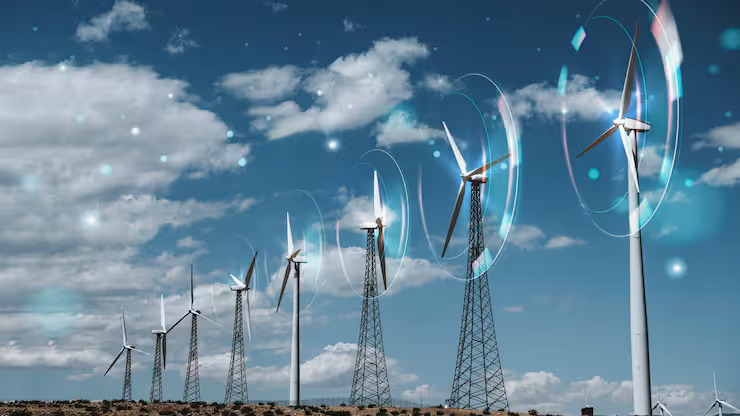
Support renewable energy integration into power networks
-
Enhance performance of industrial automation systems
-
Reduce energy losses during power transformation
Electric power converters directly affect:
-
Electrical engineers and power system designers
-
Industrial automation and control environments
-
Energy infrastructure planners
-
Renewable power generation systems
-
Consumer and industrial electronics ecosystems
By addressing voltage instability, frequency mismatch, and power quality issues, electric power converters solve essential challenges in both small-scale and large-scale electrical systems.
Working Principles of Electric Power Converters
Electric power converters operate by rapidly switching semiconductor devices on and off, shaping electrical waveforms to achieve the desired output. This controlled switching is governed by advanced power electronics design principles.
Core Operating Elements
-
Power semiconductor devices such as IGBTs, MOSFETs, and diodes
-
Control circuits using pulse-width modulation (PWM)
-
Filtering components like inductors and capacitors
-
Feedback systems for voltage and current regulation
Basic Conversion Process Overview
| Input Power Type | Conversion Method | Output Power Type |
|---|---|---|
| AC | Rectification | DC |
| DC | Inversion | AC |
| DC | Switching control | Regulated DC |
| AC | Frequency control | Modified AC |
Recent Updates and Trends in Electric Power Conversion
The past year has seen significant developments in electric power converter technology, driven by energy efficiency targets and advanced semiconductor innovation.
In 2025, wide-bandgap semiconductors such as silicon carbide (SiC) and gallium nitride (GaN) gained broader adoption in industrial power electronics. These materials allow higher switching frequencies, lower losses, and compact converter designs.
Digital power management also advanced in late 2024, with intelligent control algorithms improving real-time monitoring and adaptive regulation. These developments enhanced converter reliability in variable operating conditions.
Another notable trend is the increasing use of modular power converters. Modular architectures improve scalability and simplify maintenance in large electrical systems.
Key technology trends include:
-
High-frequency power conversion techniques
-
Improved thermal management methods
-
Enhanced power density and compact layouts
-
Integration with smart grid and energy storage systems
-
Advanced simulation-driven converter design
These updates reflect the growing demand for efficient, flexible, and intelligent power conversion solutions.
Laws, Standards, and Policy Influence on Power Converters
Electric power converters are influenced by national and international regulations that focus on safety, efficiency, and electromagnetic compatibility.
Governments and regulatory bodies enforce technical standards to ensure converters operate safely within electrical networks and do not cause interference or energy waste.
Common regulatory focus areas include:
-
Electrical safety compliance
-
Energy efficiency benchmarks
-
Harmonic distortion limits
-
Electromagnetic interference control
-
Grid interconnection requirements
In many countries, energy efficiency directives encourage the use of advanced power electronics to reduce transmission and conversion losses. Grid codes also define how power converters interact with utility networks, especially in renewable energy and distributed generation systems.
Compliance with technical standards ensures that electric power converters support long-term grid stability and sustainable energy goals.
Tools and Resources for Learning and Design
A wide range of technical tools and knowledge resources support understanding and designing electric power converters.
Commonly Used Tools and Resources
-
Power electronics simulation software for converter modeling
-
Switching loss and efficiency calculators
-
Thermal analysis tools for semiconductor devices
-
Harmonic analysis and power quality assessment tools
-
Educational platforms focused on power electronics fundamentals
Design and Analysis Reference Table
| Tool Category | Primary Purpose |
|---|---|
| Simulation Software | Converter topology validation |
| Efficiency Calculators | Loss estimation and optimization |
| Thermal Modeling Tools | Heat dissipation analysis |
| Control Design Tools | PWM and feedback tuning |
| Reference Databases | Component characteristics |
Frequently Asked Questions About Electric Power Converters
What is the main function of an electric power converter?
An electric power converter changes electrical energy from one form to another to match the requirements of specific equipment or systems.
How do power converters improve energy efficiency?
They minimize losses by optimizing voltage, current, and frequency, ensuring energy is delivered in the most usable form.
What is the difference between a converter and an inverter?
An inverter is a specific type of power converter that changes DC power into AC power, while converters include multiple transformation types.
Why are semiconductor devices important in power converters?
They enable fast switching, precise control, and efficient power handling within compact designs.
Are power converters used in renewable energy systems?
Yes, they are essential for adapting variable energy output to stable electrical systems.
Conclusion: Key Knowledge Takeaways
Electric power converters are a cornerstone of modern electrical and energy systems. They enable compatibility between power sources and loads, support efficient energy utilization, and ensure system stability across industries.
With ongoing advancements in power electronics, digital control, and semiconductor materials, electric power converters continue to evolve in performance and capability. Their role in energy infrastructure, industrial systems, and future electrical networks remains critical.
A solid understanding of power conversion principles, regulations, and tools helps professionals and learners navigate this essential field with confidence.