Fabric Finishing Machines An Explore Guide with Basics, Insights, Facts and Helpful Knowledge
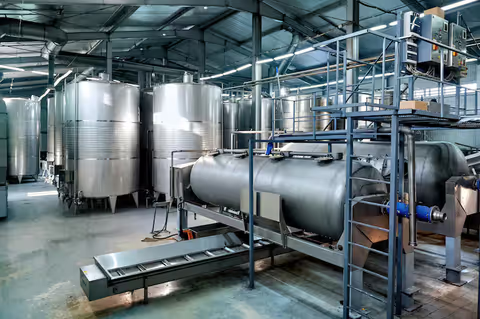
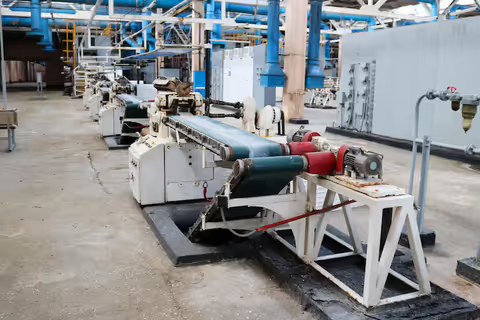
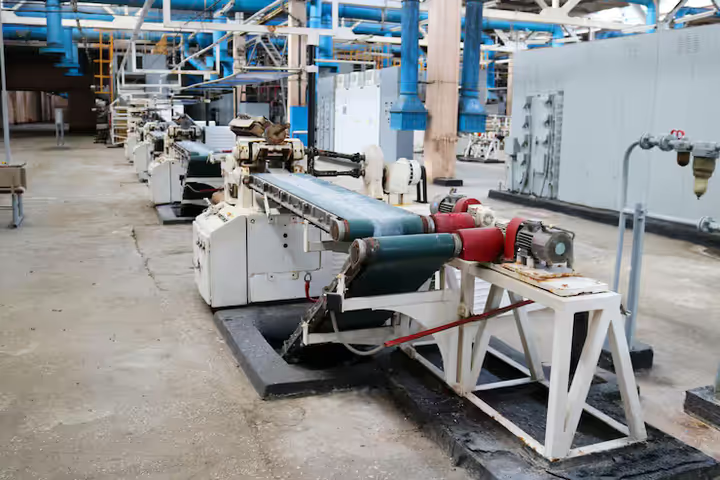
Fabric finishing machines refer to specialized industrial equipment used after weaving or knitting to enhance textile appearance, performance, durability, and comfort. Textile finishing technology includes processes such as washing, dye fixation, calendaring, coating, chemical treatment, heat setting, and surface modification.
These machines exist because raw textile materials often lack the smoothness, stability, texture consistency, or performance characteristics expected in modern apparel, technical textiles, upholstery fabrics, and industrial materials. Fabric finishing equipment helps standardize quality while adapting textiles for diverse environmental and functional requirements.
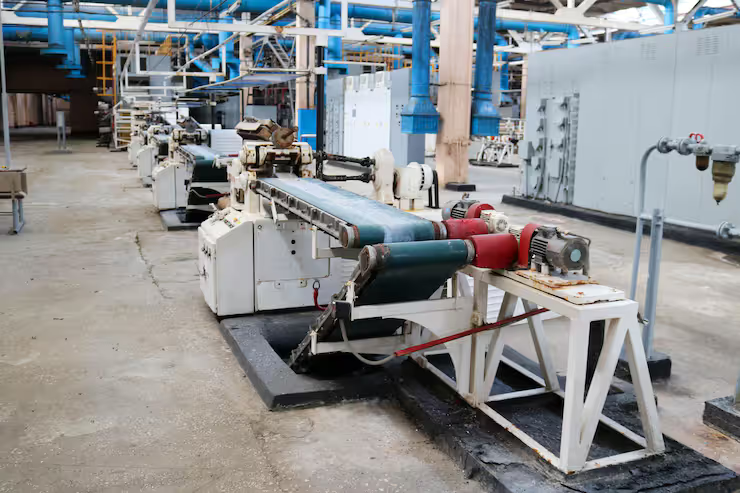
Common examples include:
-
Stenter machines for heat setting and width control
-
Calendaring machines for smooth texture
-
Compacting machines improving dimensional stability
-
Coating and laminating equipment for functional textiles
-
Softening and chemical finishing systems
Industrial fabric processing has evolved from manual techniques into automated, sensor-driven machinery supporting precision textile engineering.
Why Fabric Finishing Technology Matters Today
Textile manufacturing increasingly focuses on quality consistency, environmental responsibility, and performance enhancement. Fabric finishing machines directly influence these outcomes.
Key industry benefits include:
-
Enhanced textile durability and usability
-
Improved aesthetic appeal and comfort
-
Consistent product specifications
-
Reduced material waste through automation
-
Capability to produce technical textiles
This technology affects multiple sectors:
| Industry Sector | Role of Fabric Finishing |
|---|---|
| Apparel manufacturing | Texture control, wrinkle resistance |
| Automotive textiles | Strength and heat stability |
| Medical textiles | Sterilization compatibility |
| Home furnishings | Surface finish and durability |
| Technical textiles | Functional coatings |
Modern textile finishing technology also addresses emerging performance expectations such as moisture management, antimicrobial finishes, UV protection, and eco-friendly processing techniques.
Automation in fabric treatment equipment supports productivity while minimizing operational variability, making it valuable for both established manufacturers and developing textile clusters.
Recent Developments and Textile Finishing Trends
The past year has seen notable developments in textile machinery innovation and sustainability initiatives. Although changes vary by region, several global patterns are evident.
Important textile finishing trends observed recently include:
-
Smart textile machinery integration (2024–2025): Increased adoption of IoT sensors for process monitoring, predictive maintenance, and efficiency optimization.
-
Sustainable textile finishing adoption: Growth in water-saving chemical processes, low-energy curing systems, and recyclable finishing agents.
-
Digital textile finishing controls: Touchscreen interfaces, AI-driven quality monitoring, and real-time analytics improving fabric consistency.
-
Eco-compliance emphasis: Textile producers aligning finishing practices with environmental certification frameworks.
A simplified overview of current innovation directions:
| Trend Area | Impact on Textile Finishing |
|---|---|
| Automation expansion | Precision and consistency |
| Environmental compliance | Reduced resource footprint |
| Digital monitoring | Real-time process control |
| Functional textiles | Advanced performance fabrics |
These developments highlight the transition from purely mechanical textile finishing to data-supported industrial fabric processing systems.
Regulations, Standards, and Government Policies Affecting Textile Finishing
Textile finishing operations operate within regulatory frameworks designed to ensure environmental safety, worker protection, and quality standards. In India, where textile manufacturing plays a major economic role, several policy influences shape textile finishing technology adoption.
Relevant regulatory considerations include:
-
Environmental guidelines under pollution control authorities addressing water discharge and chemical usage
-
Textile modernization initiatives encouraging advanced machinery adoption
-
Sustainability certifications influencing finishing chemical selection
-
Workplace safety standards for industrial textile equipment
Government initiatives supporting textile infrastructure modernization and sustainability indirectly encourage adoption of modern fabric finishing machines with improved efficiency and environmental performance.
Internationally, textile finishing also aligns with:
-
Chemical safety frameworks
-
Wastewater treatment standards
-
Product labeling compliance
Compliance improves textile export competitiveness while maintaining environmental accountability.
Useful Tools and Resources for Textile Finishing Knowledge
Professionals and learners benefit from digital tools, simulation platforms, and industry resources supporting textile finishing understanding.
Helpful resources include:
-
Textile process simulation software for finishing optimization
-
Machinery manufacturer technical documentation portals
-
Industry association publications and standards libraries
-
Environmental compliance calculators for textile processing
-
Textile engineering research journals and knowledge hubs
Common digital support tools include:
| Resource Type | Purpose |
|---|---|
| Textile simulation platforms | Process analysis |
| Machinery diagnostics dashboards | Equipment performance tracking |
| Sustainability assessment tools | Environmental evaluation |
| Fabric testing databases | Quality benchmarking |
Frequently Asked Questions About Fabric Finishing Machines
What is the main function of fabric finishing machines?
Fabric finishing machines enhance textile appearance, texture, durability, and functional characteristics after initial fabric formation. They ensure consistent quality and desired performance properties.
Are finishing machines only used for clothing fabrics?
No. Industrial fabric processing applies to technical textiles, automotive fabrics, medical materials, home furnishings, and performance textiles beyond apparel manufacturing.
How does automation improve textile finishing?
Automation supports process precision, reduces variability, improves efficiency, and enables real-time monitoring for better fabric quality consistency.
Do fabric finishing processes impact environmental sustainability?
Yes. Modern sustainable textile finishing techniques focus on reduced water consumption, safer chemical usage, and energy-efficient machinery.
What skills help in understanding textile finishing technology?
Knowledge of textile engineering, material science, industrial automation, and environmental compliance frameworks supports deeper understanding.
Conclusion: Fabric Finishing Machines in Modern Textile Progress
Fabric finishing machines represent a crucial stage in textile production, bridging raw fabric creation and final material performance. Advances in textile finishing technology continue shaping how textiles look, feel, and function across industries.
Automation, sustainability priorities, digital monitoring, and regulatory compliance are driving innovation in industrial fabric processing. As textile demand grows alongside performance expectations, finishing machinery remains essential for delivering consistent, high-quality materials.
Understanding these technologies helps professionals, researchers, and learners stay informed about evolving textile manufacturing practices, emerging innovations, and responsible production approaches within the global textile ecosystem.