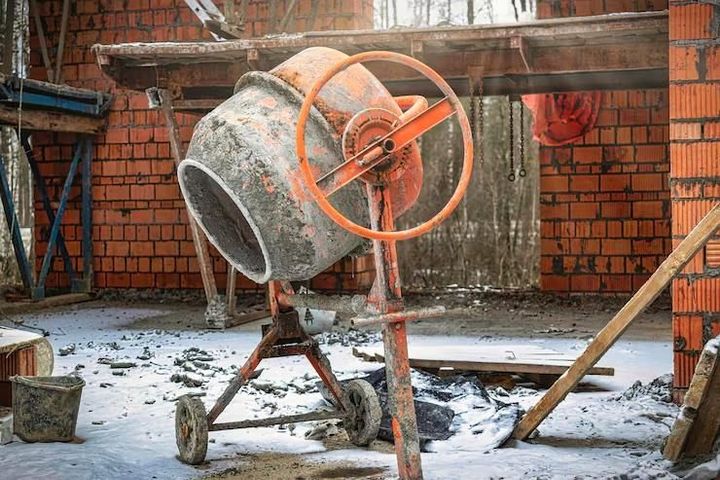
Concrete Mixers Guide: Designs, Mixing Methods, Capacity, Applications and Key Features
Concrete is one of the most widely used materials in construction, combining cement, aggregates, water, and sometimes other approved ingredients into a workable mixture. A concrete mixer is a machine designed to combine these materials more uniformly than manual mixing. Concrete mixers are used across building construction, road projects, foundations, infrastructure work, precast production, and smaller construction activities.
A concrete mixers guide helps explain the different mixer designs, mixing methods, capacity ranges, applications, and important operating features. Understanding these differences makes it easier to understand how concrete is prepared and why different projects use different types of mixing equipment.
Context
What Is a Concrete Mixer?
A concrete mixer is mechanical equipment that combines cementitious material, sand, coarse aggregate, and water to produce fresh concrete. The machine normally includes a mixing chamber, rotating components, a drive system, loading arrangements, and a discharge mechanism.
Concrete mixers developed as construction projects became larger and required more consistent mixing. Manual mixing can be suitable for limited quantities, but mechanical equipment allows larger batches to be combined using a controlled process.
In India, batch-type concrete mixers are covered by Indian Standard IS 1791:2020, while IS 4634:1991 describes a method for testing the performance of batch-type concrete mixers. The Bureau of Indian Standards reviewed IS 1791 in 2026 and IS 4634 in 2024.
How Concrete Mixers Work
The basic process involves loading measured materials into the mixer, combining them through mechanical movement, adding water according to the specified mix design, and discharging the fresh concrete.
The mixing action helps distribute cement paste and aggregate throughout the batch. The actual sequence, mixing duration, water quantity, and material proportions depend on the concrete specification and project requirements.
Importance
Why Concrete Mixing Matters
Concrete quality depends on several factors, including material proportions, moisture, mixing, transportation, placement, and curing. A mixer is therefore one part of a larger concrete production process.
Consistent mixing helps distribute the ingredients throughout a batch. Poorly mixed material can contain areas with different concentrations of cement, aggregate, or water, which can affect workability and the uniformity of the finished concrete.
Concrete mixers are used by construction teams working on:
- Residential and commercial buildings
- Foundations and structural elements
- Roads and pavements
- Bridges and infrastructure projects
- Drainage and utility structures
- Precast concrete production
- Small-scale repair and construction work
Factors That Affect Mixer Selection
Different projects require different equipment characteristics. Important factors include batch capacity, material type, mixing method, available power, loading arrangement, discharge method, site conditions, and expected production volume.
A smaller mixer may be suitable where batches are limited and the equipment needs to be moved around a site. Larger stationary or plant-based systems can handle higher production volumes and may integrate weighing, batching, and automated controls.
Recent Updates
Standards and Equipment Development
Recent developments in India have included continued review and updating of standards related to concrete and construction machinery. BIS lists IS 1791:2020 as reviewed in 2026, covering general requirements for batch-type concrete mixers. IS 383:2016, which covers coarse and fine aggregates for concrete, was reviewed in 2025. IS 456:2000, the code covering plain and reinforced concrete, was also reviewed in 2025.
These reviews show continued attention to construction materials, machinery, testing, and concrete practices. Another relevant standard, IS 4925:2023, covers concrete batching and mixing plants and replaced the earlier 2004 edition.
Movement Toward Controlled Mixing
Construction projects are also using more controlled batching and mixing processes. Automated weighing, electronic controls, material monitoring, and batching systems can help reduce variation between batches when they are properly configured and operated.
The broader trend is toward improved process control rather than relying only on manual measurement. This is particularly relevant for larger construction projects and concrete batching plants.
Laws or Policies
Indian Standards
In India, concrete mixers and related concrete production equipment can be affected by applicable Indian Standards. IS 1791:2020 provides general requirements for batch-type concrete mixers, while IS 4634 provides a method for evaluating mixer performance. IS 4925:2023 covers concrete batching and mixing plants.
Standards should be considered together with project specifications, applicable building requirements, workplace rules, and instructions from the relevant authority.
Workplace Safety Requirements
Workplace safety is also relevant when concrete mixers are operated on construction sites. India's Occupational Safety, Health and Working Conditions framework covers construction workplaces and establishes duties concerning safe working conditions.
The Ministry of Labour and Employment published the Occupational Safety, Health and Working Conditions (Central) Rules, 2026. The rules apply across India and came into force upon publication, replacing several earlier central rules covered by the framework.
For a particular project, applicable central and state requirements can vary according to the establishment, construction activity, workforce, and location. Operators should follow the applicable safety procedures, machine instructions, guarding requirements, and site controls.
Tools and Resources
Standards and Technical References
The Bureau of Indian Standards' Know Your Standard portal allows users to search Indian Standards by IS number or keyword. It also provides access to information such as amendments, testing schemes, laboratories, and related standard information.
Useful references for concrete mixing include:
- IS 1791 for batch-type concrete mixers
- IS 4634 for performance testing of batch-type mixers
- IS 4925 for concrete batching and mixing plants
- IS 456 for plain and reinforced concrete
- IS 383 for coarse and fine aggregates
Mix Design and Measurement Tools
Concrete mix design worksheets and calculators can help users understand quantities of cementitious material, aggregates, water, and other components. Such tools should be treated as calculation aids rather than substitutes for an approved project mix design.
For public works, Central Public Works Department specifications also provide technical information about mechanical batch-type concrete mixers and mixing practices. The CPWD specifications describe equipment requirements and procedures intended to produce uniform concrete.
Concrete Mixer Capacity
Mixer capacity can be described in terms of nominal batch size or other manufacturer-specified measurements. The actual quantity of mixed concrete depends on the design of the equipment and its operating limits.
| Mixer Category | Typical Application | Main Characteristic |
|---|---|---|
| Small portable mixer | Small construction activities | Easy movement around a site |
| Medium batch mixer | Building and general construction | Moderate batch production |
| Large batch mixer | Larger construction projects | Higher batch volume |
| Pan mixer | Concrete and specialized mixtures | Pan-shaped mixing chamber |
| Twin-shaft mixer | Concrete production plants | Intensive mechanical mixing |
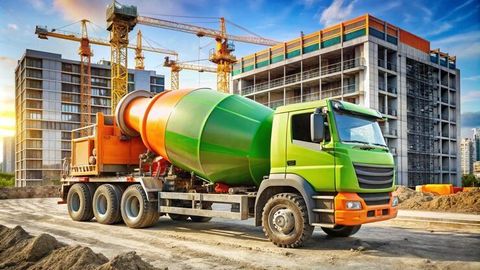
| Truck mixer | Transporting and mixing concrete | Mixing during transportation |
The figures in a manufacturer's specification should be checked carefully because nominal capacity, loading capacity, and output volume can describe different measurements.
FAQs
What is a concrete mixer?
A concrete mixer is mechanical equipment that combines cement, aggregates, water, and other approved components into a uniform fresh concrete mixture. Different mixer designs are used depending on the required batch size and application.
What are the main types of concrete mixers?
Common types include drum mixers, pan mixers, twin-shaft mixers, and truck mixers. Drum mixers use a rotating drum, while pan mixers use a rotating mixing mechanism inside a pan-shaped chamber. Larger plants may use continuous or high-capacity mixing systems.
How is concrete mixer capacity measured?
Concrete mixer capacity is commonly specified according to the manufacturer's nominal batch or mixing capacity. The usable quantity can differ from the physical volume of the drum or chamber, so technical specifications should be checked before interpreting a capacity figure.
What mixing methods are used in concrete mixers?
Batch mixing is widely used, where measured materials are loaded, mixed, and discharged as separate batches. Continuous mixing is another method in which materials are fed and mixed continuously under controlled conditions.
What standards apply to concrete mixers in India?
IS 1791:2020 covers general requirements for batch-type concrete mixers, while IS 4634 covers performance testing for batch-type mixers. Concrete batching and mixing plants are covered by IS 4925:2023. Applicable workplace and construction requirements should also be considered.
Conclusion
Concrete mixers provide a mechanical method for combining concrete ingredients into a consistent mixture. Their designs range from portable batch mixers to larger plant-based systems and truck mixers, with capacity and mixing methods varying according to application. Indian Standards such as IS 1791, IS 4634, and IS 4925 provide relevant technical references for mixers and batching systems. Current construction practices also place greater attention on controlled batching, equipment safety, testing, and workplace requirements.

You May Also Like