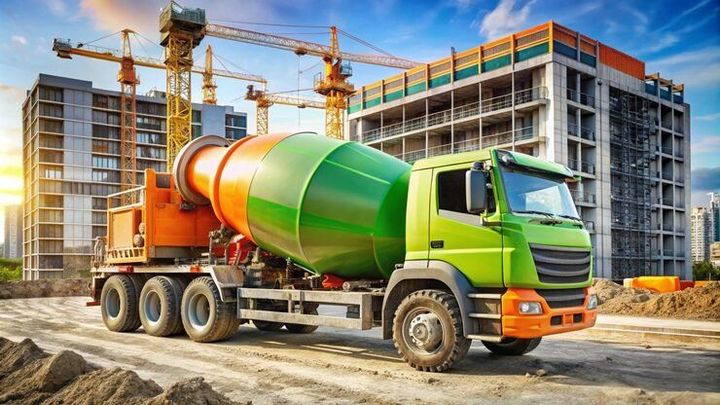
Ready-Mix Transport Mixers Explained: Types, Components, Working Methods, Uses and Features
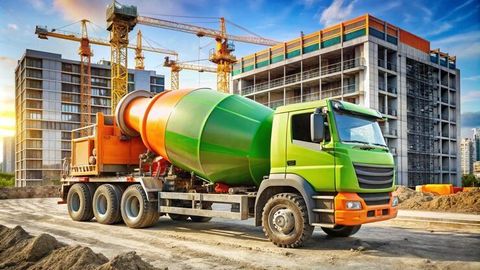
Ready-mix transport mixers are specialized vehicles used to carry freshly mixed concrete from a batching plant to a construction site while keeping the mixture sufficiently uniform during transportation. They are commonly known as transit mixers or truck mixers. A typical vehicle combines a road-going truck chassis with a rotating drum, drive mechanism, water and control systems, and a discharge arrangement.
The use of ready-mixed concrete developed alongside larger construction projects that required consistent concrete production and transportation over practical distances. Instead of preparing every batch at the construction site, concrete can be proportioned and mixed at a dedicated plant and then transported to the location where it will be placed. Indian Standard IS 4926 covers practices for ready-mixed concrete production and supply, including transportation considerations.
The transport mixer plays an important part in this process. Its rotating drum helps maintain the concrete in a workable condition and reduces the possibility of segregation while the vehicle is travelling. Once the vehicle reaches the construction location, the drum rotation and discharge arrangement help move the concrete toward the required placement area.
Importance
Why transport mixers are used
Fresh concrete contains cementitious materials, aggregates, water, and, where specified, chemical admixtures. These ingredients need to remain reasonably uniform until the concrete is placed. Transportation therefore needs to limit segregation, contamination, and unnecessary changes in the mixture.
Transport mixers are particularly relevant for projects where substantial quantities of concrete need to move from a central batching plant to different construction locations. They can be used for residential structures, commercial buildings, bridges, roads, foundations, industrial facilities, drainage structures, and other concrete construction.
The equipment also supports a more organized workflow because concrete production and construction activities can be separated. A batching plant can prepare concrete while transport mixers move individual loads between the plant and site.
Problems addressed during transportation
Several practical issues can arise while moving fresh concrete:
- Separation of coarse aggregate from the cement paste
- Loss of water through evaporation or leakage
- Delays between mixing and placement
- Restricted access to the construction area
- Difficulty maintaining uniformity during road transportation
- Need for controlled discharge at the site
Indian guidance for concrete transportation emphasizes moving mixed concrete as rapidly as practical while preventing segregation or loss of ingredients. Transit mixers, buckets, and pumping systems are among the transportation methods recognized for concrete placement.
Recent Updates
Equipment and construction trends
From 2024 through 2026, developments around concrete transportation have generally followed wider trends in construction equipment, vehicle regulation, automation, and environmental management. Transport mixers are increasingly being integrated with digital monitoring systems that can record vehicle location, drum rotation, loading information, and transportation intervals.
Another trend is greater attention to vehicle emissions and alternative power technologies. India's Ministry of Road Transport and Highways issued provisions in 2025 concerning type approval and conformity of production for construction equipment vehicles using alternative or cleaner fuels. These provisions are part of a wider regulatory movement toward cleaner construction equipment.
Concrete production itself is also receiving increased attention through updated standards and technical guidance. BIS currently lists IS 4925:2023 for concrete batching and mixing plant specifications, while IS 4926 remains a key reference for ready-mixed concrete practices.
Digital monitoring
Fleet-management and telematics systems can provide information about vehicle position, operating time, drum activity, and transportation conditions. Such systems can help construction teams coordinate arrival and concrete placement without relying entirely on manual communication.
Automation is also appearing in batching plants and construction logistics. Digital batching controls, electronic records, sensor-based monitoring, and integrated plant-to-vehicle information systems can improve the visibility of material movement.
Laws or Policies
Indian standards for ready-mixed concrete
In India, ready-mixed concrete production and transportation are influenced by Indian Standards published by the Bureau of Indian Standards. IS 4926 is the principal code of practice associated with ready-mixed concrete. BIS documentation also identifies requirements concerning the use of truck mixers and transportation of mixed concrete.
BIS guidance indicates that concrete is generally transported in a truck mixer unless an alternative arrangement is accepted. It also identifies a two-hour discharge period from loading as a general requirement under the referenced certification checklist, with provisions for longer periods under specified circumstances such as the use of retarding admixtures or suitable weather conditions.
Vehicle regulations
A transport mixer operating on public roads is also subject to applicable motor-vehicle requirements. Vehicle registration, roadworthiness, insurance, pollution-control documentation, and transport permits can apply depending on the vehicle classification and state requirements.
India's Parivahan portal identifies the Motor Vehicles Act, 1988 and Central Motor Vehicles Rules, 1989 as key references for vehicle registration and related requirements. It also notes that some documents may vary according to state requirements.
Construction projects may additionally follow project specifications, engineering requirements, environmental rules, local traffic restrictions, and site-safety procedures. The exact requirements can vary according to the project, vehicle category, location, and authority involved.
Tools and Resources
Main mixer components
A ready-mix transport mixer contains several systems that work together. The following table summarizes common components and their functions:
| Component | Main function |
|---|---|
| Rotating drum | Holds and agitates fresh concrete |
| Spiral blades | Move concrete within the drum |
| Hydraulic drive | Provides drum rotation |
| Chassis | Supports the mixer and other equipment |
| Water tank | Holds water for specified operational requirements |
| Charging hopper | Directs concrete ingredients or mixed material into the drum |
| Discharge chute | Guides concrete from the drum to the placement area |
| Control system | Regulates drum rotation and operating functions |
| Support frame | Connects the drum assembly to the vehicle chassis |
| Drum rollers | Support the rotating drum |
Types of transport mixers
Transport mixers can be classified according to their operating arrangement and application.
Drum truck mixers use a rotating drum mounted on a truck chassis. They are widely associated with conventional ready-mixed concrete transportation.
Agitating mixers are designed primarily to keep already mixed concrete moving during transportation. The drum rotates at a relatively controlled rate to maintain uniformity.
Volumetric or mobile mixing systems carry separate concrete ingredients and combine them closer to the placement location. Their operation differs from conventional ready-mix transport because mixing takes place within the vehicle.
Front-discharge mixers have the discharge arrangement toward the front of the vehicle, while rear-discharge mixers release concrete from the rear. The choice depends on vehicle design, site layout, access, and project requirements.
Working method
The process normally begins at a batching plant. Cementitious materials, aggregates, water, and other specified ingredients are proportioned according to the concrete mix design.
The prepared concrete then enters the transport mixer. The drum rotates while the vehicle travels, helping maintain the mixture's uniformity. The required drum rotation pattern depends on the mixer design and operating instructions.
After reaching the construction site, the mixer is positioned close to the placement area. The discharge chute is arranged according to the site conditions, and concrete is released from the drum. Where necessary, the concrete can then be transferred through pumps, chutes, buckets, or other approved placement equipment.
Capacity and operating factors
Transport mixer capacity varies by vehicle and drum design. Common considerations include:
- Drum volume
- Rated payload
- Vehicle dimensions
- Road restrictions
- Drum rotation speed
- Travel distance
- Concrete workability
- Site access
- Discharge arrangement
Capacity should not be considered separately from vehicle weight limits and local transportation requirements. The actual usable quantity also depends on the concrete mix, vehicle configuration, and project specifications.
Tools and reference resources
Several resources can help readers understand or manage concrete transportation. The BIS Know Your Standard portal provides access to information about Indian Standards, amendments, testing information, and related documentation.
Construction teams may also use concrete mix-design documentation, batching records, delivery records, vehicle inspection checklists, drum-maintenance schedules, GPS fleet platforms, and concrete quantity calculators. These tools support planning and record keeping, although the appropriate calculation method depends on the particular project.
FAQs
What is a ready-mix transport mixer?
A ready-mix transport mixer is a truck equipped with a rotating drum designed to carry freshly mixed concrete from a batching plant to a construction site while helping maintain a reasonably uniform mixture.
How does a transport mixer work?
Concrete is loaded into the rotating drum after proportioning and mixing. The drum continues rotating during transportation, and the concrete is later discharged through a chute or another suitable arrangement at the construction site.
What are the main components of a ready-mix transport mixer?
Important components include the rotating drum, spiral blades, hydraulic drive, chassis, charging hopper, discharge chute, support frame, drum rollers, control system, and associated water and operating equipment.
How long can concrete remain in a transport mixer?
The applicable period depends on the concrete specification, weather, admixtures, transportation conditions, and governing requirements. The BIS certification checklist associated with IS 4926 identifies discharge within two hours of loading as a general requirement, while recognizing circumstances where a longer period may be permitted.
Where are ready-mix transport mixers used?
They are used for many construction activities, including buildings, foundations, roads, bridges, industrial structures, drainage works, and other projects requiring transportation of freshly mixed concrete from a batching facility to a placement location.
Conclusion
Ready-mix transport mixers connect concrete batching plants with construction sites by carrying and agitating freshly mixed concrete during transportation. Their main systems include the rotating drum, blades, hydraulic drive, chassis, charging arrangement, and discharge equipment. Current developments are increasingly connected with digital monitoring, construction-equipment technology, and vehicle-emission requirements. In India, standards such as IS 4926 and applicable motor-vehicle regulations provide important references for ready-mixed concrete transportation and road operation.