Wood Drilling Machines Explained: Types, Components, Uses, Benefits and Working Principles
Wood drilling machines are tools designed to create accurate holes in wood, plywood, boards, panels, and other wood-based materials. A wood drilling machine uses a rotating drill bit to remove material and form a hole of a selected diameter and depth. These machines are used in furniture production, cabinet making, carpentry, woodworking workshops, construction-related tasks, and manufacturing environments.
What Is a Wood Drilling Machine?
A wood drilling machine is a mechanical or computer-controlled device used to make holes in wooden materials. Unlike a basic handheld drill, a fixed wood drilling machine can provide controlled movement, consistent drilling depth, and repeatable hole placement.
The basic drilling process involves securing a workpiece, positioning a suitable drill bit, rotating the bit at an appropriate speed, and moving the bit into the material. The cutting edges remove small pieces of wood as the hole is formed.
How Wood Drilling Developed
Early woodworking relied heavily on hand-operated tools. As furniture production and woodworking became more organized, mechanical drilling equipment was developed to reduce repetitive manual work and improve consistency.
Modern machines range from simple bench-mounted equipment to automated CNC woodworking systems. The choice depends on the material, hole pattern, production volume, required accuracy, and available workspace.
Where Wood Drilling Machines Are Used
Common applications include:
- Furniture and cabinet manufacturing
- Door and window production
- Shelving and storage systems
- Wooden panel preparation
- Decorative woodworking
- Construction-related carpentry
- Custom woodworking
- CNC-based panel processing
Importance
Why Accurate Drilling Matters
Accurate holes are important when wooden parts need to be joined with screws, dowels, hinges, pins, or other components. Incorrect hole position can affect alignment and may create unnecessary damage to the workpiece.
A controlled drilling process also helps maintain consistent hole diameter and depth. This is particularly useful when many similar parts must be processed.
Problems Addressed by Wood Drilling Machines
Manual drilling can become difficult when many holes must be created in the same position on multiple workpieces. Variations in angle, pressure, depth, and positioning can result in differences between parts.
Wood drilling machines address these challenges through fixed guides, adjustable tables, depth controls, jigs, multiple spindles, or computerized positioning systems. Some machines can create several holes during one operating cycle.
Benefits of Controlled Drilling
The main benefits can include:
- More consistent hole placement
- Controlled drilling depth
- Repeatable processing
- Reduced physical effort during repetitive work
- Compatibility with different drill-bit sizes
- Ability to process multiple holes efficiently
- Integration with automated woodworking systems
These benefits depend on the machine design, material, drill bit, operating settings, and working method.
Types of Wood Drilling Machines
Bench Drilling Machines
Bench drilling machines are compact units mounted on a workbench or similar surface. They generally include a motor, spindle, drill chuck, column, table, and depth-control mechanism.
They are suitable for workshops where moderate drilling capacity and controlled positioning are required.
Floor Drilling Machines
Floor-mounted machines provide a larger working structure than bench models. Their height and table arrangement can accommodate larger workpieces.
These machines are commonly used where a stable drilling platform is required and workspace allows a permanent installation.
Multiple-Spindle Drilling Machines
Multiple-spindle machines contain several drilling spindles arranged to create several holes in one operation. They are useful when a repeated hole pattern is needed across many similar components.
The spindle arrangement can vary depending on the machine and application.
CNC Wood Drilling Machines
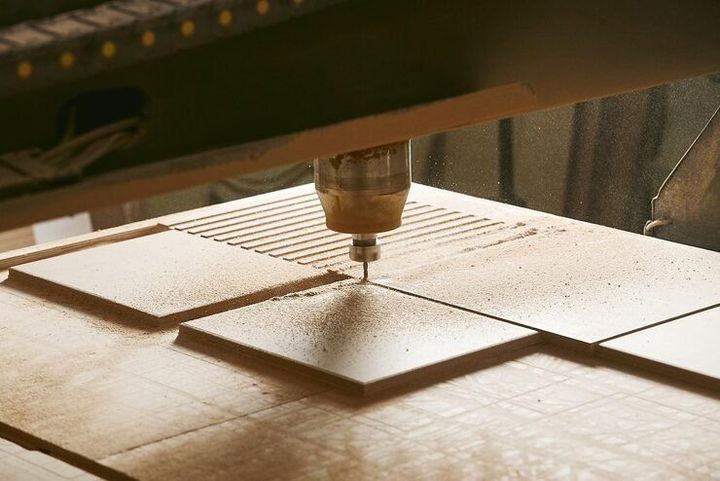
CNC wood drilling machines use computer-controlled movement to position the cutting tool. Digital instructions can control drilling locations, patterns, depth, and other operating parameters.
They are commonly associated with automated furniture and panel processing, where repeatable hole patterns are required.
Horizontal Wood Drilling Machines
Horizontal drilling machines position the spindle horizontally rather than vertically. This arrangement can be useful for certain cabinet components, panels, joints, and specialized woodworking operations.
Doweling Machines
Doweling machines are designed specifically for creating holes used with wooden dowels. Some models use multiple drilling heads to create several accurately spaced holes at once.
Main Components of a Wood Drilling Machine
Motor and Drive System
The motor provides rotational power to the spindle. Depending on the machine design, power may be transferred through belts, gears, direct-drive arrangements, or electronic systems.
Spindle and Chuck
The spindle rotates the drill bit, while the chuck holds the bit in position. Different machines use different chuck designs depending on the bit type and operating requirements.
Drill Bit
The drill bit performs the actual cutting operation. Woodworking uses several bit designs, including twist bits, brad-point bits, Forstner bits, and specialized boring tools.
Work Table
The work table supports the wooden material during drilling. Some tables can be adjusted for height, angle, or position.
Depth Stop
A depth stop limits how far the drill bit travels into the workpiece. This helps create holes with more consistent depth.
Control System
Basic machines may use simple switches and manual controls, while automated equipment can use digital controls and programmable systems.
Working Principles
Preparing the Workpiece
The wood is first positioned on the machine table or fixture. It should remain stable during drilling because movement can affect hole location and cutting quality.
Selecting the Drill Bit
The drill bit should match the required hole diameter, material, and drilling operation. Different bits are designed for different hole shapes and cutting conditions.
Setting Drilling Parameters
The operator sets the required drilling depth and machine speed according to the material and tooling. Excessive pressure or unsuitable settings can affect the hole and may increase wear on the cutting tool.
Creating the Hole
When the machine starts, the spindle rotates the drill bit. The bit moves into the wood, cutting and removing material until the required depth is reached.
For CNC equipment, programmed coordinates control where drilling takes place. For manual equipment, the operator controls positioning and movement.
Wood Drilling Machine Types at a Glance
| Machine Type | Main Movement | Common Application | Control Method |
|---|---|---|---|
| Bench Drilling Machine | Vertical | General workshop drilling | Manual |
| Floor Drilling Machine | Vertical | Larger workpieces | Manual |
| Multiple-Spindle Machine | Multiple positions | Repeated hole patterns | Manual or automated |
| CNC Drilling Machine | Programmed axes | Panel and furniture production | Computer controlled |
| Horizontal Drilling Machine | Horizontal | Panels and joints | Manual or automated |
| Doweling Machine | Dedicated drilling pattern | Dowel joints | Manual or automated |
Recent Updates
Automation and CNC Integration
From 2024 through 2026, woodworking equipment has continued moving toward greater automation and digital control. CNC-based drilling systems can integrate drilling with broader panel-processing workflows, reducing the need for repeated manual positioning.
Digital controls also allow machine settings and drilling patterns to be configured more systematically. This trend is particularly relevant to furniture and panel manufacturing environments.
Improved Machine Safety
Machine safety has received continued attention through standards covering guards, controls, emergency stopping arrangements, risk reduction, and other protective measures. The Bureau of Indian Standards maintains standards related to woodworking machinery safety, including IS 18057 parts covering several categories of woodworking machines.
Greater Focus on Dust Management
Wood drilling produces chips and fine particles. Modern woodworking environments increasingly consider dust extraction as part of workplace planning. Effective extraction can help control airborne wood particles and keep the working area cleaner.
Laws or Policies
Indian Standards and Machine Safety
In India, woodworking equipment can be influenced by Indian Standards covering machinery design, testing, guarding, and safety practices. BIS maintains standards related to woodworking machinery and general machine safety. Its current standards information includes woodworking machinery safety provisions and related machine-tool safety references.
BIS also provides a “Know Your Standard” platform where users can search Indian Standards by standard number or keyword and review related documents and information.
Workplace Safety
Workplaces using drilling machinery should follow applicable occupational safety requirements, manufacturer instructions, electrical safety practices, machine guarding requirements, and local workplace rules. Requirements can vary according to the type of workplace, machinery, and operating environment.
Safety arrangements commonly include appropriate guards, emergency stopping systems, clear controls, suitable training, and procedures for handling wood dust and machine hazards. BIS machine-safety guidance also discusses guarding, emergency stop systems, control systems, and worker awareness.
Tools and Resources
Drill-Bit Selection Guides
Woodworking reference guides can help users understand differences among brad-point, Forstner, twist, and other drill-bit designs. These resources generally explain suitable materials, hole shapes, and drilling methods.
Measurement and Layout Tools
Tape measures, rulers, squares, marking gauges, calipers, and depth gauges can help establish accurate drilling positions. For repeated hole patterns, jigs and templates can provide additional positioning control.
CNC Design Software
CNC woodworking operations may use CAD or CAM software to create drilling patterns and machine instructions. These programs allow hole locations and dimensions to be represented digitally before processing.
Standards and Technical Resources
The BIS website provides access to Indian Standards information, including machine-safety references and standard-search tools. Its current certification information also describes machinery safety certification processes and related guidance.
FAQs
What is a wood drilling machine used for?
A wood drilling machine is used to create controlled holes in wood, plywood, panels, and other wood-based materials. Applications include furniture assembly, cabinet components, dowel joints, and panel processing.
What are the main types of wood drilling machines?
Common types include bench drilling machines, floor drilling machines, multiple-spindle machines, horizontal drilling machines, doweling machines, and CNC wood drilling machines. Each type has a different arrangement and operating method.
How does a CNC wood drilling machine work?
A CNC wood drilling machine uses programmed instructions to control the position and movement of the drilling tool. The system can repeat specified hole locations and patterns with computer-controlled positioning.
Which components are important in a wood drilling machine?
Important components include the motor, drive system, spindle, chuck, drill bit, work table, depth stop, controls, and safety features. Their arrangement varies according to machine type.
Why is machine safety important when using wood drilling machines?
Rotating tools, moving machine parts, wood chips, and airborne dust can create workplace hazards. Proper guarding, stable workpiece positioning, suitable operating procedures, and applicable protective measures help reduce these risks.
Conclusion
Wood drilling machines are designed to create controlled holes in wood and wood-based materials for applications ranging from carpentry to automated panel production. Their main types include bench, floor, multiple-spindle, horizontal, doweling, and CNC machines, with each design serving different drilling requirements. Modern developments increasingly involve digital controls, automation, improved safety features, and integrated dust-management practices. Understanding machine components, operating principles, applicable standards, and safe working methods provides a useful foundation for understanding wood drilling technology.