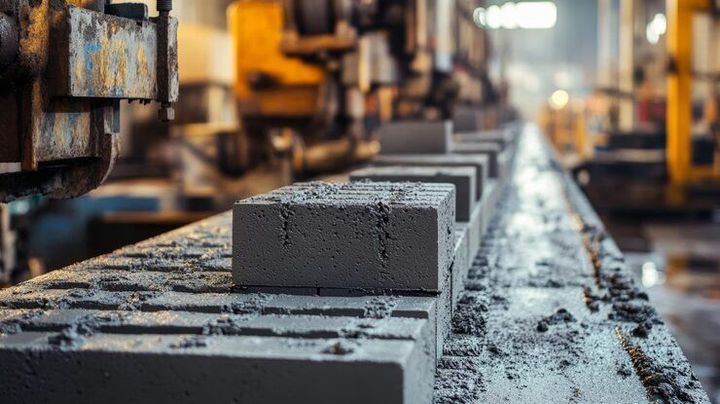
Block Making Machines Guide: Working Principles, Machine Types, Uses and Production Methods
Block making machines are equipment used to manufacture construction blocks from materials such as cement, aggregates, sand, water, fly ash, and other suitable ingredients. Depending on the machine and material mixture, they can produce solid blocks, hollow blocks, paving blocks, lightweight blocks, and other masonry units.
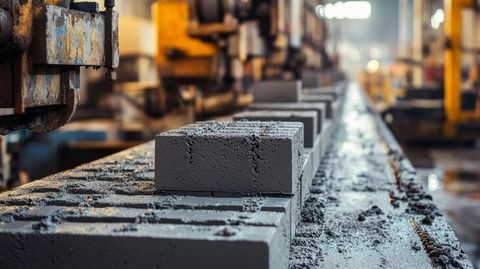
The basic idea behind a block making machine is straightforward. A measured mixture is placed into a mould, compacted through pressure or vibration, shaped into a block, and then allowed to harden under controlled conditions. The process helps produce blocks with relatively consistent dimensions and physical characteristics.
Block production has developed from simple manual moulding methods toward mechanical and automated systems. Modern equipment can combine material feeding, mixing, mould filling, vibration, compression, block removal, and handling into a connected production sequence.
Why block making machines are used
Traditional masonry units can be produced manually, but consistent production requires careful control of material proportions, mould filling, compaction, curing, and handling. Machines are used to make these stages more systematic.
A typical production arrangement may include:
- Material storage for cement, aggregates, sand, or supplementary materials
- A batching or weighing system
- A concrete mixer
- A block making machine
- Moulds for different block shapes and sizes
- Pallets or production trays
- Curing and storage areas
- Material handling equipment
The exact arrangement depends on the block type, production volume, available space, and degree of automation.
Importance
Block making machines are relevant to residential buildings, commercial structures, industrial facilities, boundary walls, pavements, landscaping, and other construction applications. Blocks provide standardized masonry units that can be arranged to form walls and other building elements.
The quality of a finished block depends on more than the machine itself. Aggregate grading, moisture content, binder proportion, compaction, mould condition, curing, and handling can all affect the final product.
Problems addressed by mechanized production
Manual production can involve variations in block dimensions, density, compaction, and surface appearance. Mechanical production can make the forming stage more repeatable when materials and operating conditions are properly controlled.
For construction applications, dimensional consistency can also make laying blocks more predictable. However, the appropriate block type depends on the structural design and the requirements of the particular building.
Common block categories
| Block type | General characteristics | Common applications |
|---|---|---|
| Solid concrete block | Dense body with no large internal cavities | Walls, foundations and masonry applications |
| Hollow concrete block | Internal cavities reduce material volume and weight | Walls and partitions |
| Lightweight concrete block | Uses lightweight aggregates or other lightweight materials | Internal and external wall applications |
| Paving block | Designed for surface paving | Walkways, courtyards and paved areas |
| Fly ash-based block | Incorporates fly ash within a suitable mixture | Masonry and construction applications |
| AAC block | Aerated structure with many small pores | Wall construction and partitions |
Indian Standards cover several categories of concrete masonry units. BIS identifies IS 2185 as the main series covering concrete masonry units, including hollow and solid blocks, lightweight blocks, autoclaved cellular aerated concrete blocks, and preformed foam cellular concrete blocks.
Recent Updates
From 2024 through 2026, developments around block production in India have included continued attention to construction material standards, ash utilization, waste management, testing, and resource efficiency.
BIS records show that several standards related to concrete masonry and block construction were reviewed during this period. These include IS 2185 parts covering hollow and solid concrete blocks, lightweight blocks, and autoclaved cellular aerated concrete blocks. IS 2572, which addresses construction of hollow and solid concrete block masonry, was also reviewed.
Greater use of supplementary materials
Fly ash remains relevant to block manufacturing because Indian environmental rules recognize ash-based products such as bricks, blocks, tiles, panels, and other construction materials as permitted utilization routes. The Ash Utilisation Notification and subsequent amendments continue to provide a regulatory framework for utilization of ash from coal- and lignite-based thermal power plants.
Increasing attention to testing
Testing and verification are also becoming important parts of organized block production. BIS laboratory information lists testing areas such as dimensions, density, compressive strength, water absorption, drying shrinkage, moisture movement, and marking for relevant concrete masonry standards.
Automation and process control
Another general development is the movement toward more integrated production systems. Automated material feeding, controlled batching, hydraulic compression, vibration systems, pallet handling, and production monitoring can reduce the amount of manual intervention required during forming and handling.
Automation does not remove the need for quality control. Material consistency, mould condition, curing, equipment maintenance, and testing remain important parts of block production.
Laws or Policies
In India, block manufacturing is affected by construction standards, environmental requirements, local building rules, and regulations concerning industrial activities. The exact requirements can differ according to the location, block type, production process, and scale of the facility.
Indian Standards for concrete blocks
IS 2185 is particularly relevant to concrete masonry units. Its different parts address hollow and solid concrete blocks, lightweight concrete blocks, autoclaved cellular aerated concrete blocks, and preformed foam cellular concrete blocks. BIS records show recent reviews of several of these standards.
IS 2572 provides a code of practice for construction using hollow and solid concrete block masonry. These standards help define characteristics and construction practices that can be considered when designing, manufacturing, testing, and using masonry units.
Fly ash utilization requirements
India's Ash Utilisation Notification establishes requirements for utilization of ash generated by coal- or lignite-based thermal power plants. The framework identifies fly ash-based products including bricks, blocks, tiles, fibre cement sheets, pipes, boards, and panels among the permitted utilization routes.
The framework also includes provisions concerning the use of ash-based products in construction projects in specified circumstances and assigns responsibilities to thermal power plants and relevant authorities. Amendments have been issued to the framework, including changes published in 2024.
Environmental and waste rules
Block manufacturing facilities may also need to consider requirements related to air emissions, dust, water use, waste handling, land use, and local environmental permissions. Construction and demolition waste rules can also become relevant where recycled materials or construction waste are incorporated into a production process.
Because requirements can vary between states and local authorities, the applicable rules should be checked against the specific production location and manufacturing process.
Tools and Resources
Several technical resources can help readers understand block making machines and the production process.
BIS standards resources
The Bureau of Indian Standards provides information about relevant Indian Standards, including concrete masonry specifications and construction practices. The BIS standards database can be used to identify the standard applicable to a particular block category.
Material testing resources
Laboratory testing can examine characteristics such as compressive strength, water absorption, density, dimensions, drying shrinkage, and moisture movement. These measurements help determine whether manufactured blocks meet the relevant technical requirements.
Production planning tools
A basic production worksheet can track:
- Raw material quantities
- Moisture content
- Batch proportions
- Mixing time
- Number of mould cycles
- Block dimensions
- Curing duration
- Test results
- Rejected or damaged units
- Equipment maintenance activities
Block quantity calculators
Construction calculators can estimate the number of blocks required for a wall when wall dimensions and block dimensions are known. Such calculations normally need adjustments for openings, joints, cutting, and the particular block design.
Machine documentation
Manufacturer manuals and machine specifications can explain mould dimensions, vibration settings, hydraulic systems, production sequences, electrical requirements, and maintenance procedures. These documents should be considered alongside applicable standards rather than treated as substitutes for construction codes.
FAQs
What is a block making machine?
A block making machine is equipment that forms construction blocks by placing a prepared material mixture into moulds and compacting it through methods such as vibration, pressure, or both. Different moulds can produce different block shapes and dimensions.
How does a concrete block making machine work?
A concrete block making machine generally follows several stages: material batching, mixing, mould filling, vibration or compression, block removal, and curing. The exact sequence depends on the machine design and type of block being produced.
What types of blocks can block making machines produce?
Depending on the mould and production system, machines can produce solid concrete blocks, hollow concrete blocks, paving blocks, lightweight blocks, and certain specialized masonry units. Some systems are designed around a particular block family, while others can accommodate interchangeable moulds.
What materials are used in block production?
Common materials include cement, aggregates, sand, and water. Depending on the block type, mixtures may also incorporate fly ash, lightweight aggregates, or other approved materials. The appropriate composition depends on the required properties and applicable technical standard.
What should be checked when producing concrete blocks?
Important factors include material proportions, aggregate grading, moisture, mould dimensions, compaction, block dimensions, curing, handling, and laboratory test results. Relevant Indian Standards should be consulted when blocks are produced for applications governed by those standards.
Conclusion
Block making machines provide a mechanical method for shaping construction mixtures into standardized masonry units. Different machine designs and moulds support the production of solid, hollow, lightweight, paving, and other block types. In India, production and use are influenced by BIS standards, environmental requirements, ash-utilization rules, and local construction regulations. Proper material control, forming, curing, testing, and handling are important factors in understanding the quality and suitability of manufactured blocks.