Pile Drivers Explained: Types, Components, Working Principles, Applications and Benefits
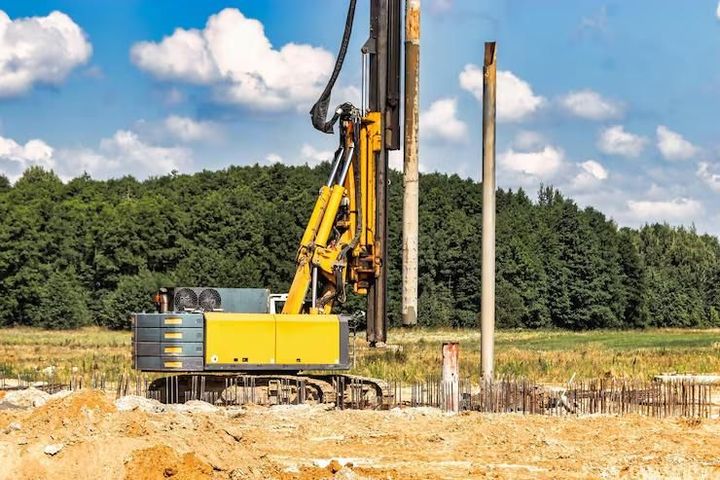
Pile drivers are construction machines used to install piles deep into the ground. A pile is a long structural element made from materials such as steel, concrete, or timber. It transfers the weight of a structure through weak surface soil to stronger layers below or distributes the load through friction along its length.
Pile driving has been used in construction for centuries. Early methods relied on simple lifting frames and heavy weights that were raised and dropped onto timber piles. Modern pile drivers use mechanical, hydraulic, diesel, or vibratory systems to control the installation process more precisely.
Pile drivers are particularly useful when the soil close to the surface cannot provide enough support for a building, bridge, retaining structure, marine facility, or other heavy construction. Instead of depending only on shallow foundations, engineers can use piles to transfer structural loads deeper into the ground.
The basic process involves positioning a pile, aligning the equipment, applying driving force, and monitoring how the pile moves through the soil. The equipment selected depends on the pile material, soil conditions, required depth, surrounding structures, and project design.
What Is a Pile Driver?
A pile driver is a machine or mechanical system designed to place piles into soil. Depending on its design, it may use repeated impact, continuous vibration, hydraulic pressure, or a combination of methods.
Pile drivers are different from drilling rigs because traditional pile driving generally pushes or drives a prefabricated pile into the ground rather than first removing a large volume of soil. Some modern foundation systems combine drilling and driving techniques according to site requirements.
Why Piles Are Used
Piles can be used when shallow soil has limited load-bearing capacity or when a structure requires deeper foundation support. They can also help resist horizontal forces, uplift, and movement caused by environmental conditions.
The load carried by a pile can reach the ground through two main mechanisms: end bearing, where the pile transfers force through its tip to stronger soil or rock, and skin friction, where resistance develops along the pile surface.
Importance
Pile drivers play an important role in foundation construction because many structures are built on soil with varying strength and composition. Urban development, transportation infrastructure, industrial facilities, ports, and other large projects may require foundation systems that extend below the surface.
For the general public, the subject matters because foundation work affects the stability and durability of structures used every day. Buildings, bridges, roads, rail infrastructure, waterfront structures, and utility facilities can all involve deep foundation techniques.
Problems Addressed by Pile Driving
Surface soil may contain loose sand, soft clay, filled ground, or other materials that are not suitable for carrying concentrated structural loads. A properly designed pile foundation can transfer loads to deeper soil layers with more suitable engineering characteristics.
Pile installation can also address situations where structures need resistance against sideways movement. Bridges and marine structures, for example, may experience forces from traffic, water movement, wind, or other environmental conditions.
However, pile driving also creates challenges. Impact systems can generate noise and ground vibration, while equipment movement can require substantial working space. These factors need to be considered during construction planning, especially in populated areas.
Main Applications
Pile drivers can be used in many construction environments, including:
- Building foundations
- Bridge foundations
- Highway and railway infrastructure
- Marine structures and waterfront construction
- Retaining structures
- Industrial facilities
- Transmission and utility structures
- Temporary earth-support systems
- Large infrastructure projects
The exact pile system depends on structural requirements, soil investigation results, environmental conditions, and applicable construction standards.
Pile Driver Types
Different pile driver types use different mechanisms to transfer energy to a pile.
| Pile Driver Type | Main Principle | Typical Characteristic |
|---|---|---|
| Diesel Hammer | Controlled combustion and impact | Repeated impact force |
| Hydraulic Hammer | Hydraulic power and impact | Adjustable operating characteristics |
| Vibratory Driver | Rapid vibration | Reduces soil resistance during installation |
| Drop Hammer | Raised weight and gravity | Simple impact mechanism |
| Hydraulic Press-In System | Static hydraulic force | Low-impact installation approach |
No single type is appropriate for every ground condition. Equipment selection normally considers pile dimensions, soil properties, installation depth, nearby structures, and environmental constraints.
Recent Updates
Pile driving continues to develop alongside broader changes in construction technology. From 2024 through 2026, attention has increasingly focused on equipment monitoring, improved control systems, environmental management, and digital documentation.
Modern piling equipment can incorporate electronic monitoring systems that record information such as installation energy, penetration behavior, operating conditions, and equipment performance. These records can help construction teams compare installation conditions with the project design.
Digital Monitoring
Digital sensors and data systems are becoming more common in foundation construction. They can help record installation information and create a clearer project record than manual observations alone.
Some systems can display operating information in real time, allowing construction personnel to identify changes in pile penetration or equipment behavior. Data interpretation still requires appropriate engineering knowledge because machine readings do not replace site investigation or structural design.
Lower-Impact Installation
Environmental considerations are also influencing pile installation methods. Vibratory systems and hydraulic press-in equipment can provide alternatives to conventional impact driving in certain situations.
The appropriate method depends heavily on soil conditions and project requirements. Reducing noise or vibration may be particularly important near hospitals, schools, residential areas, historic structures, and sensitive equipment.
Updated Foundation Standards
Indian foundation practice continues to reference Bureau of Indian Standards documents covering pile foundations and related investigations. BIS records show that several parts of IS 2911 covering concrete pile foundations were reviewed during 2025, while related foundation and subsurface-investigation standards have also undergone recent review.
This reflects an ongoing emphasis on maintaining technical guidance for foundation design, construction, testing, and site investigation.
Laws or Policies
In India, pile driving can be affected by construction standards, environmental requirements, local permissions, and rules concerning noise and construction activity. The specific requirements can vary according to the project location and type.
Foundation Standards
IS 2911 provides important Indian guidance for the design and construction of pile foundations. Different sections address concrete piles, including driven cast-in-situ piles, bored cast-in-situ piles, driven precast concrete piles, and piles installed in prebored holes.
IS 2911 also includes provisions related to pile load testing. Such standards provide a technical framework, while project-specific engineering decisions depend on soil investigation, structural requirements, and site conditions.
Noise Requirements
Pile driving can produce substantial construction noise, particularly when impact hammers are used. India's Noise Pollution (Regulation and Control) Rules, 2000 establish ambient noise standards for different categories of areas and provide a framework for controlling noise-producing activities. The Central Pollution Control Board maintains information on implementation of these rules.
Construction teams therefore need to consider the surrounding land use and applicable local requirements when planning noisy foundation activities.
Construction and Demolition Waste
India's Environment (Construction and Demolition) Waste Management Rules, 2025 apply to construction and related activities and came into effect from April 2026. The rules establish requirements concerning construction and demolition waste management.
Pile foundation projects may involve materials and construction debris that need to be managed according to applicable project and environmental requirements.
Tools and Resources
Several resources can help readers understand pile driving, foundation engineering, and construction planning.
Engineering Standards
The Bureau of Indian Standards provides access to Indian Standards related to pile foundations, soil investigation, structural design, and testing. IS 2911 is particularly relevant when studying pile foundation design and construction in India.
Pile Driving Calculations
Engineers may use pile capacity calculations, wave-equation analysis, penetration records, and pile load-testing data to evaluate foundation behavior. These methods help connect installation observations with the expected structural performance of a pile foundation.
Soil Investigation Reports
A soil investigation report is another important resource. It may contain information about soil layers, groundwater conditions, soil strength, and other characteristics that influence pile selection and installation.
Monitoring Equipment
Modern pile driving projects can use sensors, data loggers, penetration monitoring systems, vibration meters, and noise monitoring equipment. These tools can provide information about installation conditions and environmental effects.
Construction Reference Platforms
Technical libraries, government standards portals, engineering handbooks, and construction documentation platforms can provide background information. The Bureau of Indian Standards and Central Pollution Control Board websites are useful references for Indian standards and environmental requirements.
FAQs
What is a pile driver?
A pile driver is construction equipment used to install piles into the ground. Depending on the machine, it may use impact energy, vibration, or hydraulic force to move the pile to the required position and depth.
How does a pile driver work?
A pile driver positions a pile vertically and applies force to its upper section. An impact hammer repeatedly strikes the pile, while a vibratory driver creates rapid oscillations that help the pile move through the soil. Hydraulic systems can also apply controlled force.
What are the main types of pile drivers?
Common pile driver types include diesel hammers, hydraulic hammers, vibratory drivers, drop hammers, and hydraulic press-in systems. Each operates differently and may be appropriate for different soil, pile, and environmental conditions.
Where are pile drivers used?
Pile drivers are used for building foundations, bridges, roads, rail infrastructure, marine structures, industrial facilities, retaining systems, and other projects requiring deep foundation support.
Why are pile drivers important in construction?
Pile drivers allow piles to be installed where deeper foundation support is required. Piles can transfer structural loads through end bearing, shaft friction, or a combination of both, depending on the ground and foundation design.
Conclusion
Pile drivers are important construction machines used to install piles for deep foundation systems. They operate through different methods, including impact, vibration, and hydraulic force, with equipment selection depending on soil, pile, structural, and environmental conditions. Recent developments have increased the use of digital monitoring and lower-impact installation approaches, while Indian standards continue to provide technical guidance for pile foundations. Noise control, environmental requirements, site investigation, and construction standards are important considerations when pile driving is planned.