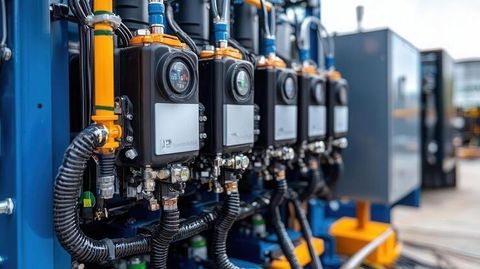
SCADA Systems Guide: Types, Working Principles, Components, Applications and Key Features
SCADA stands for Supervisory Control and Data Acquisition. A SCADA system is a technology framework used to monitor and manage industrial processes, equipment, infrastructure, and facilities from a central location. It collects information from physical equipment and presents that information to operators through software interfaces, allowing them to understand what is happening within a process.
Context
SCADA stands for Supervisory Control and Data Acquisition. A SCADA system is a technology framework used to monitor and manage industrial processes, equipment, infrastructure, and facilities from a central location. It collects information from physical equipment and presents that information to operators through software interfaces, allowing them to understand what is happening within a process.
SCADA technology developed from the need to monitor industrial equipment across large or geographically separated areas. Earlier control environments depended heavily on manual observation and local controls. As industrial facilities became larger and more connected, centralized monitoring became increasingly important.
A typical SCADA environment connects field devices, communication networks, controllers, servers, databases, and operator interfaces. Depending on the application, it may monitor pressure, temperature, voltage, flow, equipment status, production conditions, or other operational information.
How a SCADA System Works
The basic operating process can be understood as a continuous information cycle:
- Sensors and field instruments collect information from equipment.
- PLCs or RTUs receive and process signals from field devices.
- Communication networks transfer information between field locations and supervisory computers.
- SCADA software displays operational information for operators.
- Historical databases store selected information for analysis and reporting.
- Control commands can be sent back to appropriate equipment when the system configuration allows supervisory control.
This arrangement allows operators to view multiple parts of a process without physically visiting every equipment location.
Main Types of SCADA Systems
SCADA systems can be categorized according to their architecture and deployment approach.
A monolithic SCADA system generally uses a centralized architecture. A distributed SCADA system spreads supervisory functions across several computers connected through a network.
A networked SCADA system uses communication networks to connect multiple control locations. Modern environments can also use web-based and cloud-connected architectures, although critical control functions may remain within local or protected industrial networks.
The appropriate architecture depends on the scale of the facility, communication requirements, operational risks, and cybersecurity considerations.
Importance
SCADA systems matter because many industrial and infrastructure processes operate continuously and involve equipment that may be spread across large areas. Operators need a clear way to understand equipment conditions, identify abnormal readings, and maintain awareness of changing process conditions.
SCADA applications can be found in electricity generation and transmission, water and wastewater facilities, manufacturing plants, oil and gas infrastructure, transportation systems, building automation, and other industrial environments.
For everyday users, the technology can indirectly affect utilities and infrastructure they depend on. Monitoring and control systems can help organizations observe processes such as electricity distribution, water treatment, pumping, and industrial production.
Problems Addressed by SCADA
A SCADA system can help address several operational challenges:
- Distance: Equipment located across multiple sites can be monitored from centralized locations.
- Data visibility: Measurements from different devices can be displayed together.
- Event awareness: Alarms can indicate unusual conditions that require attention.
- Historical analysis: Recorded information can help identify changes and recurring patterns.
- Operational coordination: Operators can view related equipment and process conditions in one environment.
- Reporting: Historical information can be organized into reports for operational analysis.
SCADA does not replace every local control mechanism. Instead, it commonly works alongside PLCs, RTUs, sensors, industrial networks, and other control technologies.
Key SCADA Components
| Component | Main Purpose |
|---|---|
| Sensors | Measure physical conditions |
| PLC | Processes control signals and executes programmed logic |
| RTU | Collects and communicates information from remote locations |
| HMI | Presents process information to operators |
| SCADA Server | Coordinates supervisory data and functions |
| Historian | Stores historical process information |
| Communication Network | Transfers information between system components |
| Alarm System | Identifies abnormal or predefined conditions |
Recent Updates
From 2024 through 2026, SCADA development has increasingly focused on cybersecurity, connected industrial environments, remote monitoring, data integration, and modernization of older control infrastructure.
Industrial control systems are receiving continued cybersecurity attention because greater connectivity can increase the number of pathways through which systems may be exposed. CISA continued publishing Industrial Control Systems advisories covering products used across industrial environments, including automation, energy, building, and networked control technologies.
Another noticeable trend is the connection between SCADA, Industrial Internet of Things technologies, analytics, and modern data platforms. These connections can make operational information available to more applications, but they also require careful separation between business networks and industrial control environments.
In India, CERT-In has continued expanding its cybersecurity guidance. Recent guidance has addressed areas including cybersecurity audits, smart-city infrastructure, software security, and emerging technology risks.
SCADA and Industrial Cybersecurity
Cybersecurity is increasingly treated as part of SCADA system design rather than as a separate IT concern. Common areas of attention include network segmentation, identity management, access control, vulnerability monitoring, logging, backup planning, and controlled remote access.
CERT-In's recent industry guidance has emphasized measures such as stronger authentication, role-based access control, patch management, network protection, offline backups, monitoring, supply-chain awareness, incident response planning, and cybersecurity exercises.
Modern SCADA environments may also incorporate technologies such as secure remote access, virtualized infrastructure, edge computing, and analytics. Each additional connection needs to be considered in relation to operational safety and cybersecurity.
Laws or Policies
In India, SCADA systems can be affected by different cybersecurity and sector-specific requirements depending on where and how they are deployed. There is not one single SCADA law covering every industrial application.
CERT-In operates under Section 70B of the Information Technology Act, 2000 and issues cybersecurity directions, advisories, and guidelines concerning information security and incident response. Its 2022 directions remain an important part of India's broader cybersecurity framework.
Power-sector SCADA environments have additional considerations. The Central Electricity Authority has maintained dedicated cyber-security regulations for the electricity sector, and its regulatory work has continued to address cybersecurity requirements for power infrastructure. The CEA published Cyber Security Regulations in 2026.
The CEA has also continued work concerning SCADA within the power sector, including a 2026 report examining the trajectory of indigenisation of SCADA systems.
Organizations operating critical infrastructure may also have additional requirements depending on their sector and designation. Because requirements can differ according to the organization and infrastructure involved, regulatory interpretation should be based on the applicable Indian authority and current rules.
Tools and Resources
Several categories of tools are commonly associated with SCADA planning, monitoring, analysis, and cybersecurity.
SCADA Software and HMI Platforms
SCADA software provides operator interfaces, alarm displays, trend views, dashboards, historical data access, and supervisory functions. HMI platforms provide visual representations of equipment and processes so operators can understand operating conditions.
PLC and RTU Configuration Tools
PLC and RTU engineering environments are used to configure controllers, communication settings, input and output points, and control logic. These tools are normally specific to the controller family being used.
Historian and Data Analysis Tools
A historian stores selected process information over time. Historical data can be used to examine trends, compare operating periods, investigate events, and prepare technical reports.
Cybersecurity Resources
Organizations can consult CERT-In guidance for Indian cybersecurity information and CISA's Industrial Control Systems advisories for information about vulnerabilities affecting industrial technologies. CERT-In publishes current guidelines and advisories through its official website, while CISA maintains an ICS advisory program covering industrial control technologies.
Network monitoring tools, asset inventories, vulnerability-management platforms, log-management systems, and controlled remote-access technologies can also be used as part of an industrial cybersecurity program.
FAQs
What is a SCADA system?
A SCADA system is a supervisory technology used to collect information from industrial equipment and present it to operators. It can also support supervisory control functions when connected equipment and system configuration allow it.
What are the main components of SCADA systems?
Common SCADA components include sensors, PLCs, RTUs, HMIs, SCADA servers, communication networks, alarm systems, and historical databases. The exact configuration varies according to the application.
How does a SCADA system work?
A SCADA system receives information from field devices through controllers and communication networks. The information is processed and displayed through supervisory software, while selected historical information can be stored for later analysis.
Where are SCADA systems used?
SCADA systems are used in industries and infrastructure such as electricity, water treatment, manufacturing, transportation, energy, and large facilities. They are particularly useful where equipment or processes need centralized monitoring.
Why is cybersecurity important for SCADA systems?
SCADA systems may be connected to networks that create additional pathways for unauthorized access. Security practices such as access control, network segmentation, monitoring, vulnerability management, and incident planning help reduce cybersecurity risks.
Conclusion
SCADA systems provide a structured way to collect, display, store, and supervise information from industrial equipment and infrastructure. Their main elements include field devices, PLCs or RTUs, communication networks, operator interfaces, servers, alarms, and historical databases. From 2024 through 2026, cybersecurity, network connectivity, industrial data integration, and modernization have remained important areas of SCADA development. In India, cybersecurity requirements can vary by sector, with additional regulatory considerations applying to areas such as electric power infrastructure.