Hydraulic Machines Explained: Types, Components, Working Principles, Applications and Benefits
Hydraulic machines use pressurized liquid to transfer power and produce controlled movement. A hydraulic machine can lift, press, rotate, clamp, or move a load by using components such as pumps, valves, cylinders, motors, reservoirs, and pipes. The basic idea comes from fluid pressure principles developed through the study of liquids and mechanical force. Today, hydraulic machines appear in construction equipment, manufacturing systems, agricultural machinery, transport equipment, and many other applications.
Context
What Are Hydraulic Machines?
A hydraulic machine converts mechanical energy into hydraulic energy and then uses fluid pressure to create useful motion or force. Most systems use hydraulic oil, although particular applications can use other compatible fluids.
The operating principle is commonly associated with Pascal's law. It states that pressure applied to a confined fluid is transmitted throughout the fluid. This principle allows a relatively small input force to create a larger output force when the system uses cylinders with different effective areas.
Main Types of Hydraulic Machines
Hydraulic machines can be grouped according to the function they perform. Common categories include hydraulic pumps, hydraulic motors, hydraulic cylinders, hydraulic presses, and hydraulic power units.
Hydraulic pumps move fluid through a circuit and create the flow needed for operation. Hydraulic motors convert fluid energy into rotary motion, while hydraulic cylinders convert fluid pressure into linear movement. Hydraulic presses use controlled pressure to apply force to materials.
| Hydraulic Machine | Main Function | Typical Application |
|---|---|---|
| Hydraulic pump | Produces fluid flow | Machinery power circuits |
| Hydraulic cylinder | Creates linear motion | Lifting and pressing |
| Hydraulic motor | Creates rotary motion | Drives and conveyors |
| Hydraulic press | Applies controlled force | Forming and compression |
| Hydraulic power unit | Supplies and controls hydraulic power | Industrial equipment |
Importance
Why Hydraulic Systems Matter
Hydraulic machines matter because they can transmit substantial force through relatively compact components. Their controlled movement makes them useful where lifting, pressing, clamping, positioning, or rotating loads is required.
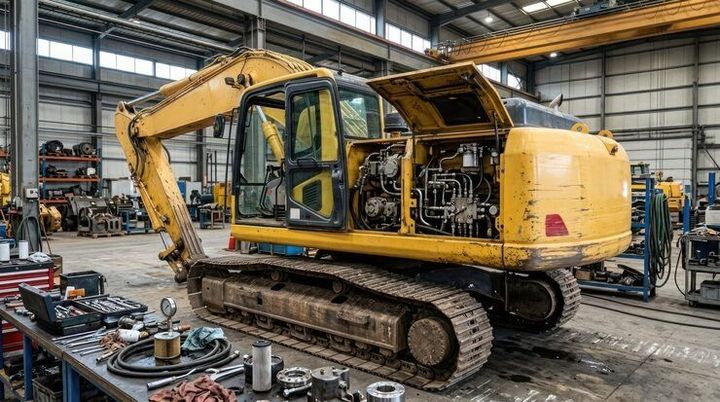
They are particularly important in equipment that must handle changing loads. Excavators, loaders, forklifts, agricultural machines, injection molding equipment, presses, and material-handling systems can use hydraulic circuits for specific movements.
For everyday users, the technology may not be visible, but it can influence construction, manufacturing, road maintenance, farming, recycling, and infrastructure work. Hydraulic systems also allow operators and control systems to regulate movement through valves and electronic controls.
Benefits and Practical Considerations
Several characteristics explain the continued use of hydraulic machines:
- High force density: Hydraulic components can produce substantial force from relatively compact cylinders and motors.
- Controlled movement: Valves and control systems can regulate speed, direction, and pressure.
- Flexible power transmission: Hoses and pipes allow components to be positioned at different points in a machine.
- Load handling: Hydraulic cylinders can manage lifting, pressing, clamping, and positioning tasks.
- System integration: Sensors and electronic controllers can be combined with hydraulic components for automated operation.
Hydraulic systems also have limitations. Fluid leakage, contamination, heat generation, pressure losses, component wear, and incorrect fluid selection can affect performance. Safe design therefore requires suitable pressure ratings, protective measures, filtration, inspection, and operating procedures.
Recent Updates
Trends in Hydraulic Technology
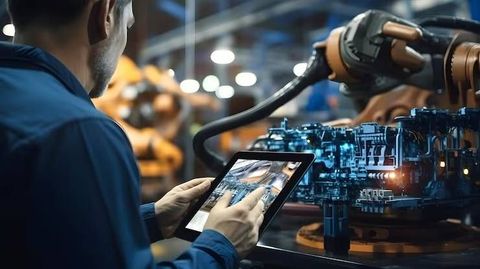
From 2024 through 2026, hydraulic technology has increasingly been discussed alongside electrification, automation, energy efficiency, and digital monitoring. Instead of treating hydraulics and electronics as separate technologies, many modern machines combine hydraulic components with sensors, electronic controls, variable-speed drives, and software-based monitoring.
Electro-hydraulic systems are one example. An electronic controller can interpret sensor information and adjust valves or pump operation according to the required movement. This can help a machine match hydraulic output more closely with operating conditions.
Another trend is condition monitoring. Sensors can track pressure, temperature, vibration, fluid condition, or operating cycles. The resulting information can help identify unusual operating conditions before they develop into larger equipment problems, although sensor systems do not eliminate the need for proper inspection.
Energy efficiency is also receiving attention. Variable-displacement pumps, load-sensing circuits, improved valves, and electronically controlled systems can reduce unnecessary fluid flow in suitable applications. The actual improvement depends on system design, load patterns, component selection, and operating conditions.
Digital and Connected Systems
Hydraulic machines are also becoming more connected to machine-control platforms. Data from pressure and temperature sensors can be recorded for analysis, while controllers can coordinate hydraulic movement with electrical and mechanical systems.
These developments are particularly relevant to automated manufacturing, mobile construction equipment, agricultural machinery, and material-handling equipment. The general direction is toward hydraulic systems that are more measurable, controllable, and integrated with digital machine architecture.
Laws or Policies
Indian Safety and Standards Framework
In India, hydraulic machinery can be affected by Indian Standards and machinery-safety requirements, depending on the type of equipment and its application. The Bureau of Indian Standards provides standards covering machinery safety, electrical equipment, machine tools, and related areas. BIS also maintains a searchable standards system through its Know Your Standard platform.
For hydraulic presses, IS 17277 (Part 3):2021 adopts ISO 16092-3:2017 and addresses safety requirements for presses. BIS lists the standard as a safety standard and records a 2025 review.
Broader machinery safety standards also address subjects such as risk assessment, protective distances, emergency-stop functions, electrical equipment of machines, and safety-related control systems. Which requirements apply depends on the equipment category, design, workplace, and intended use.
Compliance and Workplace Safety
Organizations using hydraulic equipment need to consider applicable workplace rules, equipment documentation, guarding, pressure ratings, operator training, inspection procedures, and emergency controls. Machinery covered by specific Indian regulatory or certification frameworks may have additional conformity requirements.
BIS has also maintained and updated machinery certification information in recent years, including Scheme-X material for specified machinery categories. Therefore, the applicable standard should be checked for the particular machine rather than assuming that one rule covers every hydraulic system.
Tools and Resources
Hydraulic Calculation Tools
Several technical tools can help explain or evaluate hydraulic systems. Common resources include:
- Pressure-force calculators: Relate cylinder pressure, piston area, and force.
- Flow-speed calculators: Estimate cylinder movement from fluid flow.
- Hydraulic circuit diagrams: Help explain component relationships.
- Technical manuals: Provide component specifications and operating limits.
- Fluid-power symbols and circuit references: Help readers understand schematic diagrams.
- BIS's Know Your Standard platform: Helps locate relevant Indian Standards.
A basic cylinder-force calculation uses the relationship F = P × A, where F is force, P is pressure, and A is the effective piston area. Real systems can produce different results because of friction, pressure losses, leakage, rod geometry, and other design factors.
FAQs
What Are Hydraulic Machines Used For?
Hydraulic machines are used for lifting, pressing, clamping, digging, steering, rotating, and controlled positioning. Common examples include hydraulic presses, excavators, loaders, agricultural equipment, and industrial production machinery.
How Does a Hydraulic Machine Work?
A hydraulic machine uses a pump or another pressure-generating arrangement to move fluid through a circuit. Valves control the direction and amount of flow, while cylinders or motors convert fluid energy into linear or rotary movement.
What Are the Main Components of a Hydraulic System?
The main components usually include a hydraulic pump, reservoir, valves, cylinders or motors, filters, hoses or pipes, fittings, and control elements. Sensors and electronic controllers may also be included in newer systems.
What Is the Difference Between a Hydraulic Cylinder and a Hydraulic Motor?
A hydraulic cylinder produces linear movement, such as extending or retracting a piston rod. A hydraulic motor produces rotary movement, allowing a shaft or mechanical drive to rotate.
What Factors Affect Hydraulic Machine Performance?
Performance can be affected by pressure, fluid flow, temperature, contamination, component condition, load, leakage, and circuit design. Correct sizing and suitable operating conditions are important for reliable machine operation.
Conclusion
Hydraulic machines use pressurized fluid to transfer power and create controlled movement. Pumps, valves, cylinders, motors, reservoirs, and control systems work together to perform tasks such as lifting, pressing, clamping, and rotation. Recent developments increasingly connect hydraulic technology with sensors, electronic controls, automation, and energy-efficiency measures. In India, applicable machinery standards and safety requirements depend on the equipment type and its intended use.