Autonomous Mobile Robots Guide: Features, Navigation Systems, Applications and Key Considerations
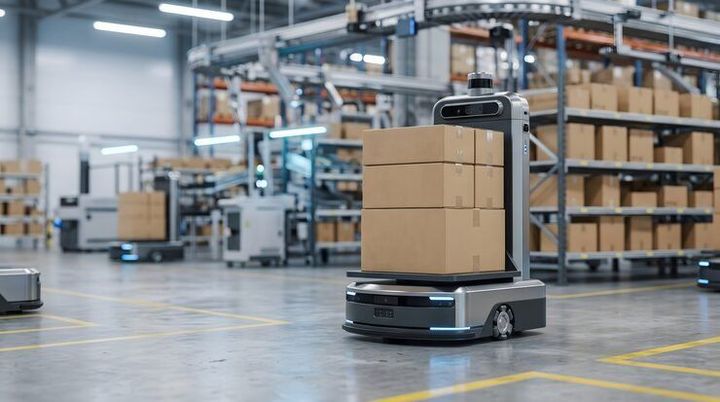
Autonomous Mobile Robots (AMRs) are mobile robotic systems designed to move through an environment with limited direct human control. They use sensors, onboard computing, software, maps, and navigation systems to understand surroundings, select routes, and respond to obstacles. AMRs are used across warehouses, factories, hospitals, laboratories, and other controlled environments where materials or items need to move between locations.
Understanding Autonomous Mobile Robots
Context and background
Earlier mobile automation often relied on fixed routes, floor markings, magnetic strips, or physical guides. Automated guided vehicles (AGVs) remain part of this field, but AMRs generally use software-based navigation to adjust movement when the environment changes.
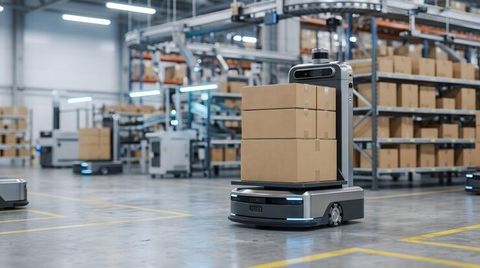
An AMR normally combines a mobile base with sensors and a control system. Depending on the model and application, it may carry bins, shelves, containers, tools, or other loads.
The basic operating process can be understood in four stages: sensing, mapping, planning, and movement. Sensors collect information about nearby objects and the surrounding area. Software uses this information to estimate the robot's position, compare it with a map, plan a route, and control the drive mechanisms.
Main features
Common Autonomous Mobile Robots features include obstacle detection, route planning, localization, map creation, automatic charging, fleet coordination, and communication with external software. Cameras, LiDAR, ultrasonic sensors, inertial measurement units, wheel encoders, and other sensors may be combined to improve environmental awareness.
A fleet management system can coordinate multiple robots by assigning tasks, monitoring locations, and managing traffic. Functions vary according to the robot design, software architecture, and environment.
Why Autonomous Mobile Robots Matter
Practical importance
AMRs can address repetitive movement tasks in places where people or conventional material-handling equipment would otherwise move items repeatedly. Examples include transferring components between production areas, moving inventory inside warehouses, carrying supplies between hospital departments, and transporting containers in laboratories.
Their importance is also connected with changing production patterns. Facilities may handle different products, layouts, or workflows over time. A navigation system that can work with digital maps and changing obstacles can be adapted through software rather than depending entirely on permanent physical routes.
AMRs do not remove the need for people. Human workers may still be responsible for loading, unloading, supervision, exception handling, maintenance, safety checks, and decisions that require judgment.
Common applications
AMR applications vary according to payload, environment, navigation method, and software integration.
- Warehousing: moving totes, cartons, shelves, and inventory between designated locations.
- Manufacturing: transporting components, work-in-progress materials, tools, and finished items between production areas.
- Healthcare: moving supplies, laboratory materials, meals, or other internal items within controlled facilities.
- Retail and distribution: supporting internal movement of stock and containers.
- Laboratories: transporting samples or equipment between defined work areas.
- Hospitality and public buildings: carrying items through mapped indoor spaces where appropriate safety controls are in place.
Key operating challenges
An AMR must interpret an environment that can change throughout the day. People, pallets, carts, doors, equipment, and temporary obstacles can affect movement. Floors, lighting, reflective surfaces, narrow passages, ramps, and network interruptions can also influence performance.
Cybersecurity is another consideration because many robots communicate with fleet software, facility networks, sensors, and other connected systems. Access controls, software updates, network segmentation, logging, and data protection can therefore be part of an AMR deployment plan.
Recent Developments in Autonomous Mobile Robots
Technology trends from 2024 to 2026
Recent developments have focused on combining robotics with artificial intelligence, computer vision, simulation, and improved sensor processing. The International Federation of Robotics identified AI, mobile manipulation, and other forms of robotics integration as significant trends during this period. In mobile robotics, AI can help process sensor information and support navigation in changing environments.
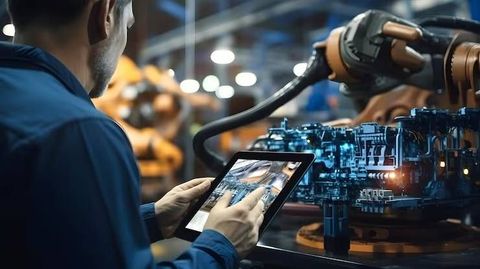
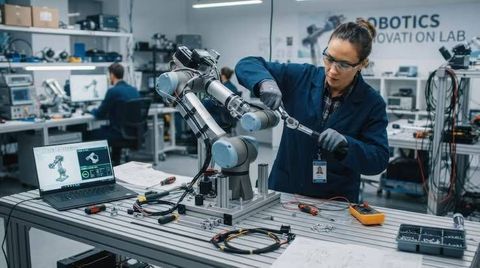
AMRs are increasingly discussed as part of broader manufacturing and logistics systems rather than as isolated machines. Fleet management, warehouse software, production systems, digital twins, and robotic arms can be connected so movement tasks form part of a larger workflow. Activity has also expanded around mobile manipulators, which combine a mobile platform with an arm for tasks requiring both movement and object handling.
India has continued developing its robotics ecosystem. A government technology advisory group discussed the domestic robotics ecosystem and a strategic roadmap for robotics in early 2026, while NITI Aayog's advanced manufacturing roadmap identified robotics, artificial intelligence, digital twins, and advanced materials as important technologies for manufacturing development.
Navigation systems
Navigation systems are central to AMR operation. A robot may use simultaneous localization and mapping (SLAM), laser-based navigation, camera-based perception, natural feature recognition, or combinations of these methods.
| Navigation approach | Main input | Typical characteristic | Common consideration |
|---|---|---|---|
| LiDAR-based | Laser distance data | Detailed spatial measurement | Reflective or changing surfaces |
| Camera-based | Images and visual data | Uses visual features | Lighting and visibility |
| SLAM | Multiple sensor inputs | Builds or updates a map while locating the robot | Sensor quality and environmental change |
| Natural-feature navigation | Existing environmental features | Uses existing reference points | Stable reference features |
| Marker or guide-based | Tags, lines, magnets, or guides | Predictable predefined routes | Physical route changes |
No single navigation approach fits every environment. Selection depends on floor conditions, traffic, lighting, map stability, required precision, robot speed, safety design, and expected obstacles.
Laws, Standards, and Policies in India
Workplace safety
In India, AMR deployment can involve workplace safety requirements, machinery rules, and applicable standards. The Occupational Safety, Health and Working Conditions Code, 2020 includes provisions concerning machinery safety, self-acting machines, lifting equipment, workplaces, accident reporting, and related safety matters. Exact requirements depend on the type of workplace and rules in force.
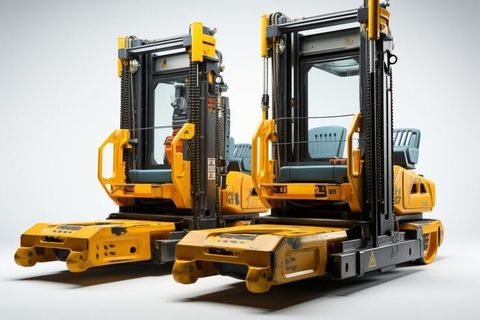
For driverless industrial trucks, including automated guided vehicles and autonomous mobile robots, BIS has circulated material based on ISO 3691-4:2023. The standard addresses safety requirements and verification for driverless industrial trucks and their systems, including guidance, control, and operating-zone considerations.
BIS has also worked on standards related to industrial robot applications and robot cells. A 2024 draft revision addressed integration of industrial robot applications and robot cells and hazards associated with intended use and reasonably foreseeable misuse.
Robotics policy direction
India's draft National Strategy on Robotics proposed measures covering research, testing, commercialization, supply-chain development, and adoption across manufacturing, agriculture, healthcare, and national security. It remains useful as policy context, while individual facilities must follow the specific laws, standards, and approvals applicable to their activities.
Tools and Resources for AMR Research
Navigation and simulation tools
ROS 2 and its Navigation2 ecosystem are used in robotics development and research. ROS documentation includes navigation-related messages, maps, paths, localization data, and planning interfaces, helping readers understand how navigation software is structured.
Gazebo is another useful robotics simulation environment. Its current simulator supports physics, rendering, sensor models, robot models, plugins, and simulated environments, allowing navigation and robot behavior to be examined before physical testing.
Standards and reference resources
The BIS Know Your Standard portal allows users to search Indian Standards by standard number or keyword and review related documents, amendments, testing information, and committee details. This can help readers identify standards relevant to robotics and machinery.
The International Federation of Robotics publishes research and trend information covering mobile robotics, industrial automation, AI, and related technologies.
Frequently Asked Questions
What are Autonomous Mobile Robots?
Autonomous Mobile Robots are mobile robotic systems that use sensors, software, and navigation systems to move through an environment and respond to changing obstacles. They are commonly used for internal material movement and other controlled tasks.
How do AMR navigation systems work?
AMR navigation systems combine sensor data, maps, localization, and route planning. Depending on the design, an AMR may use LiDAR, cameras, SLAM, wheel encoders, inertial sensors, or several of these technologies together.
What are common Autonomous Mobile Robots applications?
Common AMR applications include warehouse movement, manufacturing material transport, internal healthcare logistics, laboratory movement, and inventory handling. The suitable application depends on the environment, payload, safety requirements, and software integration.
Are AMRs regulated in India?
AMRs can be affected by Indian workplace safety requirements and relevant machinery and robotics standards. Driverless industrial trucks are also covered by safety guidance based on ISO 3691-4, while specific requirements depend on the equipment and workplace.
What should be considered before using an AMR?
Important considerations include payload, floor conditions, traffic patterns, navigation accuracy, obstacle detection, charging, network connectivity, cybersecurity, maintenance, emergency stopping, human interaction, and integration with existing systems.
Conclusion
Autonomous Mobile Robots combine mobile hardware, sensors, software, and navigation systems to move through changing environments with limited direct control. Their applications span warehouses, manufacturing facilities, healthcare environments, laboratories, and other controlled settings. Recent developments have connected AMRs more closely with AI, computer vision, fleet management, simulation, and broader manufacturing systems. In India, workplace safety requirements and relevant BIS and international standards form an important part of planning and operating these systems.