Packing Machines Explained: Types, Working Principles, Components, Applications and Benefits
Packing machines are mechanical or automated systems used to place products into containers, bags, pouches, cartons, bottles, trays, or other packaging formats. Packing machines explained in simple terms are systems that combine several activities, such as filling, forming, sealing, wrapping, labeling, or checking, into an organized packaging process.
Packaging has existed for centuries, beginning with simple materials such as leaves, woven containers, clay vessels, wooden boxes, and glass containers. As manufacturing expanded, packaging processes became more standardized. The development of mechanical equipment allowed products to be packed with greater consistency and with less manual handling.
Modern packing machines are used across food processing, beverages, pharmaceuticals, cosmetics, chemicals, agriculture, household products, electronics, and industrial manufacturing. The exact machine design depends on the product characteristics, packaging material, required quantity, production environment, and type of final package.
A packing system may perform one task or several tasks in sequence. For example, a system may measure a product, place it into a pouch, seal the pouch, print information, and move the finished package to the next stage.
Importance
Packing machines are important because packaging affects product protection, handling, storage, transportation, and presentation. A suitable packaging process can help reduce direct contact between products and the surrounding environment while creating a consistent package format.
For everyday products, packaging also helps communicate information. Labels can identify the product, quantity, ingredients, handling instructions, manufacturing information, and other details required by applicable regulations.
Problems Addressed by Packing Machines
Manual packing can involve repetitive movements and variations between individual packages. Machine-based systems are designed to perform defined operations according to programmed or mechanically controlled settings.
Common challenges addressed by packing machines include:
- Maintaining consistent filling quantities
- Creating repeatable seals and closures
- Handling large numbers of packages
- Reducing unnecessary manual handling
- Coordinating multiple packaging stages
- Printing or applying required information
- Detecting selected packaging defects
- Moving packages between processing stages
The level of automation varies considerably. Some machines require operators to load materials and monitor the process, while integrated systems can automatically coordinate several packaging stages.
Where Packing Machines Are Used
Packing machines are found in many industries. Food applications include grains, snacks, powders, liquids, frozen products, dairy products, and prepared foods. Industrial applications can include hardware, chemicals, components, agricultural materials, and other manufactured products.
The packaging format often determines the type of equipment required. Bags, pouches, bottles, cartons, cans, trays, and wrapped products each have different handling and sealing requirements.
Types of Packing Machines
Packing machines can be classified according to the packaging format, operating method, product characteristics, or specific function they perform.
Form-Fill-Seal Machines
Form-fill-seal machines create packaging from a roll of flexible material, fill the package, and seal it. Depending on the design, the machine may produce horizontal or vertical packages.
Vertical form-fill-seal systems are commonly associated with powders, grains, snacks, granules, and other products that can move downward through a forming tube. Horizontal systems are often used for products that need to remain positioned on a conveyor during wrapping.
Pouch Packing Machines
Pouch packing machines fill and seal pre-made or machine-formed pouches. They can handle different pouch designs, including flat, gusseted, and specialized formats.
The filling mechanism is selected according to whether the product is liquid, powder, granulated, or solid.
Bottle and Liquid Packing Machines
Liquid packing systems are designed for products such as beverages, oils, sauces, detergents, and other liquid materials. Filling methods can include volumetric, gravimetric, piston, or flow-based systems.
Bottle packing lines may also include capping, labeling, inspection, and conveying equipment.
Cartoning and Case Packing Machines
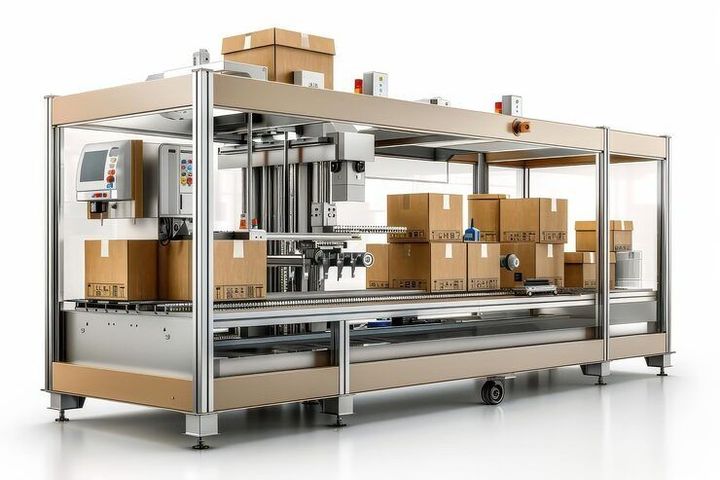
Cartoning machines place products into cartons and may close or seal the cartons afterward. Case packing systems arrange individual packages into larger shipping containers.
These machines are useful when products need to be grouped into standardized outer packages for handling and distribution.
Wrapping Machines
Wrapping machines use flexible packaging material to surround products. Applications include individual product wrapping, grouped products, pallets, and industrial loads.
The wrapping method depends on product dimensions, material characteristics, and the desired package configuration.
Working Principles of Packing Machines
Although machine designs differ, many packing systems follow a sequence of controlled operations.
Product Feeding
The process usually begins with product feeding. Conveyors, hoppers, feeders, pumps, augers, or other mechanisms move the product toward the filling area.
The feeding mechanism depends on the physical characteristics of the product. Free-flowing grains behave differently from powders, liquids, fragile products, or irregular components.
Measuring and Filling
The machine determines the required quantity through a selected measuring system. Weight-based systems use load cells, while volumetric systems use defined spaces or chambers.
Other mechanisms include auger fillers for powders, piston fillers for certain liquids or pastes, and multihead weighing systems for products with varying individual piece weights.
Forming or Positioning the Package
For flexible packaging, the machine may form packaging material around the product. For pre-made containers, the equipment positions the container beneath the filling mechanism.
Sensors and mechanical guides help maintain the position of packaging materials during operation.
Sealing and Closing
After filling, the package is closed. Heat sealing, ultrasonic sealing, pressure sealing, adhesive application, crimping, capping, or other methods may be used depending on the package.
Seal temperature, pressure, contact time, and material compatibility can affect seal quality.
Inspection and Discharge
Some systems include sensors or inspection equipment that checks package presence, dimensions, weight, labels, seals, or other defined characteristics.
Finished packages are then transferred to another conveyor, collection area, carton, or subsequent processing stage.
Components of Packing Machines
A packing machine normally contains several coordinated components.
| Component | Main Function |
|---|---|
| Hopper | Holds and feeds product |
| Conveyor | Moves products or packages |
| Filling system | Places a measured quantity into packaging |
| Sensors | Detect position, movement, or selected conditions |
| Control system | Coordinates machine operations |
| Sealing unit | Closes the package |
| Motor and drive | Provides controlled movement |
| Pneumatic system | Operates selected mechanical movements |
| Touchscreen interface | Allows operators to monitor and adjust settings |
| Safety system | Helps control access and machine operation |
The control system is often connected to sensors, motors, valves, and other components. Modern equipment may use programmable logic controllers to coordinate different stages of the packaging cycle.
Applications and Benefits
Packing machines are used in production environments where packaging needs to follow a repeatable process. Their applications depend on the product and packaging format.
Food and Beverage
Food packaging systems can handle products such as grains, snacks, coffee, sauces, liquids, frozen foods, and prepared foods. Packaging equipment may include filling, sealing, capping, labeling, and inspection stages.
Pharmaceutical and Healthcare Products
Specialized packaging systems are used for regulated products and medical-related materials. These environments generally require controlled handling, traceability, and compliance with applicable standards.
Chemical and Industrial Products
Industrial packing equipment can handle powders, granules, liquids, components, and other materials. Machine design must account for product properties and the required containment method.
Agriculture
Agricultural products such as seeds, grains, fertilizers, and selected produce can be handled using weighing, filling, bagging, sealing, and labeling equipment.
Key Benefits
The main benefits of packing machines relate to process consistency and controlled handling. Depending on the machine and application, these can include:
- Repeatable packaging operations
- Controlled product measurement
- Reduced repetitive manual handling
- Integration with conveyors and inspection systems
- Consistent package formation
- Easier coordination of multiple packaging stages
- Digital monitoring of selected operating parameters
These benefits depend on appropriate machine selection, correct setup, maintenance, packaging-material compatibility, and operating conditions.
Recent Updates
From 2024 through 2026, packaging technology has continued moving toward automation, digital monitoring, material efficiency, and greater attention to packaging sustainability. Modern systems increasingly combine sensors, programmable controls, machine vision, data collection, and automated quality checks.
Another developing area is packaging-material compatibility. Food packaging regulations in India have continued to evolve, including changes concerning recycled plastics and other food-contact requirements. FSSAI lists an amendment concerning the use of recycled plastics in food packaging in 2025.
Regulatory activity has also continued into 2026. FSSAI records amendments and draft amendments concerning packaging materials and definitions under the Food Safety and Standards (Packaging) Regulations.
These developments mean that packaging equipment increasingly has to work with specific material characteristics while supporting documented quality and compliance processes.
Laws or Policies
In India, packing operations can be affected by different rules depending on the product and packaging format. Food-related packaging is governed in part by the Food Safety and Standards Authority of India under the Food Safety and Standards (Packaging) Regulations, 2018 and subsequent amendments. FSSAI maintains the current regulations and related amendments through its official regulatory resources.
For food businesses, packaging material must meet applicable food-safety requirements. FSSAI also strengthened its inspection approach in 2025 by classifying food-grade packaging material as a critical food-safety point and requiring relevant conformity documentation from NABL-accredited laboratories in the specified inspection context.
Packaged commodities intended for retail sale can also be affected by the Legal Metrology (Packaged Commodities) Rules, 2011. The Department of Consumer Affairs discussed proposed amendments in 2024 concerning declarations for pre-packaged commodities and clarified that certain industrial and institutional packages are treated differently under the proposed framework.
Packaging operators therefore need to consider the product category, packaging material, labeling requirements, measurement rules, and applicable sector-specific regulations. Specific compliance requirements can change, so official government notifications and regulations should be checked for the relevant product category.
Tools and Resources
Several resources can help readers understand packing machines and packaging requirements.
Machine Manuals and Technical Documents
Manufacturer manuals, equipment specifications, operating instructions, and maintenance documentation can explain machine settings, component functions, safety procedures, and compatible packaging materials.
FSSAI Resources
For food-related packaging in India, the FSSAI regulatory database provides access to packaging regulations, amendments, notifications, and related guidance.
Legal Metrology Resources
The Department of Consumer Affairs provides information concerning Legal Metrology and packaged commodity requirements. These resources can help readers understand declarations and measurement-related rules applicable to packaged goods.
Measurement and Production Calculators
Packaging calculations may involve product weight, package dimensions, filling volume, production rate, conveyor speed, and material usage. Spreadsheet templates and basic unit-conversion tools can help organize these calculations.
Maintenance Checklists
A maintenance checklist can record inspection of sealing components, sensors, conveyors, filling mechanisms, pneumatic connections, electrical components, and safety systems. Documentation can help identify recurring operational issues and maintenance requirements.
FAQs
What are packing machines used for?
Packing machines are used to fill, form, wrap, seal, close, label, inspect, or otherwise prepare products for packaging. The exact function depends on the machine design and product type.
How do packing machines work?
Most packing machines follow a sequence involving product feeding, measuring, filling, package formation or positioning, sealing or closing, inspection, and discharge. Sensors and control systems coordinate these stages.
What are the main types of packing machines?
Common types include form-fill-seal machines, pouch packing machines, liquid filling machines, bottle packing systems, cartoning machines, case packing systems, and wrapping machines. The appropriate type depends on the product and packaging format.
What components are used in a packing machine?
Common components include hoppers, conveyors, filling mechanisms, sensors, motors, drives, control systems, sealing units, pneumatic components, operator interfaces, and safety systems.
What regulations affect food packing machines in India?
Food packaging operations can be affected by FSSAI requirements concerning food-contact packaging materials, hygiene, and related compliance processes. Retail packaged commodities may also be subject to Legal Metrology requirements.
Conclusion
Packing machines combine mechanical systems, controls, sensors, and packaging components to prepare products in consistent formats. Different machine types are designed for different products, packaging materials, and operations such as filling, sealing, wrapping, or cartoning. Recent developments have emphasized automation, digital monitoring, material compatibility, and packaging compliance. In India, food packaging and packaged commodities are subject to regulatory frameworks that can affect both packaging materials and operating processes.