Fabrication Materials Explained: Types, Properties, Applications, Selection and Performance Factors
Fabrication materials are the metals, alloys, polymers, composites, and other substances shaped, cut, joined, formed, or finished to create useful components and structures. Fabrication Materials Explained: Types, Properties, Applications, Selection and Performance Factors requires understanding how a material behaves during cutting, bending, welding, machining, forming, and use. The right material depends on the required strength, environment, temperature, weight, durability, dimensional needs, and fabrication method.
What fabrication materials mean
Fabrication is the process of turning material into a component or assembly through operations such as cutting, drilling, bending, welding, machining, forming, and finishing. The practice is used in construction, manufacturing, transportation, energy, agriculture, infrastructure, and many other fields.
Steel has traditionally been a major fabrication material because it combines strength, formability, and compatibility with several joining methods. Aluminium, stainless steel, copper alloys, plastics, and composite materials are also used when properties such as low weight, corrosion resistance, electrical conductivity, or chemical resistance are important.
Common material categories
Fabrication materials can be grouped by their basic composition and behavior.
- Carbon steel is widely used for frames, supports, plates, brackets, tanks, and general structures.
- Stainless steel contains chromium and is used where corrosion resistance, cleanliness, or temperature resistance is important.
- Aluminium alloys are relatively light and can be formed into many shapes, making them useful for transport structures, enclosures, and equipment.
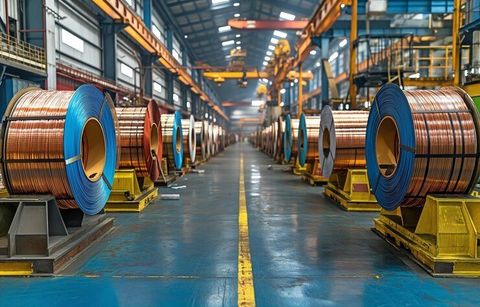
- Copper and copper alloys are valued for electrical and thermal conductivity and are used in selected industrial and electrical applications.
- Plastics and engineering polymers are used for guards, housings, pipes, liners, and components where low weight or chemical resistance matters.
- Composites combine different materials to achieve a particular balance of strength, weight, stiffness, or environmental resistance.
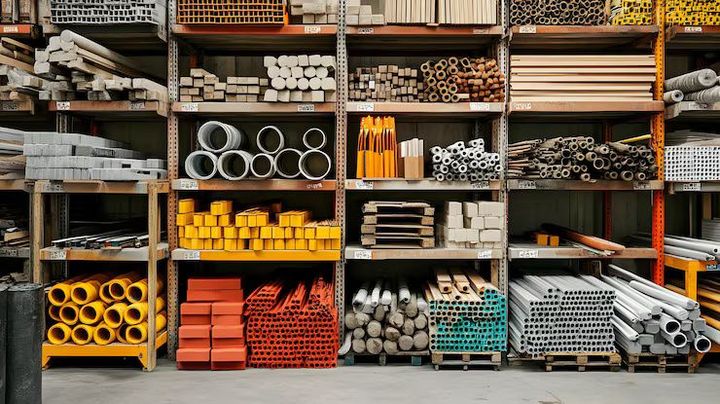
The material form also matters. Sheet, plate, bar, tube, pipe, angle, channel, beam, wire, and custom profiles behave differently during fabrication and operating conditions.
Importance
Why material selection matters
Material selection affects how easily a component can be produced and how it performs after fabrication. A material may have high strength but still be unsuitable if it is difficult to weld, prone to distortion, sensitive to heat, or poorly suited to the operating environment.
Fabrication materials also influence maintenance requirements, expected durability, weight, energy use, and the ability to repair or modify a component. For everyday structures, these factors can affect safety, reliability, transportation, and the useful life of equipment.
Key properties to consider
Important properties include tensile strength, yield strength, hardness, toughness, ductility, stiffness, density, thermal expansion, electrical conductivity, and corrosion resistance. Weldability and machinability are also important because the material must respond appropriately to the intended fabrication process.
A simple comparison is shown below:
| Material type | Main properties | Common applications |
|---|---|---|
| Carbon steel | Strength, ductility, weldability | Frames, structures, brackets |
| Stainless steel | Corrosion resistance, strength | Equipment, enclosures, process components |
| Aluminium alloy | Low density, formability | Transport parts, panels, frames |
| Copper alloy | Electrical and thermal conductivity | Electrical and heat-transfer components |
| Engineering polymer | Low weight, chemical resistance | Liners, guards, housings |
| Composite | High stiffness-to-weight potential | Panels, specialized structures |
Performance in real environments
A material's laboratory properties do not tell the entire story. Temperature changes, moisture, chemicals, vibration, ultraviolet exposure, and contact with other materials can change long-term performance.
For example, a material exposed to salt or industrial chemicals may require different corrosion considerations from one used in a dry indoor environment. Likewise, a component exposed to repeated loading needs attention to fatigue rather than only its single-load strength.
Recent Updates
Changes in steel standards
India's standards system has been updating several material specifications relevant to fabrication. BIS records show newer editions of structural steel standards, including IS 2062 Part 1 from 2025 and Part 2 from 2026. These developments reflect continued attention to material grades, testing, mechanical properties, and product specifications.
For fabrication planning, the applicable edition of a standard should be checked rather than relying on an older material specification. Drawings, engineering documents, inspection plans, and material certificates may also need to reference the applicable standard and grade.
Lower-carbon material trends
Environmental considerations have become more visible in material selection. India's Ministry of Steel released a Green Steel Taxonomy during 2024, creating a framework for classifying steel according to greenhouse-gas intensity and supporting a transition toward lower-carbon steel production.
This trend can affect how manufacturers evaluate raw materials, production methods, recycled content, emissions information, and material traceability. It does not mean that one material is suitable for every application; technical performance remains an important consideration.
Digital fabrication and material data
Fabrication is also becoming more data-driven. Computer-aided design, digital cutting systems, automated forming, 3D measurement, simulation, and production tracking can improve dimensional control and reduce avoidable fabrication errors.
Material certificates and digital records are increasingly useful for tracing grade, heat or batch information, dimensions, and test results. Such records can help connect the material specification with the finished component.
Laws or Policies
Standards and product requirements in India
In India, material selection for structural and industrial fabrication can be influenced by Bureau of Indian Standards specifications, building requirements, engineering codes, and project-specific technical documents. IS 2062 is an important Indian Standard covering hot-rolled medium and high-tensile structural steel used for structural work.
The applicable standard depends on the material and its intended use. Other standards cover areas such as hollow sections, steel tubes, stainless steel products, galvanized materials, tolerances, and testing. The relevant edition should be confirmed for each project.
Workplace and environmental requirements
Fabrication activities can involve welding fumes, metal dust, noise, heat, chemicals, waste materials, and other workplace hazards. In India, occupational safety requirements are shaped by the Occupational Safety, Health and Working Conditions Code, 2020, together with applicable rules and workplace requirements.
Environmental requirements can also apply to industrial facilities, particularly where processes generate air emissions, wastewater, hazardous materials, or regulated waste. The Environment Protection Act framework and rules administered through environmental authorities may be relevant depending on the activity and location.
These requirements vary with the type and scale of fabrication. Engineering, safety, and environmental compliance should therefore be checked against the current rules applicable to the particular facility and project.
Tools and Resources
Material selection resources
Useful resources include BIS standards and its standards database for checking specifications, grades, revisions, and related documents. Engineering material databases can provide information about density, strength, thermal properties, corrosion behavior, and other characteristics.
Material selection worksheets can also organize requirements such as:
- Required load and stress conditions
- Operating temperature range
- Exposure to moisture or chemicals
- Joining and fabrication method
- Required dimensions and tolerances
- Weight limitations
- Inspection and testing requirements
- Expected maintenance environment
Calculation and design tools
Engineering calculators can help with unit conversion, weight estimation, beam loading, thermal expansion, and basic dimensional calculations. Computer-aided design and simulation software can be used to examine geometry, fit, deformation, and stress before physical fabrication.
These tools support planning but do not replace project-specific engineering analysis where structural safety or specialized performance is involved.
Material documentation
Material certificates, inspection reports, drawings, welding procedures, fabrication specifications, and test records can provide a documented connection between the selected material and the finished component. Keeping these records organized can also make later inspection and maintenance easier.
FAQs
What are fabrication materials?
Fabrication materials are substances that can be cut, formed, machined, joined, or finished to create components and structures. Common examples include carbon steel, stainless steel, aluminium alloys, copper alloys, polymers, and composites.
How are fabrication materials selected?
Fabrication materials are selected by considering strength, ductility, hardness, corrosion resistance, temperature, weight, fabrication method, dimensions, expected loads, and environmental exposure. Applicable standards and project specifications are also considered.
Which properties matter most in fabrication materials?
Important properties include tensile and yield strength, toughness, ductility, stiffness, hardness, corrosion resistance, thermal behavior, weldability, and machinability. The relevant properties depend on how the finished component will be fabricated and used.
What are common applications of fabrication materials?
Fabrication materials are used in structural frames, machinery parts, equipment housings, pipelines, tanks, brackets, transport components, electrical assemblies, panels, and many other manufactured products.
How do recent standards affect fabrication materials?
Recent standards updates can change material grades, testing requirements, dimensions, tolerances, or terminology. Fabricators and designers should verify the current standard applicable to the material and intended application.
Conclusion
Fabrication materials include a broad range of metals, polymers, and composites, each with different properties and fabrication behavior. Material selection depends on mechanical requirements, environmental exposure, fabrication methods, dimensions, standards, and expected performance. Recent developments include updated material standards, greater attention to lower-carbon steel, and increased use of digital fabrication and material records. In India, standards, workplace safety requirements, and environmental rules can all influence how fabrication materials are specified and handled.