Cable Manufacturing Organizations Guide: Production Methods, Equipment and Industry Processes
Cable manufacturing organizations play an important role in producing the electrical cables, communication wires, industrial conductors, and specialized cable systems used in modern infrastructure. These organizations convert raw materials such as copper, aluminium, polymers, rubber, and steel into finished cables designed for different electrical, mechanical, and environmental requirements.
Context
Cable manufacturing organizations play an important role in producing the electrical cables, communication wires, industrial conductors, and specialized cable systems used in modern infrastructure. These organizations convert raw materials such as copper, aluminium, polymers, rubber, and steel into finished cables designed for different electrical, mechanical, and environmental requirements.
Cable manufacturing developed alongside the expansion of electricity networks, telecommunications, transportation, and industrial production. Early electrical systems required insulated conductors to transmit electricity safely between power sources and equipment. As industries expanded, cable manufacturers developed different production methods to support power distribution, telecommunications, construction, automotive systems, and heavy machinery.
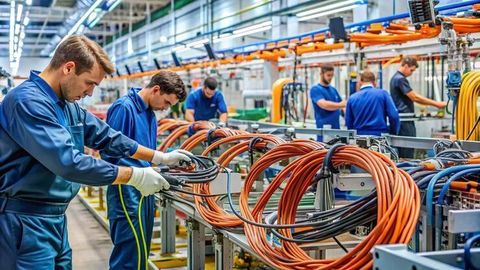
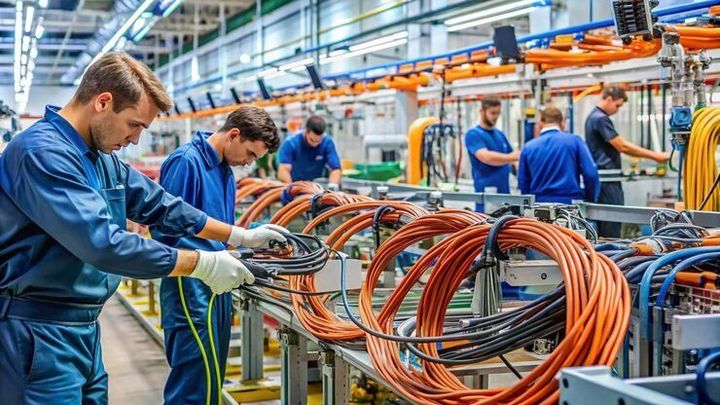
Today, cable manufacturing organizations operate through several interconnected production stages. These include raw material preparation, wire drawing, conductor stranding, insulation, cable assembly, protective covering, testing, and packaging. The equipment, materials, and production methods depend on the intended application of each cable.
Understanding Cable Manufacturing Organizations
Cable manufacturing organizations are industrial companies that design, produce, assemble, and test different types of cables. Their operations may focus on a specific product category or cover several manufacturing segments.
Common cable categories include:
Power cables: Used to transmit electricity through residential, commercial, industrial, and utility networks.
Control cables: Carry signals between control panels, machines, and industrial equipment.
Communication cables: Support data and voice transmission through copper or optical fibre technology.
Automotive cables: Connect electrical and electronic components in vehicles.
Industrial cables: Designed for machinery, production facilities, automation equipment, and demanding operating environments.
Specialized cables: Developed for applications involving high temperatures, underwater installation, renewable energy, or specific mechanical conditions.
Each category has different construction requirements. Cable manufacturers select conductor materials, insulation compounds, protective layers, and dimensions according to the electrical and physical conditions in which a cable will operate.
Importance
Cable manufacturing organizations are important because electrical and communication systems depend on reliable connections between equipment, buildings, and infrastructure. Electricity networks require conductors capable of carrying electrical current, while communication networks use copper or optical fibre cables to transmit information.
These products affect everyday activities such as household electricity, internet connectivity, transportation systems, manufacturing operations, and public infrastructure. Industrial facilities also depend on cables to connect motors, sensors, automated machinery, control systems, and monitoring equipment.
Main Applications of Cable Manufacturing
Cable manufacturing supports several important industries:
Power infrastructure: Electrical cables connect generating facilities, substations, distribution networks, and buildings.
Construction: Building cables supply electricity to lighting, appliances, electrical panels, and other installations.
Telecommunications: Fibre optic and copper cables support broadband networks, telephone systems, and data transmission.
Manufacturing: Industrial cables connect production machinery, robotic equipment, motors, and control systems.
Transportation: Railway systems, electric vehicles, aircraft, and marine equipment use application-specific cables.
Renewable energy: Solar installations and wind energy facilities require cables for power transmission and electrical connections.
Main Stages of Cable Production
Cable manufacturing involves multiple processes that transform raw materials into finished products.
Raw material preparation: Copper, aluminium, and other materials are inspected and prepared for processing.
Wire drawing: Metal rods pass through specialized dies to reduce their diameter and create wires of the required dimensions.
Conductor stranding: Several individual wires are twisted or arranged together to form a conductor with specific electrical and mechanical properties.
Insulation: Plastic, rubber, or other insulating materials are applied around conductors to reduce unwanted electrical contact.
Cable assembly: Multiple insulated conductors may be combined into one cable according to the product design.
Protective covering: Additional layers, including sheathing, shielding, or armouring, may be applied to protect the cable.
Testing and inspection: Finished cables undergo electrical, dimensional, and physical checks.
Packaging: Approved cables are measured, wound onto drums or reels, labelled, and prepared for transportation.
Cable Manufacturing Equipment
Different machines are used throughout the production process. The following table explains common equipment and its purpose.
| Equipment | Main function | Common application |
|---|---|---|
| Wire drawing machine | Reduces metal wire diameter | Copper and aluminium conductors |
| Stranding machine | Combines individual wires | Flexible and multi-wire conductors |
| Extrusion machine | Applies insulation or outer covering | Insulated electrical cables |
| Cable laying-up machine | Combines insulated conductors | Multi-core cables |
| Armouring machine | Applies protective metal layers | Industrial and underground cables |
| Cable testing equipment | Checks electrical and physical properties | Quality inspection |
| Winding machine | Winds finished cables onto reels | Packaging and handling |
Production facilities may use automated controls to regulate temperature, production speed, material flow, and dimensional consistency. Equipment selection depends on cable design, production capacity, material characteristics, and applicable manufacturing standards.
Recent Updates
Cable manufacturing has been influenced by developments in renewable energy, electric transportation, telecommunications, industrial automation, and data infrastructure. Between 2024 and 2026, manufacturers have increasingly focused on production automation, material efficiency, digital monitoring, and specialized cable designs.
Automation in Cable Manufacturing
Modern cable production facilities increasingly use automated machinery to manage repetitive manufacturing operations. Programmable logic controllers, industrial sensors, and computerized monitoring systems can help regulate production parameters.
Automation is particularly relevant to wire drawing, extrusion, stranding, winding, and inspection. Digital monitoring can record production information such as operating temperature, line speed, material consumption, and equipment performance.
Some facilities also use predictive maintenance systems to identify unusual machine conditions. These systems analyze operating information to help maintenance teams investigate possible equipment problems before they interrupt production.
Development of Specialized Cable Systems
Demand for specialized cables is associated with expanding electrical and communication infrastructure. Renewable energy projects require cables designed for solar installations, wind turbines, and power distribution systems.
Electric vehicle manufacturing has also increased the importance of high-voltage cables, battery connections, charging infrastructure, and vehicle wiring systems. Meanwhile, telecommunications expansion and data centre development have increased the relevance of fibre optic cables and high-capacity electrical connections.
Material Efficiency and Environmental Considerations
Cable manufacturers are also examining ways to reduce production waste and improve material utilization. Examples include recovering usable metal from manufacturing waste, optimizing insulation materials, improving extrusion processes, and reducing energy consumption.
Recycling requires appropriate separation and processing because cables may contain several different materials. Copper, aluminium, plastics, rubber, and protective metals can require different recovery methods.
Laws or Policies
Cable manufacturing organizations must follow applicable industrial, environmental, electrical safety, labour, and product-quality requirements. In India, several regulatory frameworks influence cable production, factory operations, and the use of finished electrical products.
Electrical Standards and Product Requirements in India
The Bureau of Indian Standards (BIS) develops Indian Standards covering different electrical products and materials. Certain cable categories are subject to applicable Indian Standards and conformity requirements.
Examples include standards covering PVC-insulated cables, cross-linked polyethylene (XLPE) insulated cables, and other electrical cable categories. Manufacturers must identify the relevant standard according to cable construction, voltage rating, intended application, and applicable regulatory requirements.
The Central Electricity Authority also establishes regulations concerning electrical safety and the supply of electricity. These requirements are relevant to electrical installations, equipment, and power infrastructure.
Factory Safety and Environmental Regulations
Cable manufacturing facilities may involve high-temperature extrusion equipment, rotating machinery, electrical systems, chemical materials, and metal-processing operations. Factory operators must follow applicable workplace safety requirements.
The Factories Act, 1948, has historically provided an important framework for industrial workplace safety in India, alongside state-level implementation. India's labour law framework has also undergone changes, including the introduction of labour codes, so applicable commencement and implementation provisions should be checked.
Environmental requirements may apply to emissions, industrial wastewater, waste handling, and pollution control. Depending on the manufacturing activity and location, facilities may need approvals from the relevant State Pollution Control Board or Pollution Control Committee.
Quality Inspection and Certification
Quality inspection is an important part of cable manufacturing. Testing may cover conductor resistance, insulation thickness, voltage withstand, dimensions, mechanical strength, and other properties specified by relevant standards.
Depending on the cable category, applicable requirements may include BIS certification, factory quality procedures, and customer-specific technical specifications. Compliance requirements vary according to the product and its intended use.
Tools and Resources
Several technical tools, websites, and manufacturing resources help explain cable production processes and industrial requirements. These resources are relevant to manufacturers, engineering students, procurement teams, and individuals learning about electrical infrastructure.
Manufacturing Design and Calculation Tools
Cable manufacturing and electrical design involve calculations related to conductor dimensions, electrical resistance, current capacity, voltage drop, and insulation requirements.
Common technical resources include:
Cable sizing calculators: Help estimate conductor dimensions based on electrical load and installation conditions.
Electrical resistance calculators: Explain how conductor material, length, and cross-sectional area influence resistance.
CAD software: Supports cable layouts, manufacturing drawings, and equipment designs.
Production monitoring systems: Record machine operating conditions, production quantities, and process information.
Quality testing instruments: Measure electrical characteristics and physical properties of finished cables.
Calculation results depend on assumptions and operating conditions. Actual cable selection requires consideration of applicable electrical standards, installation methods, temperature, and engineering requirements.
Industry Websites and Technical Resources
The Bureau of Indian Standards website provides information about Indian Standards and product certification. The Central Electricity Authority publishes electrical regulations and technical information relevant to India's power sector.
The International Electrotechnical Commission (IEC) publishes international standards covering electrical and electronic technologies. Technical information from these organizations helps readers understand cable classifications, testing methods, and manufacturing requirements.
Industry publications and technical manufacturer documentation can also explain developments in conductor materials, insulation compounds, extrusion equipment, and automated production systems.
FAQs
What do cable manufacturing organizations produce?
Cable manufacturing organizations produce power cables, communication cables, control cables, automotive wiring, industrial cables, and specialized electrical conductors. Product construction depends on the intended application.
What machines are used in cable manufacturing?
Common machines include wire drawing machines, stranding machines, extrusion lines, cable laying-up machines, armouring equipment, testing instruments, and winding machines. Each performs a different production function.
How does the cable manufacturing process work?
The cable manufacturing process generally includes raw material preparation, wire drawing, conductor stranding, insulation, cable assembly, protective covering, testing, and packaging. The exact sequence depends on the cable design.
Which standards apply to cable manufacturing in India?
Applicable requirements may include relevant Bureau of Indian Standards specifications, electrical safety regulations, factory safety requirements, and environmental regulations. The specific standards depend on the cable category and manufacturing activity.
What are the recent developments in cable manufacturing technology?
Recent developments include automated production equipment, digital quality monitoring, specialized renewable energy cables, electric vehicle wiring systems, and improved material recovery processes. Adoption varies across manufacturing facilities.
Conclusion
Cable manufacturing organizations support electricity distribution, telecommunications, transportation, construction, and industrial production. Their operations combine specialized machinery, material processing, insulation methods, cable assembly, and quality testing. Automation, renewable energy infrastructure, and specialized electrical systems continue to influence manufacturing processes. Indian standards, workplace safety requirements, and environmental regulations also shape how cable manufacturing facilities operate.