Modern Manufacturing Process Guide: Production Methods, Automation, Equipment and Applications
Modern manufacturing is the process of converting raw materials, components, and other resources into finished products through organized production methods. It combines traditional industrial techniques with modern machinery, computer systems, robotics, and automation technologies. The manufacturing industry has developed from manual workshops and early mechanical production into interconnected industrial facilities that use digital systems to coordinate different stages of production.
Context
Modern manufacturing is the process of converting raw materials, components, and other resources into finished products through organized production methods. It combines traditional industrial techniques with modern machinery, computer systems, robotics, and automation technologies. The manufacturing industry has developed from manual workshops and early mechanical production into interconnected industrial facilities that use digital systems to coordinate different stages of production.
The development of modern manufacturing began with mechanized production during the Industrial Revolution. The introduction of steam-powered machinery, assembly lines, electrical equipment, and computer-controlled systems gradually changed how factories operated. Today, manufacturing processes can involve automated machines, industrial robots, digital monitoring systems, and advanced production equipment.
Modern manufacturing includes several activities, such as product design, material preparation, machining, assembly, inspection, packaging, and distribution. These activities are connected to create products used in transportation, construction, electronics, healthcare, agriculture, and everyday household applications.
Main Stages of a Manufacturing Process
A typical manufacturing process follows several connected stages:
Product design: Engineers prepare product specifications, technical drawings, dimensions, and material requirements.
Material preparation: Raw materials are selected, measured, cut, cleaned, or processed before production.
Production: Machines and workers transform materials into components or finished products.
Assembly: Individual components are joined to create a complete product.
Quality inspection: Products are examined for dimensions, performance, safety, and manufacturing defects.
Packaging: Finished products are prepared for storage, transportation, or distribution.
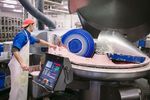
The sequence can vary depending on the product and production method. For example, food processing requires different equipment and procedures from automobile manufacturing or electronic component production.
Importance
Modern manufacturing plays an important role in industrial development, infrastructure, economic activity, and the availability of everyday products. It supports industries that produce vehicles, electrical equipment, machinery, medical devices, construction materials, packaging products, and consumer electronics.
Manufacturing efficiency also affects production schedules, material usage, product consistency, and workplace conditions. Businesses must manage challenges such as equipment downtime, material shortages, energy consumption, changing product requirements, and quality variations.
Benefits and Practical Challenges
Modern production systems can help manufacturers organize operations and monitor production activities. Automated equipment can perform repetitive operations, while digital monitoring systems help operators identify production interruptions and equipment irregularities.
However, introducing modern manufacturing technology also involves practical challenges:
Equipment integration: Different machines and software systems must communicate and operate together.
Workforce training: Employees need appropriate technical knowledge to operate and maintain modern equipment.
Quality control: Production systems require regular inspection and monitoring.
Energy management: Industrial machinery can consume substantial electricity and other resources.
Maintenance planning: Equipment requires scheduled inspections, replacement parts, and technical attention.
Cybersecurity: Connected industrial systems may face risks involving unauthorized access and operational disruptions.
Common Manufacturing Methods
Manufacturing methods differ according to materials, product designs, production quantities, and technical requirements.
| Manufacturing method | Description | Common applications |
|---|---|---|
| Machining | Removes material to create specific shapes | Metal components, engine parts |
| Casting | Pours molten material into a prepared mould | Industrial housings, machine parts |
| Fabrication | Cuts, bends, and joins materials | Steel structures, equipment frames |
| Injection molding | Forms products by injecting material into moulds | Plastic components, containers |
| Additive manufacturing | Builds objects through successive material layers | Prototypes, specialized components |
| Assembly | Connects individual components | Vehicles, electronics, appliances |
Each method has different material requirements, equipment arrangements, production capabilities, and inspection procedures.
Recent Updates
Modern manufacturing has increasingly incorporated digital technologies, industrial automation, artificial intelligence, and connected equipment. Developments from 2024 through 2026 reflect a broader movement toward smart factories, flexible production systems, energy monitoring, and data-supported industrial operations.
These developments are changing how manufacturers plan production, monitor equipment, and manage industrial facilities. However, technology adoption varies according to industry, factory size, investment capacity, and technical requirements.
Industrial Automation and Robotics
Industrial automation uses machines, controllers, sensors, and software to perform production activities with reduced manual intervention. Automated systems are commonly used for material handling, welding, cutting, packaging, inspection, and assembly.
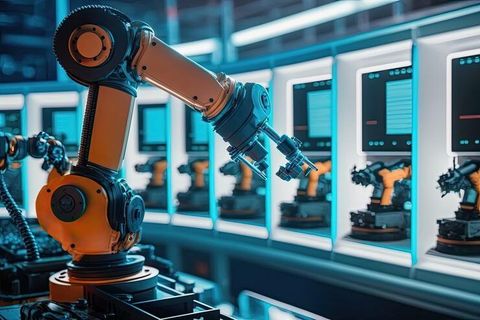
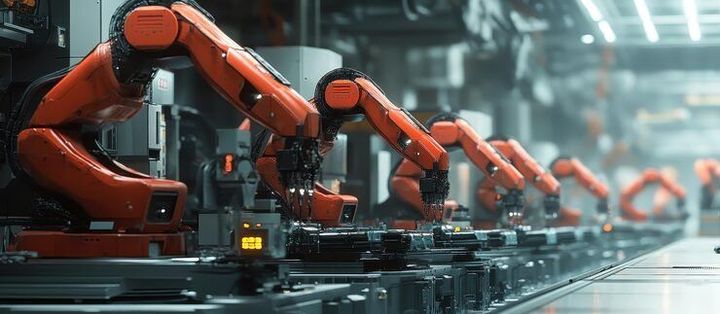
Industrial robots can perform repetitive movements and operations in controlled production environments. Collaborative robots, also called cobots, are designed to work near human operators under specified safety conditions.
Common automation technologies include:
Programmable Logic Controllers (PLCs): Control industrial machinery and production sequences.
Industrial robots: Perform welding, assembly, painting, and material handling.
Computer Numerical Control (CNC): Controls machining operations through programmed instructions.
Automated Guided Vehicles (AGVs): Transport materials along defined routes.
Machine vision systems: Examine products using cameras and image-processing software.
Smart Manufacturing and Artificial Intelligence
Smart manufacturing connects industrial equipment, production software, sensors, and monitoring platforms. These systems collect operational information that can help manufacturers understand equipment performance, production output, and resource consumption.
Artificial intelligence is also being applied to predictive maintenance, automated inspection, production scheduling, and process optimization. For example, machine-learning systems can examine equipment data to identify patterns associated with unusual vibration or temperature changes.
Digital twins are another developing technology. They create digital representations of physical machines, production lines, or industrial facilities. Engineers can use these models to examine operating conditions and evaluate potential process changes.
Sustainable Manufacturing Technologies
Energy efficiency and resource management have become important considerations in industrial planning. Manufacturers are examining electricity consumption, water usage, waste generation, material recovery, and emissions associated with production.
Some facilities use energy-monitoring systems, efficient motors, heat recovery equipment, and material recycling processes. The suitability of these technologies depends on production requirements, factory infrastructure, and environmental conditions.
Laws or Policies
Manufacturing operations in India are influenced by industrial regulations, workplace safety requirements, environmental legislation, product standards, and government initiatives. The applicable requirements depend on the industry, manufacturing activity, factory location, and products being produced.
Industrial Regulations and Factory Safety in India
The Factories Act, 1948, historically established important provisions relating to factory health, safety, and working conditions. India's labour-law framework has also undergone changes through the introduction of labour codes, including the Occupational Safety, Health and Working Conditions Code, 2020. Implementation and applicable requirements should be checked against current central and state notifications.
Manufacturing facilities may also need to comply with building regulations, electrical safety requirements, fire protection rules, machinery safeguards, and industry-specific permissions.
The Environment (Protection) Act, 1986, provides an important framework for environmental protection. Depending on their activities, industrial facilities may require approvals from relevant State Pollution Control Boards or Pollution Control Committees.
Government Programs and Industrial Development
The Indian government has introduced several initiatives connected with manufacturing development, industrial investment, and technology adoption.
Important examples include:
Make in India: A national initiative focused on strengthening domestic manufacturing and industrial development.
Production Linked Incentive (PLI) Schemes: Sector-specific programs designed to encourage manufacturing activity and production in selected industries, subject to eligibility conditions.
Digital India: A broader initiative supporting digital infrastructure, technology adoption, and digital capabilities.
National Manufacturing Policy: An earlier policy framework that established objectives for strengthening India's manufacturing sector.
Manufacturers must examine the individual eligibility requirements, applicable notifications, and current program guidelines before making decisions based on government initiatives.
Tools and Resources
Modern manufacturing depends on a combination of physical equipment, engineering software, monitoring platforms, and production management systems. These tools support different stages of industrial operations, from product development to quality inspection.
Manufacturing Equipment and Production Software
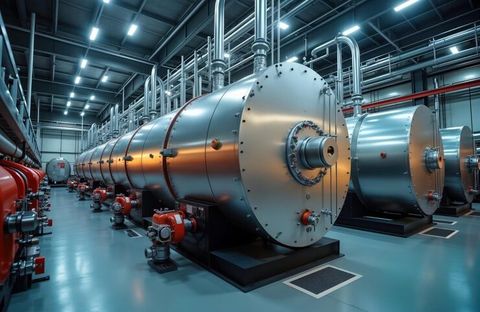
Common manufacturing equipment includes CNC machines, industrial presses, welding systems, cutting machines, injection molding machines, conveyor systems, industrial compressors, and robotic arms.
Engineering and production software helps organize manufacturing activities. Examples include:
Computer-Aided Design (CAD): Used to prepare product designs, technical drawings, and component models.
Computer-Aided Manufacturing (CAM): Converts design information into manufacturing instructions for compatible machines.
Manufacturing Execution Systems (MES): Monitor production activities, work orders, and manufacturing performance.
Enterprise Resource Planning (ERP): Coordinates inventory, procurement, production planning, and business information.
Quality Management Systems (QMS): Organize inspections, documentation, and quality-related procedures.
Platforms such as Autodesk, Siemens, and Dassault Systèmes provide software used in engineering, design, and industrial operations.
Production Monitoring and Maintenance Tools
Manufacturing facilities use sensors, measuring instruments, and monitoring systems to examine equipment conditions and production performance.
Common tools include vibration sensors, temperature monitors, pressure gauges, digital calipers, coordinate measuring machines, and industrial energy meters.
Maintenance management software can help organize inspection schedules, equipment records, repair activities, and spare-part information. Production dashboards can also display operational indicators such as machine availability, production output, defect rates, and equipment downtime.
Important Manufacturing Performance Indicators
Manufacturers commonly monitor several measurements to understand production performance:
Overall Equipment Effectiveness (OEE): Examines equipment availability, operating performance, and production quality.
Production cycle time: Measures the time required to complete a manufacturing operation or production cycle.
Defect rate: Represents the proportion of products that do not meet specified requirements.
Downtime: Measures periods when equipment is unavailable for production.
Material utilization: Examines how effectively raw materials are used during production.
These indicators provide information about different aspects of manufacturing operations. Their interpretation depends on the production process, measurement methods, and operational targets.
FAQs
What are the main types of modern manufacturing processes?
Common manufacturing processes include machining, casting, fabrication, molding, additive manufacturing, and assembly. Each method is used for different materials, product designs, and production requirements.
How does industrial automation improve manufacturing processes?
Industrial automation uses programmable controllers, sensors, robots, and software to perform production activities. It can support consistent operations, repetitive tasks, equipment monitoring, and production coordination.
What equipment is commonly used in modern manufacturing?
Common equipment includes CNC machines, industrial robots, welding machines, injection molding systems, cutting equipment, conveyors, presses, and inspection instruments. Equipment selection depends on the product and manufacturing method.
What is smart manufacturing technology?
Smart manufacturing connects industrial machines, sensors, software, and data systems to monitor and coordinate production activities. It can support equipment monitoring, quality inspection, and production planning.
Which Indian regulations apply to manufacturing industries?
Manufacturing facilities may be subject to workplace safety, environmental protection, electrical safety, factory registration, and product-standard requirements. Applicable rules depend on the industry, location, and nature of operations.
Conclusion
Modern manufacturing combines production methods, industrial equipment, automation, and digital technologies to transform raw materials into finished products. Machining, fabrication, molding, casting, and assembly remain important processes across different industries. Automation, artificial intelligence, and smart manufacturing systems are changing how production activities are monitored and coordinated. In India, industrial operations are also shaped by workplace safety requirements, environmental regulations, product standards, and manufacturing initiatives.