Electric Mining Trucks Guide: Battery Systems, Charging Methods, Performance and Uses
Electric mining trucks are heavy-duty vehicles designed to transport minerals, rocks, and other materials within mining operations using electrical power instead of relying entirely on conventional diesel engines. An Electric Mining Trucks Guide explains their battery systems, charging methods, performance characteristics, applications, and operating requirements.
Context
Electric mining trucks are heavy-duty vehicles designed to transport minerals, rocks, and other materials within mining operations using electrical power instead of relying entirely on conventional diesel engines. An Electric Mining Trucks Guide explains their battery systems, charging methods, performance characteristics, applications, and operating requirements. These vehicles are part of a broader shift toward electrification in the mining industry, where equipment must operate under demanding conditions involving heavy loads, steep gradients, dust, and long working hours.
Traditional mining trucks commonly use diesel engines or diesel-electric drive systems. Electric mining technology developed through improvements in electric motors, battery storage, power electronics, and energy management. Some mining trucks use trolley-assisted electrical systems, while newer designs incorporate rechargeable battery packs that allow vehicles to operate without continuous external electrical connections.
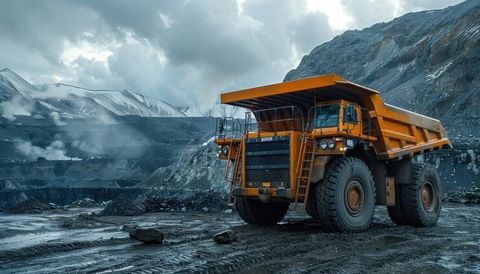
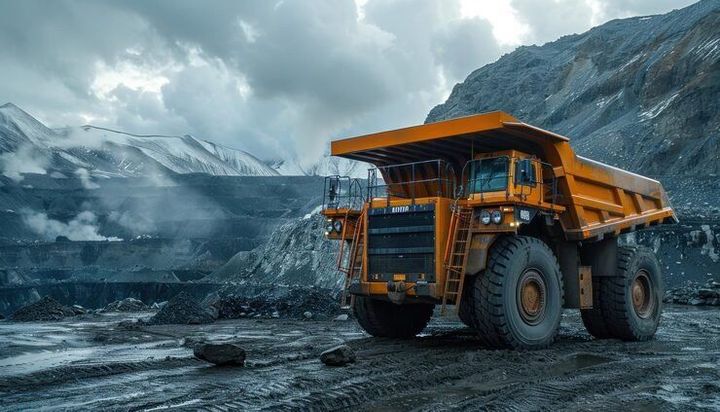
Electric mining trucks are available in different sizes and configurations. Smaller electric vehicles may transport materials within underground mines, while large battery-powered haul trucks are designed for surface mining operations. Their design depends on payload capacity, travel distance, road conditions, charging infrastructure, and the energy requirements of the mining site.
Main Types of Electric Mining Trucks
Electric mining trucks can be classified according to their power source and operating design.
Battery-electric mining trucks: Use rechargeable battery packs to power electric motors. They can operate without a continuous connection to an external power supply.
Trolley-assisted mining trucks: Receive electrical power through overhead cables while traveling along designated routes. Some systems also use onboard energy storage.
Diesel-electric mining trucks: Use diesel engines to generate electricity that powers electric traction motors. These are different from fully battery-electric vehicles.
Underground electric mining trucks: Designed for confined underground environments, often with compact dimensions and battery-powered drive systems.
Each configuration has different infrastructure requirements and operating characteristics.
How Electric Mining Trucks Work
A battery-electric mining truck stores electrical energy in a battery pack. The battery management system monitors battery temperature, voltage, charging conditions, and energy levels to support controlled operation.
When the operator accelerates, power electronics regulate the electricity supplied to the electric motors. These motors generate rotational force that moves the wheels. During braking or downhill travel, regenerative braking may recover some movement energy and return it to the battery.
The vehicle also includes cooling equipment, control systems, electrical protection components, and monitoring technology. Together, these systems support vehicle operation under demanding mining conditions.
Importance
Electric mining trucks are becoming increasingly relevant as mining companies examine energy consumption, operational emissions, equipment efficiency, and workplace conditions. Mining operations often involve vehicles carrying heavy loads over repeated routes, making transportation a significant part of site energy use.
Conventional diesel mining trucks produce exhaust emissions during operation. Battery-electric vehicles do not produce exhaust emissions from an onboard combustion engine while driving, although electricity generation and battery manufacturing may create emissions elsewhere in the supply chain.
Benefits and Operational Challenges
Electric mining trucks have several potential operational characteristics:
Reduced local exhaust emissions: Battery-electric vehicles do not release diesel exhaust from an onboard engine during normal driving.
Regenerative braking: Some systems recover energy during braking or downhill movement.
Electric drive performance: Electric motors can deliver high torque at low speeds, which is useful when moving heavy loads.
Different maintenance requirements: Electric drivetrains have fewer combustion-related components, although batteries, cooling systems, electrical equipment, and tires still require maintenance.
Noise considerations: Electric operation can reduce some vehicle noise, although tires, warning systems, and mechanical components still generate sound.
However, electric mining trucks also present practical challenges. Battery weight, charging time, electricity availability, charging infrastructure, operating temperature, and vehicle purchase requirements can influence their suitability.
Battery Systems and Main Components
Battery technology is central to electric mining truck performance. Lithium-ion battery systems are used in many modern electric vehicle designs because they provide rechargeable energy storage and can support high-power applications.
| Component | Main function |
|---|---|
| Battery pack | Stores electrical energy |
| Battery management system | Monitors battery condition and operation |
| Electric motor | Converts electrical energy into movement |
| Inverter | Controls electrical power supplied to the motor |
| Cooling system | Manages operating temperature |
| Regenerative braking | Recovers some braking energy |
| Charging connection | Transfers electricity into the battery |
| Vehicle control unit | Coordinates electrical and mechanical systems |
Battery capacity is generally measured in kilowatt-hours (kWh), while motor power is measured in kilowatts (kW). Actual operating range depends on vehicle weight, payload, route gradient, speed, temperature, and driving patterns.
Recent Updates
Electric mining truck development has increasingly focused on larger battery systems, faster charging arrangements, energy recovery, and integration with mine-wide electrical infrastructure. During 2024–2026, manufacturers and mining operators have continued exploring battery-powered haulage, trolley-assisted transportation, and electrified underground equipment.
Battery Technology and Charging Developments
Battery systems are evolving through improvements in energy density, thermal management, charging controls, and battery monitoring. These developments aim to support heavy-duty applications where vehicles may need to travel long distances while carrying substantial payloads.
Charging methods are also receiving attention. High-power charging systems can reduce the time required to replenish battery energy, provided that the vehicle and electrical infrastructure support the necessary power levels. Some mining projects are also examining battery exchange systems, where depleted battery packs are replaced with charged units.
Battery swapping may reduce vehicle waiting time, but it requires compatible equipment, additional battery inventory, handling systems, and dedicated infrastructure.
Automation and Energy Management
Electric mining trucks are increasingly being considered alongside autonomous vehicle systems and digital mine management platforms. Sensors, vehicle positioning systems, and fleet monitoring software can help coordinate vehicle movement, track energy consumption, and identify operating conditions.
Mine operators can also use energy management software to coordinate charging schedules with electricity availability and production requirements. These developments demonstrate how vehicle electrification is connected with wider changes in industrial automation and mining infrastructure.
Laws or Policies
Electric mining trucks are influenced by mining safety regulations, vehicle requirements, electrical safety standards, environmental policies, and battery transportation rules. Requirements vary according to the country, mine type, vehicle configuration, and applicable regulatory authority.
Mining Regulations in India
In India, mining operations are regulated under legislation including the Mines Act, 1952, and the Mines and Minerals (Development and Regulation) Act, 1957, along with applicable rules and regulations. The Directorate General of Mines Safety (DGMS) oversees important aspects of mine safety and occupational health.
Electric mining equipment must be considered within the applicable requirements for electrical installations, machinery operation, worker protection, and mine-specific safety procedures. Underground operations may have additional requirements relating to ventilation, electrical equipment, fire prevention, and emergency arrangements.
Battery and Environmental Requirements
Battery-powered mining vehicles involve additional considerations relating to battery storage, charging areas, electrical isolation, fire protection, and the handling of damaged battery packs.
India's Battery Waste Management Rules, 2022, establish requirements concerning battery waste management and extended producer responsibility for covered batteries. The applicable obligations depend on the battery category and the responsible organization.
Environmental requirements may also apply to mining operations through pollution control approvals, environmental clearances, and applicable emissions regulations. Electric vehicles can reduce direct exhaust emissions at the mine, but electricity generation and battery production remain relevant when assessing overall environmental impact.
Tools and Resources
Different digital tools and technical resources help mining operators understand electric mining truck performance, battery requirements, and infrastructure planning.
Battery and Performance Calculation Tools
Battery capacity calculators can estimate the energy required for a vehicle based on operating hours, motor power, and energy consumption. Charging time calculators can provide approximate charging periods using battery capacity and charger power, although actual results depend on charging efficiency and battery charging limits.
Important measurements include:
Battery capacity: The amount of electrical energy stored, generally measured in kWh.
Charging power: The rate at which electrical energy enters the battery, measured in kW.
Energy consumption: Electricity used over a distance or operating period.
Payload capacity: The maximum material weight a vehicle is designed to carry.
Regenerative energy: Electrical energy recovered during braking or downhill movement.
These measurements help explain differences between vehicle models and operating conditions.
Industry Websites and Technical Resources
Several organizations publish information about mining equipment, battery technology, and electrification:
International Council on Mining and Metals (ICMM): Publishes information about mining sustainability, operational practices, and industry developments.
International Energy Agency (IEA): Provides research on energy technologies, electrification, and industrial energy use.
Directorate General of Mines Safety (DGMS): Provides Indian mining safety information and applicable regulatory material.
Society of Automotive Engineers (SAE International): Publishes technical standards and research related to vehicle engineering and electrification.
Manufacturer technical documentation: Provides vehicle specifications, battery capacity, charging requirements, and operating limitations.
Vehicle specifications should be evaluated according to the actual mining environment rather than relying only on general product descriptions.
Electric Mining Truck Planning Factors
Before introducing electric mining trucks, mining operators generally examine several factors:
Daily travel distance and expected operating hours.
Average payload and road gradients.
Battery capacity and charging intervals.
Electricity supply and charging infrastructure.
Battery cooling and environmental conditions.
Maintenance facilities and worker training.
Emergency procedures and electrical safety arrangements.
These factors influence how electric vehicles can be integrated into existing mining operations.
FAQs
How do electric mining trucks work?
Electric mining trucks use battery packs or external electrical connections to supply energy to electric motors. Electronic control systems regulate motor power, while regenerative braking can recover some energy during deceleration.
What battery systems are used in electric mining trucks?
Many modern battery-electric mining trucks use lithium-ion battery systems. Battery capacity, cooling arrangements, charging limits, and management technology vary according to vehicle design and operating requirements.
What are the charging methods for electric mining trucks?
Common charging methods include plug-in charging, high-power charging, battery swapping, and trolley-assisted electrical supply. The appropriate method depends on vehicle design, mine layout, electricity availability, and operating schedules.
How do electric mining trucks compare with diesel mining trucks?
Battery-electric mining trucks produce no onboard combustion exhaust during operation and may recover energy through regenerative braking. Diesel trucks can operate without battery charging infrastructure, but they require fuel and produce exhaust emissions.
Where are electric mining trucks used?
Electric mining trucks are used or being developed for underground mines, surface mining operations, mineral transportation, and selected heavy-duty industrial applications. Their suitability depends on payload, terrain, operating distance, and electrical infrastructure.
Conclusion
Electric mining trucks use battery systems, electric motors, and different charging arrangements to transport materials in mining environments. Their performance depends on battery capacity, charging infrastructure, payload, terrain, and energy management. Recent developments in battery technology, automation, and mine electrification are expanding their potential applications. Mining regulations, electrical safety, battery management, and environmental considerations remain important parts of their deployment.