Forklift Technology Guide: Designs, Lifting Capacities, Functions and Warehouse Applications
Forklift technology refers to the machines, lifting mechanisms, power systems, and safety features used to move and position materials in warehouses, factories, distribution centers, construction sites, and industrial facilities. A forklift is a powered industrial vehicle designed to lift loads, carry them over short distances, and place them at different heights. Its development followed the growth of industrial manufacturing and the need to handle heavy materials more efficiently.
Context
Forklift technology refers to the machines, lifting mechanisms, power systems, and safety features used to move and position materials in warehouses, factories, distribution centers, construction sites, and industrial facilities. A forklift is a powered industrial vehicle designed to lift loads, carry them over short distances, and place them at different heights. Its development followed the growth of industrial manufacturing and the need to handle heavy materials more efficiently.
Early material-handling equipment relied heavily on manual effort and simple lifting devices. As factories and warehouses expanded, powered industrial trucks became increasingly important for moving pallets, containers, machinery components, and packaged goods. Modern forklift designs now include electric motors, internal combustion engines, electronic controls, sensors, and systems that help operators monitor lifting conditions.
Understanding Forklift Designs
Forklifts are available in several designs because different workplaces require different lifting heights, load capacities, and operating conditions. Their structure generally includes a chassis, mast, forks, hydraulic lifting system, power source, steering controls, and operator protection features.
Common forklift designs include:
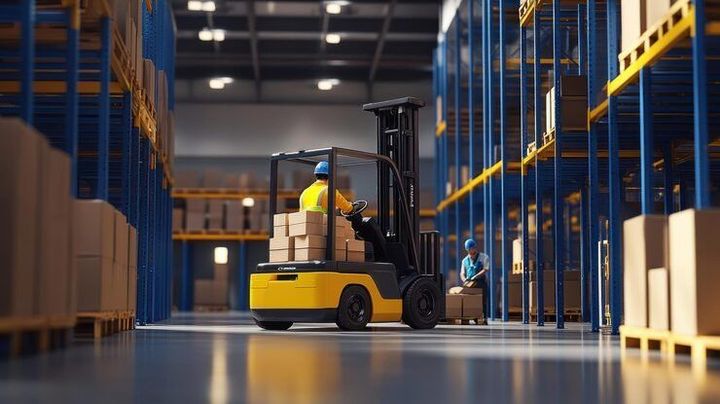
Counterbalance forklifts: Use a rear counterweight to balance loads carried at the front. They are common in warehouses, loading areas, and manufacturing facilities.
Reach trucks: Use an extending mechanism to position loads on elevated warehouse racks, particularly in narrow aisles.
Pallet stackers: Lift and position palletized materials at relatively low or moderate heights, depending on the model.
Rough-terrain forklifts: Have features designed for uneven outdoor surfaces, such as construction sites and certain agricultural locations.
Order pickers: Allow operators to access individual items stored on elevated warehouse shelves.
Telehandlers: Use an extendable boom to lift loads forward and upward, often in construction and outdoor material-handling applications.
Each design has specific operating limits. The suitability of a forklift depends on its rated capacity, load dimensions, floor conditions, available space, and required lifting height.
Importance
Forklift technology plays an important role in the movement of goods throughout modern supply chains. Warehouses use forklifts to unload deliveries, organize inventory, transfer materials between work areas, and prepare products for dispatch. Manufacturing facilities use them to move components, raw materials, equipment, and finished products.
Appropriate equipment selection can help reduce unnecessary manual handling and support more organized material movement. However, forklifts also introduce risks, including collisions, falling loads, vehicle overturning, and injuries involving pedestrians. Understanding their functions, limitations, and operating requirements is important for warehouse managers, equipment operators, maintenance teams, and businesses that handle heavy materials.
Forklift Lifting Capacity and Load Stability
Lifting capacity is the maximum load a forklift is rated to handle under specified conditions. It is commonly expressed in kilograms or tonnes and depends on the machine's configuration, load center, lifting height, and approved attachments.
The load center describes the horizontal distance between the load's center of gravity and the relevant vertical reference point of the fork face. A load positioned farther forward can reduce the forklift's available lifting capacity. Heavy or unevenly distributed materials may also affect stability.
Important capacity considerations include:
Rated capacity: The manufacturer's specified capacity under stated operating conditions.
Load center: The distance between the fork face and the load's center of gravity.
Lift height: The height at which the load must be positioned.
Attachments: Devices such as clamps or extensions that can change the machine's capacity.
Load distribution: The way weight is spread across the forks and within the load.
Operators must use the capacity plate and manufacturer documentation applicable to the specific machine and configuration. A forklift should not be assumed to handle its nominal capacity at every lifting height or with every attachment.
Comparing Forklift Types
| Forklift type | Main function | Typical operating environment |
|---|---|---|
| Counterbalance | Carries loads at the front | Warehouses and loading areas |
| Reach truck | Places pallets on elevated racks | Indoor storage facilities |
| Pallet stacker | Lifts and positions pallets | Stockrooms and smaller warehouses |
| Rough-terrain forklift | Handles materials on uneven ground | Construction and outdoor sites |
| Order picker | Supports access to individual stored items | Inventory and picking operations |
| Telehandler | Lifts loads using an extendable boom | Construction and agricultural sites |
These are general descriptions rather than fixed specifications. Load limits, lifting heights, turning requirements, and operating surfaces vary by model.
Recent Updates
Forklift technology continues to develop through changes in electrification, automation, battery design, and workplace monitoring. Across the 2024–2026 period, industrial material-handling trends have included greater interest in electric forklifts, connected fleet systems, and automated movement within warehouses. Adoption varies according to facility size, operating conditions, infrastructure, and equipment requirements.
Electric Forklifts and Battery Technology
Electric forklifts use batteries and electric motors rather than conventional fuel-powered engines. Lithium-ion batteries have become an option for some industrial vehicles, alongside established lead-acid battery systems. Battery choice affects charging arrangements, maintenance requirements, operating schedules, and the facilities needed for safe battery handling.
Electric models produce no exhaust emissions at the point of use, which can be useful in enclosed work areas. Their overall environmental impact still depends on factors such as electricity generation, battery production, equipment lifespan, and end-of-life handling. Electric forklifts must also be matched to the required load capacity, travel distance, and operating schedule.
Automation and Connected Warehouse Systems
Some warehouses use automated guided vehicles and autonomous mobile robots to transport materials along defined routes or between workstations. Certain forklift systems also incorporate navigation technology, obstacle detection, fleet-management software, and automated movement functions.
Connected systems can collect information about equipment use, operating hours, battery condition, and maintenance needs. These features may help facilities plan equipment use and identify operational issues, but they do not eliminate the need for suitable workplace controls. Automated equipment still requires risk assessment, suitable routes, maintenance, and coordination with people working in the same area.
Safety Monitoring and Operator Assistance
Modern forklift models may include cameras, warning lights, proximity sensors, speed controls, stability monitoring, and operator-presence systems. The exact features differ by manufacturer and model. Such systems can support awareness of nearby hazards, but they cannot replace operator training, safe driving practices, or workplace traffic management.
Laws or Policies
Forklift operation is affected by workplace safety legislation, equipment standards, training requirements, inspection procedures, and local operating rules. The applicable requirements depend on the country, the workplace, the type of equipment, and the activities being performed.
Forklift Safety Regulations in India
In India, workplace safety requirements can arise under the Occupational Safety, Health and Working Conditions Code, 2020, and other applicable legislation, rules, and regulations. The Code's implementation status and the provisions applicable to a particular workplace should be checked against current government notifications and relevant state requirements.
Factories and other industrial workplaces may also be subject to applicable factory safety rules, machinery requirements, and provisions addressing the handling and movement of materials. Employers and site operators have responsibilities determined by the laws applicable to their operations.
Operator Training and Workplace Controls
Safe forklift operation generally requires instruction appropriate to the equipment and workplace. Training should cover controls, load stability, capacity plates, visibility, pedestrian awareness, operating surfaces, parking, and emergency procedures. Workplace authorization and any formal qualification requirements depend on applicable rules and the employer's procedures.
Practical safety measures commonly include:
Inspecting the forklift before use and reporting defects.
Checking the load weight and ensuring it is stable.
Keeping loads within the rated capacity for the operating configuration.
Maintaining safe separation between forklifts and pedestrians.
Using seat belts and other installed protective equipment as applicable.
Parking securely, lowering the forks, and following shutdown procedures.
Equipment should be maintained according to manufacturer instructions and applicable inspection requirements. Defective brakes, damaged forks, hydraulic leaks, faulty steering, and warning-system problems require appropriate attention before the vehicle is returned to operation.
Tools and Resources
Several technical resources can help facilities understand forklift specifications, calculate load requirements, manage inspections, and plan warehouse operations. Their usefulness depends on the equipment model and the workplace's operational needs.
Capacity Charts and Manufacturer Documentation
A forklift capacity plate provides important information about the machine's rated lifting capability under specified conditions. Manufacturer manuals explain operating controls, approved attachments, maintenance schedules, and model-specific limitations.
Capacity charts and attachment documentation are particularly relevant when handling unusual load dimensions or lifting materials to greater heights. Online specifications should be checked against the exact model and configuration rather than treated as universal values.
Warehouse Planning and Fleet Management Tools
Warehouse layout software can help planners assess aisle widths, storage arrangements, travel paths, and access to loading areas. Fleet-management systems can record equipment utilization, operating hours, charging status, and maintenance information.
Inspection templates can document checks of tires, forks, chains, mast movement, brakes, lights, steering, and hydraulic systems. A maintenance record can also include inspection dates, identified defects, corrective work, and the next scheduled review.
Practical Equipment Selection Checklist
Before selecting or assigning a forklift, facilities can evaluate:
Maximum load weight and load dimensions.
Required lifting height and load center.
Indoor or outdoor operating conditions.
Aisle width, turning space, and floor condition.
Power source, charging arrangements, and ventilation needs.
Attachment compatibility and capacity limitations.
Operator training, maintenance access, and safety controls.
These factors help establish whether a particular forklift design is appropriate for the intended task.
FAQs
What are the main types of forklifts used in warehouses?
Common types include counterbalance forklifts, reach trucks, pallet stackers, and order pickers. The appropriate design depends on aisle width, load weight, storage height, and the type of material being moved.
How is forklift lifting capacity determined?
Lifting capacity depends on the manufacturer's rating and factors such as load center, lifting height, attachments, and load distribution. Operators should refer to the machine's capacity plate and documentation for the relevant configuration.
What is the difference between electric and diesel forklifts?
Electric forklifts use batteries and electric motors, while diesel forklifts use combustion engines. Electric models produce no exhaust at the point of use, whereas diesel models require attention to exhaust ventilation and fuel handling. Operating conditions influence equipment suitability.
What safety features are used in modern forklift technology?
Features may include seat belts, overhead guards, warning lights, cameras, proximity sensors, speed controls, and stability monitoring. Availability varies by model, and these features do not replace training or workplace safety procedures.
What regulations apply to forklift operation in India?
Applicable requirements may include workplace safety legislation, factory rules, equipment inspection procedures, and operator training requirements. The specific obligations depend on the workplace and the provisions currently in force.
Conclusion
Forklift technology includes different vehicle designs, lifting mechanisms, power systems, and safety features for handling materials in industrial environments. Lifting capacity depends on the machine's specifications, load characteristics, attachments, and operating conditions. Electrification, automation, and connected monitoring systems are influencing warehouse equipment practices. Appropriate equipment selection, regular inspection, operator training, and compliance with applicable safety requirements remain important aspects of forklift operation.