Cable Manufacturing Explained: Materials, Processes, Types, Applications and Quality Considerations
Cable manufacturing is the industrial process used to produce cables that carry electrical power, signals, data, or control information. A typical cable may contain a conductive core, insulation, protective layers, shielding, and an outer sheath, depending on its intended application. The materials and construction vary according to voltage, current, flexibility, environmental exposure, and mechanical requirements.
The basic idea behind an electrical cable is simple: a conductive material provides a path for electricity, while insulating and protective materials help control electrical flow and protect the conductor. Copper and aluminium are commonly used as conductors because they provide suitable electrical conductivity and can be formed into wires or strands.
Modern cable manufacturing combines several processes rather than producing the complete cable in one operation. Conductors are prepared, drawn, stranded, insulated, assembled, protected, tested, and finally packaged on drums or other suitable supports. Different cable types use different combinations of these stages.
Cable manufacturing developed alongside the expansion of electrical systems, telecommunications, transportation, industrial equipment, and infrastructure. As electrical networks became more complex, cable designs also developed to handle different voltage levels, temperatures, mechanical conditions, and installation environments.
Importance
Cables are part of many systems used in homes, buildings, factories, transportation networks, communication infrastructure, renewable-energy installations, and electrical grids. Their characteristics influence how electrical energy or signals move from one point to another.
For everyday users, cable selection can affect electrical safety, equipment operation, energy losses, durability, and installation requirements. A cable intended for indoor wiring may have very different insulation and protection requirements from a cable installed underground, inside industrial equipment, or in a photovoltaic system.
Why cable construction matters
Cable construction helps address several practical challenges:
- Electrical conductivity: The conductor must provide an appropriate path for current.
- Insulation: Insulating materials separate conductive parts and reduce the possibility of unintended electrical contact.
- Heat management: Electrical current generates heat, so cable design must account for allowable operating temperatures.
- Mechanical protection: Armouring, sheathing, or other layers can protect cables from physical forces.
- Environmental resistance: Materials may need resistance to moisture, chemicals, oils, sunlight, heat, or cold.
- Flexibility: Cables used in moving equipment may require more flexible construction than fixed installations.
- Fire behavior: Some applications require cables with specific flame, smoke, or fire-survival characteristics.
Common cable materials
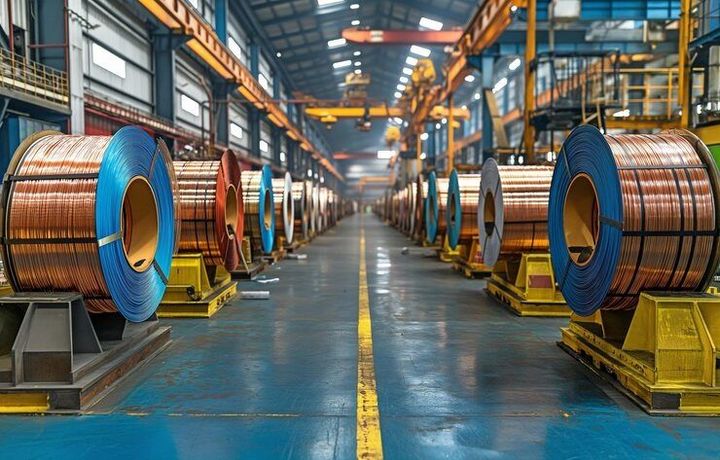
Copper and aluminium are widely used for conductors. Copper provides high electrical conductivity and is commonly used in building wiring, industrial cables, flexible cables, and many power applications. Aluminium has lower density than copper and is used in various power transmission and distribution applications.
Insulation and sheath materials can include PVC, polyethylene, cross-linked polyethylene, elastomeric compounds, and other specialized materials. The selected material depends on electrical, thermal, mechanical, and environmental requirements.
| Cable component | Common materials | Main purpose |
|---|---|---|
| Conductor | Copper, aluminium | Carries electrical current |
| Insulation | PVC, XLPE, elastomeric compounds | Separates and protects conductors |
| Shield | Metallic tape, wire, foil | Controls electromagnetic interference |
| Armour | Steel wire or tape | Provides mechanical protection |
| Sheath | PVC, polyethylene, elastomeric compounds | Protects the cable from its surroundings |
Recent Updates
Cable manufacturing continues to develop as electricity networks, renewable-energy systems, industrial automation, electric transportation, and high-voltage transmission expand. Current development areas include improved insulation systems, fire-performance characteristics, higher-voltage applications, photovoltaic cables, and more specialized testing methods.
Indian Standards have also continued to evolve. BIS records show developments and revisions involving cable materials, conductors, current ratings, fire-survival cables, and high-voltage direct-current transmission. For example, IS 6380:2024 addresses elastomeric insulation and sheath for electric cables, while IS 18833:2024 covers test methods and requirements for certain HVDC power-transmission cables.
BIS information also shows activity around cable-related standards reviewed or revised during 2024–2026. Examples include standards concerning cable drums, conductors, cable current ratings, and installation-related requirements.
Photovoltaic cable technology is another relevant area as solar installations expand. Indian standards include requirements for electric cables used with photovoltaic systems, including cables designed for rated direct-current voltages up to 1,500 V in applicable applications.
Another continuing trend is greater attention to fire behavior and low-smoke cable construction in applications where smoke and corrosive gases can create additional hazards. Indian standards include specifications for fire-survival cables and related testing methods.
Laws or Policies
In India, cable manufacturing and use are influenced by Indian Standards, product certification requirements, electrical safety regulations, and technical rules for electrical installations.
The Bureau of Indian Standards, or BIS, maintains Indian Standards covering different cable categories, materials, testing methods, and applications. BIS also provides a “Know Your Standard” platform where users can search standards by product name or Indian Standard number and view related information.
Certain cable categories are subject to compulsory certification requirements. BIS lists cables covered by the Cables Quality Control Order, including specified PVC-insulated heavy-duty electric cables under applicable Indian Standards. Where a product is covered by a compulsory certification order, manufacturers and other relevant parties must follow the applicable requirements.
Electrical safety is also shaped by the Central Electricity Authority and the Electricity Act framework. The Central Electricity Authority's safety regulations address requirements connected with the construction, installation, protection, operation, and maintenance of electrical supply lines and equipment. Indian Standards are referenced within this framework where applicable.
The regulatory framework continues to develop. CEA records show amendments to the Technical Standards for Construction of Electrical Plants and Electric Lines during the current regulatory period, while further amendments were under consultation in 2026.
Requirements can differ according to cable type, voltage level, installation environment, and intended application. Manufacturers, engineers, installers, and other responsible parties therefore need to identify the specific Indian Standards and regulations applicable to a particular cable.
Tools and Resources
Several resources can help readers understand cable manufacturing, specifications, and testing requirements.
Indian Standards resources
The BIS “Know Your Standard” platform allows users to search Indian Standards by keyword or IS number. It can provide access to standard information, amendments, testing schemes, laboratories, and related certification details.
Cable calculation tools
Cable-sizing calculators can help estimate conductor requirements based on factors such as current, voltage, conductor material, installation method, permissible voltage drop, and operating conditions. These calculators are useful for preliminary understanding, but final electrical design needs to follow the applicable engineering requirements and standards.
Technical datasheets
Cable datasheets normally contain information such as conductor material, conductor size, insulation type, rated voltage, temperature range, cable construction, dimensions, and applicable standards. Comparing these specifications can help readers understand how different cable designs are intended to function.
Testing resources
Cable testing may include conductor resistance testing, insulation resistance measurement, dimensional checks, tensile testing, thermal tests, voltage tests, flame-related tests, and other examinations depending on the cable category. BIS maintains information on cable testing standards and related laboratory resources.
Manufacturing process overview
A typical cable manufacturing sequence may include:
- Wire drawing: Metal rod is reduced through dies to reach the required conductor dimensions.
- Annealing: Copper or other suitable conductors may undergo controlled heating to adjust mechanical properties.
- Stranding: Individual wires are combined to create a stranded conductor where the design requires flexibility or specific construction.
- Insulation extrusion: Insulating material is applied around the conductor through an extrusion process.
- Core assembly: Multiple insulated cores can be arranged together according to the cable design.
- Shielding or armouring: Additional layers may be added for electrical screening or mechanical protection.
- Sheathing: An outer protective layer is applied around the completed cable construction.
- Testing: Finished cable sections undergo examinations appropriate to their design and applicable standards.
Quality considerations extend across the entire manufacturing process. Conductor dimensions, material properties, insulation thickness, concentricity, surface condition, electrical resistance, and mechanical characteristics can all influence cable performance. Production controls therefore focus on maintaining consistent dimensions and material properties throughout manufacturing.
FAQs
What materials are commonly used in cable manufacturing?
Copper and aluminium are common conductor materials. Insulation and protective layers may use PVC, polyethylene, cross-linked polyethylene, elastomeric compounds, metallic shielding materials, and steel for certain armoured cable constructions.
How does cable manufacturing work?
Cable manufacturing generally involves preparing the conductor, drawing and sometimes annealing the metal, stranding wires when required, applying insulation, assembling cores, adding shielding or armour where applicable, applying an outer sheath, and performing appropriate tests.
What are the main types of electrical cables?
Common categories include power cables, control cables, flexible cables, communication cables, photovoltaic cables, automotive cables, instrumentation cables, and specialized high-voltage cables. Their construction depends on the electrical and environmental conditions in which they are intended to operate.
Why are cable quality tests important?
Cable quality tests help verify characteristics such as conductor resistance, insulation properties, dimensions, mechanical strength, thermal behavior, and other requirements specified for a particular cable type. The applicable tests depend on the relevant Indian Standard or technical specification.
Which Indian Standards apply to cable manufacturing?
The applicable standard depends on the cable category and intended application. BIS maintains standards covering cable construction, conductors, insulation, testing, current ratings, fire characteristics, photovoltaic applications, and high-voltage systems. The BIS standards database can be used to identify the relevant specification.
Conclusion
Cable manufacturing combines conductive materials, insulation, protective layers, controlled production processes, and quality testing to create cables for different electrical and industrial applications. Copper and aluminium are widely used as conductors, while materials such as PVC, XLPE, and elastomeric compounds are used for insulation and protection. Indian Standards and electrical safety regulations provide an important framework for cable specifications, testing, certification, and installation. Recent developments continue to address photovoltaic systems, fire performance, advanced insulation, and high-voltage transmission applications.