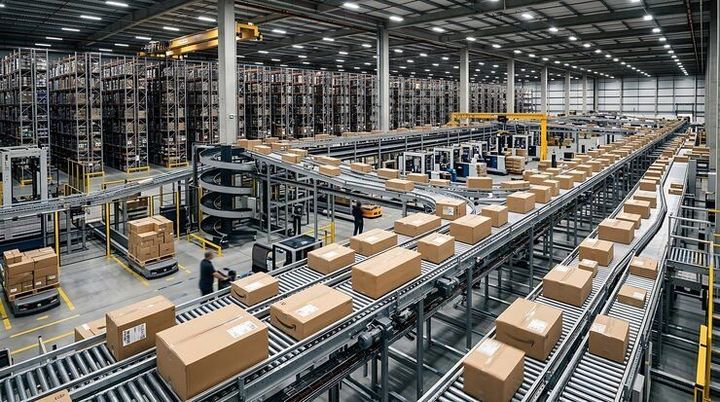
Automated Material Sorting Systems Guide: Types, Sensors, Processes and Industrial Uses
Automated material sorting systems are industrial technologies that identify, separate, and direct different materials according to their physical or chemical properties. These systems are used in recycling plants, mining operations, food processing facilities, manufacturing units, and waste management centers. They combine mechanical equipment, sensors, software, and control systems to organize mixed materials into separate categories.
Context
Automated material sorting systems are industrial technologies that identify, separate, and direct different materials according to their physical or chemical properties. These systems are used in recycling plants, mining operations, food processing facilities, manufacturing units, and waste management centers. They combine mechanical equipment, sensors, software, and control systems to organize mixed materials into separate categories.
Material sorting has traditionally depended on manual inspection, screens, magnets, and other mechanical separation methods. As production volumes increased and material mixtures became more complex, industries developed automated methods to improve consistency and reduce the need for repeated manual handling. Modern automated material sorting systems can recognize selected material characteristics and direct individual items or particles toward designated collection points.
How Automated Material Sorting Works
An automated sorting line typically moves materials along a conveyor belt or through a controlled processing area. Sensors examine the materials, software interprets the collected information, and mechanical devices separate selected items according to programmed rules.
A typical process includes several stages:
Material feeding: Mixed materials enter the system at a controlled rate.
Detection: Sensors examine characteristics such as color, shape, size, density, or chemical composition.
Classification: Control software compares sensor information with configured identification criteria.
Separation: Air jets, robotic arms, diverter gates, or other mechanisms direct materials into separate streams.
Collection and inspection: Sorted materials are collected, checked, and prepared for further processing.
The precise arrangement depends on the material being handled, the required separation accuracy, and the operating conditions of the facility.
Importance
Automated material sorting systems help industries manage large quantities of mixed materials in a consistent and organized way. They are particularly relevant where materials must meet defined purity requirements before reuse, further manufacturing, or disposal.
For recycling facilities, effective sorting can separate paper, plastics, metals, and glass from mixed waste. In manufacturing, sorting systems can identify components with different dimensions or visible defects. Mining operations may use sensor-based sorting to distinguish valuable mineral-bearing rocks from less useful material before additional processing.
Industrial Problems Addressed by Automated Sorting
Manual and conventional sorting methods can face several limitations. Material mixtures may move quickly, items may overlap, and some materials may look similar despite having different compositions. Repetitive handling can also create ergonomic risks for workers.
Automated systems address selected challenges by applying consistent detection and separation rules. Their performance still depends on material presentation, sensor capability, calibration, maintenance, and the quality of the incoming stream.
Common industrial applications include:
Recycling: Separating plastic types, metals, paper, glass, and electronic waste.
Mining: Identifying and separating rocks based on selected mineral or material characteristics.
Food processing: Sorting products by color, shape, size, or visible defects.
Manufacturing: Grouping components by dimensions, material type, or inspection results.
Packaging: Separating items according to shape, label, size, or product category.
Waste management: Dividing mixed waste into material streams for recovery or appropriate treatment.
Types of Automated Material Sorting Systems
Different sorting technologies use different physical properties to recognize materials. Some systems operate independently, while others combine several methods in a single production line.
| System type | Main detection or separation method | Common applications |
|---|---|---|
| Optical sorting | Color, shape, or reflected light | Plastics, food, glass |
| Near-infrared sorting | Spectral response of materials | Plastic identification, recycling |
| Magnetic separation | Magnetic properties | Iron and steel recovery |
| Eddy-current separation | Response of conductive non-ferrous metals to changing magnetic fields | Aluminum and other non-ferrous metals |
| X-ray sorting | Differences in X-ray absorption or related signals | Mineral processing, selected waste streams |
| Size-based sorting | Screens, sieves, or dimensional measurement | Aggregates, grains, bulk materials |
| Robotic sorting | Camera or sensor information with robotic movement | Packaging, recycling, component handling |
The table describes general operating principles. A system's suitability depends on the material mixture, item size, contamination level, and separation requirements.
Recent Updates
Automated material sorting has increasingly incorporated machine vision, improved sensor processing, robotics, and data-based monitoring. Developments from 2024 through 2026 reflect broader industrial interest in handling complex material streams, improving traceability, and supporting more efficient resource recovery. Specific capabilities vary between equipment manufacturers and installations.
Artificial Intelligence and Machine Vision
Traditional optical sorters often use predefined thresholds and classification rules. Newer systems may incorporate machine-learning models that analyze images, recognize patterns, and distinguish between materials with similar visual characteristics.
Machine vision can evaluate color, shape, surface appearance, and other visible features. When combined with appropriate sensors, it can help identify objects that conventional color-based detection may not distinguish reliably. Performance depends on the training data, lighting, material condition, and system configuration.
Advanced Sensors and Robotic Sorting
Near-infrared sensors can help distinguish certain polymers by analyzing their spectral responses. Other systems use X-ray measurements, laser-based techniques, or multiple sensors to classify materials that require different identification methods.
Robotic sorting combines cameras or other sensors with programmed movement. A robotic arm can identify a target object and pick it from a moving or stationary stream. These systems are useful when items have irregular shapes or require more flexible handling, although speed, gripping ability, and object overlap can limit performance.
Monitoring and Resource Recovery
Industrial operators increasingly use control software to monitor throughput, equipment status, rejected materials, and sorting performance. Data from these systems can help identify blockages, sensor drift, and changes in incoming material quality.
Interest in circular manufacturing and recycling is also encouraging the development of sorting processes that recover materials for reuse. However, improved detection alone does not ensure successful recycling. Material quality, collection systems, processing capacity, and the availability of suitable downstream facilities also influence recovery outcomes.
Laws or Policies
Automated material sorting systems may be affected by workplace safety rules, machinery requirements, environmental regulations, waste management policies, and product-specific standards. The applicable rules depend on the country, industry, facility, and type of material being processed.
Industrial Safety and Machinery Requirements in India
In India, industrial facilities must consider applicable occupational safety, factory, electrical, and machinery-related requirements. The relevant legal framework depends on the establishment and the provisions in force. The Occupational Safety, Health and Working Conditions Code, 2020, forms part of India's labor-law framework, with implementation and applicable provisions subject to official commencement arrangements.
Sorting equipment may contain moving belts, rotating mechanisms, robotic arms, electrical controls, and compressed-air systems. Appropriate guarding, emergency stops, maintenance procedures, operator training, and isolation of hazardous energy during maintenance are important safety considerations.
Waste Management and Environmental Rules
India's waste management framework includes rules addressing solid waste, plastic waste, electronic waste, and other specific waste categories. Requirements may include segregation, collection, processing, recycling, recordkeeping, and responsibilities for relevant organizations.
Automated sorting can support these activities by separating materials into identifiable streams, but installing a sorting system does not by itself establish regulatory compliance. Facilities must assess the rules applicable to their operations, the materials handled, and the destinations of recovered or rejected materials.
Environmental permissions and pollution-control requirements may also apply to industrial facilities. Operators should consult current Central Pollution Control Board guidance, relevant state pollution control boards, and applicable government notifications for requirements affecting a particular installation.
Tools and Resources
Several technical resources help engineers, facility managers, and students understand automated material sorting systems. The appropriate resource depends on whether the task involves selecting sensors, designing a process, checking safety requirements, or evaluating sorting results.
Sensor and Equipment Resources
Equipment documentation explains operating principles, supported materials, installation conditions, maintenance requirements, and performance limitations. Technical information from sensor manufacturers can help readers understand optical detection, near-infrared spectroscopy, magnetic separation, X-ray technologies, and machine vision.
Industrial automation platforms such as Siemens TIA Portal and Rockwell Automation Studio 5000 are used in applicable control-system environments. Depending on the installation, control software can manage conveyor speeds, sensor inputs, diverter mechanisms, alarms, and production data.
Process Evaluation and Planning Tools
A sorting-system evaluation spreadsheet can record incoming material volume, material composition, throughput, rejected items, recovered fractions, and maintenance interruptions. These measurements help operators compare operating periods and identify changes in process performance.
Useful calculations include:
Recovery rate: The quantity of a target material recovered divided by the quantity of that material entering the process, expressed as a percentage.
Purity rate: The quantity of the intended material in a sorted output divided by the total quantity of that output, expressed as a percentage.
Throughput: The quantity of material processed during a defined period, such as kilograms per hour.
Reject rate: The quantity rejected divided by the total quantity entering the relevant sorting stage, expressed as a percentage.
The measurement method and sampling procedure should remain consistent when comparing results. High recovery and high purity are different objectives, and improving one may affect the other.
Standards and Government Information
The Bureau of Indian Standards provides information about relevant Indian standards. The Central Pollution Control Board publishes guidance and regulatory information related to pollution control and waste management. International Organization for Standardization publications may also help organizations understand applicable management and technical standards, subject to the scope of each document.
FAQs
What are automated material sorting systems?
Automated material sorting systems use sensors, software, and mechanical equipment to identify and separate materials according to selected characteristics. They are used in recycling, mining, manufacturing, food processing, and waste management.
Which sensors are used in automated material sorting?
Common technologies include optical cameras, near-infrared sensors, magnetic detectors, X-ray systems, and dimensional sensors. The choice depends on the properties that distinguish the target materials.
How does AI improve industrial material sorting?
Artificial intelligence can analyze images and sensor data to recognize patterns and classify materials. Its performance depends on model quality, sensor information, material presentation, and operating conditions.
What is the difference between recovery rate and purity rate?
Recovery rate measures how much of a target material is successfully recovered from the incoming stream. Purity rate measures how much of the sorted output consists of the intended material.
Which industries use automated material sorting equipment?
Recycling, mining, food processing, packaging, manufacturing, and waste management are common users. Each industry selects sorting technologies according to material characteristics and processing requirements.
Conclusion
Automated material sorting systems combine sensors, classification software, and mechanical separation equipment to organize mixed materials into defined streams. Optical, magnetic, near-infrared, X-ray, and robotic technologies address different industrial requirements. Advances in machine vision and monitoring are expanding sorting capabilities, although performance still depends on material quality, system configuration, and maintenance. Applicable safety, environmental, and waste management rules remain important considerations for industrial installations.