Screw Machines Guide: Types, Components, Working Principles, Applications and Benefits
Screw machines are specialized machine tools used to manufacture small, accurately shaped metal or plastic components. They perform operations such as turning, drilling, cutting, threading, and shaping materials through controlled movements of rotating tools and workpieces. These machines are commonly used to produce components that require consistent dimensions and repeated manufacturing operations.
Context
Screw machines are specialized machine tools used to manufacture small, accurately shaped metal or plastic components. They perform operations such as turning, drilling, cutting, threading, and shaping materials through controlled movements of rotating tools and workpieces. These machines are commonly used to produce components that require consistent dimensions and repeated manufacturing operations.
The development of screw machines is closely connected to the growth of industrial manufacturing. Early automatic screw machines were developed to increase the production of small metal components used in clocks, watches, mechanical equipment, and other precision instruments. As manufacturing requirements expanded, these machines evolved from mechanically controlled equipment into electrically operated and computer-controlled systems.
Today, screw machines are found in automotive manufacturing, electronics, aerospace, medical equipment production, and general engineering. Their operating methods vary according to their design, spindle arrangement, cutting tools, and level of automation.
What Are Screw Machines?
A screw machine is an automatic or semi-automatic turning machine designed to manufacture components from metal bars, rods, or other suitable materials. The workpiece rotates while cutting tools remove unwanted material to create the required shape.
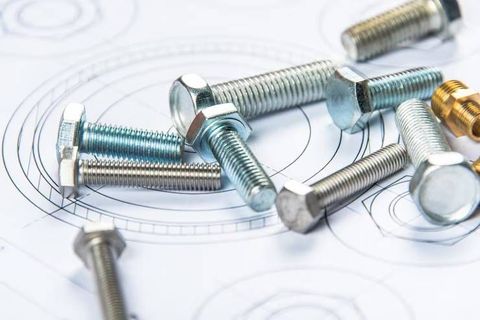
Depending on the machine configuration, several operations can take place during one production cycle. This makes screw machines useful for producing components such as bolts, pins, bushings, connectors, shafts, and threaded fittings.
Why Were Screw Machines Developed?
Traditional machining methods often required repeated manual adjustments and individual operations. As industrial production expanded, manufacturers needed equipment that could produce identical components with greater consistency.
Screw machines addressed this requirement through automated tool movements, controlled material feeding, and repeatable machining cycles. Their development also contributed to the expansion of precision engineering and large-scale component manufacturing.
Importance
Screw machines play an important role in modern manufacturing because many industrial products depend on small components with accurate dimensions. Even minor differences in the shape or size of a mechanical part can affect how an assembly operates.
These machines help manufacturing facilities maintain consistent production processes while reducing the amount of repetitive manual work. Their importance extends across industries that require accurately machined components in different quantities and materials.
Applications Across Industries
Screw machines support several manufacturing activities:
Automotive Industry: Used to manufacture fasteners, fuel system components, transmission parts, bushings, and small mechanical fittings.
Electronics Industry: Produce electrical connectors, contact pins, terminals, and precision metal housings.
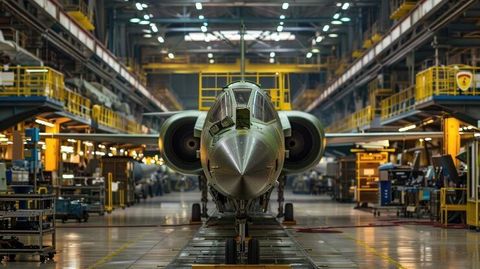
Aerospace Manufacturing: Used for producing selected precision fittings, threaded components, and mechanical parts.
Medical Equipment: Manufacture certain small metal components used in instruments and equipment assemblies.
General Engineering: Produce shafts, threaded rods, spacers, pins, and other mechanical components.
Manufacturing Challenges They Address
Manufacturing facilities frequently deal with production consistency, dimensional accuracy, material waste, and repeated machining requirements. Screw machines help address these challenges through automated cutting sequences and controlled tool positioning.
However, their performance depends on several factors, including material properties, tool condition, machine alignment, operating speed, and maintenance practices. Incorrect machine settings or unsuitable cutting tools can result in surface defects, dimensional variations, and unnecessary material waste.
Types of Screw Machines
Screw machines are classified according to their spindle arrangement, operating mechanism, and machining capabilities. Each type is designed for particular component shapes and production requirements.
Single-Spindle Automatic Screw Machines
Single-spindle machines use one rotating spindle to hold and rotate the workpiece. Cutting tools move into position to perform turning, drilling, threading, and other machining operations.
These machines are commonly used for producing small and medium-sized components. Their relatively straightforward configuration makes them suitable for manufacturing processes that require repeated operations on similar workpieces.
Multi-Spindle Automatic Screw Machines
Multi-spindle screw machines contain several spindles arranged around a rotating drum or indexing mechanism. Each spindle holds a workpiece and performs a particular operation as the machine moves through its production sequence.
Different machining activities can take place simultaneously at separate stations. This arrangement is commonly used when manufacturing large quantities of components with multiple machining requirements.
Swiss-Type Screw Machines
Swiss-type screw machines are designed for machining long, slender, and relatively small-diameter components. The material passes through a guide bushing that supports the workpiece close to the cutting area.
This support helps control material movement during machining. Modern Swiss-type machines frequently use CNC controls to coordinate several cutting tools and machining operations.
Turret-Type Screw Machines
Turret screw machines use a rotating tool holder called a turret. The turret contains multiple cutting tools that can be positioned successively to perform different operations.
These machines are suitable for components that require several machining stages. Their tool arrangement allows different operations to take place within a coordinated production cycle.
CNC Screw Machines
Computer Numerical Control (CNC) screw machines use programmed instructions to control spindle rotation, tool movement, material positioning, and machining sequences.
Operators can configure machining programs for different component designs. Depending on their configuration, CNC screw machines can perform turning, threading, drilling, grooving, and other precision operations.
Comparison of Screw Machine Types
| Machine Type | Main Configuration | Common Applications |
|---|---|---|
| Single-spindle | One rotating spindle | Repeated small-part production |
| Multi-spindle | Multiple rotating spindles | High-volume component manufacturing |
| Swiss-type | Sliding headstock and guide bushing | Long, slender components |
| Turret-type | Multiple tools in a rotating turret | Multi-operation machining |
| CNC screw machine | Computer-controlled machining | Complex and precision components |
Components and Working Principles
Screw machines contain several mechanical and electronic components that work together to complete machining operations. Their arrangement depends on the machine model and manufacturing requirements.
Main Components
Spindle: Holds and rotates the workpiece during machining.
Collet or Chuck: Secures the material and maintains its position during rotation.
Cutting Tools: Remove material to create the required shape, diameter, grooves, and threads.
Tool Holder: Supports cutting tools and maintains their operating positions.
Feed Mechanism: Controls how material moves into the machining area.
Control System: Manages operating sequences, spindle speed, tool movements, and other machine functions.
Coolant System: Delivers cutting fluid to control heat and assist chip removal where required.
Machine Bed: Provides structural support for the machine's major components.
How Do Screw Machines Work?
The operating process generally follows a sequence of controlled machining activities.
Material Loading: A metal bar or suitable workpiece is positioned inside the machine and secured using a collet or chuck.
Spindle Rotation: The spindle rotates the material at a selected speed according to its dimensions and material properties.
Tool Positioning: Cutting tools move toward the rotating workpiece based on the machine configuration.
Material Removal: Cutting tools remove unwanted material through turning, drilling, grooving, or threading operations.
Component Formation: Multiple machining operations create the required dimensions and surface features.
Part Removal: The completed component is separated from the remaining material and transferred for inspection or further processing.
In CNC screw machines, these operations are coordinated through programmed instructions. Automatic feeding systems can also move additional material into position for subsequent production cycles.
Common Materials Used
Screw machines can process different materials depending on their design, cutting tools, and operating capabilities.
Common examples include:
Stainless steel
Carbon steel
Brass
Aluminium
Copper
Certain engineering plastics
Material selection influences cutting speed, tool selection, heat generation, and the final surface finish.
Recent Updates
The screw machine industry is developing alongside wider changes in computer-controlled machining, industrial automation, and digital manufacturing. Between 2024 and 2026, manufacturers have increasingly focused on connected production equipment, precision machining, and improved monitoring systems.
CNC Automation and Smart Manufacturing
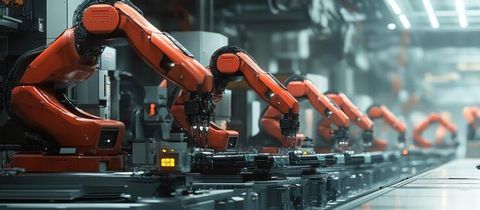
Modern CNC screw machines increasingly incorporate automated tool management, digital programming, and integrated production monitoring. These technologies allow operators to monitor machining conditions and identify irregularities during production.
Industrial Internet of Things (IIoT) technology is also influencing machine operations. Sensors can collect information about vibration, temperature, spindle activity, and machine operating conditions.
Artificial Intelligence and Predictive Maintenance
Artificial intelligence is becoming part of wider manufacturing technology development. In machining environments, data analysis can help identify unusual operating patterns and support predictive maintenance planning.
These systems may help manufacturing facilities identify potential equipment problems before they interrupt production. However, their accuracy depends on sensor quality, available operating data, and system configuration.
Developments in India's Machine Tool Industry
India's machine tool industry has continued to expand its manufacturing capabilities. According to the Indian Machine Tool Manufacturers' Association (IMTMA), estimated domestic machine tool production reached ₹14,566 crore in FY 2024–25, while consumption reached ₹31,781 crore.
The industry is also experiencing increased interest in CNC equipment, automation, and advanced manufacturing technologies. Automotive, electronics, aerospace, defence, and general engineering remain important areas of machine tool demand.
These developments provide a broader industrial context for the continued use of automatic screw machines and other precision machining equipment.
Laws or Policies
In India, screw machine manufacturing and industrial operation are influenced by machinery safety requirements, occupational health regulations, applicable technical standards, and factory-related rules.
Occupational Safety and Health Regulations
The Occupational Safety, Health and Working Conditions Code, 2020 came into force in November 2025. It establishes responsibilities relating to workplace safety, employee health, and working conditions.
Section 8 addresses the responsibilities of machinery designers, manufacturers, importers, and suppliers. It includes requirements concerning safe equipment design, necessary testing, and the availability of appropriate operating information.
Manufacturing facilities must also consider applicable central and state rules when establishing workplace safety procedures.
Machinery Safety Standards
The Bureau of Indian Standards (BIS) develops Indian Standards covering machinery safety and related engineering requirements.
IS 16819:2018, aligned with ISO 12100:2010, addresses general principles for machinery design, risk assessment, and risk reduction.
It provides a framework for identifying mechanical hazards and considering suitable protective measures. Relevant technical standards depend on the particular machine category and application.
Machinery Regulation Developments
India's Machinery and Electrical Equipment Safety (Omnibus Technical Regulation) Order, 2024 underwent amendments during 2025. However, the Ministry of Heavy Industries subsequently published its withdrawal on January 16, 2026.
Therefore, the withdrawn order should not be treated as an active blanket certification requirement for screw machines. Manufacturers and operators must refer to the currently applicable notifications, BIS requirements, and relevant workplace regulations.
Tools and Resources
Several technical resources help engineers, machine operators, and manufacturing students understand screw machines and their operating requirements.
CAD Software: Computer-Aided Design platforms help create component drawings, dimensions, and mechanical designs.
CAM Software: Computer-Aided Manufacturing tools help prepare machining operations and CNC programs.
CNC Simulation Software: Simulators allow users to examine tool movements and machining sequences before actual production.
Machining Calculators: These tools help estimate spindle speed, feed rate, cutting speed, and machining parameters.
Technical Manuals: Machine manufacturers provide operating instructions, component information, maintenance schedules, and safety guidelines.
BIS Standards: The Bureau of Indian Standards provides information about applicable Indian technical and safety standards.
IMTMA Resources: The Indian Machine Tool Manufacturers' Association publishes industry information, manufacturing research, technical updates, and training resources.
FAQs
What Is a Screw Machine Used For?
A screw machine is used to manufacture small precision components through operations such as turning, drilling, threading, and cutting. Common applications include automotive fittings, electrical connectors, shafts, pins, and threaded parts.
What Are the Main Types of Screw Machines?
The main types include single-spindle automatic, multi-spindle automatic, Swiss-type, turret-type, and CNC screw machines. Each type has a different configuration and machining capability.
How Does a CNC Screw Machine Work?
A CNC screw machine follows computer-programmed instructions to control spindle rotation, cutting tool movements, material feeding, and machining sequences. This allows multiple operations to be performed with controlled positioning.
What Materials Can Screw Machines Process?
Depending on their specifications, screw machines can process stainless steel, carbon steel, brass, aluminium, copper, and selected engineering plastics. Cutting tools and operating parameters must be suitable for the selected material.
What Is the Difference Between Single-Spindle and Multi-Spindle Screw Machines?
A single-spindle screw machine uses one rotating spindle to process a workpiece, while a multi-spindle machine uses several spindles to perform different operations simultaneously. Multi-spindle configurations are commonly associated with higher-volume production requirements.
Conclusion
Screw machines are important manufacturing tools used to produce small, accurately shaped components across several industrial sectors. Their different configurations, including single-spindle, multi-spindle, Swiss-type, turret-type, and CNC systems, support a wide range of machining requirements. Developments in automation, digital monitoring, and precision engineering continue to influence their applications. Understanding their components, working principles, safety requirements, and industrial uses provides a foundation for understanding modern screw machine technology.