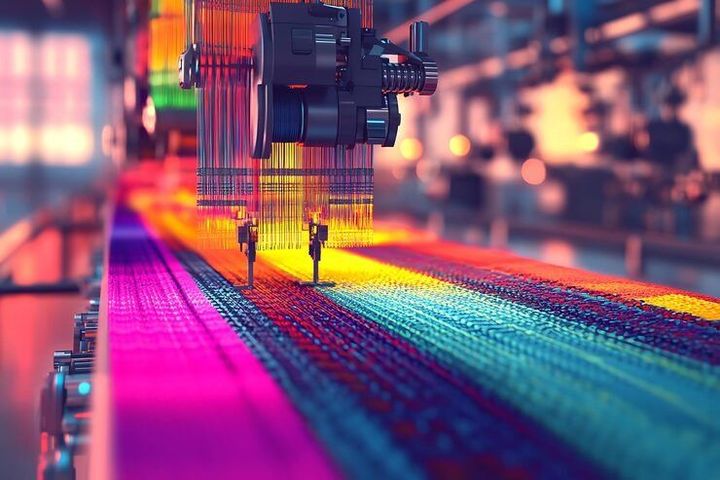
Printing Technology Explained: Types, Processes, Equipment, Materials, Applications and Key Considerations
Printing technology is the collection of methods, machines, materials, and processes used to reproduce text, images, graphics, patterns, and other information on a physical surface. Common printing surfaces include paper, cardboard, plastic films, textiles, metal, glass, and specially prepared materials. Modern printing combines traditional mechanical techniques with digital controls, computer software, electronic imaging, and automated equipment.
The origins of printing can be traced to early methods of stamping and transferring images onto surfaces. Movable-type printing later changed the way written information could be reproduced, while industrial presses made large-scale production possible. During the twentieth century, offset lithography, flexography, screen printing, gravure, and other processes expanded the range of printing applications.
Digital printing introduced another major change by allowing electronic files to be transferred directly to printing equipment. Instead of relying on a fixed plate for every design, many digital systems use computer-controlled ink or toner placement. Today, printing technology includes both conventional and digital processes, with each method suited to different materials, quantities, image requirements, and production conditions.
Importance
Printing remains relevant because physical information and printed products are used across many parts of everyday life and industry. Books, newspapers, labels, packaging, instruction manuals, posters, textiles, product markings, technical documents, and educational materials all depend on some form of printing technology.
Printing also connects digital information with physical objects. A computer file can become a paper document, package label, textile pattern, identification mark, or industrial component through an appropriate printing process.
Common applications
Printing technology is used in areas such as:
- Publishing and educational materials
- Packaging and product identification
- Commercial documents and stationery
- Textile decoration and fabric patterns
- Signage and display graphics
- Industrial markings and technical labels
- Promotional and informational materials
- Decorative printing on glass, metal, ceramics, and plastics
- Specialized manufacturing and electronic applications
The choice of printing process can affect image quality, production speed, material compatibility, drying requirements, durability, and the amount of preparation required. Understanding these factors helps explain why different printing equipment exists for different applications.
Printing technology and everyday needs
A printed package may need ink that remains readable when exposed to moisture or handling. A book requires consistent text and images across many pages, while a textile application may require ink that interacts appropriately with fabric fibers. Industrial printing can involve much more specialized requirements, such as resistance to heat, chemicals, abrasion, or outdoor exposure.
Types and Processes
Different printing methods use different mechanisms to transfer an image or pattern. The main categories include traditional processes, digital printing, and specialized industrial techniques.
Offset printing
Offset printing transfers an image from a prepared plate to an intermediate rubber blanket and then onto the final material. It is commonly associated with books, magazines, brochures, catalogs, and other paper-based materials.
The process involves several stages, including file preparation, plate preparation, ink application, image transfer, and finishing. Multiple plates are generally used when producing full-color images.
Digital printing
Digital printing transfers information from an electronic file to a digital printer. Common systems use inkjet or toner-based technologies. Digital printing can accommodate variable information, changing designs, and shorter production runs without the same plate preparation used by many conventional processes.
Inkjet systems place small droplets of ink onto the substrate, while toner systems use electrically controlled particles that are transferred and fixed to the surface.
Flexographic printing
Flexography uses flexible printing plates and is widely associated with packaging materials, labels, films, paper products, and certain flexible substrates. It can use different ink formulations depending on the material and application.
The process generally involves a plate cylinder, an anilox roller for controlled ink transfer, and an impression cylinder that brings the material into contact with the printing plate.
Gravure printing
Gravure uses engraved cells on a cylinder to hold and transfer ink. It is designed for consistent, high-volume reproduction and can be used for packaging, decorative materials, publications, and specialty applications.
The depth and arrangement of engraved cells influence the amount of ink transferred to the substrate.
Screen printing
Screen printing pushes ink through selected areas of a mesh screen onto the surface below. A stencil determines which areas receive ink. The method can be used on paper, textiles, plastics, glass, ceramics, and other materials.
Screen printing is also associated with applications requiring relatively thick ink layers or special surface effects.
3D printing
3D printing differs from conventional printing because it creates physical objects by depositing or solidifying material layer by layer. Materials can include plastics, resins, metals, ceramics, and other specialized compounds.
The process begins with a digital model, which is divided into layers by specialized software. The printer then builds the object progressively according to those digital instructions.
| Printing type | Typical materials | Common applications | Main process characteristic |
|---|---|---|---|
| Offset | Paper, board | Books, magazines, documents | Plate and blanket transfer |
| Digital | Paper, films, specialty media | Documents, graphics, variable data | Direct digital output |
| Flexographic | Films, paper, labels | Packaging, labels | Flexible plate transfer |
| Gravure | Films, paper, foils | Packaging, publications | Engraved cylinder transfer |
| Screen | Textile, glass, paper, plastics | Graphics, textiles, decoration | Ink pushed through mesh |
| 3D printing | Plastics, resins, metals | Prototypes, components, models | Layer-by-layer construction |
Equipment and Materials
Printing equipment ranges from compact desktop printers to large industrial production systems. The equipment selected depends on the printing process, material, image requirements, production volume, and finishing requirements.
Main equipment components
A conventional printing setup may include plates, cylinders, rollers, ink delivery systems, drying units, feeders, and finishing equipment. Digital systems can include print heads, toner units, imaging systems, electronic controls, and automated material handling.
Prepress equipment and software are also important. Files may need color management, resolution checks, font handling, layout preparation, and proofing before they reach the printing stage.
Printing materials
Common materials include:
- Paper and paperboard
- Plastic films
- Textile fabrics
- Metal sheets and coated surfaces
- Glass and ceramics
- Adhesive label materials
- Specialty synthetic substrates
- Resins and polymer materials for 3D printing
Ink selection depends on the printing method and substrate. Water-based, solvent-based, UV-curable, pigment-based, dye-based, and other formulations are used for different applications.
Material characteristics such as absorption, surface texture, flexibility, heat resistance, and moisture resistance can influence the final result. Proper compatibility between ink, equipment, and substrate is therefore an important part of printing preparation.
Applications
Printing technology supports a wide range of industries and physical products.
Publishing and documents
Books, newspapers, educational materials, manuals, reports, forms, and brochures commonly use offset or digital printing. Digital systems are also useful when documents contain changing text, images, or other variable information.
Packaging and labels
Packaging printing can involve paperboard, corrugated materials, flexible films, metalized materials, and labels. Flexographic, gravure, offset, and digital systems may be used depending on the substrate and design requirements.
Packaging printing may also include barcodes, product information, instructions, symbols, batch information, and other variable data.
Textile printing
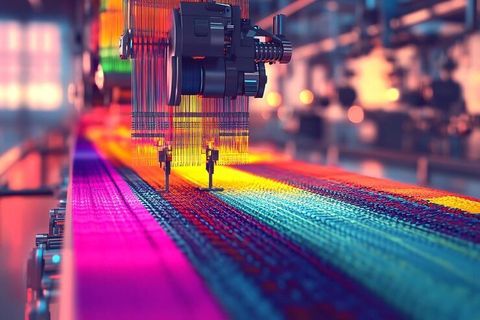
Textile printing places patterns, images, or colors onto fabric. Screen printing, digital textile printing, sublimation, and other specialized methods can be used depending on the fabric and ink system.
Industrial applications
Industrial printing includes markings on components, control panels, cables, containers, electronic parts, and manufacturing materials. Some systems are designed to produce small characters, serial numbers, codes, or durable markings.
Decorative applications
Printing can also be applied to glass, ceramics, metal, plastics, and other surfaces for decorative patterns and functional graphics. Specialized inks and curing systems may be required when the surface is non-absorbent.
Recent Updates
From 2024 through 2026, printing technology has continued moving toward digital workflows, automation, variable-data production, and more controlled material use. Modern systems increasingly combine printers with software that can monitor production conditions, manage color, detect errors, and organize files.
Automation is another important development. Computer-controlled equipment can coordinate feeding, printing, drying, inspection, cutting, and finishing with less manual intervention. These systems are particularly relevant to industrial and packaging environments.
Environmental considerations have also received continued attention. Printing operations are increasingly examining water-based inks, lower-emission processes, recyclable substrates, material recovery, and efficient production workflows. Indian standards activity also continues to address printing inks, stationery, coatings, and related products.
Digital printing is also expanding into applications that previously depended heavily on conventional processes. Variable-data printing, personalized documents, short-run packaging, textile printing, and specialized industrial marking are examples of areas where digital workflows can be integrated.
Laws or Policies
In India, printing activities can be affected by several areas of regulation, including taxation, environmental rules, product standards, packaging requirements, and material-specific regulations.
The Goods and Services Tax framework classifies different printed products and printing-related activities under specific tariff and service headings. CBIC information identifies separate treatment for categories such as printed books, newspapers, printing machinery, and certain printing activities. The applicable classification depends on the nature of the supply and its principal components.
Environmental rules can become relevant when printing involves plastic packaging or materials covered by India's plastic-waste framework. Recent regulatory material includes requirements concerning recycled plastic packaging, labeling, compostable plastics, biodegradable plastics, and related compliance matters.
The Bureau of Indian Standards maintains standards and technical information covering numerous materials and products. Its Know Your Standard portal allows users to search Indian Standards by standard number or product-related keyword, including documents, amendments, and testing information.
Specific requirements can vary according to the material, application, product category, and location. Businesses and organizations handling regulated materials generally need to consult the applicable government notifications and standards for their particular activity.
Tools and Resources
Several types of tools can help readers understand or prepare printing projects.
Design and file preparation tools
Desktop publishing and graphic design software can be used to prepare page layouts, illustrations, photographs, and print-ready files. PDF tools are also commonly used to check page dimensions, embedded fonts, image resolution, and color information.
Color management resources
Color reference systems, calibration tools, proofing software, and color profiles help maintain more predictable color reproduction between screens and printing equipment. These resources are particularly relevant when accurate color matching is important.
Printing calculators
Print-production calculators can help estimate paper usage, sheet layouts, ink coverage, dimensions, page counts, and material requirements. Their results depend on the assumptions and specifications entered by the user.
Standards and regulatory resources
The Bureau of Indian Standards provides access to Indian Standards and related technical documents. The Central Pollution Control Board provides information on environmental rules and plastic-waste requirements, while CBIC publishes GST-related classifications and notifications.
FAQs
What is printing technology?
Printing technology refers to the equipment, materials, software, and processes used to reproduce text, images, graphics, patterns, or physical objects on a selected surface.
What are the main types of printing technology?
Common types include offset printing, digital printing, flexographic printing, gravure printing, screen printing, and 3D printing. Each uses a different image-transfer or material-building process.
How does digital printing work?
Digital printing uses electronic files to control inkjet or toner-based equipment. The image is transferred directly from the digital file without the conventional plate preparation used in many offset processes.
What materials are used in printing technology?
Printing materials can include paper, cardboard, plastic films, textiles, metal, glass, ceramics, and specialized synthetic substrates. The suitable material depends on the printing process and intended application.
What printing equipment is used for industrial applications?
Industrial printing equipment can include inkjet systems, screen-printing machines, flexographic presses, digital presses, coding systems, marking equipment, and specialized 3D printers. Equipment selection depends on the surface, information being printed, production conditions, and durability requirements.
Conclusion
Printing technology combines traditional processes, digital systems, specialized equipment, and a wide range of materials. Offset, digital, flexographic, gravure, screen, and 3D printing each use different techniques for transferring or constructing information and objects. Recent developments have emphasized automation, digital workflows, variable-data capabilities, material efficiency, and environmental considerations. In India, printing activities can also be influenced by GST classifications, environmental rules, packaging requirements, and applicable Indian Standards.