Gear Grinding Machines Explained: Types, Components, Processes, Applications and Benefits
Gear grinding machines are precision machine tools used to improve the shape, surface finish, and dimensional accuracy of gear teeth. A gear is a rotating mechanical component that transfers motion and force between shafts, and its teeth must interact correctly with another gear. Gear grinding is generally performed after earlier gear-making operations and, in many applications, after heat treatment has hardened the material.
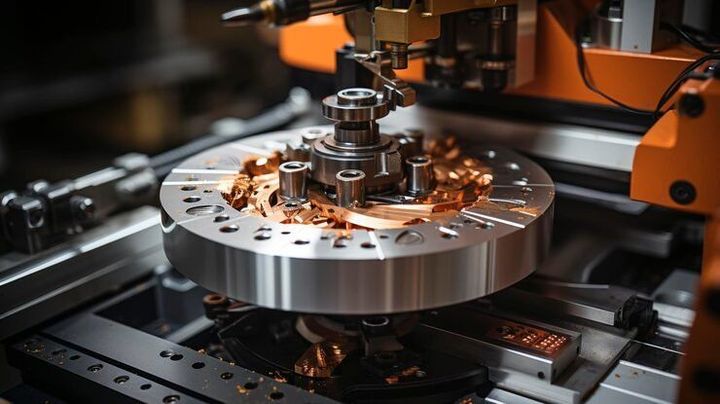
The basic idea behind gear grinding is similar to other grinding processes: an abrasive wheel removes a controlled amount of material from the gear surface. However, the machine must coordinate the grinding wheel and gear very precisely so that the required tooth profile, spacing, and alignment are maintained.
Gear manufacturing has developed from manually controlled equipment to computer numerical control (CNC) systems capable of coordinating several machine movements. Modern gear grinding machines can combine controlled grinding, dressing, measurement, cooling, and automated part handling within a connected production process.
The technology is used in many mechanical systems because gears can transmit rotational movement efficiently when their teeth are manufactured within specified geometric tolerances. Automotive transmissions, industrial gearboxes, aerospace equipment, robotics, machine tools, pumps, and other mechanical systems can contain ground gears.
Importance
Why gear grinding matters
The accuracy of gear teeth affects how two gears contact each other. Differences in tooth shape, spacing, alignment, or surface condition can influence noise, vibration, heat generation, and the way loads are distributed.
Gear grinding machines address these manufacturing challenges by removing small amounts of material with controlled abrasive action. The process can correct certain dimensional variations remaining after earlier manufacturing stages and produce a smoother tooth surface.
For general readers, the importance of the process can be understood through several areas:
- Accuracy: Controlled grinding helps produce gear teeth with specified dimensions and geometry.
- Surface condition: Abrasive grinding can create a refined tooth surface suitable for particular mechanical applications.
- Noise and vibration: Consistent tooth geometry can help reduce unwanted variations during gear engagement.
- Load distribution: Accurate tooth geometry supports more predictable contact between mating gears.
- Manufacturing consistency: CNC controls and measurement systems can help maintain repeatable production conditions.
Where these machines are used
Gear grinding machines are associated with industries where mechanical power transmission requires accurately manufactured gears. Common applications include:
- Automotive and transmission manufacturing
- Industrial gearboxes and reducers
- Aerospace mechanical systems
- Robotics and automated equipment
- Machine tools
- Energy-related equipment
- Agricultural machinery
- Heavy industrial equipment
- Precision motion systems
The specific grinding method depends on the gear geometry, material, required accuracy, production volume, and manufacturing sequence.
Main types of gear grinding machines
Different gear grinding machines use different methods to remove material from gear teeth.
| Machine type | Basic method | Common use |
|---|---|---|
| Generating gear grinder | Grinding wheel and gear rotate in a coordinated relationship | Production of cylindrical gears |
| Profile gear grinder | Wheel follows a defined tooth profile | Precision gear profiles |
| Form grinding machine | Wheel shape corresponds to the required tooth form | Specialized gear geometries |
| CNC gear grinder | Computer-controlled movement coordinates multiple axes | Automated precision production |
| Internal gear grinder | Grinding system works on internal teeth | Internal gears and related components |
The terminology can vary between manufacturers and technical standards, but these categories provide a general understanding of the main approaches.
Recent Updates
Automation and digital control
From 2024 through 2026, gear manufacturing has continued moving toward CNC control, automation, digital monitoring, and integrated inspection. Industry reporting has highlighted growing interest in shop-floor automation and collaborative robots in gear manufacturing.
Modern CNC systems can coordinate grinding movements with greater control than manually operated equipment. Digital controls can also record process information, support machine monitoring, and connect production equipment with broader manufacturing systems.
Closed-loop measurement
Another development is the increased integration of measurement with production. Some modern systems combine gear grinding with automated inspection, measurement, part handling, and correction functions. A closed-loop approach can use measurement results to adjust production parameters rather than treating inspection as a completely separate activity.
Growth of machine-tool technology in India
India's machine-tool sector has also been expanding. The Indian Machine Tool Manufacturers' Association reported provisional machine-tool production of about ₹14,566 crore and consumption of about ₹31,781 crore for FY 2024–25. These figures cover the wider machine-tool sector rather than gear grinding machines specifically.
Industry exhibitions and technology events have also increasingly focused on digital manufacturing, automation, and advanced machine tools. IMTEX 2025, for example, brought together exhibitors from multiple countries to present developments in machine-tool and digital-manufacturing technology.
Laws or Policies
Machine safety in India
In India, industrial equipment is affected by occupational safety and workplace requirements. The Occupational Safety, Health and Working Conditions Code, 2020 became effective from November 21, 2025 as part of the implementation of India's four Labour Codes. The framework covers occupational safety, health, and working conditions in applicable establishments.
For machinery such as gear grinding machines, practical safety considerations include guarding of moving parts, appropriate operating procedures, worker training, electrical safety, emergency controls, and management of grinding-related hazards. The exact requirements can depend on the establishment, machine configuration, applicable rules, and state-level implementation.
Indian Standards
The Bureau of Indian Standards maintains Indian Standards covering gears, machine tools, accuracy, inspection, and related engineering subjects. BIS records include standards concerning cylindrical gear accuracy and methods of inspection, as well as standards related to gear geometry and load calculations.
BIS also provides its “Know Your Standard” platform, which allows users to search standards by Indian Standard number or keyword and view related information.
Manufacturers and technical personnel normally need to identify the standards applicable to the specific gear, machine, material, and manufacturing process rather than relying on one general standard.
Tools and Resources
Gear inspection equipment
Gear measurement equipment is used to examine characteristics such as tooth profile, lead, pitch, runout, and related geometric properties. Coordinate measuring machines and dedicated gear inspection systems can be used depending on the application.
CNC control systems
CNC controls coordinate machine movements and grinding operations. Modern systems can also record operating information and integrate with factory monitoring systems.
Grinding wheels and dressing tools
The grinding wheel is the main abrasive element in the process. Its composition, grain characteristics, hardness, and geometry influence how material is removed. Dressing equipment restores or conditions the wheel surface so that the grinding process remains controlled.
Coolant and filtration systems
Grinding can generate heat and fine particles. Appropriate coolant circulation and filtration systems help manage heat and maintain the grinding environment. Their design depends on the machine, abrasive process, material, and operating conditions.
Standards and technical references
Useful resources include the Bureau of Indian Standards database, machine-tool technical documentation, gear inspection references, and publications covering gear manufacturing technology. BIS provides searchable information for Indian Standards and related documents.
FAQs
What is a gear grinding machine?
A gear grinding machine is a precision machine tool used to grind gear teeth. It removes small amounts of material from tooth surfaces to achieve specified geometry, dimensions, and surface characteristics.
What are the main types of gear grinding machines?
Common types include generating gear grinders, profile gear grinders, form grinding machines, CNC gear grinders, and machines designed for internal gears. The appropriate type depends on the gear geometry and required manufacturing process.
How does a gear grinding machine work?
The gear is held securely while an abrasive grinding wheel contacts its teeth. The machine coordinates the movement and rotation of the gear and grinding wheel to remove controlled amounts of material from the tooth surfaces.
Why is CNC used in gear grinding machines?
CNC allows several machine movements to be coordinated electronically. This can support repeatable positioning, controlled grinding paths, automated parameter management, and integration with measurement systems.
What standards are related to gear accuracy in India?
BIS maintains Indian Standards covering areas such as cylindrical gear accuracy, gear inspection, gear geometry, and load calculations. The applicable standard depends on the specific gear and engineering requirement.
Conclusion
Gear grinding machines are precision tools used to refine gear teeth after earlier manufacturing operations. Their main elements include grinding wheels, spindles, workholding systems, dressing equipment, CNC controls, cooling systems, and measurement technology. From 2024 through 2026, automation, digital control, integrated inspection, and connected manufacturing have remained important developments in gear production. In India, machine safety and applicable Indian Standards provide an important regulatory and technical framework for industrial gear manufacturing.

You May Also Like