Future of Plastics Guide: Emerging Technologies, Bioplastics, Circular Economy and Material Development
The future of plastics involves developing new materials, improving manufacturing methods, and changing how plastic products are collected, reused, and processed after use. Plastics are materials made mainly from polymers, which are long chains of molecules. Many conventional plastics are produced from petroleum or natural gas, although some newer materials use plant-based feedstocks or other alternative sources.
Context
The future of plastics involves developing new materials, improving manufacturing methods, and changing how plastic products are collected, reused, and processed after use. Plastics are materials made mainly from polymers, which are long chains of molecules. Many conventional plastics are produced from petroleum or natural gas, although some newer materials use plant-based feedstocks or other alternative sources.
Plastics became widely used because they are lightweight, durable, adaptable, and suitable for many applications. They appear in food packaging, electronics, vehicles, medical equipment, construction materials, and household products. However, their durability also creates challenges when discarded products remain in the environment or are difficult to recycle.
The future of plastics focuses on reducing these problems while preserving useful material properties. Emerging technologies, bioplastics, circular economy systems, and material development are central areas of research. Progress depends on material design, manufacturing infrastructure, collection systems, environmental conditions, and the availability of suitable recycling processes.
Understanding Emerging Plastic Technologies
Plastic technology includes the processes used to design polymers, manufacture products, improve material performance, and recover resources after use. Researchers are investigating materials that can provide required strength, flexibility, heat resistance, and barrier properties while reducing environmental impacts.
Several approaches are being explored:
Advanced recycling: Processes that break certain plastics into chemical building blocks or other usable feedstocks.
Improved mechanical recycling: Methods that sort, clean, melt, and reshape recovered plastic materials.
Bio-based polymers: Plastics made partly or entirely from biological feedstocks.
Biodegradable polymers: Materials designed to break down under specified environmental conditions.
Smart material development: Polymers designed with particular properties, such as improved durability, easier separation, or responsiveness to temperature.
These approaches serve different purposes. A material made from plants is not necessarily biodegradable, and a biodegradable plastic does not necessarily break down quickly in ordinary soil, rivers, or oceans.
Importance
The future of plastics matters to households, manufacturers, waste-management organizations, farmers, retailers, and governments. Plastic products can protect food, reduce product damage, support medical applications, and help create lightweight components. At the same time, poorly managed plastic waste can block drainage systems, harm wildlife, contribute to litter, and fragment into smaller particles.
The challenge is to consider the entire life cycle of a plastic product, from raw material extraction and manufacturing to transportation, use, collection, and disposal. Changing one stage may create new requirements elsewhere. For example, a recyclable package may provide limited environmental benefits if suitable collection and processing facilities are unavailable.
The Role of a Circular Economy
A circular economy aims to keep materials in productive use for longer and reduce waste. In plastics, this approach includes designing products for reuse, improving collection systems, increasing material recovery, and reducing unnecessary packaging.
A circular plastics system may involve several stages:
Design: Create products using fewer material types and components that can be separated.
Use and reuse: Extend product life through durable design and suitable reuse arrangements.
Collection: Gather discarded plastics through household, commercial, and industrial systems.
Sorting and processing: Separate different polymers, colors, additives, and contaminants.
Material recovery: Convert suitable recovered plastics into materials for new products.
Residual management: Handle materials that cannot be reused or recovered through appropriate waste-management methods.
Not every plastic can be recycled repeatedly without quality changes. Heat, oxidation, contamination, and mixing incompatible polymers can affect material properties. Circular economy planning therefore includes waste prevention and reuse, not recycling alone.
Comparing Plastic Material Categories
The following table explains common material categories and their general characteristics.
| Material category | Main characteristic | Important consideration |
|---|---|---|
| Conventional plastic | Often produced from fossil-based feedstocks | Waste collection and long-term persistence |
| Bio-based plastic | Uses biological feedstocks in whole or in part | Feedstock source and production impacts |
| Biodegradable plastic | Can break down under specified conditions | Required temperature, moisture, and treatment |
| Compostable plastic | Meets defined composting requirements | Suitable composting facilities may be necessary |
| Recycled plastic | Contains material recovered from previous products | Quality depends on sorting and processing |
| Chemically recycled plastic | Uses chemical processes to recover feedstocks or products | Energy use, emissions, yields, and output quality |
These categories can overlap. For example, a plastic may be bio-based and biodegradable, or fossil-based and biodegradable. Labels should be interpreted according to the specific material and the conditions under which its properties have been tested.
Recent Updates
Developments from 2024 through 2026 have continued to emphasize plastic waste reduction, recycled content, alternative feedstocks, and improved material recovery. Research and industrial trials are exploring ways to process mixed plastic waste, improve sorting accuracy, and develop polymers with more suitable end-of-life characteristics. Commercial readiness varies considerably across technologies.
Advances in Recycling Technology
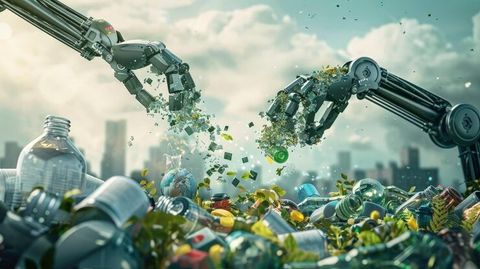
Mechanical recycling remains an established approach for suitable plastic waste. Newer sorting systems increasingly use optical sensors, automated identification, robotics, and data analysis to separate materials. Better sorting can improve the consistency of recovered plastics, although results depend on incoming waste quality and facility capabilities.
Chemical recycling includes several distinct processes, such as depolymerization and pyrolysis. Depolymerization can break certain polymers into smaller chemical building blocks, while pyrolysis uses heat in limited oxygen conditions to produce a mixture of chemical outputs. These methods are not suitable for every plastic, and their environmental performance depends on factors such as energy sources, process efficiency, emissions controls, and the uses of the resulting materials.
Bioplastics and New Polymer Development
Research into bioplastics includes materials made from starch, cellulose, plant oils, agricultural residues, and microorganisms. Some are intended for packaging, agricultural applications, coatings, or specialized industrial uses. Researchers are also studying polymers that combine bio-based feedstocks with improved durability or end-of-life characteristics.
Biodegradable materials require careful evaluation. Industrial composting conditions can differ substantially from home composting conditions, and some certified compostable products need controlled heat, moisture, and processing time. Introducing these materials into conventional plastic recycling streams may also cause contamination if they are not identified and separated appropriately.
Digital Tools and Material Traceability
Digital identification systems and improved product labeling are being explored to help waste operators identify polymer types and additives. Data tools can support material tracking, recycling assessments, and manufacturing decisions. Their effectiveness depends on consistent data, reliable identification methods, and coordination among producers, recyclers, and regulators.
Laws or Policies
Plastic production, packaging, recycling, and waste management are influenced by national laws, local rules, product standards, and international environmental initiatives. Requirements differ between countries and may change as governments introduce waste-reduction measures and extended producer responsibility systems.
Plastic Waste Rules in India
India's Plastic Waste Management Rules, 2016, and subsequent amendments provide a framework for managing plastic waste. The rules address areas such as waste collection, recycling, responsibilities of relevant stakeholders, and restrictions concerning specified plastic products. Requirements can depend on the type of plastic, product category, and applicable amendment.
Extended producer responsibility, commonly called EPR, places specified obligations on producers, importers, and brand owners concerning the management of plastic packaging waste. Applicable requirements may include registration, reporting, recycling targets, and other compliance measures under the relevant framework. The precise obligations depend on the category and rules in force.
India has also introduced restrictions on identified single-use plastic items. The scope of these restrictions is defined by the applicable rules rather than by a general ban on every disposable plastic product. Businesses and individuals need to distinguish restricted items from other products that remain subject to separate waste-management requirements.
Standards and Environmental Claims
Standards can help establish whether a material meets defined requirements for mechanical performance, compostability, biodegradation, or recycled content. Testing conditions matter because laboratory results may not represent the conditions found in open environments.
Environmental claims should describe material properties accurately. A statement that a product is biodegradable or environmentally preferable should be supported by appropriate evidence and relevant conditions. Regulatory requirements and accepted testing standards may differ by market, so manufacturers need to consider the destination in which a product is sold or used.
Tools and Resources
Several technical and public resources help explain plastic materials, recycling processes, and applicable policies. They are useful for general learning, material comparisons, and understanding how waste-management systems operate.
Material Databases and Technical Resources
The Central Pollution Control Board (CPCB) provides information related to plastic waste management, applicable rules, guidance, and compliance frameworks in India. The Bureau of Indian Standards (BIS) publishes standards relevant to materials, testing, and product requirements where applicable.
The Organisation for Economic Co-operation and Development (OECD) publishes research on plastic production, waste generation, recycling, and policy approaches. The United Nations Environment Programme (UNEP) also provides reports on plastic pollution and international efforts to address it.
Life-Cycle Assessment and Recycling Tools
Life-cycle assessment, or LCA, is a method for evaluating environmental impacts across stages such as raw material production, manufacturing, transport, use, and disposal. It can help compare alternative materials when the same functional purpose, system boundaries, and assumptions are applied.
Material identification guides can help distinguish common polymers such as polyethylene (PE), polypropylene (PP), polyethylene terephthalate (PET), and polystyrene (PS). However, resin identification codes identify a plastic category; they do not establish that a particular item is accepted by every local recycling program.
A practical material assessment can include:
Polymer type and composition.
Percentage of recycled or bio-based content.
Durability and intended product lifespan.
Local collection and recycling availability.
Composting requirements, where relevant.
Energy use, emissions, and material recovery rates.
FAQs
What is the future of plastics technology?
The future of plastics technology includes improved mechanical recycling, selected chemical recycling processes, bio-based polymers, better material identification, and designs that support reuse. Progress depends on technical performance, environmental impacts, and suitable waste-management infrastructure.
What is the difference between bioplastics and biodegradable plastics?
Bioplastics generally refer to plastics that are bio-based, biodegradable, or both. Bio-based describes the source of the material, while biodegradable describes its ability to break down under specified conditions. These terms are not interchangeable.
How does a circular economy reduce plastic waste?
A circular economy aims to reduce unnecessary material use, extend product life, encourage reuse, and recover suitable materials for further use. Effective collection, sorting, product design, and processing infrastructure are necessary for these approaches to work together.
What are the main plastic recycling technologies?
Mechanical recycling processes suitable plastics through sorting, cleaning, melting, and reshaping. Chemical recycling uses processes that transform certain plastics into smaller chemical compounds or feedstocks. Suitability and environmental performance vary by polymer and process.
Which plastic waste rules apply in India?
India's Plastic Waste Management Rules and subsequent amendments establish requirements for plastic waste handling, specified single-use plastic restrictions, and extended producer responsibility for relevant packaging categories. Current obligations depend on the material, activity, and applicable regulations.
Conclusion
The future of plastics depends on material innovation, improved recycling, responsible product design, and effective waste-management systems. Bioplastics and biodegradable polymers have specific applications, but their environmental effects depend on feedstocks, processing, use, and disposal conditions. Circular economy approaches seek to preserve material value through reduction, reuse, and recovery. Scientific evidence, suitable infrastructure, and clear regulations remain important to evaluating the practical role of emerging plastic technologies.

You May Also Like