Electric Vehicle Battery Technology Guide: Cell Types, Battery Packs, Charging and Key Features
Electric vehicle battery technology is the foundation of battery-powered transport. It combines electrochemical cells, battery modules or packs, electronics, cooling systems, and charging controls to store and deliver electrical energy. Modern EV batteries mainly use lithium-ion chemistry, while newer approaches such as sodium-ion and solid-state designs are being developed for different operating needs.
Context
How EV batteries developed
An EV battery begins with individual cells. Each cell contains an anode, cathode, electrolyte, separator, and current collectors. During charging, electrical energy drives a chemical reaction that stores energy inside the cell. During driving, the reaction reverses and produces electricity for the motor.
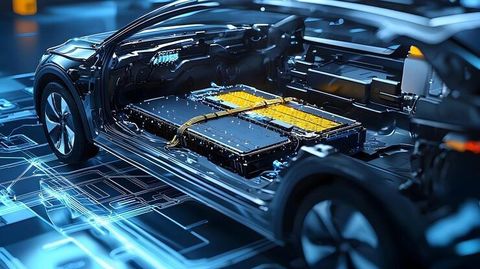
Several cells are connected to form modules or larger battery packs. A battery management system monitors voltage, temperature, current, and state of charge. It helps keep cells within their intended operating range and coordinates charging and power delivery.
Main cell types
EV battery cells commonly use cylindrical, prismatic, or pouch formats. These shapes describe the physical construction of the cell rather than its chemistry.
Cylindrical cells use a rigid metal casing and are widely used in many vehicle designs. Prismatic cells have a rectangular housing that can make pack layouts more compact. Pouch cells use a flexible outer layer and can be arranged in different shapes, although the pack needs structural protection around them.
Battery chemistry also affects performance. Lithium iron phosphate, or LFP, is known for characteristics that suit many everyday EV applications. Nickel manganese cobalt, commonly called NMC, can provide higher energy density and is used where packaging and range requirements make that useful.
Importance
Why battery packs matter
The battery pack influences several everyday aspects of an EV, including driving range, charging time, vehicle weight, acceleration, thermal management, and cabin or cargo space. A larger battery can store more energy, but it also adds mass and requires more materials and structural support.
Battery capacity is usually expressed in kilowatt-hours, or kWh. A higher kWh rating generally means the battery can store more electrical energy, but actual driving range also depends on vehicle efficiency, speed, temperature, terrain, weather, traffic, and heating or cooling use.
Charging and battery management
Charging can use alternating current, or AC, or direct current, or DC. AC charging is common at homes and many workplaces, while DC fast charging is used where higher charging power is available.
Charging speed is influenced by the vehicle, battery temperature, charger power, state of charge, and charging curve. A battery may accept high power during part of a charging session and then reduce power as it approaches a high state of charge.
For everyday use, battery management is also important. Temperature control can help keep the cells within their intended operating range. The battery management system can balance cells, monitor electrical conditions, and detect conditions that require protective action.
Key battery characteristics
Readers comparing EV battery technology may encounter these terms:
- Energy density: The amount of energy stored for a given mass or volume.
- Power density: The rate at which electrical power can be delivered relative to mass or volume.
- State of charge: An estimate of how much usable energy remains.
- Charging curve: The change in charging power during a charging session.
- Cycle life: The number of charge and discharge cycles a battery can complete before its capacity falls to a defined level.
- Thermal management: Methods used to control battery temperature.
- Battery management system: Electronics and software that monitor and control battery operation.
Recent Updates
LFP and changing battery chemistry
Recent global battery data show continued growth in LFP batteries. The International Energy Agency reported that LFP accounted for more than half of global EV battery deployment in 2025. LFP has gained attention because its chemistry uses iron and phosphate rather than nickel and cobalt, while its energy density differs from NMC.
NMC remains relevant for applications where energy density is important. The choice between chemistries depends on vehicle design, climate, packaging, charging needs, supply chains, and other engineering requirements.
Sodium-ion and solid-state development
Sodium-ion batteries have moved from research toward larger-scale development. Sodium-ion cells use sodium-based chemistry and can reduce reliance on lithium, while their current energy density is generally below that of established lithium-ion designs. Their performance in cold conditions is also an area of interest.
Solid-state batteries replace the conventional liquid electrolyte with a solid material. Research and pilot manufacturing have continued, but large-scale deployment still requires validation of durability, manufacturing consistency, safety, and practical performance.
Battery manufacturing and recycling
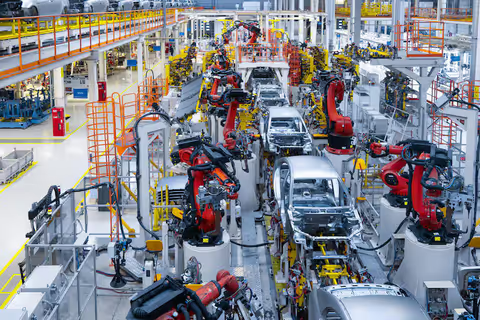
Battery manufacturing capacity is expanding in several regions, including India. Recycling is also receiving greater attention because used batteries contain materials that can potentially be recovered and processed again.
The International Energy Agency reported that global EV battery deployment reached about 1.2 TWh in 2025, reflecting continued expansion in electric mobility. At the same time, supply chains for minerals, cell materials, manufacturing equipment, and recycling remain important parts of battery development.
Laws or Policies
India EV and battery framework
In India, EV battery technology is influenced by vehicle incentives, manufacturing programs, charging infrastructure rules, and battery waste regulations.
The PM E-DRIVE scheme was introduced in 2024 to support electric mobility and related infrastructure. Its overall implementation period was subsequently extended through March 2028, while specific vehicle categories have had separate eligibility timelines.
India also has a Production Linked Incentive program for Advanced Chemistry Cell battery storage. The program is designed to expand domestic battery manufacturing and increase domestic value addition.
Charging infrastructure rules
The Ministry of Power issued the Guidelines for Installation and Operation of Electric Vehicle Charging Infrastructure in 2024. The guidelines cover private, semi-restricted, and public charging locations and address areas such as electricity connections, charging infrastructure, and grid requirements.
Battery disposal and recycling are covered by the Battery Waste Management Rules, 2022, with amendments issued in 2023 and 2024. These rules establish responsibilities for battery producers, consumers, recyclers, and other participants in the battery lifecycle.
Because schemes and rules can change, readers should check current government notifications when assessing a specific vehicle, charger, battery project, or recycling requirement.
Tools and Resources
Battery and charging tools
Several resources can help readers understand EV battery technology:
- Battery capacity calculators can estimate energy use from battery size and efficiency assumptions.
- Charging-time calculators can estimate approximate charging periods using battery capacity and charger power.
- Route-planning tools can combine trip distance with charging locations and vehicle range information.
- EV efficiency displays can show electricity use in kWh per distance traveled.
- Government policy portals can provide current information on EV programs and charging rules.
- Battery recycling guidance can explain collection, handling, and recycling requirements in different regions.
Simple battery comparison table
| Battery feature | What it means | Why it matters |
|---|---|---|
| Capacity, kWh | Stored electrical energy | Influences potential driving range |
| Energy density | Energy per mass or volume | Affects vehicle weight and packaging |
| Charging power, kW | Rate of electrical input | Influences charging time |
| Chemistry | Materials used in the cell | Affects energy density and operating characteristics |
| Thermal management | Temperature control system | Helps maintain operating conditions |
| BMS | Battery monitoring and control | Tracks cells and protective functions |
FAQs
What types of cells are used in electric vehicle batteries?
Common EV cell formats include cylindrical, prismatic, and pouch cells. Common lithium-ion chemistries include LFP and NMC, with each having different energy density and operating characteristics.
How does electric vehicle battery technology affect range?
Battery capacity and vehicle efficiency both affect range. Weather, driving speed, terrain, traffic, tire conditions, cabin heating or cooling, and battery temperature can also change actual energy use.
What is the difference between LFP and NMC batteries?
LFP uses lithium iron phosphate as its cathode chemistry, while NMC uses nickel, manganese, and cobalt. LFP generally has lower energy density than NMC, while NMC is often selected when higher energy density is useful.
How long does an EV battery last?
Battery lifespan varies with chemistry, temperature, charging patterns, vehicle design, and operating conditions. Capacity normally changes gradually over time rather than remaining constant throughout the battery's life.
What is a battery management system?
A battery management system monitors battery voltage, temperature, current, and other operating conditions. It can help balance cells and activate protective controls when operating conditions move outside defined limits.
Conclusion
Electric vehicle battery technology combines cells, battery packs, monitoring electronics, thermal management, and charging systems. LFP and NMC remain important lithium-ion chemistries, while sodium-ion and solid-state designs continue to develop. Battery manufacturing, charging infrastructure, and recycling policies are also shaping the EV landscape in India. Understanding capacity, energy density, charging power, chemistry, and battery management helps readers interpret EV specifications more clearly.