CNC Router Guide: Working Principles, Cutting Methods, Materials and Industrial Uses
A CNC Router Guide explains the working principles, cutting methods, materials, equipment, and industrial uses of computer numerical control (CNC) routers. A CNC router is a machine that uses programmed instructions to move a rotating cutting tool along selected paths. It removes material from a workpiece to create shapes, patterns, grooves, holes, and three-dimensional surfaces with controlled movement.
Context
A CNC Router Guide explains the working principles, cutting methods, materials, equipment, and industrial uses of computer numerical control (CNC) routers. A CNC router is a machine that uses programmed instructions to move a rotating cutting tool along selected paths. It removes material from a workpiece to create shapes, patterns, grooves, holes, and three-dimensional surfaces with controlled movement.
CNC technology developed from earlier numerical control systems used in manufacturing during the twentieth century. As computer systems became more capable, manufacturers began using digital designs and computer programs to control machine movements. CNC routers extended these capabilities to materials such as wood, plastics, foam, and certain non-ferrous metals.
Today, CNC routers are used in furniture production, sign making, cabinet manufacturing, interior design, product development, and industrial fabrication. Their operation combines digital design, machine programming, cutting tools, and workpiece positioning to produce parts according to specified dimensions.
Main Components of a CNC Router
A CNC router contains several interconnected components that coordinate the cutting process. The machine's configuration depends on its size, intended materials, and production requirements.
Machine frame: Supports the machine and provides structural stability during cutting.
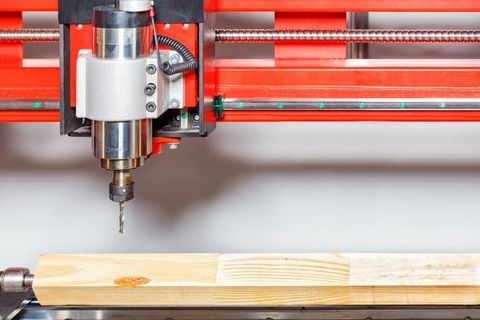
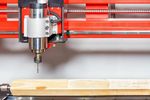
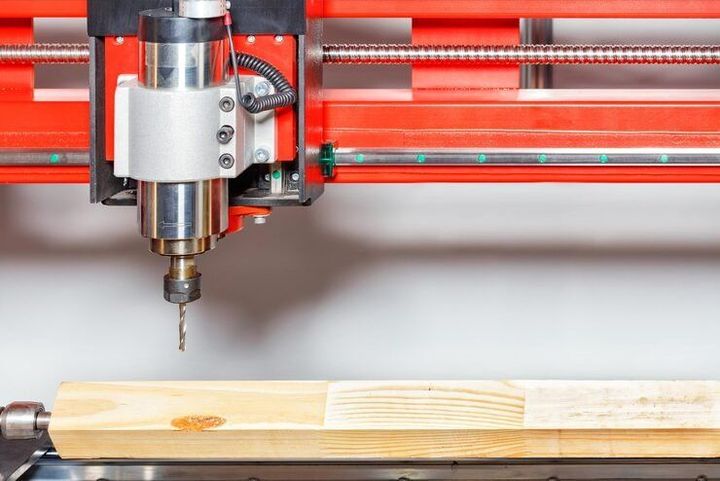
Spindle: Rotates the cutting tool at a selected speed.
Cutting tool: Removes material from the workpiece according to the programmed path.
Motion system: Uses motors, rails, and drive mechanisms to move the tool or workpiece along different axes.
Controller: Interprets programmed instructions and coordinates machine movement.
Worktable: Supports the material during machining and may include clamps or a vacuum hold-down system.
Software: Converts digital designs into instructions that the machine can execute.
Many CNC routers operate along three principal axes: X, Y, and Z. The X and Y axes control horizontal movement, while the Z axis controls vertical movement. Some machines include additional rotary axes for producing more complex shapes.
How CNC Router Programming Works
The process usually begins with a digital drawing or computer-aided design (CAD) model. Computer-aided manufacturing (CAM) software then converts the design into toolpaths, which define how the cutting tool should move through the material.
The software generates machine instructions, commonly represented through G-code or a compatible controller format. These instructions may specify movement coordinates, spindle speed, cutting depth, feed rate, and other operating parameters. The operator checks the program, secures the workpiece, selects the appropriate tool, and verifies the machine setup before cutting begins.
Importance
CNC routers are important because they allow manufacturers to produce repeated shapes and detailed patterns with controlled machine movement. Manual cutting can require considerable operator skill, especially when a design contains many curves, repeated holes, or closely spaced features. Computer-controlled movement helps maintain consistency when the material, tooling, setup, and program are properly managed.
These machines are useful for small workshops, educational institutions, furniture manufacturers, sign makers, and larger production facilities. They can support one-off prototypes as well as repeated manufacturing tasks, although production capacity depends on machine size, cutting speed, material properties, and setup time.
Common CNC Router Cutting Methods
Different cutting methods are used according to the required shape, surface finish, and material thickness.
Profile cutting: Follows the outside or inside boundary of a design to produce a specific shape.
Pocketing: Removes material from a defined area to create a recessed section.
Engraving: Creates shallow lines, letters, symbols, or decorative details on a surface.
Drilling: Produces holes at programmed locations using a suitable tool and cutting sequence.
Grooving: Creates channels used for joints, panels, fittings, or decorative patterns.
Three-dimensional carving: Removes material at varying depths to produce sculpted surfaces and relief designs.
Tool selection and cutting parameters influence the finished result. Excessive feed rates, unsuitable spindle speeds, worn cutting edges, or poor workpiece support can cause rough surfaces, tool breakage, dimensional errors, or material damage.
Materials Processed by CNC Routers
CNC routers can process several material groups, but the machine configuration and cutting tool must match the workpiece.
Wood and wood-based panels are widely used in furniture, cabinets, decorative panels, and interior components. Plastics such as acrylic and certain engineering polymers can be cut or engraved with suitable tools and cutting conditions. Foam is often processed for models, patterns, packaging inserts, and display components.
Some CNC routers also process aluminum, brass, and other non-ferrous metals when their rigidity, spindle capacity, tooling, and cutting parameters are appropriate. Harder metals generally require machines and machining methods designed for those materials. A conventional router should not be assumed suitable for every metal or industrial cutting task.
Recent Updates
CNC router technology continues to develop through improvements in digital design software, machine controls, tool monitoring, and manufacturing automation. Trends during 2024–2026 include greater integration between CAD/CAM systems, increased use of automated material handling, and more accessible digital production workflows. These developments vary across machine types, manufacturers, and industrial sectors.
Software Integration and Automation
Modern CAD/CAM workflows can connect design files with toolpath generation and machine programming. Some systems include simulation features that help operators inspect tool movement, identify potential collisions, and review material removal before running a physical cutting operation. Simulation reduces certain programming risks but does not eliminate the need for machine checks and safe setup procedures.
Automation can also include automatic tool changers, vacuum workholding, material-positioning systems, and production monitoring. These features can reduce manual intervention during repeated operations, depending on the machine configuration and production process.
Precision, Monitoring, and Material Efficiency
Improved motion control, spindle technology, and measurement systems can support consistent machining when equipment is maintained and correctly configured. Some production environments use sensors or monitoring software to track operating conditions and identify unusual vibration, temperature changes, or tool wear.
Nesting software is another relevant development in panel processing. It arranges multiple component shapes on a sheet to help manage material use and reduce offcuts. Actual material savings depend on part geometry, cutting allowances, sheet dimensions, and production requirements.
Digital manufacturing does not remove the need for operator knowledge. Tool selection, dust extraction, workholding, machine maintenance, and inspection remain important parts of CNC router operation.
Laws or Policies
CNC router operation is affected by workplace safety requirements, electrical safety rules, environmental controls, and applicable industrial regulations. In India, the precise requirements depend on the workplace, the state, the machine installation, and the activities performed.
Workplace Safety in India
Factories and industrial workplaces may be subject to applicable provisions of Indian occupational safety and factory legislation, including relevant requirements under the Factories Act, 1948, where applicable, and the evolving framework under the Occupational Safety, Health and Working Conditions Code, 2020. Applicability depends on commencement notifications, the relevant rules, the establishment, and the legal requirements in force.
Important safety considerations include guarding moving parts, preventing accidental machine activation, providing suitable operator training, and maintaining electrical equipment. Operators should follow the machine manufacturer's instructions and established workplace procedures for setup, maintenance, and emergency shutdown.
Dust, Noise, and Environmental Controls
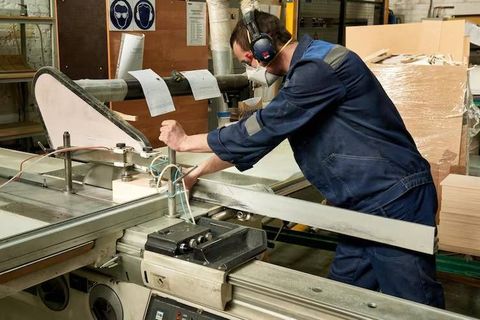
Cutting wood, composite boards, plastics, and other materials can generate airborne particles, noise, and waste. Suitable extraction and ventilation systems help manage exposure to dust and fumes, while hearing protection may be needed depending on measured noise levels and workplace rules.
Industrial facilities may also need to comply with applicable environmental requirements concerning emissions, waste handling, and the disposal of process materials. Requirements vary with the material, production activity, and local regulatory conditions. Safety data sheets and material documentation help identify specific handling and disposal precautions.
Operator Safety Practices
Common precautions include:
Keeping guards and protective devices in their intended operating condition.
Securing workpieces before machining begins.
Using appropriate eye, hearing, and respiratory protection based on the risk assessment.
Keeping hands away from rotating tools and moving machine components.
Isolating electrical and other energy sources before maintenance.
Ensuring dust extraction and ventilation are suitable for the material being processed.
Loose clothing, jewelry, and unsecured hair can become entangled in rotating equipment. Gloves should not be worn near rotating cutting tools unless the task-specific safety procedure explicitly permits them. Machine-specific instructions and workplace risk assessments should determine the correct protective measures.
Tools and Resources
Selecting, programming, and operating a CNC router involves both physical equipment and digital resources. The appropriate combination depends on the workpiece, production volume, design complexity, and required dimensional accuracy.
Design and Manufacturing Software
CAD software is used to create two-dimensional drawings or three-dimensional models. CAM software converts those designs into machining operations and toolpaths. Some software packages combine both functions, while others use separate applications.
Commonly used tools include Autodesk Fusion for design and manufacturing workflows, VCarve for routing and engraving workflows, and FreeCAD for computer-aided design tasks. Available features, supported controllers, and machine compatibility differ, so the software documentation should be reviewed before selecting a workflow.
Cutting Tools and Workholding Equipment
Common CNC router tools include straight bits, spiral bits, compression bits, V-bits, ball-nose bits, and specialized engraving cutters. Each tool has a particular geometry and intended use. For example, a ball-nose bit is commonly used for curved three-dimensional surfaces, while a V-bit can create angled engraving details.
Workholding methods include mechanical clamps, fixtures, and vacuum tables. The chosen method must hold the workpiece securely without obstructing the cutting path. Dust extraction equipment is also important when machining materials that generate airborne particles.
Comparing CNC Router Materials
| Material | Common applications | Main considerations |
|---|---|---|
| Solid wood | Furniture, signs, decorative parts | Grain direction, moisture, splintering |
| MDF and plywood | Cabinets, panels, interior components | Dust extraction, edge quality |
| Acrylic | Displays, signs, covers | Heat buildup, melting, edge finish |
| Foam | Models, patterns, packaging | Tool geometry, workpiece stability |
| Aluminum | Panels, brackets, selected components | Machine rigidity, chip removal, tooling |
| Engineering plastics | Fixtures, enclosures, prototype parts | Heat sensitivity, material-specific cutting parameters |
This comparison is general. Each material has different grades and properties, and the manufacturer's machining guidance should be considered before selecting tools or operating settings.
FAQs
What is a CNC router and how does it work?
A CNC router is a computer-controlled cutting machine that moves a rotating tool along programmed paths. It follows digital instructions to cut, engrave, groove, or carve material into a specified shape.
Which materials can a CNC router cut?
Depending on the machine and tooling, CNC routers can process wood, plywood, MDF, foam, acrylic, selected plastics, and certain non-ferrous metals. Material compatibility depends on machine rigidity, spindle capacity, tool selection, and cutting parameters.
What are the common CNC router cutting methods?
Common methods include profile cutting, pocketing, engraving, drilling, grooving, and three-dimensional carving. The selected method depends on the part geometry, material, and required surface finish.
Which software is used for CNC router programming?
CAD software creates the design, while CAM software generates toolpaths and machine instructions. Some applications combine both functions, and the final program must be compatible with the machine's controller.
What safety precautions are important when operating a CNC router?
Important precautions include securing the workpiece, using suitable guards, controlling dust, wearing appropriate protective equipment, and keeping clear of rotating tools. Maintenance should follow the machine's energy-isolation procedures and manufacturer instructions.
Conclusion
CNC routers combine digital design, programmed movement, and rotating cutting tools to process materials into precise shapes and patterns. Their applications range from furniture and signage to prototyping and selected industrial components. Machine capability, tooling, material properties, and software compatibility determine the suitable cutting methods. Workplace safety, dust control, operator training, and applicable regulations remain essential considerations in CNC router use.

You May Also Like