ndustrial Vacuum Cleaner Guide: Cleaning Methods, Filtration Systems, Uses and Key Features
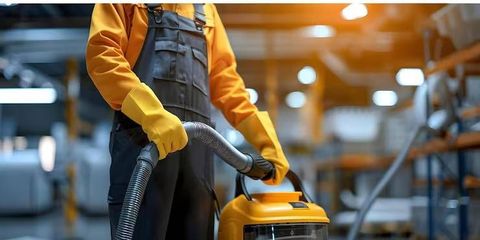
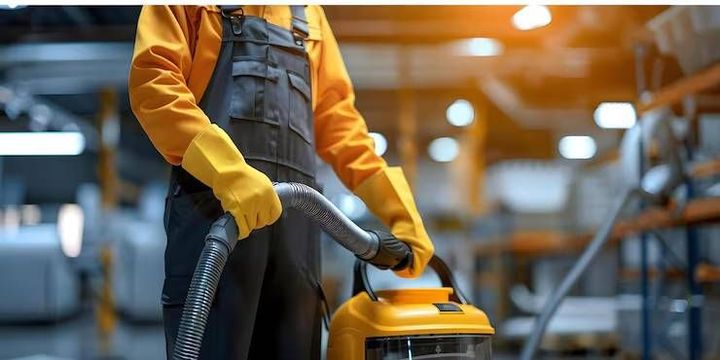
An industrial vacuum cleaner is a machine designed to collect dust, debris, liquids, and other unwanted materials from industrial, commercial, and workshop environments. Unlike many household vacuum cleaners, industrial models are often built for demanding cleaning conditions, larger collection volumes, and specific types of waste. An Industrial Vacuum Cleaner Guide explains the cleaning methods, filtration systems, applications, and key features that influence how these machines operate.
Context
An industrial vacuum cleaner is a machine designed to collect dust, debris, liquids, and other unwanted materials from industrial, commercial, and workshop environments. Unlike many household vacuum cleaners, industrial models are often built for demanding cleaning conditions, larger collection volumes, and specific types of waste. An Industrial Vacuum Cleaner Guide explains the cleaning methods, filtration systems, applications, and key features that influence how these machines operate.
Vacuum cleaning technology developed from early mechanical devices into electrically powered equipment used in homes, factories, workshops, and public buildings. As manufacturing processes expanded, workplaces needed ways to collect metal particles, wood dust, packaging waste, and other residues produced during daily operations. Industrial vacuum cleaners evolved to address these requirements through stronger construction, specialized attachments, larger containers, and filtration systems suited to different materials.
How an Industrial Vacuum Cleaner Works
Most industrial vacuum cleaners use an electric motor to drive a fan or blower, creating a pressure difference that draws air and debris through an inlet. The incoming material passes through a collection container and filtration system before the air exits the machine.
The precise arrangement varies by model. Some machines collect dry dust, others handle liquids, and certain specialized units are designed for fine powders or particular industrial residues. Selecting equipment according to the material being collected is important because not every vacuum cleaner is suitable for every substance.
Main Types of Industrial Vacuum Cleaners
Industrial vacuum cleaners can be grouped according to their intended cleaning tasks.
Dry vacuum cleaners: Collect dust, chips, crumbs, and other dry debris from floors, equipment, and work areas.
Wet and dry vacuum cleaners: Handle suitable liquids as well as dry materials, using containers and components designed for those conditions.
Fine-dust vacuum cleaners: Use specialized filtration arrangements to capture small airborne particles drawn into the machine.
Central vacuum systems: Use fixed pipe networks connected to a central collection unit, allowing cleaning at multiple points within a facility.
Heavy-duty industrial units: Support demanding cleaning operations involving substantial debris volumes or extended operating periods, depending on their design.
Specialized hazardous-dust vacuum cleaners: Are designed for identified hazards and may require certified equipment, specialized filters, and particular operating procedures.
These categories can overlap. A machine may combine heavy-duty construction with fine-dust filtration, while another may be intended for liquid recovery or use in a regulated industrial environment.
Importance
Industrial vacuum cleaners help maintain cleaner workplaces by collecting materials that can otherwise accumulate around machinery, production lines, storage areas, and floors. Dust and debris may interfere with equipment operation, reduce visibility, contaminate products, or create slipping and tripping hazards. Effective collection methods help workplaces manage these concerns as part of routine housekeeping and maintenance.
These machines are relevant to manufacturing plants, construction sites, automotive workshops, warehouses, food-processing facilities, laboratories, and commercial buildings. The appropriate equipment depends on the waste material, cleaning frequency, environment, and safety requirements.
Common Industrial Cleaning Applications
Industrial vacuum cleaners support different tasks across multiple sectors.
Manufacturing: Collecting suitable metal chips, plastic fragments, and production residues.
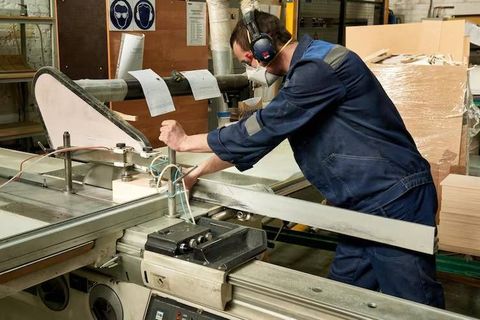
Woodworking: Removing sawdust and wood particles from work areas and compatible machinery connections.
Construction: Collecting building dust and debris when the machine is suitable for the material and required dust-control level.
Automotive workshops: Removing dry dirt, workshop debris, and compatible liquid spills.
Food processing: Collecting suitable dry product residues under the facility's hygiene procedures.
Warehousing: Cleaning floors, storage areas, and equipment surroundings.
Facility maintenance: Removing accumulated dust from selected workspaces and machinery enclosures.
The cleaning method must match the material. For example, ordinary dust collection equipment may not be appropriate for combustible powders, toxic substances, or certain fine mineral dusts. These materials can require specialized controls and equipment designed for the specific hazard.
Benefits of Appropriate Dust Collection
Industrial vacuum cleaning can help reduce the amount of loose debris left on surfaces and limit the spread of some dust when the equipment and work practices are suitable. It can also support maintenance routines by collecting residues before they accumulate around moving parts or sensitive components.
However, a vacuum cleaner does not replace every other workplace control. Local exhaust ventilation, wet cleaning methods, protective equipment, and specialized containment may be necessary depending on the process and the substance involved.
Recent Updates
Industrial cleaning technology continues to develop through improvements in filtration, motor control, monitoring, and equipment integration. Trends visible across the 2024–2026 period include greater attention to fine-particle control, energy use, operator ergonomics, and maintenance information. The extent of these features varies by manufacturer and model, and not every development represents a new industry-wide standard.
Filtration and Dust-Control Developments
High-efficiency particulate air (HEPA) filtration is used in applications where the equipment is designed and tested to capture very small airborne particles. Some industrial systems combine multiple filtration stages to collect larger debris before air reaches a finer filter. This arrangement can help manage filter loading and support suitable air-cleaning performance.
Filter design remains important because a filter's rating alone does not establish the performance of the entire machine. Seals, housing design, airflow, filter condition, and the method used to empty the collection container can affect whether dust escapes during operation or maintenance.
Smart Monitoring and Energy Management
Some newer industrial vacuum systems incorporate electronic controls, filter-condition indicators, airflow monitoring, or automated operating features. These functions can help operators identify restricted airflow or maintenance needs, although the available information and monitoring accuracy differ between models.
Motor efficiency and adjustable suction settings are also relevant to equipment development. Matching airflow and suction to the task can support effective collection while avoiding unnecessary energy use. Battery-powered industrial units are available for certain applications, although runtime, charging needs, and performance depend on the design and workload.
Ergonomics and Equipment Integration
Manufacturers continue to address practical issues such as movement between work areas, noise, container handling, hose connections, and integration with production equipment. Some vacuum cleaners can connect directly to compatible industrial tools, collecting dust close to where it is generated. The connection and collection capacity must be appropriate for the tool and material.
Laws or Policies
Industrial vacuum cleaner use is shaped by workplace safety requirements, environmental rules, electrical safety standards, and regulations concerning hazardous dust. Requirements depend on the country, industry, substance being collected, and conditions in which the machine operates.
Workplace Safety Requirements in India
In India, industrial cleaning practices may fall under applicable occupational safety legislation, factory requirements, state rules, and sector-specific regulations. The Occupational Safety, Health and Working Conditions Code, 2020, forms part of India's occupational safety framework; its applicability depends on commencement arrangements and the provisions in force. Applicable requirements should be checked against current official notifications and rules.
Employers may need to assess workplace hazards, manage dust exposure, maintain suitable equipment, and establish safe operating procedures. In environments involving hazardous substances, controls may include appropriate collection equipment, worker training, maintenance procedures, and suitable personal protective equipment.
Dust, Electrical, and Fire Safety
Fine dust can present inhalation risks, while some combustible dusts can ignite or explode under certain conditions. A vacuum cleaner intended for ordinary industrial debris should not automatically be considered suitable for combustible powders, flammable liquids, or hazardous atmospheres.
Equipment used in such environments may need specific certification or compliance with standards appropriate to the hazard. Electrical protection, grounding, static control, motor design, and approved collection arrangements may all be relevant. A HEPA filter alone does not make a vacuum cleaner explosion-proof or suitable for every hazardous substance.
Facilities should also follow the manufacturer's instructions for filter replacement, container emptying, liquid collection, electrical connections, and equipment inspection. Applicable requirements may involve the Bureau of Indian Standards, recognized technical standards, or other competent authorities, depending on the equipment and use.
Tools and Resources
Several technical resources can help users understand industrial vacuum cleaner specifications, compare system designs, and plan maintenance. The information should be interpreted according to the actual cleaning task rather than relying on a single specification.
Specification Sheets and Selection Tools
Manufacturer specification sheets commonly list airflow, static pressure or vacuum level, motor power, container capacity, filter type, noise information, and operating requirements. Airflow indicates the volume of air moved over a period, while vacuum level describes the pressure difference the machine can generate. Both measurements matter, but their values must be considered together with hose diameter, filter condition, and the material being collected.
A selection worksheet can record:
Material type and particle characteristics.
Dry, wet, or combined cleaning requirements.
Expected debris volume and cleaning frequency.
Required filtration class or certification.
Hose length, inlet size, and equipment compatibility.
Power supply, mobility, noise, and maintenance needs.
Filtration and Safety References
HEPA filter information, industrial dust-control guidance, and applicable occupational safety documents can help clarify filtration requirements. In India, relevant material may be available through the Ministry of Labour and Employment, the Directorate General Factory Advice Service and Labour Institutes, and the Bureau of Indian Standards.
For specialized dust hazards, the United States National Institute for Occupational Safety and Health (NIOSH) and the Occupational Safety and Health Administration (OSHA) publish technical guidance that may provide additional background. Their publications do not replace Indian legal requirements or a site-specific safety assessment.
Maintenance and Performance Records
A basic maintenance log can record operating hours, filter inspections, airflow observations, container emptying, hose condition, and replacement parts. Regular inspection can help identify blocked hoses, damaged seals, worn filters, and other conditions that reduce collection performance.
FAQs
What is an industrial vacuum cleaner used for?
An industrial vacuum cleaner collects dust, debris, and, in suitable models, liquids from factories, workshops, warehouses, construction areas, and other workspaces. Its intended materials and operating conditions depend on the machine's design.
How do industrial vacuum cleaner filtration systems work?
Filtration systems separate collected particles from the air passing through the machine. Some use several stages, such as a primary filter followed by a finer filter, while specialized units may use HEPA filtration or other arrangements suited to specific hazards.
What is the difference between wet and dry industrial vacuum cleaners?
Dry models collect materials such as dust and chips, while wet and dry models are designed to collect suitable liquids as well as dry debris. Liquid capacity, electrical protection, filter requirements, and permitted materials vary by model.
Is a HEPA industrial vacuum cleaner suitable for hazardous dust?
Not necessarily. HEPA filtration can capture very small particles when used in a properly designed system, but hazardous dust may require additional containment, certified equipment, or controls for combustible or toxic materials.
Which specifications matter when choosing an industrial vacuum cleaner?
Important specifications include airflow, vacuum level, filter type, collection capacity, power requirements, hose compatibility, and suitability for the material. Safety certifications and maintenance requirements also matter when the machine will operate in a hazardous environment.
Conclusion
Industrial vacuum cleaners collect dust, debris, and suitable liquids across manufacturing, construction, maintenance, and other work environments. Their performance depends on the cleaning method, filtration system, airflow, collection capacity, and compatibility with the material. Workplace safety rules and specialized hazards can determine which equipment is appropriate for a particular task. Understanding these factors provides a practical foundation for evaluating industrial vacuum cleaner designs and their uses.