Beverage Carton Filling Machines Guide: Technologies, Production Processes and Key Features
Beverage carton filling machines are industrial systems designed to fill liquid products into cartons, seal the packages, and prepare them for distribution. They are commonly used in the food and beverage industry for products such as milk, fruit juice, plant-based drinks, flavored beverages, and other liquid foods. A Beverage Carton Filling Machines Guide explains the technologies, production processes, equipment components, and operational features involved in this type of packaging.
Context
Beverage carton filling machines are industrial systems designed to fill liquid products into cartons, seal the packages, and prepare them for distribution. They are commonly used in the food and beverage industry for products such as milk, fruit juice, plant-based drinks, flavored beverages, and other liquid foods. A Beverage Carton Filling Machines Guide explains the technologies, production processes, equipment components, and operational features involved in this type of packaging.
Carton packaging developed as manufacturers sought practical ways to transport and store liquids in lightweight containers. Modern beverage cartons can contain multiple layers of paperboard, polymers, and, in some packaging formats, aluminum. These layers provide structural strength and help control the movement of moisture, oxygen, and light, depending on the carton design.
Beverage carton filling equipment varies according to the product, packaging material, required production rate, and expected storage conditions. Some systems fill cartons under refrigerated conditions, while others use aseptic packaging technology to fill commercially sterile products into sterilized packaging under controlled conditions.
Understanding Beverage Carton Filling Technology
A beverage carton filling machine combines several operations into a coordinated production system. Depending on its design, it may form cartons from flat packaging material, fill prepared cartons, seal openings, print identification information, and transfer completed packages to downstream equipment.
Common applications include:
Dairy packaging: Filling milk, cream-based drinks, and other dairy beverages.
Juice packaging: Packaging fruit juices, juice blends, and selected nectar products.
Plant-based beverages: Filling oat, soy, almond, and other plant-derived drinks.
Liquid food packaging: Handling selected soups, broths, and other products compatible with the machine design.
The equipment used for one product may not be appropriate for another. Differences in viscosity, acidity, temperature, particle content, and sensitivity to oxygen can affect filling methods and packaging requirements.
Main Types of Carton Filling Machines
Carton filling machines are generally classified by how they handle packaging material and protect the product.
Preformed carton filling machines: Fill cartons that have already been manufactured into a suitable shape.
Roll-fed systems: Form packages from continuous packaging material during production.
Aseptic carton filling machines: Fill commercially sterile products into sterilized packaging within a controlled environment.
Non-aseptic filling machines: Fill products using appropriate hygiene and preservation controls, often with refrigerated storage or other specified handling conditions.
These categories may overlap because machine designs differ. A filling system's suitability depends on the complete packaging process rather than its name alone.
Importance
Beverage carton filling machines play an important role in producing packaged drinks for retail distribution, institutional use, and other food supply channels. They help manufacturers manage filling accuracy, package consistency, hygiene, production speed, and packaging material use. Their operation also affects how products are stored, transported, and presented to consumers.
Poorly controlled filling or sealing can lead to leaking cartons, incorrect fill volumes, product contamination, and packaging waste. Inadequate control of temperature or sterilization may also affect product safety and shelf life. For these reasons, filling machinery is closely connected to food safety procedures, quality checks, and routine equipment maintenance.
Important Machine Components
A typical carton filling line contains several connected components, although the exact arrangement depends on the technology.
Packaging material handling system: Feeds carton blanks, preformed containers, or continuous packaging material into the machine.
Filling unit: Measures and dispenses the required quantity of liquid into each package.
Forming mechanism: Shapes packaging material into a carton when the machine uses roll-fed or blank-forming technology.
Sealing unit: Closes the carton using compatible heat-sealing, pressure-sealing, or other specified methods.
Control system: Coordinates filling cycles, machine movements, alarms, and production settings.
Inspection equipment: Checks selected characteristics, such as fill level, package appearance, seal integrity, or identification codes.
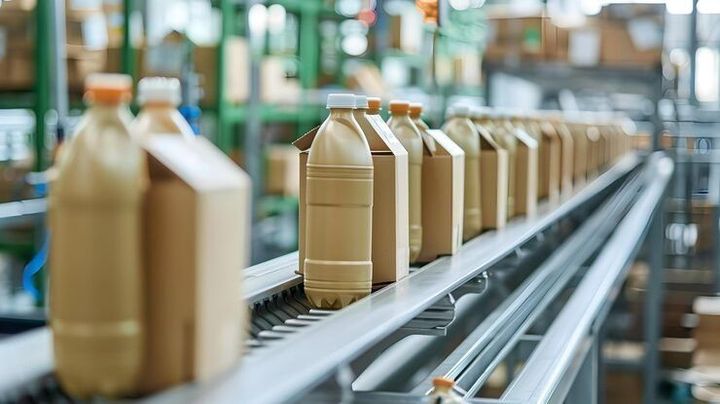
Conveyor system: Moves cartons between filling, sealing, inspection, and packing stages.
Not every machine includes all these components within one unit. Some production lines use separate equipment for carton forming, filling, coding, inspection, and secondary packaging.
Production Process Overview
The production process begins with preparing the product and packaging materials. The liquid may undergo filtration, blending, heat treatment, or other processing steps according to its formulation and food safety requirements.
The general sequence is shown below.
| Production stage | Main purpose |
|---|---|
| Product preparation | Establish the required product condition |
| Packaging preparation | Supply suitable cartons or packaging material |
| Carton forming | Create the required container shape, where applicable |
| Filling | Dispense a controlled volume of liquid |
| Sealing | Close the package to the required specification |
| Inspection | Check selected package and process characteristics |
| Coding and packing | Add identification details and prepare cartons for transport |
In aseptic production, product sterilization and packaging sterilization are coordinated with controlled filling conditions. The complete system must maintain the required sterile conditions, rather than relying on the filling machine alone.
Recent Updates
Beverage carton filling technology continues to develop through improvements in automation, monitoring, packaging design, and resource efficiency. During 2024–2026, broader industry developments have included increased attention to production data, material reduction, equipment flexibility, and packaging recyclability. The extent of adoption varies by manufacturer, product category, and production facility.
Automation and Digital Monitoring
Modern filling lines may use programmable logic controllers, touchscreen interfaces, industrial sensors, and automated inspection systems. These technologies help operators monitor filling volumes, machine temperatures, conveyor movement, production interruptions, and other operating conditions.
Some systems also collect production data for maintenance planning and quality analysis. For example, repeated sealing faults or unusual machine vibration may indicate a developing equipment problem. Digital monitoring can support investigation, but accurate results still depend on sensor calibration, suitable operating procedures, and trained personnel.
Packaging Materials and Resource Efficiency
Packaging manufacturers continue to examine ways to reduce material use while maintaining carton strength, barrier properties, and product protection. Some carton formats use paper-based structures with reduced polymer content or alternative barrier designs, although the suitability of each format depends on the beverage and required storage conditions.
Recyclability is another important consideration. A carton's actual recovery depends on its material construction, collection systems, sorting facilities, and available recycling processes. A packaging design described as recyclable may not be accepted in every local waste-management system.
Flexible Production and Equipment Design
Some filling systems are designed to accommodate multiple carton sizes or formats through adjustments or changeover procedures. This flexibility can help facilities manage different product lines, but changing formats may require replacement parts, cleaning, setup, and validation checks.
Manufacturers are also developing equipment with improved access for cleaning and maintenance. Hygienic design can reduce areas where product residue accumulates, supporting sanitation procedures and lowering the risk of contamination when the equipment is operated correctly.
Laws or Policies
Beverage carton filling machines used in India must operate within the relevant food safety, packaging, machinery safety, and environmental requirements. Applicable rules depend on the beverage, facility, packaging materials, production process, and distribution arrangements.
Food Safety Regulations in India
The Food Safety and Standards Authority of India (FSSAI) administers India's food safety framework under the Food Safety and Standards Act, 2006. Relevant regulations address food manufacturing, hygiene, packaging, labeling, and other requirements applicable to food businesses.
Manufacturers must identify the requirements relevant to their products and processes. These may include appropriate sanitation procedures, controls against contamination, traceability records, and compliance with applicable packaging standards. Aseptic operations require particular attention to validated processing conditions and the maintenance of sterile systems.
Packaging and Labeling Requirements
Food packaging must be suitable for its intended use and comply with applicable Indian food-contact material requirements. Packaging materials should not introduce unacceptable contamination or transfer substances into the beverage beyond permitted limits.
Packaged beverage labels may need information such as the product name, ingredient details, declared quantity, manufacturer information, dates, and other particulars required by applicable rules. The precise requirements depend on the product category and relevant regulations, including applicable FSSAI labeling and display requirements and Legal Metrology rules.
Environmental and Workplace Requirements
Packaging production and disposal may be affected by applicable waste-management rules, including India's Plastic Waste Management Rules where relevant to the packaging structure and producer obligations. Environmental requirements can also apply to wastewater, manufacturing emissions, and industrial waste.
Factories must follow applicable workplace safety requirements for electrical systems, moving machinery, hot sealing components, and cleaning chemicals. Emergency stops, machine guarding, lockout procedures where applicable, and appropriate training help reduce workplace hazards. Specific obligations depend on the facility and the laws in force.
Tools and Resources
Selecting and operating beverage carton filling equipment involves reviewing technical documentation, product requirements, packaging specifications, and production data. Several resources can help operators, engineers, and production planners understand these factors.
Machine Specifications and Production Calculations
Technical datasheets and equipment manuals describe compatible carton formats, filling ranges, operating conditions, cleaning requirements, and maintenance procedures. These documents should be reviewed alongside the product's processing requirements and packaging material specifications.
Production planning can use basic calculations to estimate line output. For example, a machine running at 6,000 cartons per hour for five hours at its stated operating rate has a theoretical output of 30,000 cartons. Actual production may be lower because of startup time, changeovers, cleaning, interruptions, and rejected packages.
Quality and Maintenance Resources
A production facility may use digital checklists, maintenance logs, calibration records, and quality-control templates. These records can track seal inspections, fill-volume checks, cleaning cycles, component replacement, and equipment downtime.
Useful reference sources include:
FSSAI: Indian food safety regulations and guidance.
Bureau of Indian Standards (BIS): Relevant Indian standards and technical publications.
Equipment manuals: Operating limits, maintenance schedules, and cleaning instructions.
Packaging material datasheets: Barrier properties, sealing compatibility, and storage conditions.
Food processing engineering references: General information about filling systems, hygienic design, and process control.
The relevance of each resource depends on the machine model, packaging format, beverage characteristics, and applicable regulatory requirements.
FAQs
What is a beverage carton filling machine?
A beverage carton filling machine is industrial equipment that fills liquid products into cartons and seals them for handling, storage, and distribution. Some machines also form cartons and inspect completed packages.
How does a beverage carton filling machine work?
The system prepares the packaging, measures and dispenses the liquid, seals the carton, and transfers the completed package for inspection or packing. The sequence varies according to the machine design and whether the process is aseptic.
What is the difference between aseptic and non-aseptic carton filling?
Aseptic filling combines commercially sterile product, sterilized packaging, and controlled filling conditions to maintain sterility. Non-aseptic systems use different preservation and handling methods, which may require refrigeration or other specified storage conditions.
Which beverages can carton filling machines handle?
Depending on the equipment configuration, machines can handle milk, juices, plant-based drinks, and selected liquid foods. Viscosity, acidity, particles, temperature, and packaging compatibility determine which products a system can process.
What factors matter when selecting beverage carton filling equipment?
Relevant factors include product characteristics, carton size, required production capacity, filling accuracy, sanitation procedures, sealing technology, automation, maintenance requirements, and regulatory compliance. Compatibility with packaging materials and downstream equipment is also important.
Conclusion
Beverage carton filling machines combine product handling, filling, sealing, and quality-control operations within industrial packaging systems. Different technologies serve different beverage types, carton formats, and storage requirements. Automation, packaging development, and resource efficiency continue to influence equipment design, while food safety and environmental regulations shape production practices. Understanding these factors provides a foundation for evaluating carton filling processes and their role in beverage manufacturing.