5G Phone Details: Display Types, Processors, Charging Technology and Network Compatibility
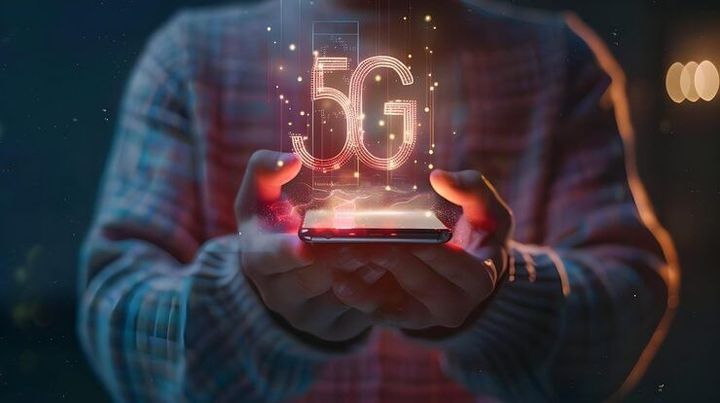
A 5G phone is a mobile device designed to connect to fifth-generation cellular networks while also supporting earlier network generations where required. The technology developed from earlier mobile standards such as 4G LTE, with 5G introducing different radio technologies, frequency bands, and network architectures intended to support higher data capacity, lower latency, and a greater number of connected devices.
The term “5G phone” describes more than network connectivity. A modern device combines a display panel, mobile processor, modem, antennas, battery, charging system, operating system, and other components. These parts work together to determine how the phone handles applications, video, photography, gaming, communication, and cellular connections.
How 5G phones developed
Early smartphones focused mainly on voice communication and basic internet access. Later generations introduced faster mobile data, larger displays, application ecosystems, and more advanced processors. The arrival of 5G expanded the technical requirements because phones needed compatible radio hardware and support for additional frequency bands.
A 5G phone normally includes a cellular modem integrated into the processor or connected closely with it. The modem communicates with nearby network equipment using supported 5G frequencies. A phone may also use 4G LTE when 5G coverage is unavailable or when network conditions require another connection method.
Importance
5G phone technology matters because smartphones are used for many tasks that depend on wireless connectivity and computing performance. Video streaming, cloud applications, online gaming, navigation, video calls, connected devices, and large file transfers can all place different demands on a phone.
Network compatibility is particularly important because a phone can support 5G in one country while having limited compatibility in another. The reason is that mobile operators use different frequency bands. A device intended for one market may therefore require a different radio configuration from a device intended for another market.
Display types
The display is the main visual interface of a smartphone. Common technologies include LCD, OLED, and AMOLED-based panels.
LCD panels use a separate backlight to illuminate the screen. OLED panels use individual light-emitting pixels, allowing dark areas of an image to consume less power under suitable conditions. AMOLED is a form of OLED technology that uses an active matrix to control individual pixels.
Some modern phones use LTPO display technology. LTPO can allow the refresh rate to change dynamically according to what is displayed. For example, a screen may use a lower refresh rate for relatively static content and increase it during scrolling or animation.
Processors and 5G modems
The processor, often called a system-on-chip or SoC, handles general computing tasks and works alongside specialized components for graphics, artificial intelligence, image processing, and cellular communication.
Recent smartphone platforms include processors from companies such as Qualcomm, MediaTek, Apple, and Samsung. Different processor families have different CPU designs, graphics capabilities, manufacturing processes, modem configurations, and power-management systems.
For everyday users, processor performance affects application loading, multitasking, camera processing, gaming, and battery behavior. The modem component is particularly important for 5G because it determines which network technologies and frequency bands the phone can communicate with.
Charging technology
Charging systems have also changed considerably. USB-C is widely used on modern smartphones, while charging systems may support different power levels and protocols.
Wired charging can use higher power than earlier smartphone systems, while wireless charging transfers energy through electromagnetic induction. Some phones dynamically control charging power based on temperature, battery condition, and other factors.
Battery capacity is normally expressed in milliampere-hours, or mAh. Capacity alone does not determine battery life because screen brightness, display refresh rate, processor efficiency, network conditions, application activity, and software optimization also affect energy consumption.
Network compatibility
Network compatibility depends on several technical factors. These include supported 5G bands, 4G LTE bands, carrier aggregation capabilities, modem configuration, SIM or eSIM support, and the network technology used by the operator.
Two phones can both be described as 5G devices while having different band support. Checking the technical specifications for the exact regional model is therefore important when considering international use.
Recent Updates
From 2024 through 2026, smartphone development has continued toward more capable processors, adaptive displays, faster charging systems, improved power management, and broader 5G band support. Manufacturers have increasingly combined CPU, graphics, AI processing, and cellular modem functions into integrated platforms.
Display technology has continued moving toward OLED and high-refresh-rate panels, with variable refresh rates becoming more common across different device categories. LTPO-based displays have also become more widely associated with dynamic refresh-rate control.
Processor development has placed greater emphasis on on-device AI processing. Modern mobile platforms can include dedicated neural-processing hardware for tasks such as image enhancement, voice processing, translation, summarization, and other computational functions. Actual capabilities vary according to the processor and software.
5G network development has also continued in India. TRAI has published recommendations and consultation materials concerning additional spectrum and telecommunications regulation during 2024–2026. These developments include work involving spectrum identified for International Mobile Telecommunications and changes associated with the Telecommunications Act, 2023.
Technology comparison
| Component | Common technologies | Main role |
|---|---|---|
| Display | LCD, OLED, AMOLED, LTPO OLED | Shows images, text and video |
| Processor | Multi-core mobile SoC | Handles computing tasks |
| Graphics | Integrated GPU | Processes graphics and video |
| Modem | 4G LTE and 5G modem | Connects to cellular networks |
| Charging | USB-C wired, wireless charging | Transfers energy to the battery |
| Battery | Lithium-ion or lithium-polymer | Stores electrical energy |
| Connectivity | 5G, 4G LTE, Wi-Fi, Bluetooth | Enables wireless communication |
Laws or Policies
In India, mobile telecommunications operate within a regulatory framework involving the Department of Telecommunications and the Telecom Regulatory Authority of India. The Telecommunications Act, 2023 provides a legislative framework for telecommunications, while related rules and regulations continue to develop.
TRAI's regulatory records show updates concerning consumer protection, quality of telecommunications, tariffs, mobile number portability, and other areas during 2024–2026. These rules can affect how telecommunications providers operate and how consumers receive information about telecommunications products and connections.
Telecommunications equipment is also subject to technical conformity requirements. The Department of Telecommunications states that notified telecommunications equipment covered by Mandatory Testing and Certification of Telecommunication Equipment requirements needs an applicable conformity assessment certificate before it can be used in India under the prescribed framework.
IMEI identification is another important part of mobile-device regulation. The Department of Telecommunications published guidance in 2026 concerning mandatory IMEI registration and the consequences associated with tampering. This makes the device's identification number an important technical and regulatory element of a mobile phone.
What network compatibility means in India
A phone intended for use in India should have appropriate support for the 5G bands used by the relevant network operator. Band support can differ between regional versions of the same phone model.
Network compatibility can be checked through the manufacturer's specification page, the operator's published compatibility information, or official telecommunications resources. Software updates can also affect network functionality, although software cannot add physical radio capabilities that the hardware does not contain.
Tools and Resources
Several resources can help readers understand 5G phone specifications and network compatibility.
- Manufacturer specification pages can provide information about display technology, processor models, charging protocols, supported network bands, SIM configurations, and battery capacity.
- The Department of Telecommunications website provides information about telecommunications rules, equipment requirements, and regulatory developments in India.
- TRAI publishes information about telecommunications regulations, spectrum matters, quality requirements, and consumer-related rules.
- GSMA's public resources provide information about mobile technologies and industry terminology.
- Device specification databases can be used to compare processor models, display characteristics, supported frequency bands, and charging capabilities.
- Network coverage maps published by individual operators can help readers understand where particular network technologies are available.
A useful specification checklist includes display type, screen refresh rate, processor model, modem generation, 5G bands, 4G bands, charging protocol, battery capacity, SIM configuration, and software support period.
FAQs
What should I check for 5G phone network compatibility?
Check the exact model's supported 5G and 4G LTE frequency bands, modem specifications, SIM configuration, and compatibility information for the intended Indian network operator. Regional variants can have different radio configurations.
Which display types are used in 5G phones?
Common display types include LCD, OLED, AMOLED, and LTPO OLED. OLED-based panels can control individual pixels, while LTPO technology can support variable refresh rates on compatible devices.
How do processors affect 5G phone performance?
The processor manages computing tasks such as applications, graphics, photography, video processing, and AI functions. Its associated modem handles cellular communication, including supported 5G technologies and frequency bands.
What is fast charging technology in a 5G phone?
Fast charging refers to charging systems that transfer electrical power to a battery at a higher rate than older standard charging methods. The actual charging rate depends on the phone, charger, cable, charging protocol, battery condition, and temperature.
Does every 5G phone work on every 5G network?
No. A phone must support the frequency bands and network technologies used by a particular operator. A device may therefore have 5G capability but still have limited compatibility with certain networks or regions.
Conclusion
A 5G phone combines cellular connectivity with several other technologies, including displays, processors, batteries, charging systems, and wireless communication hardware. Display type affects visual characteristics, while the processor and modem influence computing and network functions. Network compatibility depends heavily on supported frequency bands and regional hardware configurations. In India, telecommunications equipment and network operation are also shaped by regulatory requirements and technical standards.