Smart Home Systems Knowledge: Components, Communication Methods, Sensors and Automation
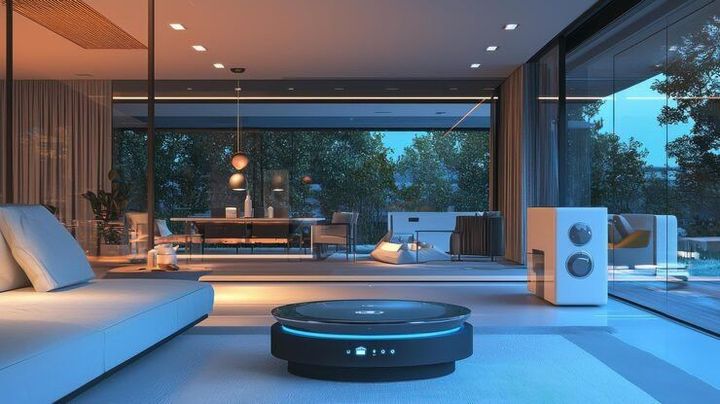
Smart home systems knowledge helps explain how connected household devices communicate, collect information, and perform automated actions. A smart home can include lighting controls, thermostats, cameras, door locks, appliances, speakers, sensors, and a central application or hub. These components use communication methods such as Wi-Fi, Bluetooth, Zigbee, Z-Wave, Thread, and Matter to exchange information. Understanding the basic components, sensors, communication methods, and automation principles makes the technology easier to understand for people without a technical background.
What Is a Smart Home System?
A smart home system is a group of connected devices that can exchange information and respond to commands or predefined conditions. Instead of operating every device separately, users can connect several household functions through an application, controller, hub, or compatible smart home platform.
The concept developed from earlier home automation systems, which used timers, wired controls, and dedicated controllers. As wireless networking and connected computing became more common, household devices gained the ability to communicate through local networks and internet-connected platforms.
A typical smart home contains several layers. Devices perform physical tasks, sensors collect information, communication networks transfer information, and software determines how devices respond.
Main Components
A smart home system may contain the following components:
- Smart devices: Lights, plugs, thermostats, locks, appliances, blinds, cameras, and speakers can receive commands or operate according to programmed conditions.
- Sensors: Motion, temperature, humidity, light, door, window, smoke, water-leak, and occupancy sensors provide information about the home environment.
- Controllers: A smartphone, tablet, voice assistant, wall panel, hub, or dedicated controller can be used to manage connected devices.
- Network equipment: Routers, access points, and Thread Border Routers provide communication pathways for different devices.
- Software platforms: Applications and automation systems allow users to configure devices, create routines, review information, and manage permissions.
These components do not always need to come from the same manufacturer. Compatibility depends on the communication technology, software platform, and standards supported by each device.
How Automation Works
Automation connects an event with a response. For example, a motion sensor can detect movement and send information to a controller. A programmed rule may then activate a light for a specified period.
Automation can be simple or complex. A basic routine might involve one sensor and one device, while a larger setup could combine occupancy information, lighting, temperature, time, and security conditions.
Importance
Everyday Household Applications
Smart home systems can address routine household tasks by connecting devices and allowing them to respond to conditions. Common applications include:
- Lighting that responds to motion or scheduled times.
- Heating or cooling equipment that reacts to temperature readings.
- Door and window sensors that report changes in their state.
- Water-leak sensors that identify moisture in selected areas.
- Smart plugs that control connected electrical equipment.
- Cameras and doorbells that provide visual information around entrances.
- Energy-monitoring devices that record electricity use.
The practical value of automation depends on the household, device configuration, network reliability, and how the automation rules are designed.
Accessibility and Convenience
Automation can reduce the number of manual steps required for repetitive household activities. Voice commands, scheduled actions, mobile controls, and sensor-based routines can be useful for people with different physical abilities or daily routines.
However, connected technology also introduces new considerations. A household may need to manage passwords, software updates, device permissions, network security, privacy settings, and compatibility between different platforms.
Privacy and Security
Smart home devices can collect information about household activity. Cameras may capture images, microphones can process voice commands, and sensors can reveal information about movement, temperature, occupancy, or appliance use.
Security therefore involves more than protecting the router. Device accounts, applications, firmware, local networks, cloud platforms, and access permissions can all form part of the overall security environment.
Recent Updates
Matter and Interoperability
One major development from 2024 onward has been the continued expansion of Matter, an industry standard intended to improve interoperability between compatible smart home ecosystems.
Matter 1.4 introduced improvements involving multi-platform management, home network infrastructure, energy management, and occupancy sensing. It also included support for certified home routers and access points that can combine Wi-Fi and Thread networking functions.
Matter 1.4.1 focused on easier device setup, including enhanced setup flows, multi-device QR codes, and NFC-based onboarding information. These changes were designed to simplify the process of adding compatible devices to a smart home environment.
Matter 1.4.2 added further security and network infrastructure improvements. The update included mechanisms for verifying administrators, restricting access to sensitive network settings, and maintaining more consistent device identities.
Matter 1.5 expanded the standard into additional device categories, including cameras, closures, soil sensors, and additional energy-management functions.
By 2026, the broader trend is toward interoperability, easier setup, stronger device security, energy monitoring, and support for a wider range of household equipment.
Smarter Sensors and Local Processing
Sensors are becoming more capable of detecting occupancy, environmental changes, and other conditions. Radar, vision-based sensing, and ambient sensing are increasingly discussed alongside conventional motion and temperature sensors.
Another trend is greater use of local processing. Some systems can process selected information within the home rather than sending every event to a remote platform. The exact approach varies by device and software architecture.
Communication Methods
Different communication methods continue to coexist because each has different characteristics.
| Communication method | Typical role | Main characteristic |
|---|---|---|
| Wi-Fi | Cameras, appliances, speakers | High data capacity |
| Bluetooth | Setup, phones, nearby devices | Short-range communication |
| Zigbee | Sensors, switches, lighting | Low-power mesh networking |
| Z-Wave | Sensors, switches, controllers | Low-power home automation |
| Thread | Sensors and low-power devices | IP-based mesh networking |
| Matter | Interoperability layer | Common smart home standard |
Matter does not replace every communication method. Instead, it can work across technologies such as Wi-Fi, Ethernet, and Thread while providing a common application-level framework for compatible devices.
Laws or Policies
Data Protection in India
Smart home systems can process personal information when devices collect identifiable data or information connected to household activities. India enacted the Digital Personal Data Protection Act, 2023, and the Ministry of Electronics and Information Technology notified the Digital Personal Data Protection Rules, 2025. Government materials describe the framework as addressing the processing and protection of digital personal data.
The practical obligations applicable to a particular device, platform, organization, or activity depend on how personal data is processed and on the relevant implementation provisions. Users should therefore distinguish between general smart home functionality and legal requirements that apply to a particular organization.
Wireless Equipment Requirements
Wireless smart home equipment can also fall under telecommunications and radio-frequency rules. India's Department of Telecommunications states that Equipment Type Approval is relevant to specified wireless communication devices operating in permitted de-licensed frequency bands or involving radio-frequency transmission.
The exact regulatory requirements depend on the equipment and how it operates. The Department of Telecommunications provides information about Equipment Type Approval and related wireless requirements through its electronic portal.
Consumer Protection
Smart home devices and their digital purchasing environments can also fall within India's consumer protection framework. The Department of Consumer Affairs lists the Consumer Protection Act, 2019 and Consumer Protection (E-Commerce) Rules, 2020 among the relevant consumer protection provisions.
These rules are part of a broader framework concerning consumer transactions and digital commerce. They should not be interpreted as a technical certification framework for every smart home device.
Cybersecurity Guidance
Cybersecurity is another relevant area. CERT-In, India's national incident response organization under MeitY, has published cybersecurity guidance that discusses IoT device threats and practices such as encrypted communication, access control, device integrity, and regular firmware updates.
Tools and Resources
Smart Home Applications
Common platforms can help users configure compatible devices, create routines, manage permissions, and monitor connected equipment. Examples include Google Home, Apple Home, Amazon Alexa, and manufacturer-specific applications.
The features available through each platform depend on supported devices and communication standards. A device may work with one platform while having limited compatibility with another.
Standards and Device Information
Matter documentation can help readers understand interoperability, device categories, commissioning, and supported communication technologies. The Connectivity Standards Alliance publishes information about Matter specifications and developments.
For Indian standards information, the Bureau of Indian Standards provides its “Know Your Standard” portal. The portal allows searches using an Indian Standard number or a product-related keyword and provides information associated with applicable standards.
Household Planning Tools
A simple home automation worksheet can also help organize a system. Useful fields include:
- Room or area
- Device type
- Sensor type
- Communication method
- Controller or platform
- Automation condition
- Automated response
- Power source
- Software update status
This type of table can make it easier to understand how individual components interact without requiring specialized technical knowledge.
FAQs
What are the main components of a smart home system?
The main components include connected devices, sensors, controllers, network equipment, and software platforms. These elements work together to collect information, transmit data, process conditions, and trigger automated actions.
Which communication methods are used in smart home systems?
Common communication methods include Wi-Fi, Bluetooth, Zigbee, Z-Wave, Thread, Ethernet, and Matter-based communication. The appropriate method depends on factors such as data requirements, range, power consumption, device compatibility, and network design.
How do sensors support smart home automation?
Sensors provide information about conditions inside or around a home. Motion sensors can detect movement, temperature sensors measure environmental conditions, door sensors detect opening or closing, and water sensors can detect moisture. Automation rules can then use these events to trigger connected devices.
What is Matter in smart home systems knowledge?
Matter is a smart home interoperability standard developed by the Connectivity Standards Alliance. It is designed to help compatible devices communicate across supported ecosystems while improving consistency in setup and device management.
Are smart home devices covered by Indian regulations?
Some smart home devices and related activities can be affected by Indian data protection, consumer protection, telecommunications, radio-frequency, and cybersecurity frameworks. The applicable requirements depend on the device, organization, data involved, and method of operation.
Conclusion
Smart home systems combine connected devices, sensors, communication networks, controllers, and automation rules to manage household functions. Wi-Fi, Bluetooth, Zigbee, Z-Wave, Thread, and Matter each play different roles within this environment. Recent developments have placed greater attention on interoperability, easier setup, energy management, security, and broader sensor capabilities. In India, data protection, consumer protection, wireless equipment requirements, and cybersecurity guidance form parts of the wider regulatory environment surrounding connected technology.