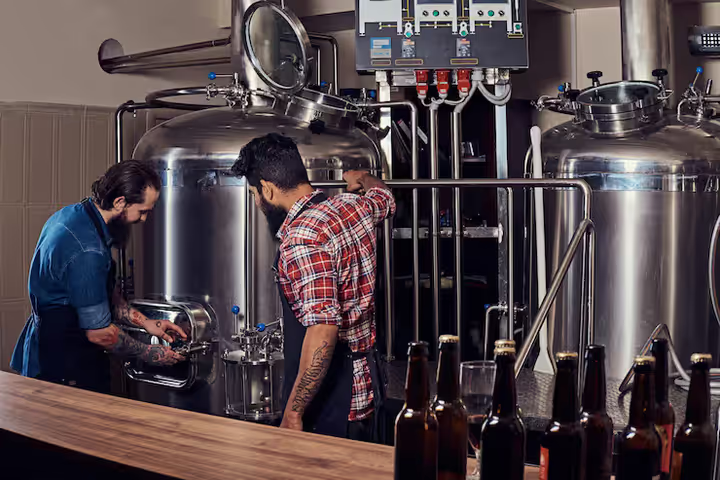
Wine Bottling Machines An Explore Guide with Basics, Facts, and Practical Knowledge
Wine bottling machines are engineered systems designed to fill, seal, cap, and label wine containers in a controlled and hygienic environment. These machines emerged as a necessity when wine production moved from small-scale manual filling to high-volume standardized packaging. The primary purpose is to protect wine quality while ensuring consistent volume, contamination control, and regulatory accuracy.
In early winemaking, bottling was entirely manual, leading to oxidation risks, imprecise volumes, and higher spoilage losses. As commercial wine distribution expanded globally, automated wine bottling equipment became essential to achieve uniform packaging, transport stability, and shelf consistency. Today, wine bottling machinery operates as part of fully integrated winery automation systems.
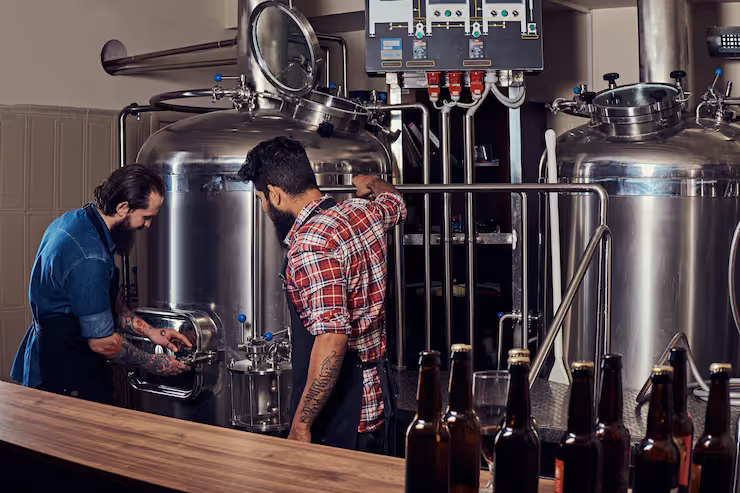
Modern bottling lines combine liquid filling technology, sterile sealing, labeling automation, and real-time digital monitoring. These systems now support both boutique wineries and large-scale wine production facilities.
Why Wine Bottling Machines Matter Today
Wine bottling machines play a critical role in quality assurance, production efficiency, and global wine logistics. With rising consumer focus on product safety, traceability, and packaging consistency, automation has shifted from being optional to operationally essential.
Key Stakeholders Affected
-
Winery owners and vineyard operators
-
Beverage production engineers
-
Food safety compliance teams
-
Packaging and labeling specialists
-
Export inspection authorities
Problems These Machines Solve
-
Inconsistent bottle fill levels
-
Oxidation and microbial contamination
-
Manual handling errors
-
Label misalignment and seal leakage
-
Production slowdown and supply chain delays
Practical Benefits
-
Precise volume accuracy
-
Reduced oxygen exposure
-
Improved hygiene control
-
High-speed production scalability
-
Digital quality monitoring
Wine Bottling Process Overview Table
| Process Stage | Function | Technology Used |
|---|---|---|
| Bottle Rinsing | Removes dust and microbes | Air-water vacuum systems |
| Liquid Filling | Transfers wine into bottles | Gravity, vacuum, pressure fillers |
| Corking/Capping | Seals bottles securely | Pneumatic sealing heads |
| Labeling | Applies bottle branding | High-speed labeling modules |
| Inspection | Verifies defects and volume | Optical sensor inspection |
Wine Bottling Machines: Recent Updates and Industry Trends (2024–2025)
The past year has seen rapid technological advancement in automated wine bottling systems due to sustainability targets and smart manufacturing adoption.
Smart Sensors and AI Monitoring – 2024
Many modern bottling machines now operate with AI-powered vision inspection. These systems detect fill-level deviation, seal leakage, and label defects in real time. 2024 saw wider implementation of predictive maintenance analytics to prevent mechanical breakdowns before production loss occurs.
Sustainability-Focused Design – 2024–2025
Lightweight glass bottling compatibility and reduced water usage rinsing technology gained wide adoption in 2025. Some systems now operate with closed-loop water recycling for bottle cleaning.
Increased Compatibility with Alternative Closures – 2025
Machines are now being configured for:
-
Natural cork
-
Synthetic cork
-
Screw caps
-
Glass stoppers
This flexibility allows wineries to match regional export regulations.
Industry Digitalization Movement
Digital twins are being introduced for bottling lines to simulate production output, downtime prediction, and process optimization without physical trials.
Laws, Regulations, and Compliance Impact
Wine bottling machinery must operate under strict regulatory oversight due to alcoholic beverage control laws, food-grade safety guidelines, and packaging accuracy standards. These regulations vary by country but follow similar foundational principles.
Key Regulatory Areas
-
Net quantity declarations on bottles
-
Alcohol content accuracy
-
Food contact material certification
-
Tamper-proof sealing compliance
-
Hygiene and sanitation validation
India-Specific Regulatory Influence
In India, wine bottling equipment operation aligns with:
-
Food Safety and Standards Authority of India (FSSAI) packaging and labeling framework
-
Legal Metrology Act for volume accuracy
-
Pollution control board wastewater disposal norms
-
State excise department alcohol packaging approvals
Global Compliance Standards Referenced
-
HACCP hygiene compliance
-
ISO 22000 food safety management
-
OIML volume measurement protocols
Non-compliance may result in production suspension, batch rejection, and export clearance delays.
Tools, Resources, and Practical Monitoring Systems
Several digital tools and industrial resources help monitor and optimize wine bottling infrastructure performance.
Production Tracking Tools
-
Bottling line efficiency dashboards
-
Digital OEE (Overall Equipment Effectiveness) trackers
-
Real-time liquid flow monitoring systems
Quality Control Tools
-
Optical fill-level inspection cameras
-
Cork defect detection scanners
-
Pressure integrity testing devices
Documentation and Compliance Resources
-
Digital batch traceability software
-
Label compliance validators
-
Packaging audit reporting systems
Training and Knowledge Platforms
-
Winery automation certification modules
-
Beverage process simulation software
-
Online wine engineering technical libraries
Frequently Asked Questions (FAQs)
What types of wine bottling machines exist?
Wine bottling machines are classified into gravity fillers, vacuum fillers, pressure fillers, and isobaric fillers. Each type supports different wine characteristics and carbonation levels.
How does automated wine bottling improve product safety?
Automation minimizes human contact, reducing contamination risks, oxygen exposure, and handling errors. Integrated sterilization and inspection modules further enhance safety compliance.
Can one bottling machine handle multiple bottle sizes?
Yes, modern machines are modular and allow quick format changeovers for different bottle heights, diameters, and closure types without full system redesign.
What is the average production capacity of industrial bottling lines?
Depending on system configuration, output can range from a few hundred bottles per hour to tens of thousands per hour for large-scale winery operations.
How is wine oxidation prevented during bottling?
Advanced bottling systems use nitrogen flushing, inert gas blanketing, and vacuum sealing to prevent oxygen contact during filling and sealing processes.
Data Snapshot: Bottling Accuracy Improvement Over Time
| Year | Average Fill Accuracy |
|---|---|
| 2010 | ±5 ml |
| 2018 | ±2 ml |
| 2023 | ±0.8 ml |
| 2025 | ±0.3 ml |
Practical Knowledge for Winery Operations
Wine bottling machinery performance is influenced by:
-
Wine temperature stability before filling
-
Bottle pre-sterilization effectiveness
-
Correct cork moisture levels
-
Label adhesive curing timing
-
Post-bottling storage vibration control
Improper synchronization between these stages can lead to pressure imbalance, label slippage, bottle cracking, and microbial spoilage.
The Strategic Role of Wine Bottling Machines in Modern Wine Supply Chains
Wine bottling equipment connects vineyard production with global retail distribution. It acts as the final quality checkpoint before wines enter long-distance logistics networks. Consistency in bottling directly influences:
-
Brand reputation
-
Export reliability
-
Shelf-life stability
-
Consumer trust
-
Regulatory audit clearance
As climate change increases grape variability and wine chemistry complexity, precision bottling control becomes even more influential in preserving intended flavor profiles.
Conclusion
Wine bottling machines represent the technological heart of modern wine packaging operations. From basic filling to AI-driven inspection and sustainability-focused design, these systems ensure consistency, hygiene, and regulatory alignment across the global wine industry. Recent advancements in smart automation, precision control, and compliance integration demonstrate how bottling technology continues to evolve with market demands and safety expectations.
Understanding wine bottling machinery from a technical, regulatory, and operational lens provides valuable insight into how today’s wineries maintain product integrity from vineyard to bottle. As digital manufacturing expands, wine bottling machines will remain central to efficient, compliant, and quality-driven beverage production worldwide.