Electric Vehicle Technologies An Explore Guide to Basics, Working Principles, and Key Facts
Electric Vehicle (EV) technologies refer to the systems and components that enable vehicles to run primarily on electricity rather than conventional fossil fuels. This field emerged from the need to reduce dependence on petroleum, improve energy efficiency, and address environmental challenges linked to internal combustion engines. Advances in battery chemistry, power electronics, and digital control systems have accelerated EV development over the last two decades.
At its core, EV technology integrates electrical engineering, materials science, and software-driven energy management. The ecosystem includes vehicles powered entirely by batteries (BEVs), those combining batteries with engines (HEVs and PHEVs), and supporting charging and grid-integration technologies. These innovations exist to provide cleaner mobility, quieter operation, and higher efficiency across personal and commercial transportation.
Importance
Electric Vehicle technologies matter today because transportation is a major contributor to global emissions and urban air pollution. EV adoption directly affects individuals, manufacturers, energy providers, and governments seeking sustainable growth.
Key reasons EV technologies are critical include:
-
Environmental impact: Reduced tailpipe emissions help improve air quality and support climate targets.
-
Energy efficiency: Electric drivetrains convert a higher percentage of stored energy into motion compared to combustion engines.
-
Energy security: Electricity can be generated from diverse sources, including renewables, lowering reliance on imported fuels.
-
Technological innovation: EVs drive progress in batteries, semiconductors, AI-based controls, and smart grids.
Industries such as automotive manufacturing, power electronics, software development, and renewable energy are directly influenced by EV technology advancements.
Working Principles of Electric Vehicle Technologies
Electric vehicles operate through a combination of energy storage, power conversion, and motor control systems. The process begins with electrical energy stored in a battery pack and ends with mechanical motion at the wheels.
Core components and principles include:
-
Battery pack: Stores DC electrical energy, typically using lithium-ion or lithium-iron-phosphate chemistry.
-
Battery Management System (BMS): Monitors voltage, temperature, and state of charge to ensure safety and longevity.
-
Power electronics: Inverters and converters manage the flow of electricity between the battery and motor.
-
Electric motor: Converts electrical energy into rotational force, delivering instant torque.
-
Regenerative braking: Recovers kinetic energy during deceleration and feeds it back to the battery.
Simplified Energy Flow Table
| Stage | Function | Key Technology |
|---|---|---|
| Energy Storage | Holds electrical energy | Lithium-ion battery |
| Power Control | Converts and regulates power | Inverter, DC-DC converter |
| Motion | Produces torque and speed | AC induction or PMSM motor |
| Energy Recovery | Recharges battery while braking | Regenerative braking |
Recent Updates and Industry Trends
Over the past year, EV technologies have seen rapid progress driven by policy support and technical breakthroughs.
2025 Highlights:
-
Solid-state battery research (Jan 2025): Several manufacturers reported pilot-scale production, targeting higher energy density and improved safety.
-
Fast-charging advancements (Mar 2025): New high-voltage architectures (800V+) reduced charging times significantly for compatible vehicles.
-
Software-defined vehicles (Jun 2025): Increased use of over-the-air updates improved efficiency optimization and diagnostics.
-
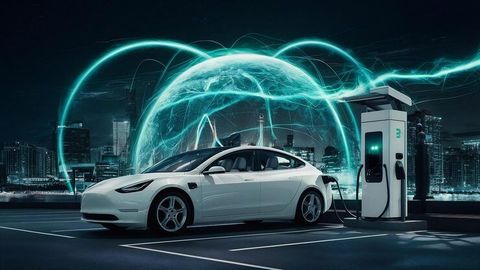
Grid integration (Aug 2025): Vehicle-to-grid (V2G) trials expanded, enabling EVs to support power stability during peak demand.
These trends indicate a shift toward smarter, more resilient electric mobility systems that integrate vehicles with energy networks.
Laws, Regulations, and Government Programs
Electric Vehicle technologies are strongly influenced by regulatory frameworks and national strategies. In India, EV adoption is guided by policies designed to encourage manufacturing, infrastructure development, and research.
Key policy drivers include:
-
FAME initiative: Promotes EV adoption through incentives for technology development and infrastructure.
-
Emission standards: Stricter norms encourage automakers to adopt electric drivetrains.
-
Battery recycling rules: Regulations mandate responsible handling and reuse of EV batteries.
-
State-level EV policies: Support charging infrastructure and local manufacturing ecosystems.
Globally, similar frameworks exist in the EU, China, and the US, aligning EV technology growth with sustainability and energy goals.
Tools and Resources
A wide range of digital and technical resources support understanding and deployment of EV technologies.
Helpful tools and platforms include:
-
EV range estimators: Calculate expected driving range based on battery capacity and driving conditions.
-
Charging time calculators: Estimate charging duration across AC and DC standards.
-
Simulation software: Models battery performance, thermal behavior, and drivetrain efficiency.
-
Standards organizations: Provide technical documentation on charging connectors and safety protocols.
-
Research portals: Offer access to peer-reviewed studies on batteries, motors, and power electronics.
Example Comparison Table: Charging Standards
| Standard | Typical Power Level | Use Case |
|---|---|---|
| AC Level 2 | 7–22 kW | Home and workplace |
| DC Fast Charging | 50–350 kW | Highways and fleets |
| Ultra-Fast | 350 kW+ | Next-generation EVs |
Frequently Asked Questions
What types of electric vehicles exist?
Electric vehicles include Battery Electric Vehicles (BEVs), Hybrid Electric Vehicles (HEVs), and Plug-in Hybrid Electric Vehicles (PHEVs), each using different combinations of electric motors and engines.
How long do EV batteries last?
Modern EV batteries are designed to last many years, with advanced thermal management and battery management systems helping maintain performance over time.
Are electric motors more efficient than engines?
Yes. Electric motors typically achieve much higher energy conversion efficiency, delivering instant torque with fewer moving parts.
What is regenerative braking?
Regenerative braking captures energy normally lost during braking and converts it back into electrical energy stored in the battery.
How do EVs interact with the power grid?
Through smart charging and vehicle-to-grid systems, EVs can balance electricity demand and support grid stability.
Conclusion
Electric Vehicle technologies represent a fundamental transformation in transportation, combining energy efficiency, digital intelligence, and environmental responsibility. From advanced batteries and motors to smart charging and grid integration, EV systems continue to evolve rapidly. Supported by strong policies, ongoing research, and growing infrastructure, electric mobility is positioned as a long-term solution to modern transportation challenges. Understanding the basics, working principles, and current developments provides a clear foundation for exploring how EV technologies will shape the future of mobility.