Neuromorphic Computing Systems Guide: Brain-Inspired Design, Processing Methods and Key Features
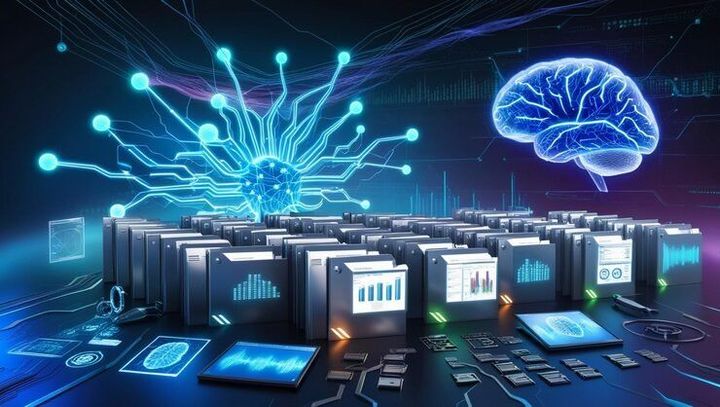
Neuromorphic computing systems are computing technologies designed to imitate selected principles of the human brain and nervous system. Instead of relying entirely on conventional processor designs, these systems use brain-inspired architectures that combine information storage, processing, and communication in ways that resemble networks of biological neurons. Neuromorphic computing research brings together neuroscience, computer engineering, artificial intelligence, and semiconductor technology.
Context
Neuromorphic computing systems are computing technologies designed to imitate selected principles of the human brain and nervous system. Instead of relying entirely on conventional processor designs, these systems use brain-inspired architectures that combine information storage, processing, and communication in ways that resemble networks of biological neurons. Neuromorphic computing research brings together neuroscience, computer engineering, artificial intelligence, and semiconductor technology.
Traditional computers generally process information through clearly defined sequences of instructions. Neuromorphic systems can instead use networks of artificial neurons and synapses, with some designs responding to events as they occur rather than processing information continuously. The goal is to investigate computing methods that may handle certain tasks with different energy, timing, and processing requirements.
Understanding Brain-Inspired Design
The human brain contains neurons that communicate through connections called synapses. Neurons receive signals, integrate information, and transmit electrical impulses when particular conditions are met. The strength and behavior of synaptic connections also change during learning and adaptation.
Neuromorphic engineering translates selected biological principles into electronic circuits and computational models. Artificial neurons represent simplified versions of biological nerve cells, while artificial synapses represent connections between them. These components do not reproduce the full complexity of the human brain, but they can support specialized forms of computation.
Main Types of Neuromorphic Systems
Neuromorphic computing can be implemented through several approaches:
Digital neuromorphic systems: Use digital circuits to represent artificial neurons, synapses, and their interactions.
Analog neuromorphic systems: Use electrical properties of circuits to represent certain neural behaviors.
Mixed-signal systems: Combine analog and digital components to balance different processing requirements.
Software-based neural simulations: Model networks of neurons on conventional computing hardware for research and experimentation.
Event-driven systems: Process changes or signals when events occur, rather than requiring every component to operate continuously.
These approaches differ in accuracy, flexibility, hardware complexity, and energy requirements. Their suitability depends on the application and the characteristics of the system being developed.
Importance
Neuromorphic computing matters because conventional computing architectures face practical challenges when processing large amounts of data from sensors, cameras, robots, and other connected devices. Many artificial intelligence applications require repeated calculations, memory access, and communication between processing components. These activities can increase energy use, particularly in systems that operate continuously or have limited power supplies.
Brain-inspired computing explores alternative ways to handle these workloads. For example, an event-driven device may process changes in a camera's visual input without repeatedly analyzing an unchanged scene. This approach can be useful when information arrives irregularly or when a system needs to respond to specific events with limited delay.
Applications in Everyday Technology
Neuromorphic systems are being studied for several potential applications:
Robotics: Processing sensor information to support movement, navigation, and responses to changing surroundings.
Machine vision: Detecting motion, changes, and patterns in visual data.
Edge computing: Performing selected calculations directly on devices rather than sending all information to remote computers.
Wearable electronics: Exploring low-power processing for devices that monitor movement or other signals.
Industrial monitoring: Identifying unusual patterns in equipment vibration, temperature, or other sensor readings.
Scientific research: Modeling neural activity and investigating how networks of interconnected units process information.
These applications are at different stages of development. Some are experimental, and practical results depend on the hardware, software, data, and operating conditions involved.
Neuromorphic Computing Compared with Conventional Computing
The table summarizes general differences between conventional and neuromorphic computing architectures.
| Feature | Conventional computing | Neuromorphic computing |
|---|---|---|
| Processing approach | Often follows defined instruction sequences | May use networks of artificial neurons |
| Data handling | Commonly uses clocked operations and structured data movement | May use event-driven communication |
| Memory and processing | Often separated into distinct components | Some designs integrate computation and memory-like behavior |
| Learning | May use separate training and inference processes | Some systems support local adaptation or learning mechanisms |
| Typical applications | General computing, databases, software, and AI | Specialized neural processing and event-based tasks |
| Main challenges | Data movement, power use, and workload scaling | Programming, evaluation, compatibility, and hardware complexity |
These are broad tendencies rather than universal rules. Conventional processors can run neural networks efficiently, while neuromorphic systems may still require conventional computers for training, control, or data preparation.
Recent Updates
Neuromorphic computing research has continued to develop through improvements in specialized chips, event-based sensors, neural models, and hardware design. From 2024 through 2026, research has increasingly examined how brain-inspired processors can work alongside conventional CPUs, GPUs, and AI accelerators. This combination allows researchers to evaluate which parts of a computing task may benefit from specialized neural hardware.
Advances in Neuromorphic Hardware
Research platforms such as Intel's Loihi family and IBM's TrueNorth research architecture have helped investigate networks of artificial neurons and event-based computation. Academic laboratories and semiconductor research groups are also exploring analog circuits, resistive memory devices, and other approaches to represent neural connections.
More recent work has examined ways to improve scalability, hardware reliability, learning methods, and communication between processing units. However, the performance of a neuromorphic chip depends heavily on the task being tested. Results from a specialized demonstration should not automatically be interpreted as evidence that the same system will outperform conventional hardware across general computing workloads.
Integration with Artificial Intelligence
Neuromorphic computing is increasingly discussed alongside edge AI, robotics, and sensor processing. Event-based cameras, for example, report changes in brightness at individual pixels, producing a stream of events rather than conventional full-frame images. Neuromorphic processors can be designed to work with this kind of input.
Researchers are also studying how to combine spiking neural networks with other machine-learning methods. Spiking networks communicate through discrete signals that resemble simplified neural impulses. Challenges remain in training these networks, comparing their accuracy fairly, developing software tools, and integrating them into established computing systems.
Laws or Policies
Neuromorphic computing is influenced by broader rules governing artificial intelligence, semiconductor development, data protection, cybersecurity, and scientific research. There is no single international law designed specifically for all neuromorphic computing systems. Applicable requirements depend on the system's purpose, the information it processes, and the country in which it is developed or used.
Technology Policy and Semiconductor Development in India
India's semiconductor development initiatives, including the India Semiconductor Mission, support the broader development of semiconductor manufacturing, design capabilities, and related technologies. These initiatives form part of the environment in which specialized computing hardware, including potential neuromorphic processors, may be researched and developed. Support for semiconductor technology does not necessarily mean that every neuromorphic project receives government funding.
India's National Strategy for Artificial Intelligence also provides broader policy context for responsible AI development and the use of artificial intelligence in areas such as healthcare, agriculture, education, and public administration. Neuromorphic computing may contribute to some AI research, but it is a distinct hardware and computing approach rather than a separate category of AI regulation.
Data Protection, Safety, and Responsible Development
Neuromorphic devices used in cameras, wearable electronics, industrial monitoring, or healthcare-related research may process personal or sensitive information. Developers must consider applicable privacy requirements, security risks, and the responsibilities associated with collecting and processing data.
India's Digital Personal Data Protection Act, 2023, and its associated rules and implementation arrangements form part of the country's data-protection framework. The requirements applicable to a particular system depend on the provisions in force and the nature of the data processing. Other rules may apply when devices are used in regulated industries or safety-critical environments.
Tools and Resources
Neuromorphic computing requires tools for designing neural models, testing algorithms, simulating hardware behavior, and evaluating performance. Researchers often combine conventional programming environments with specialized software and hardware platforms.
Neuromorphic Development Platforms
Several established research tools support experimentation with brain-inspired computing:
Intel Loihi and Lava: Intel's Loihi research processors provide a platform for investigating neuromorphic computation, while Lava is an open-source software framework for developing and running applications across supported neuromorphic and conventional computing environments.
SpiNNaker: A neuromorphic computing platform developed through research at the University of Manchester, designed to support large-scale neural network simulations using many processing cores.
BrainScaleS: A research platform developed through European neuroscience and computing research that uses specialized hardware to investigate accelerated neural network dynamics.
NEST Simulator: Software used to simulate networks of neurons, particularly for computational neuroscience research.
Brian simulator: A Python-based tool for developing and simulating spiking neural network models.
These resources differ in hardware requirements, supported models, programming methods, and intended research uses. Compatibility and availability should be checked in the documentation for each platform.
Learning and Evaluation Resources
University courses, semiconductor research publications, technical documentation, and neuroscience textbooks can help readers understand the principles behind neuromorphic computing. Tutorials on spiking neural networks, digital logic, embedded systems, and computational neuroscience provide useful background for beginners.
When comparing neuromorphic systems, researchers may evaluate several measurements, including energy per operation, response latency, classification accuracy, network size, and hardware utilization. Comparisons are meaningful only when the systems are tested on comparable tasks under clearly described conditions.
FAQs
What are neuromorphic computing systems?
Neuromorphic computing systems are hardware or software architectures inspired by how biological neural networks process information. They commonly use artificial neurons and connections to investigate specialized computing methods.
How does brain-inspired computing work?
Brain-inspired computing represents selected neural behaviors using electronic circuits or mathematical models. Some systems communicate through discrete spikes or events, allowing computation to respond to changes in incoming information.
What are the main applications of neuromorphic computing?
Potential applications include robotics, event-based vision, edge AI, industrial sensor analysis, and scientific research. Practical suitability depends on the task, hardware design, and software support.
How is neuromorphic computing different from artificial intelligence?
Artificial intelligence is a broad field involving systems that perform tasks associated with learning, prediction, or decision-making. Neuromorphic computing is a computing approach that can support AI tasks through brain-inspired hardware and neural processing methods.
What tools are used to develop neuromorphic systems?
Researchers use platforms and tools such as Lava, SpiNNaker, BrainScaleS, NEST, and Brian. These support different activities, including hardware experimentation, neural network simulation, and spiking-model development.
Conclusion
Neuromorphic computing systems apply selected principles of biological neural networks to specialized hardware and computational models. Their potential applications include robotics, sensor processing, edge AI, and scientific research, although practical capabilities vary across systems. Current research focuses on hardware development, event-driven processing, learning methods, and integration with conventional computing. Technical standards, privacy requirements, and responsible development practices remain relevant to their design and use.