Navratri Travel Guide: Destinations, Garba Events, Cultural Experiences, Routes and Planning
Navratri is a Hindu festival observed over nine nights and dedicated in many traditions to forms of the divine feminine, including Goddess Durga and Shakti. Across India, the festival includes prayers, fasting, music, dance, temple visits, cultural programs, and community gatherings. Gujarat has developed a particularly distinctive Navratri tradition centered on Garba and Dandiya Raas.
Context
Navratri is a Hindu festival observed over nine nights and dedicated in many traditions to forms of the divine feminine, including Goddess Durga and Shakti. Across India, the festival includes prayers, fasting, music, dance, temple visits, cultural programs, and community gatherings. Gujarat has developed a particularly distinctive Navratri tradition centered on Garba and Dandiya Raas.
A Navratri Travel Guide can help visitors understand how destinations, Garba events, cultural experiences, routes, and daily planning fit together during the festival. In Gujarat, Garba takes place in neighborhoods, villages, temple courtyards, public grounds, and large organized venues. UNESCO inscribed Garba of Gujarat on its Representative List of the Intangible Cultural Heritage of Humanity in 2023, recognizing its cultural and community significance.
The festival varies considerably between regions. Gujarat is associated strongly with Garba and Dandiya, while West Bengal is known for Durga Puja, Mysuru for Dasara traditions, and several northern and western regions observe Navratri through different combinations of worship, fairs, music, and cultural activities.
Importance
Why Navratri travel requires planning
Navratri can change the normal rhythm of a destination. Popular areas may experience increased evening activity, heavier traffic around event grounds, larger crowds near temples, and changes to local transport patterns. Travelers therefore need to consider more than the main event when preparing a trip.
A practical plan usually includes the festival destination, accommodation area, daily route, transportation method, event timings, cultural sites, meals, and return arrangements. Travelers attending several Garba events may also need additional time between venues because evening traffic can affect journey times.
Navratri travel is also a way to understand regional culture. Garba is not simply a stage performance; UNESCO describes it as a participatory tradition transmitted through practice and observation across generations. It involves dancers, musicians, craftspeople, religious figures, organizers, and wider communities.
Destinations and cultural experiences
Gujarat provides several different experiences for travelers interested in Navratri. Ahmedabad has large organized Garba programs alongside neighborhood celebrations and temple activities. Vadodara is widely associated with large-scale Garba gatherings and community dance traditions. Gujarat Tourism also identifies Ambaji, Pavagadh, Bahuchraji, Chotila, and other religious locations as significant places connected with Navratri traditions.
Other Indian destinations provide different cultural perspectives:
- Ahmedabad can combine organized Garba events with urban cultural activities and heritage exploration.
- Vadodara provides opportunities to experience large community Garba gatherings.
- Jamnagar has traditional local Garba practices with distinctive historical characteristics.
- Ambaji offers a pilgrimage-oriented Navratri experience connected with the Ambaji temple.
- Pavagadh combines temple pilgrimage with the wider cultural atmosphere of Gujarat during the festival.
- Kolkata provides a different Navratri experience through Durga Puja traditions, artistic installations, rituals, and community celebrations.
- Mysuru provides Dasara-related cultural experiences that differ from Gujarat's Garba-centered celebrations.
Recent Updates
Current Navratri travel trends
From 2024 through 2026, Navratri travel has increasingly combined traditional cultural participation with organized public events, digital planning, and destination-based travel. Government tourism platforms now provide information about festival locations and scheduled cultural programs, making it easier for travelers to compare destinations before planning their routes.
Gujarat Tourism continues to position Ahmedabad and Vadodara as important Navratri destinations while also highlighting village Garba and pilgrimage locations. This creates a wider range of experiences, from large public gatherings to smaller community traditions.
For 2026, official tourism information lists the main Sharad Navratri period from October 11 to October 19. Gujarat's Vibrant Navratri Festival is scheduled at GMDC Ground in Ahmedabad during this period, while other listed events include celebrations in Lunawada, Jamnagar, and at the Bhadrakali Mata Temple in Ahmedabad.
Growing cultural recognition
The international cultural recognition of Garba has also influenced how travelers understand the festival. UNESCO's inscription recognizes Garba as a living tradition practiced in both urban and rural areas, with knowledge passed between generations.
India's intangible cultural heritage listing has continued to expand in recent years. Garba was included in 2023, followed by Nawrouz in 2024 and Deepavali in 2025 on UNESCO's Representative List. This broader recognition places traditional Indian celebrations within an international cultural heritage context.
Laws or Policies
Event permissions and public gatherings
Navratri events held in public spaces can be affected by local permissions, traffic arrangements, crowd-management measures, fire-safety requirements, and sound regulations. Specific requirements can vary between cities and venues, so travelers should check information issued by the relevant local authority for the particular event.
One important nationwide framework is India's Noise Pollution (Regulation and Control) Rules, 2000. The rules state that loudspeakers and public-address systems generally require written permission from the relevant authority. They also establish restrictions on their use during night hours, while allowing state governments to permit use during certain cultural or religious festive occasions subject to conditions.
The rules also establish ambient noise standards for different types of areas and provide authorities with powers to regulate excessive noise. This is relevant to large Garba events, particularly when amplified music is used near residential or sensitive areas.
Travelers should also follow venue instructions regarding entry, crowd movement, prohibited items, parking, emergency exits, and photography. These requirements can differ from one location to another.
Tools and Resources
Planning a Navratri route
A simple route plan can reduce unnecessary movement between destinations. Mapping platforms can be used to compare road routes, railway stations, airports, public transport connections, and walking distances around event venues.
Government tourism websites and official event pages can provide information about festival dates, venues, cultural programs, and destination details. India's tourism platform currently lists Navratri events across several states, while Gujarat Tourism provides information about Navratri destinations and traditional celebrations in the state.
A basic planning table can help organize a multi-day itinerary:
| Planning Area | Information to Check |
|---|---|
| Destination | City, village, temple area, or event location |
| Garba Event | Venue, entry requirements, program timing |
| Route | Airport, railway station, road, or local transport |
| Accommodation Area | Distance from main event locations |
| Cultural Visits | Temples, heritage areas, museums, local attractions |
| Evening Plan | Event start, travel time, return route |
| Local Rules | Sound limits, traffic restrictions, venue regulations |
| Weather | Forecast, temperature, and rain conditions |
Digital planning resources
Travelers can use map applications for route planning, railway and airline platforms for journey information, weather applications for forecasts, and official tourism portals for festival information. Calendar applications can also help organize multiple Garba events, temple visits, and travel periods across the nine nights.
For a destination involving several cities, it can be useful to group nearby locations on the same day rather than repeatedly crossing a large urban area. Travelers should also allow additional journey time during evening festival hours because traffic conditions may differ from normal days.
Cultural preparation
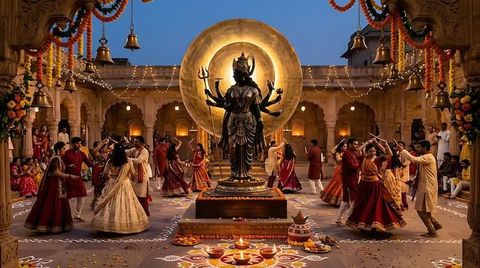
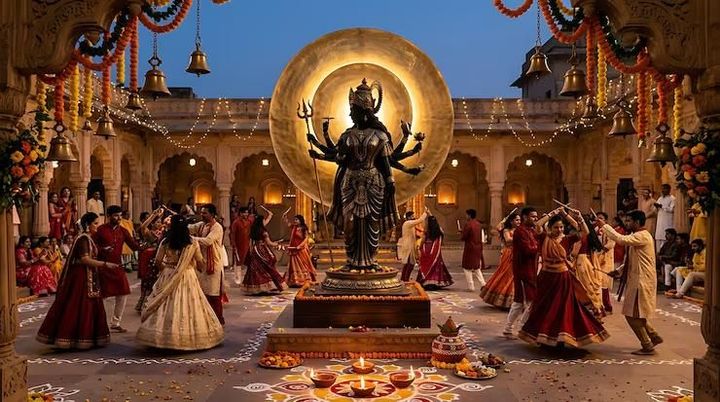
Understanding basic Garba etiquette can make participation easier. Garba is generally performed in circular formations, with participants moving rhythmically around a central representation associated with the festival's devotional tradition. Dandiya Raas uses decorated sticks and follows its own movement patterns.
Visitors who are unfamiliar with the dances can observe the movements before joining a group. Respect for religious spaces, photography rules, local traditions, and community practices is important, particularly at temple-centered celebrations.
FAQs
Which destinations are associated with a Navratri Travel Guide?
Ahmedabad, Vadodara, Ambaji, Pavagadh, Bahuchraji, Chotila, and other Gujarat locations are associated with Navratri travel. Other parts of India provide different festival traditions, including Durga Puja in Kolkata and Dasara celebrations in Mysuru.
Where can travelers experience Garba events in Gujarat?
Garba events take place in neighborhoods, villages, temple areas, public grounds, and organized venues throughout Gujarat. Ahmedabad and Vadodara are major urban locations, while smaller communities can provide more localized cultural experiences.
How should a Navratri Travel Guide include routes and planning?
A useful plan can include the festival venue, accommodation area, transportation route, cultural locations, event timings, and return journey. Checking local traffic information and official venue details is also important during busy festival evenings.
What cultural experiences are associated with Navratri?
Common experiences include Garba, Dandiya Raas, temple visits, devotional activities, traditional music, regional food, community gatherings, and cultural programs. The exact traditions vary by region and community.
Are there rules for music and Garba events?
Yes. Public use of loudspeakers and public-address systems is regulated under India's Noise Pollution (Regulation and Control) Rules, 2000. Written permission is generally required, and restrictions apply to nighttime use, subject to specified festive-period provisions and local conditions.
Conclusion
Navratri travel brings together religious traditions, Garba events, cultural experiences, local destinations, and seasonal travel planning. Gujarat provides a particularly strong connection with Garba, while other Indian regions present distinct forms of Navratri and related celebrations. Current festival information shows a combination of traditional community practices and organized public events. Understanding routes, event arrangements, local rules, and cultural customs can help travelers understand how Navratri is experienced across different parts of India.