Hydraulic Unit Components Guide: Pumps, Motors, Valves, Reservoirs and Their Functions
A hydraulic unit is a mechanical system that generates, controls, and supplies pressurized fluid to operate machinery. A Hydraulic Unit Components Guide explains how pumps, motors, valves, reservoirs, filters, and other parts work together to transfer energy and control movement. These systems are used in industrial manufacturing, construction equipment, agricultural machinery, material handling, and many other applications that require controlled force.
Context
A hydraulic unit is a mechanical system that generates, controls, and supplies pressurized fluid to operate machinery. A Hydraulic Unit Components Guide explains how pumps, motors, valves, reservoirs, filters, and other parts work together to transfer energy and control movement. These systems are used in industrial manufacturing, construction equipment, agricultural machinery, material handling, and many other applications that require controlled force.
Hydraulic technology developed from the principles of fluid pressure and force transmission. When pressure is applied to a confined liquid, that pressure can be transmitted through the fluid to produce movement or force at another point. Modern hydraulic power units use this principle to operate cylinders, hydraulic motors, and other equipment through a coordinated arrangement of mechanical and fluid components.
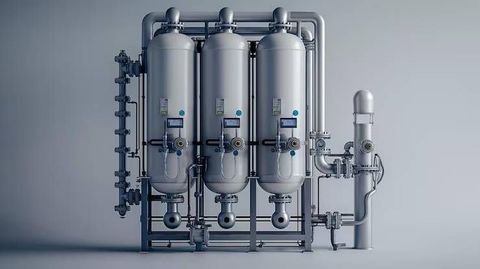
A hydraulic power unit typically contains a fluid reservoir, pump, electric motor or engine, pressure-control components, and connecting pipes or hoses. The exact arrangement depends on the machinery, required pressure, fluid flow, operating environment, and type of movement being controlled.
Main Types of Hydraulic Units
Hydraulic units vary according to their application and construction. Common arrangements include stationary power units installed in factories, compact units integrated into machines, and mobile units used in vehicles or construction equipment.
Industrial hydraulic power units: Supply hydraulic energy to presses, production machinery, lifting equipment, and automated systems.
Mobile hydraulic units: Operate equipment such as cranes, excavators, agricultural machinery, and vehicle-mounted lifting systems.
Compact hydraulic units: Combine several components in a smaller assembly for applications with limited installation space.
Custom hydraulic units: Use a configuration designed around particular flow, pressure, control, and installation requirements.
Although these units differ in size and design, they perform the same basic function: converting mechanical energy into hydraulic energy and delivering it in a controlled form.
Importance
Understanding hydraulic unit components helps explain how industrial machines lift loads, apply pressure, position materials, and perform repetitive movements. Equipment operators, maintenance personnel, engineering students, and manufacturing professionals may need this knowledge to understand machine operation and recognize the purpose of individual parts.
A problem in one component can affect the performance of the entire hydraulic circuit. For example, a restricted filter may reduce fluid flow, a damaged hose may cause leakage, and an incorrectly adjusted pressure-control valve may affect machine movement. Understanding how the components interact makes it easier to interpret equipment diagrams and maintenance documentation.
Hydraulic Pumps and Motors
The hydraulic pump is responsible for moving fluid through the system. It converts mechanical input from an electric motor or engine into hydraulic flow. System pressure develops when the moving fluid encounters resistance from a load or restriction; the pump itself primarily supplies flow.
Common pump types include:
Gear pumps: Use rotating gears to move fluid through the pump housing. They are often used in straightforward hydraulic circuits.
Vane pumps: Use sliding vanes within a rotating assembly to move fluid. Their performance depends on the design and operating conditions.
Piston pumps: Use reciprocating pistons to move fluid and can be designed for relatively high pressures and variable flow rates.
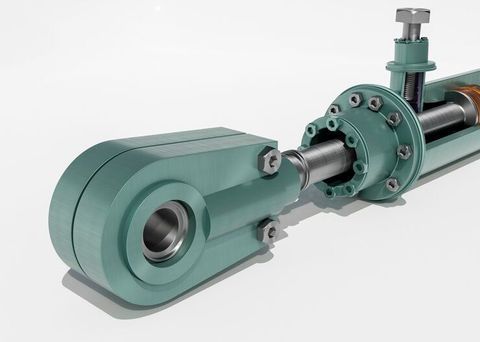
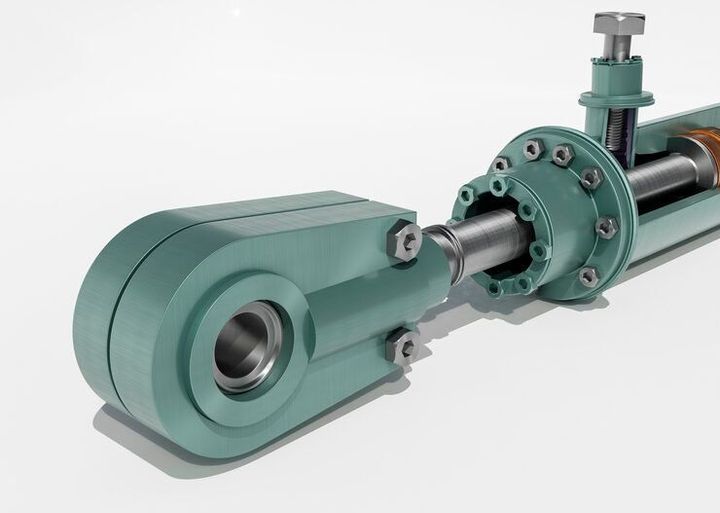
Hydraulic motors perform a related but different function. They convert hydraulic energy into rotary mechanical movement, which can drive wheels, conveyors, winches, or other rotating equipment. Electric motors, by contrast, commonly provide the mechanical input that drives the hydraulic pump.
Hydraulic Valves and Their Functions
Valves control the movement, pressure, and direction of hydraulic fluid. Their selection depends on the circuit design and the movements required from the machine.
Directional control valves: Route fluid toward different parts of the circuit, allowing a cylinder or motor to extend, retract, or change direction.
Pressure relief valves: Limit system pressure by directing fluid away from the pressure line when the set condition is reached.
Flow control valves: Regulate fluid flow to influence actuator speed.
Check valves: Permit flow in one direction while restricting reverse flow under specified conditions.
Proportional valves: Adjust flow or pressure in response to a variable control signal.
A valve's function depends on its internal design, pressure rating, flow capacity, and position in the circuit. Correct valve selection is important because different machines require different combinations of movement control and pressure regulation.
Reservoirs, Filters, and Supporting Components
The reservoir stores hydraulic fluid and provides a supply for the pump. It also allows some air to separate from the fluid, supports heat dissipation, and provides space for fluid expansion. Reservoir design may include internal baffles, fill openings, level indicators, and ventilation arrangements.
Filters remove particles that could damage pumps, valves, and actuators. Their location and filtration rating depend on the system's cleanliness requirements and design. Other components may include pressure gauges, heat exchangers, suction strainers, pressure accumulators, hoses, pipes, and fluid-level or temperature sensors.
The following table summarizes common components and their primary roles.
| Component | Main function | Typical consideration |
|---|---|---|
| Hydraulic pump | Produces fluid flow | Flow rate and pressure rating |
| Electric motor | Drives the pump | Power rating and electrical supply |
| Hydraulic motor | Produces rotary movement | Torque and rotational speed |
| Control valve | Directs or regulates fluid | Flow capacity and control function |
| Reservoir | Stores hydraulic fluid | Capacity, cooling, and layout |
| Filter | Removes contaminants | Filtration rating and pressure drop |
| Accumulator | Stores hydraulic energy in pressurized fluid | Capacity and pressure range |
| Hose or pipe | Carries hydraulic fluid | Pressure rating and compatibility |
| Heat exchanger | Transfers heat away from fluid | Cooling capacity and operating conditions |
Recent Updates
Hydraulic technology continues to develop through improvements in energy efficiency, electronic control, monitoring, and integration with automated machinery. Across 2024–2026, broader industrial trends have included increased attention to variable-speed pump drives, condition monitoring, and the integration of hydraulic equipment with digital control systems. The availability of these technologies varies by machine type, manufacturer, and operating environment.
Energy Efficiency and Electronic Control
Traditional hydraulic systems may run pumps at a relatively constant speed even when the machine needs less flow. Variable-speed electric drives can adjust pump speed according to demand, potentially reducing unnecessary energy consumption in suitable applications. Actual results depend on the system design, operating cycle, control strategy, and equipment characteristics.
Electronic controllers and proportional valves also allow more precise adjustment of fluid flow and pressure. In automated manufacturing, these components can work with programmable logic controllers and machine sensors to coordinate movement with other production activities.
Condition Monitoring and Fluid Management
Sensors can monitor pressure, temperature, fluid level, and other operating conditions. More advanced monitoring arrangements may use vibration data, particle measurements, or operating trends to identify developing problems. Such information can support maintenance planning, but a sensor reading alone does not establish the cause of a fault.
Hydraulic fluid management remains important because contamination, unsuitable fluid, overheating, and moisture can affect component performance. Current industrial practices increasingly emphasize fluid cleanliness, appropriate filtration, leak detection, and monitoring of operating conditions. The specific procedures depend on the equipment manufacturer's documentation and the application's requirements.
Laws or Policies
Hydraulic units are affected by machinery safety requirements, electrical safety rules, environmental regulations, workplace procedures, and applicable industrial standards. Requirements vary by country and by the type of machine in which the hydraulic unit is installed.
Industrial Safety Requirements in India
In India, applicable workplace and machinery requirements may arise under occupational safety legislation, state rules, factory regulations, and relevant technical standards. The Occupational Safety, Health and Working Conditions Code, 2020, is part of India's occupational safety legislative framework; its practical application depends on commencement notifications, implementing rules, and the relevant circumstances.
Hydraulic equipment can create hazards involving high-pressure fluid, unexpected movement, hot surfaces, stored energy, and electrical equipment. Machine guarding, pressure relief arrangements, safe isolation procedures, and appropriate training are important elements of risk control. Applicable requirements should be determined for the particular workplace and machine.
Technical Standards and Environmental Considerations
International Organization for Standardization (ISO) standards address aspects of hydraulic fluid power, including safety, component performance, and system design. For example, ISO 4413 covers general rules and safety requirements for hydraulic fluid power systems and their components. The applicable edition and any national adoption should be checked for a particular project.
Hydraulic fluid leakage can contaminate soil or water, depending on the fluid and the location of the release. Industrial facilities may need to follow applicable waste-handling, spill-control, and environmental rules. Used hydraulic fluid and contaminated filters should be managed according to relevant local requirements rather than disposed of indiscriminately.
Tools and Resources
Technical resources help users understand hydraulic circuits, select compatible components, and interpret operating specifications. Component ratings and design requirements should be checked against the actual application rather than assumed from a general description.
Hydraulic Calculators and Circuit Diagrams
Hydraulic calculators can estimate relationships among pressure, force, flow, actuator speed, and power. For example, cylinder force is related to fluid pressure and the effective piston area. In simplified form:
Force = Pressure × Effective Area
Actual performance can differ because of friction, pressure losses, leakage, and mechanical limitations.
Hydraulic circuit diagrams use standardized symbols to represent pumps, valves, cylinders, motors, filters, and other parts. Learning to read these diagrams helps explain fluid paths and the relationship between control components. ISO 1219 provides standards related to graphical symbols and circuit diagrams for fluid power systems.
Manufacturer Documentation and Maintenance Records
Manufacturer technical manuals and component data sheets provide information about pressure ratings, flow capacity, compatible fluids, installation requirements, and maintenance intervals. Examples of manufacturers publishing hydraulic component documentation include Bosch Rexroth, Parker Hannifin, and Danfoss.
Maintenance records can track fluid changes, filter replacements, leakage observations, operating temperatures, and recurring faults. A useful record includes the machine identification, component model, inspection date, observed condition, and work performed. These details help establish operating history and support structured troubleshooting.
FAQs
What are the main components of a hydraulic power unit?
The main components usually include a hydraulic pump, electric motor or engine, reservoir, valves, filters, and connecting pipes or hoses. Some systems also include accumulators, heat exchangers, gauges, and electronic sensors.
How does a hydraulic pump work in a hydraulic unit?
A hydraulic pump converts mechanical energy into fluid flow. Pressure develops when the flow encounters resistance in the circuit, allowing the system to produce controlled force or movement through an actuator.
What is the function of hydraulic valves?
Hydraulic valves control fluid direction, pressure, or flow. Depending on the design, they can change actuator direction, regulate movement speed, limit pressure, or prevent reverse flow.
Why is a reservoir important in a hydraulic power unit?
The reservoir stores hydraulic fluid and helps provide a consistent supply to the pump. It can also support air separation, heat dissipation, and fluid expansion, depending on its design.
How do filters affect hydraulic unit performance?
Filters remove contaminants that may damage components or interfere with valve operation. Correct filter selection and maintenance help maintain fluid cleanliness, while excessive restriction can reduce flow and affect system operation.
Conclusion
Hydraulic unit components work together to convert mechanical energy into controlled fluid power for industrial and mobile machinery. Pumps generate flow, valves regulate it, reservoirs store fluid, and motors or cylinders produce mechanical movement. Modern systems increasingly combine hydraulic equipment with electronic controls and condition monitoring. Component selection, fluid cleanliness, safety measures, and compliance with applicable technical requirements all influence system operation.

You May Also Like