Gold Jewellery Details: Types, Purity Standards, Settings, Designs and Care Methods
Gold jewellery has a long history across many cultures, including India, where gold ornaments have traditionally been associated with family ceremonies, cultural traditions, personal adornment, and craftsmanship. Gold is naturally soft, so jewellery is generally made by combining gold with other metals to create alloys with different levels of hardness, colour, and durability.
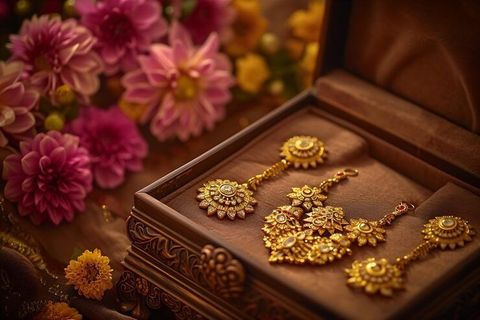
Gold jewellery can take many forms, including rings, earrings, necklaces, bracelets, bangles, pendants, chains, and traditional ornaments. Differences in gold purity, metal composition, construction, and decorative techniques create a wide range of designs.
Understanding gold jewellery details helps readers interpret purity markings, recognise common types and settings, and understand why different ornaments require different care methods. In India, the Bureau of Indian Standards (BIS) operates the hallmarking framework, which provides a standardised way of recording the fineness of precious-metal articles.
How gold jewellery is made
Pure gold is relatively soft, so jewellery manufacturers commonly combine it with metals such as silver, copper, zinc, or other alloying metals. The resulting composition can affect hardness, colour, strength, and suitability for particular designs.
Jewellery production may involve several stages, including melting, alloy preparation, casting, forming, soldering, polishing, stone setting, finishing, and hallmarking where applicable. Traditional handcrafted techniques can exist alongside computer-assisted design and precision manufacturing.
Common types of gold jewellery
Gold jewellery is available in many forms. Common categories include:
- Rings, which can have plain bands, decorative surfaces, gemstones, or detailed patterns.
- Earrings, including studs, hoops, drops, and traditional hanging designs.
- Necklaces and chains, which range from simple linked structures to elaborate patterned ornaments.
- Bangles and bracelets, which may be rigid, flexible, plain, engraved, or decorated with stones.
- Pendants, which are generally attached to chains and can contain decorative motifs or gemstones.
The construction of each type influences its weight, flexibility, surface area, and maintenance requirements.
Importance
Gold jewellery matters to many people because it combines material characteristics with cultural, personal, and design considerations. Understanding purity and construction can help readers interpret markings correctly and distinguish between different forms of jewellery.
Purity is particularly important because the amount of gold in an alloy affects its fineness. A higher karat designation indicates a greater proportion of gold, while lower-karat alloys contain a larger proportion of other metals.
Why purity standards matter
Gold purity is commonly expressed using karats and fineness. Karat indicates the proportion of gold on a 24-part scale, while fineness expresses the gold content in parts per thousand.
For example, 22K gold corresponds to 916 fineness, meaning approximately 916 parts per thousand are gold. BIS lists six permitted grades for hallmarking gold jewellery and artefacts under the relevant Indian standard: 14K (585), 18K (750), 20K (833), 22K (916), 23K (958), and 24KS (995).
| Gold Grade | Fineness | Approximate Gold Proportion |
|---|---|---|
| 14K | 585 | 58.5% |
| 18K | 750 | 75.0% |
| 20K | 833 | 83.3% |
| 22K | 916 | 91.6% |
| 23K | 958 | 95.8% |
| 24KS | 995 | 99.5% |
The exact characteristics of an ornament also depend on its alloy composition and manufacturing method. Therefore, purity alone does not describe every physical property of a finished piece.
Gold jewellery settings
A setting is the structure used to hold a gemstone or decorative element in place. Common settings include prong, bezel, channel, pavé, and flush settings.
A prong setting uses small metal projections to hold a stone. A bezel setting surrounds the stone with a metal rim. Channel settings place stones within a groove, while pavé arrangements use multiple small stones positioned closely together.
The setting influences the appearance, security, cleaning requirements, and overall structure of jewellery. Different settings may therefore be suited to different shapes and types of ornaments.
Recent Updates
Gold hallmarking in India has continued to develop through expanded district coverage and greater use of digital identification. The HUID-based system uses a six-character alphanumeric Hallmark Unique Identification number for individual hallmarked articles. BIS states that the HUID can be checked through the BIS Care App.
Mandatory hallmarking has expanded in phases. The Department of Consumer Affairs reported that a fourth phase covered additional districts from late 2024. BIS also published amendments during 2025 and 2026 that further changed the district coverage under the mandatory hallmarking framework.
A 2026 amendment expanded the listed coverage to 385 districts, while BIS records another amendment that added seven districts during the sixth phase. These developments show a continuing shift toward wider geographic coverage and traceability within the hallmarking system.
Digital verification has also become an important part of the current framework. The BIS Care App includes a “Verify HUID” feature that can display information associated with a hallmarked jewellery article, including its recorded purity and registration details.
Laws or Policies
In India, gold jewellery hallmarking is governed through the Bureau of Indian Standards framework and orders issued by the Department of Consumer Affairs. The BIS Act, 2016, BIS Hallmarking Regulations, and the Hallmarking of Gold Jewellery and Gold Artefacts Order form important parts of the regulatory structure.
Understanding the BIS hallmark
A current BIS hallmark on gold jewellery consists of three principal elements:
- The BIS Standard Mark.
- The purity or fineness marking.
- The six-character alphanumeric HUID.
For example, a 22K article may carry a 22K916 purity indication along with the BIS mark and its HUID.
Mandatory hallmarking applies according to the districts, article categories, purity grades, and exemptions specified by the applicable government orders. Certain categories are exempt under the framework, including specified lightweight articles and particular traditional jewellery categories.
BIS also states that each article in a pair should have its own hallmark, and detachable jewellery components may require their own hallmark markings.
Consumer protection and testing
BIS provides procedures through which a jewellery article can be tested at a recognised Assaying and Hallmarking Centre. If a hallmarked precious-metal article is found to have lower purity than the marked purity, the BIS consumer-protection framework specifies compensation provisions based on the shortage of purity and applicable testing charges.
The applicable rules can change through amendments, so official BIS and Department of Consumer Affairs information remains the appropriate reference for current requirements.
Tools and Resources
Several resources can help readers understand gold jewellery details, purity standards, and hallmarking.
BIS Care App
The BIS Care App includes a HUID verification function. Users can enter the HUID associated with a hallmarked gold jewellery article to access relevant recorded information.
BIS Hallmarking information
The BIS website provides explanations of hallmarking, permitted purity grades, consumer questions, jeweller registration, recognised hallmarking centres, and related regulatory information.
Purity conversion references
A simple karat-to-fineness table can help readers interpret markings such as 14K585, 18K750, 20K833, 22K916, 23K958, and 24KS995. These references are useful when comparing the purity notation found on different gold jewellery articles.
Jewellery care checklist
Basic care practices can help preserve the condition of gold jewellery:
- Keep pieces separated to reduce scratches and tangling.
- Store jewellery in a dry, lined container when it is not being worn.
- Keep delicate ornaments away from harsh household chemicals.
- Avoid unnecessary contact with chlorine and abrasive substances.
- Clean jewellery gently with appropriate materials rather than rough surfaces.
- Inspect clasps, links, settings, and stones periodically for signs of looseness or damage.
- Keep records of hallmark and HUID information where applicable.
Care requirements can differ according to the gold alloy, gemstones, surface finish, and construction method.
FAQs
What is gold jewellery purity?
Gold jewellery purity describes the proportion of gold contained in the alloy. In India, purity can be expressed through karat and fineness markings, such as 22K916, 18K750, and 14K585.
What does HUID mean in gold jewellery?
HUID means Hallmark Unique Identification. It is a six-character alphanumeric identification associated with an individual hallmarked jewellery article and can be verified through the BIS Care App.
What are the main gold jewellery settings?
Common gold jewellery settings include prong, bezel, channel, pavé, and flush settings. Each uses a different structural method to hold gemstones or decorative elements.
Is 22K916 gold the same as pure gold?
No. 22K916 indicates approximately 91.6% gold, with the remaining portion consisting of other metals in the alloy. BIS also recognises a 24KS995 grade for hallmarking within its applicable standard.
How should gold jewellery be cared for?
Gold jewellery should generally be kept dry and protected from scratches, harsh chemicals, and abrasive materials. Jewellery containing gemstones or delicate settings may require care appropriate to those additional materials.
Conclusion
Gold jewellery includes many types, designs, purity levels, and setting methods, making its characteristics dependent on both metal composition and construction. In India, BIS hallmarking provides standardised purity and identification markings, including the HUID system. Understanding karat, fineness, settings, designs, and care methods gives readers a clearer view of how different gold jewellery articles are made and identified. Current hallmarking requirements and district coverage should be checked through official BIS information because the regulatory framework can be amended.