Diamond & Jewellery Technology Guide: Cutting, Grading, Design, Manufacturing and Quality
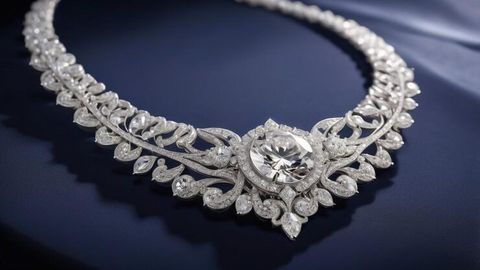
Diamond and jewellery technology combines gemology, precision cutting, computer-aided design, metalworking, casting, setting, polishing, and quality inspection. Modern jewellery production connects traditional craftsmanship with digital tools and scientific testing to create and evaluate rings, earrings, necklaces, bracelets, and other jewellery pieces.
Diamonds are assessed through characteristics commonly known as the 4Cs: color, clarity, cut, and carat weight. Grading laboratories examine these characteristics and document their observations in reports. GIA, for example, provides grading reports for natural diamonds that include a 4Cs assessment and, for applicable stones, a plotted clarity diagram.
The manufacturing process can begin with a digital design and continue through model creation, metal preparation, stone cutting, setting, polishing, and inspection. Technologies such as computer-aided design (CAD), computer-aided manufacturing (CAM), laser tools, automated polishing equipment, and optical inspection systems have expanded the precision available to jewellery manufacturers.
Laboratory-grown diamonds have also become an important part of diamond technology. They can be produced using methods such as chemical vapor deposition (CVD) and high-pressure, high-temperature (HPHT), and specialized laboratory reports can identify their characteristics and laboratory origin.
Importance
Why diamond and jewellery technology matters
Diamond and jewellery technology affects several stages of the jewellery lifecycle, from selecting and shaping gemstones to creating finished metal designs. Accurate measurements and controlled manufacturing processes can help reduce dimensional variation and identify defects during production.
For consumers, grading and identification information can make technical descriptions easier to understand. A diamond report may provide information about color, clarity, carat weight, proportions, and other characteristics, depending on the type of report.
Jewellery manufacturers and designers also use digital technologies to address practical challenges such as:
- Creating accurate three-dimensional jewellery models
- Checking stone dimensions before setting
- Planning metal thickness and structural features
- Producing repeatable components
- Examining surface finish and symmetry
- Identifying manufacturing defects
- Recording gemstone and metal characteristics
Understanding quality measurements
Diamond quality is not determined by a single measurement. The 4Cs describe different characteristics, while jewellery quality also involves metal purity, construction, finishing, stone setting, symmetry, and dimensional accuracy.
| Area | What it examines | Common technology or method |
|---|---|---|
| Carat weight | Weight of the diamond | Precision electronic scale |
| Color | Body color of the diamond | Laboratory comparison and instruments |
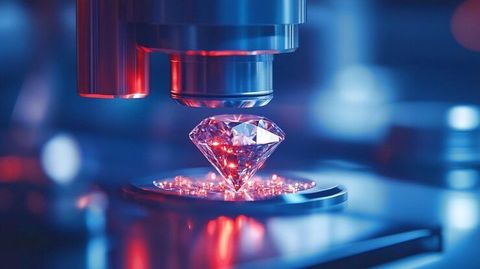
| Clarity | Internal and external characteristics | Magnification and microscopy |
| Cut | Proportions and finish | Optical measurement and grading |
| Jewellery design | Shape and dimensions | CAD and 3D modelling |
| Metal purity | Precious-metal fineness | Hallmarking and assaying |
| Surface quality | Polishing and finishing | Microscopy and visual inspection |
| Stone setting | Security and alignment | Magnification and dimensional checks |
These measurements serve different purposes and should not be treated as interchangeable. A diamond's grading information describes the stone, while jewellery inspection also considers how the stone and metal components work together.
Recent Updates
Digital design and manufacturing
From 2024 through 2026, jewellery manufacturing has continued moving toward greater use of digital modelling, automated production, laser technology, and computer-assisted inspection. CAD systems allow designers to create three-dimensional models before physical production begins, while CAM equipment can translate digital designs into manufacturing instructions.
Digital workflows can also make it easier to modify dimensions, create matching components, and prepare designs for casting or machining. In production environments, these systems are increasingly combined with imaging and measurement technologies for quality control.
Laboratory-grown diamond assessment
Laboratory-grown diamonds have received significant attention in recent years as testing and identification technologies have developed. GIA revised its laboratory-grown diamond evaluation approach beginning in October 2025, introducing an overall quality assessment using descriptive categories rather than the nomenclature used for natural diamonds. The assessment considers characteristics including clarity, color, polish, symmetry, and cut.
This change illustrates an important distinction between diamond identification and diamond grading. Laboratory reports can specify whether a stone is laboratory-grown and provide technical information about its characteristics.
Traceability and digital records
Traceability is another continuing technology trend. Laser inscriptions, report numbers, QR-linked records, and digital databases can connect a gemstone with its laboratory documentation.
GIA reports for laboratory-grown diamonds can include laser inscriptions identifying the stone as laboratory-grown, along with a report number. Digital verification tools can therefore become part of the wider quality-control process.
Laws or Policies
Hallmarking in India
In India, precious-metal jewellery is also affected by the Bureau of Indian Standards (BIS) hallmarking framework. Hallmarking records the proportion of precious metal in an article and provides information about its fineness. Gold and silver are currently covered under India's hallmarking framework.
For hallmarked gold jewellery, the hallmark includes the BIS logo, purity or fineness information, and a six-digit Hallmark Unique Identification (HUID) number. The HUID can be checked through the BIS CARE application.
Mandatory hallmarking coverage has continued to expand. BIS records show amendments during 2024, 2025, and 2026, including additional districts covered under the mandatory hallmarking framework.
Silver hallmarking
Silver jewellery has also seen changes in the Indian standards framework. BIS reported the revised IS 2112:2025 standard, introducing HUID-based hallmarking for silver jewellery and articles on a voluntary basis from September 2025. The revised standard specifies several silver purity grades and provides a system for connecting hallmarked articles with identification information.
Consumer verification
BIS provides mechanisms for checking hallmark information and obtaining testing through recognized Assaying and Hallmarking Centres. The BIS CARE application includes a HUID verification function for applicable hallmarked jewellery.
Rules can change, and requirements can vary according to the metal, article type, location, and applicable exemptions. Current BIS information should therefore be consulted when determining the requirements for a specific jewellery item.
Tools and Resources
Diamond grading resources
Gemological laboratories provide educational material explaining diamond grading, identification, and laboratory reports. GIA publishes information about the 4Cs and provides report-verification resources for applicable reports.
Digital report databases can also help readers understand the information recorded on a diamond report. Report numbers and inscriptions can provide an additional connection between a physical stone and its documentation.
Jewellery design software
CAD software is widely used for jewellery design. A designer can create a digital ring, pendant, bracelet, or other piece and examine proportions before physical manufacturing.
Common digital tools include:
- 3D CAD modelling systems
- Digital sculpting software
- Rendering and visualization tools
- CAM preparation software
- 3D printing systems
- Laser measurement equipment
- Digital microscopes
- Gemstone measurement instruments
These tools have different functions. CAD focuses on geometry and design, while inspection equipment focuses on measuring or examining physical results.
BIS resources
For jewellery in India, the BIS website provides information about hallmarking requirements, registered entities, recognized Assaying and Hallmarking Centres, standards, and consumer guidance. The BIS CARE application also provides HUID verification and access to information about Indian standards.
FAQs
What are the 4Cs in diamond grading?
The 4Cs are color, clarity, cut, and carat weight. They provide a standardized framework for describing important characteristics of diamonds. Laboratory reports may document these characteristics along with additional information depending on the report type.
How does diamond cutting technology work?
Diamond cutting technology combines planning, precision measurement, mechanical equipment, laser technology, and polishing techniques. The objective is to shape the rough material into a planned geometry while controlling proportions, symmetry, and surface finish.
What is the difference between natural and laboratory-grown diamond grading?
Both types can be examined for characteristics such as color and clarity, but they are not the same material origin. Laboratory-grown diamonds are created through technological processes such as CVD or HPHT, and laboratory documentation can identify them as laboratory-grown.
What is HUID in jewellery?
HUID means Hallmark Unique Identification. For applicable hallmarked gold jewellery in India, it is a six-digit alphanumeric identification connected with the hallmark and can be checked through the BIS CARE application.
How is jewellery manufacturing quality checked?
Quality checking can include examining metal purity, dimensions, stone alignment, setting security, surface finish, symmetry, and workmanship. Depending on the production environment, manufacturers may use microscopes, digital measurement systems, CAD comparisons, and other inspection equipment.
Conclusion
Diamond and jewellery technology brings together gemology, digital design, precision manufacturing, gemstone cutting, metalworking, and quality inspection. Diamond grading uses established characteristics such as color, clarity, cut, and carat weight, while jewellery inspection also considers metal purity and manufacturing details. Recent developments include expanded digital workflows, laboratory-grown diamond assessment systems, and increased use of traceability technologies. In India, BIS hallmarking and HUID systems provide an additional framework for identifying the purity and traceability of applicable precious-metal jewellery.