Battery Manufacturing Details: Electrodes, Separators, Electrolytes, Cells and Assembly Processes
Battery manufacturing is a multi-stage industrial process that converts chemical materials into cells and then combines those cells into usable battery packs. Modern batteries can contain electrodes, separators, electrolytes, current collectors, protective housings, sensors, and electronic controls. Understanding battery manufacturing details helps explain how energy-storage products are designed for electric vehicles, portable electronics, renewable-energy systems, industrial equipment, and other applications.
What Battery Manufacturing Involves
Battery manufacturing begins with selecting and preparing materials that can store and release electrical energy through controlled electrochemical reactions. Different battery chemistries use different combinations of materials, but many rechargeable lithium-ion batteries contain a positive electrode called the cathode, a negative electrode called the anode, an electrolyte, and a separator.
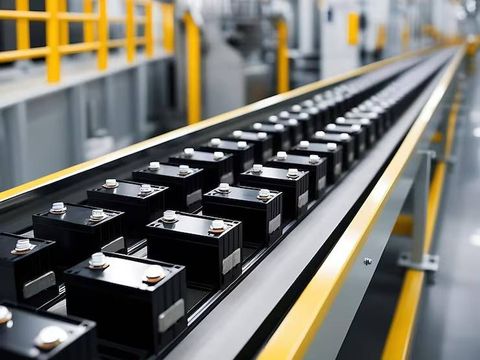
The manufacturing process normally moves through several connected stages. Materials are processed into electrode coatings, assembled into individual cells, tested, and then combined into modules or battery packs. Manufacturing conditions such as humidity, temperature, cleanliness, coating thickness, and material consistency can affect the final cell.
Main Battery Components
The main components have different functions within a cell:
- Cathode: Stores and releases lithium ions during charging and discharging. Common cathode families include lithium iron phosphate and nickel-manganese-cobalt-based materials.
- Anode: Receives and releases lithium ions during operation. Graphite is widely used in lithium-ion batteries, while other materials are being studied for specific applications.
- Separator: A thin insulating layer that keeps the electrodes apart while allowing ions to move through the cell.
- Electrolyte: Provides a medium through which ions move between the electrodes.
- Current collectors: Conduct electrical current from the electrode materials to the external connections. Aluminum is commonly associated with cathodes, while copper is commonly used for anodes.
- Housing: Protects the internal components and provides mechanical structure.
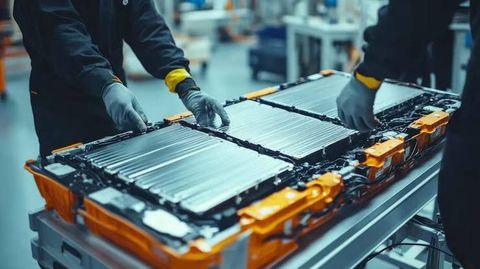
A battery cell is the basic electrochemical unit. Several cells can be connected into a module, and multiple modules can form a battery pack with additional monitoring and protection systems.
Importance
Why Battery Manufacturing Matters
Battery manufacturing affects how energy can be stored and used in transportation, electronics, backup systems, and electricity networks. As renewable electricity generation expands, batteries can help store electricity for later use. Batteries also support electric mobility by storing electrical energy for vehicle propulsion.
The manufacturing process matters because small differences in materials or assembly can influence electrical performance, operating temperature, durability, and safety. Consistent production therefore requires controlled processes and repeated inspection.
Battery manufacturing also affects resource use and waste management. Materials such as lithium, nickel, cobalt, copper, aluminum, graphite, and other compounds can enter different stages of the supply chain. Recycling and recovery processes can return some materials to industrial use and reduce the amount of battery waste requiring disposal.
From Materials to Finished Packs
Battery production can be understood as a sequence:
- Material preparation: Active materials, conductive additives, binders, solvents, and other ingredients are prepared.
- Electrode manufacturing: Materials are mixed into slurries and coated onto metal foils.
- Drying and processing: Coated foils are dried and processed to achieve the required electrode characteristics.
- Cell assembly: Electrodes and separators are arranged in a selected cell format.
- Electrolyte filling: Electrolyte is introduced under controlled conditions.
- Formation: Initial controlled charging and discharging activate the electrochemical system.
- Testing: Cells are inspected for electrical, physical, and safety characteristics.
- Module and pack assembly: Cells are connected with structural and electronic components.
Common Cell Formats
| Cell Format | General Structure | Common Application Areas |
|---|---|---|
| Cylindrical | Rolled internal layers inside a cylindrical casing | Vehicles, tools, electronics |
| Prismatic | Flat electrode assembly inside a rigid rectangular case | Vehicles, energy storage |
| Pouch | Flexible laminated outer package | Electronics, vehicles, energy storage |
The appropriate cell format depends on factors such as available space, thermal management, mechanical requirements, manufacturing processes, and the intended application.
Recent Updates
Growth of Domestic Cell Manufacturing
India has been expanding its domestic advanced chemistry cell manufacturing capacity. The Ministry of Heavy Industries administers the Production Linked Incentive scheme for Advanced Chemistry Cell battery storage, with a planned 50 GWh domestic ACC manufacturing capacity and an overall scheme outlay of ₹18,100 crore. By early 2026, 40 GWh had been awarded to four beneficiary firms, while government updates indicated that manufacturing capacity was still being commissioned.
The program has also encouraged development around the broader battery manufacturing ecosystem, including electrode materials, foils, components, and recycling facilities. Government information indicates that additional manufacturers have announced battery-cell capacity plans beyond the capacity directly awarded under the PLI program.
Increasing Attention to Stationary Storage
Battery manufacturing is also being connected with grid-scale energy storage. In 2026, the Ministry of Heavy Industries initiated a process for selecting manufacturers for an additional 10 GWh of Advanced Chemistry Cell capacity intended for grid-scale stationary storage applications. This reflects the growing connection between battery technology, renewable electricity, and electricity-system storage.
Greater Focus on Recycled Materials
Battery manufacturing is increasingly connected with recycling and material recovery. India's Battery Waste Management framework includes requirements for Extended Producer Responsibility and minimum use of recycled materials in new batteries from the specified financial years. Amendments made during 2024 established future minimum recycled-material percentages for different battery categories.
Laws or Policies
Battery Waste Management Rules in India
India's Battery Waste Management Rules, 2022 apply to batteries across different chemistries, forms, sizes, and applications. They cover portable, automotive, industrial, and electric-vehicle batteries. The rules use an Extended Producer Responsibility approach under which producers, including manufacturers and importers, have responsibilities related to waste-battery collection and recycling or refurbishment.
Producers, recyclers, and refurbishers are required to register through the centralized Battery Waste EPR portal administered by the Central Pollution Control Board. The system supports registration, reporting, and management of EPR obligations.
Recycled Material Requirements
The regulatory framework has also introduced minimum recycled-material requirements for new batteries. The 2024 amendment established future percentages for portable, electric-vehicle, automotive, and industrial batteries, with requirements increasing over subsequent financial years.
A further amendment in 2025 addressed certain labeling and Extended Producer Responsibility identification requirements, including provisions involving QR codes or barcodes containing registration information.
These rules mean that battery manufacturing is connected not only with production quality but also with environmental compliance, record keeping, recycling, labeling, and material recovery.
Tools and Resources
Manufacturing and Technical Resources
Several resources can help readers understand battery manufacturing and its regulatory environment:
- CPCB Battery Waste EPR Portal: Provides information about producer, recycler, and refurbisher registration and EPR processes.
- Ministry of Heavy Industries: Provides information about the Advanced Chemistry Cell PLI scheme and domestic cell-manufacturing programs.
- Battery Waste Management Rules: Useful for understanding producer responsibilities, recycling requirements, labeling, and reporting.
- Battery testing equipment: Electrical testers, insulation testers, charge-discharge systems, thermal measurement equipment, and cell inspection systems are used during development and production.
- Battery management systems: These monitor parameters such as voltage, temperature, current, and state of charge within battery packs.
- Process monitoring systems: Manufacturing facilities can use sensors and automated inspection equipment to monitor coating, drying, assembly, and testing stages.
Basic Manufacturing Data
Important measurements may include electrode thickness, coating uniformity, moisture levels, cell voltage, internal resistance, capacity, temperature, and dimensional accuracy. These measurements are normally interpreted together because one measurement alone does not describe complete cell performance.
FAQs
What are the main stages of battery manufacturing?
Battery manufacturing generally includes material preparation, electrode production, drying and processing, cell assembly, electrolyte filling, formation, aging, testing, and final module or pack assembly.
What are electrodes, separators, and electrolytes in battery manufacturing?
Electrodes participate in the electrochemical reactions that enable energy storage and release. The separator keeps the electrodes physically apart while allowing ion movement, while the electrolyte provides an ion-conducting medium between the electrodes.
How are battery cells assembled?
Battery cells are assembled by arranging prepared electrodes and separators in a specific configuration. The assembly is enclosed in a suitable casing, electrical connections are created, electrolyte is introduced, and controlled formation and testing are performed.
What is the role of the Battery Waste Management Rules?
India's Battery Waste Management Rules establish responsibilities for producers and other participants in the battery lifecycle. They include Extended Producer Responsibility requirements for collection, recycling or refurbishment, registration, reporting, and related environmental management.
What is an Advanced Chemistry Cell?
An Advanced Chemistry Cell, commonly called an ACC, refers to an advanced rechargeable battery cell technology designed for applications such as electric mobility and stationary energy storage. India's PLI program is intended to expand domestic ACC manufacturing capacity.
Conclusion
Battery manufacturing combines material preparation, electrode production, separator placement, electrolyte handling, cell assembly, formation, testing, and pack integration. The process requires controlled manufacturing conditions because material consistency and assembly accuracy can influence cell characteristics and safety. In India, domestic ACC manufacturing programs and battery-waste regulations are shaping both production capacity and end-of-life management. Understanding these stages provides a clearer view of how individual battery materials become complete cells and usable battery systems.