Diwali Decoration Guide: Traditional Styles, Modern Trends, Lighting and Home Decor
A Diwali Decoration Guide explains how traditional customs, modern design ideas, lighting, and home decor come together during Diwali, a major festival celebrated in India and by communities around the world. Diwali is commonly associated with the triumph of light over darkness and good over evil, although its stories and religious significance vary among Hindu, Jain, Sikh, and other communities. Homes, courtyards, shops, and public spaces are often decorated to mark the occasion and welcome family members and guests.
Context
A Diwali Decoration Guide explains how traditional customs, modern design ideas, lighting, and home decor come together during Diwali, a major festival celebrated in India and by communities around the world. Diwali is commonly associated with the triumph of light over darkness and good over evil, although its stories and religious significance vary among Hindu, Jain, Sikh, and other communities. Homes, courtyards, shops, and public spaces are often decorated to mark the occasion and welcome family members and guests.
Traditional Diwali decoration includes diyas, rangoli, flower garlands, decorative torans, and colorful fabrics. Contemporary arrangements may combine these elements with electric string lights, lanterns, reusable ornaments, and simple interior designs. The result depends on regional customs, household preferences, available space, and the meaning that individuals associate with the festival.
Traditional Diwali Decoration Styles
Traditional decorations often use materials and symbols that have cultural significance. Earthen diyas are commonly placed near entrances, windows, balconies, and courtyards, while rangoli designs are created on floors using colored powders, rice flour, flowers, or other suitable materials.
Common traditional decorations include:
Diyas: Small lamps, traditionally made from clay, that may use oil or ghee and a cotton wick.
Rangoli: Decorative floor patterns featuring geometric shapes, floral designs, or religious symbols.
Torans: Decorative hangings placed above doorways, often made with flowers, leaves, fabric, or beads.
Flower garlands: Arrangements of marigolds and other flowers used around entrances, prayer areas, and indoor spaces.
Decorative fabrics: Colorful cloths, cushions, and table coverings that introduce festive patterns and textures.
These decorations differ across regions and families. Some households emphasize religious symbols and prayer spaces, while others focus on floral arrangements, colorful entrances, and shared family activities.
Modern Diwali Home Decor
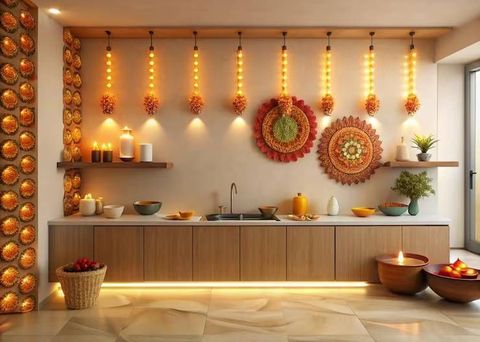
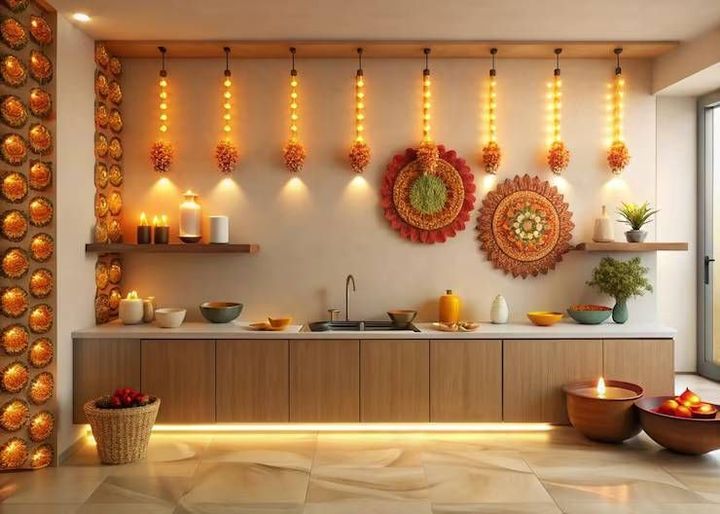
Modern Diwali home decor often combines traditional elements with contemporary materials and layouts. Neutral backgrounds, coordinated colors, geometric lanterns, decorative trays, and reusable ornaments can create a consistent appearance without requiring elaborate arrangements.
Some households use a limited color palette, such as gold and cream, red and white, or green and earthy brown. Others prefer bright combinations inspired by regional textiles and traditional festival patterns. The choice of decor may also reflect the size of the home, existing furniture, and whether decorations need to be stored and reused.
Importance
Diwali decoration is important because it helps express cultural identity, create a festive atmosphere, and prepare homes for prayer, family gatherings, and hospitality. Decorating can also provide an opportunity for family members to share traditional practices, teach children about cultural customs, and create decorations together.
For people living in apartments or smaller homes, decoration requires practical planning. Limited floor space, electrical outlets, ventilation, pets, children, and building rules can influence the choice and placement of decorations. Outdoor arrangements may also be affected by weather, shared walkways, and restrictions on open flames.
Planning a Safe and Organized Decoration Layout
A decoration plan helps households use available space without obstructing movement or creating unnecessary hazards. Entrance areas should remain accessible, while decorative objects should be placed away from stairways, exits, and frequently used walkways.
Useful planning considerations include:
Space: Measure the area available for rangoli, lamps, furniture, and decorative displays.
Lighting: Identify suitable outlets and determine whether battery-powered or plug-in lights fit the layout.
Materials: Consider durability, cleaning requirements, and whether decorations can be reused.
Household needs: Keep fragile objects, cords, and open flames away from children and pets.
Storage: Set aside containers for ornaments, lights, fabric, and other items after the festival.
A simple layout can also prevent overcrowding. For example, a household may use a floral toran at the entrance, a rangoli near the doorway, and a small decorative arrangement in the living room instead of covering every available surface.
Comparing Common Diwali Decoration Ideas
| Decoration type | Common materials | Suitable locations | Main consideration |
|---|---|---|---|
| Traditional diyas | Clay, oil or ghee, cotton wicks | Stable, open areas | Fire safety |
| Rangoli | Colored powder, rice flour, flower petals | Entrance or courtyard | Foot traffic and cleaning |
| String lights | LED bulbs, electrical wiring | Balconies, windows, walls | Electrical safety |
| Torans | Flowers, leaves, fabric, beads | Doorways | Secure attachment |
| Paper lanterns | Paper, lightweight frames | Indoor decorative areas | Distance from flames |
| Floral arrangements | Fresh or artificial flowers | Tables, entrances, prayer spaces | Cleanliness and durability |
| Reusable ornaments | Fabric, metal, wood, or other materials | Shelves and living areas | Storage and maintenance |
The suitability of each option depends on the location and materials. Decorations intended for indoor use should not automatically be assumed suitable for outdoor exposure, moisture, or heat.
Recent Updates
Diwali decoration trends during 2024–2026 have reflected a combination of traditional craftsmanship, contemporary interior design, energy awareness, and reusable materials. Digital inspiration platforms have also made it easier for households to explore rangoli patterns, lighting layouts, color combinations, and room-by-room decoration plans. These are broad design trends rather than rules that apply to every household or region.
LED Lighting and Contemporary Designs
LED string lights, decorative lamps, and rechargeable lighting products are commonly used in modern festive arrangements. Compared with many traditional incandescent bulbs, LED products generally use less electricity for similar lighting purposes and produce less heat, although product quality and performance vary.
Warm white lighting is often used to create a softer indoor atmosphere, while multicolored lights can introduce a brighter festive appearance. Some lighting products include timers, adjustable brightness, or remote controls. Users should check the product's electrical ratings and instructions before installation, particularly for outdoor use.
Sustainable and Reusable Decoration
Reusable fabric hangings, durable lanterns, metal ornaments, and natural floral arrangements are among the options used to reduce reliance on disposable decorations. Some households also create rangoli using flower petals, rice flour, or other locally available materials.
Environmental effects depend on the materials, manufacturing process, transportation, and disposal method. Decorations described as sustainable are not necessarily environmentally preferable in every situation. Reusing existing items and selecting durable materials can reduce repeated replacement, while appropriate waste separation can help manage discarded packaging and decorations.
Digital Inspiration and DIY Projects
Websites and social platforms provide examples of DIY Diwali decoration, paper lantern construction, rangoli designs, and small-space layouts. Digital design tools can help users test color combinations or organize the placement of furniture and decorative items before arranging them at home.
Online tutorials vary in accuracy and safety. Instructions involving electrical wiring, candles, oil lamps, or heat-sensitive materials should be assessed carefully, and damaged electrical products should not be used.
Laws or Policies
Diwali decoration in India is influenced by local fire-safety requirements, electrical safety practices, housing rules, and regulations concerning noise, pollution, and public spaces. The exact requirements can vary by state, municipality, housing society, and the type of activity involved.
Fire and Electrical Safety
Open flames from diyas and candles should be kept away from curtains, paper decorations, dry flowers, and other combustible materials. Lamps should be placed on stable, heat-resistant surfaces, and unattended flames should be extinguished before leaving the area or going to sleep.
Electrical decorations should use appropriate plugs, undamaged cables, and products designed for the intended environment. Outdoor lighting requires equipment rated for outdoor conditions. Overloaded sockets, exposed wires, and tangled or damaged cables can create electrical and fire hazards.
Noise, Fireworks, and Community Rules
Diwali-related fireworks may be subject to national, state, and local restrictions, including limits on permitted products, locations, and times. India's environmental authorities and courts have issued rules and directions concerning fireworks and air pollution, with requirements sometimes varying by location and year. Residents should check the applicable local rules rather than assume that the same restrictions apply everywhere.
Apartment communities and housing societies may also set rules for decorating shared spaces, attaching lights to building exteriors, using common electrical outlets, or keeping corridors clear. Such rules can help maintain access and safety in shared buildings.
Waste and Public Space Considerations
Decorations should not block public footpaths, emergency exits, building entrances, or access routes. Packaging, used materials, and damaged lighting equipment should be handled according to local waste-management arrangements. Natural materials and reusable decorations can help limit unnecessary waste, although disposal practices still matter.
Tools and Resources
Several resources can help with Diwali decoration planning, design, and safety. The most useful choice depends on whether the task involves visual inspiration, room layout, lighting, or household organization.
Decoration Ideas and Design Tools
Pinterest and Instagram contain examples of traditional rangoli, festive entrances, flower arrangements, lanterns, and modern home decor. Search filters and saved collections can help organize ideas by room, material, color, or style.
Canva and similar design applications can help create printable rangoli templates, decorative labels, invitation designs, or simple layout references. Room-planning applications can help visualize furniture placement and decorative arrangements before moving objects.
Lighting and Safety Resources
Product instruction manuals and manufacturer websites provide information about electrical ratings, indoor or outdoor suitability, installation, and maintenance. The Bureau of Indian Standards provides information about relevant Indian standards, while local fire authorities may publish household fire-safety guidance.
A simple spreadsheet can also organize decoration materials, quantities, storage locations, and electrical items that need inspection. This can be useful for households that reuse the same decorations each year.
FAQs
What are traditional Diwali decoration ideas for the home?
Traditional Diwali decoration ideas include clay diyas, rangoli, flower garlands, torans, colorful fabrics, and decorated prayer spaces. Materials and designs vary according to regional traditions and household preferences.
How can modern Diwali home decor combine traditional and contemporary styles?
Modern Diwali home decor can combine rangoli and flower garlands with LED string lights, simple lanterns, coordinated colors, and reusable ornaments. A consistent color scheme can help connect traditional and contemporary elements.
Which lighting is suitable for Diwali decoration?
LED string lights and decorative lamps are commonly used for festive lighting. The appropriate choice depends on location, electrical ratings, weather exposure, and installation instructions. Open-flame lamps require a stable surface and careful supervision.
How can Diwali decorations be arranged in a small apartment?
Small apartments can use doorway torans, compact rangoli designs, wall-mounted decorations, and a few carefully placed lights. Keeping corridors and exits clear helps preserve safe movement.
What safety rules should be followed during Diwali decoration?
Keep open flames away from combustible materials, avoid overloaded sockets, inspect electrical cables, and use outdoor-rated lights outdoors. Local rules may also apply to fireworks, shared building areas, and waste disposal.
Conclusion
Diwali decoration brings together cultural traditions, lighting, floral arrangements, and contemporary home design. Choices range from diyas and rangoli to LED lights and reusable ornaments, depending on household preferences and available space. Fire prevention, electrical safety, local regulations, and responsible waste handling are important parts of festive planning. Understanding these factors provides a clear foundation for arranging traditional and modern Diwali decorations.