Wind Energy Turbines An Explore Guide with Basics, Facts, and Practical Knowledge
Wind energy turbines are advanced machines designed to convert the natural movement of air into usable electrical power. When wind flows across the turbine blades, it creates lift similar to how airplane wings work. This lift causes the blades to rotate, turning a shaft connected to a generator that produces electricity.
The idea behind wind power is simple yet powerful: air movement is endless, naturally replenished, and widely available. Long before modern turbines existed, windmills were used to grind grain and pump water. Today’s wind turbines apply the same principle at a far greater scale using engineering, physics, and smart grid technology.
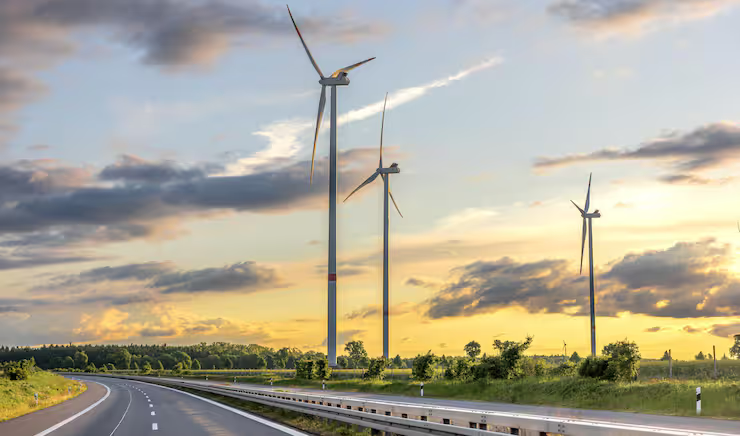
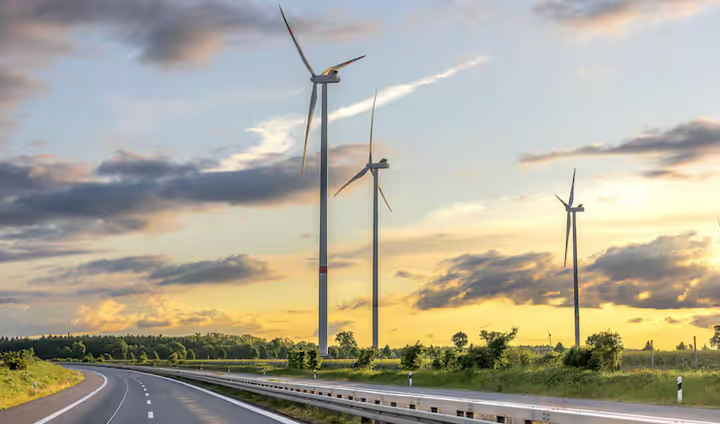
Modern turbines are mostly horizontal-axis designs with three long blades mounted on a tall tower. Their height allows them to access faster, more consistent wind speeds, which significantly improves electricity generation. Vertical-axis turbines also exist, mostly used for research, urban testing, and niche applications.
Wind energy exists today because traditional energy systems based on coal, oil, and gas are limited, pollution-heavy, and increasingly unsustainable. Wind turbines offer a clean, renewable alternative that supports long-term environmental balance and energy stability.
Wind Energy Turbines – Importance
Wind energy plays a vital role in modern power systems across the world. It directly addresses several major challenges faced by governments, industries, and communities.
Environmental Protection
Wind power generates electricity without releasing carbon dioxide, sulfur dioxide, nitrogen oxides, or particulate pollution. This helps reduce air pollution and supports climate-change mitigation goals.
Energy Security
Because wind is naturally available, it reduces dependency on imported fuels. This strengthens national energy security and protects economies from fossil-fuel volatility.
Sustainable Electricity Growth
As electricity demand rises with urbanization and digital expansion, wind energy provides scalable generation without exhausting natural resources.
Grid Stability Through Hybrid Systems
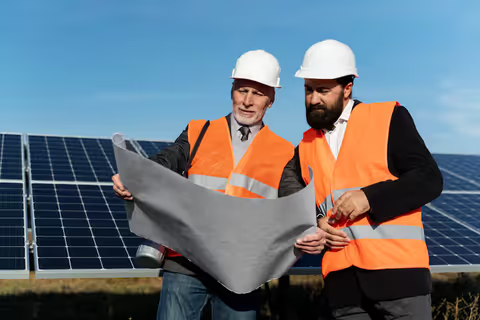
Wind energy is increasingly combined with solar power to create hybrid renewable systems. This stabilizes electricity output across different weather conditions and time cycles.
Rural and Regional Development
Wind farms are typically located in open rural and coastal regions. These areas benefit from infrastructure development, technical activity, and grid expansion.
Support for Carbon Targets & ESG Goals
Wind turbines directly contribute to environmental, social, and governance objectives adopted by governments and large organizations worldwide.
Wind Energy Turbines – Recent Updates and Trends
The past year has seen rapid shifts in policy focus, technology direction, and renewable-energy strategy.
Domestic Manufacturing Mandates
New regulatory measures introduced in 2025 require key wind-turbine components—such as blades, towers, generators, gearboxes, and control systems—to be manufactured locally. Operational data storage is also required to remain within national digital infrastructure. This strengthens domestic supply chains and reduces overseas dependency.
Data Accuracy and Forecasting Regulation
Grid authorities are tightening forecasting accuracy standards for wind power output. This encourages the use of advanced weather-modelling software, AI-driven prediction tools, and digital twin technology to minimize generation deviations.
Advanced Turbine Design Research
New research focuses on:
-
Smart blade materials
-
Machine-learning-based performance optimization
-
Vertical-axis turbine efficiency improvements
-
Noise-reduction engineering
-
Offshore floating turbine platforms
Repowering and Life-Extension Projects
Older wind farms are being refurbished with larger blades, advanced control systems, and higher towers to extend operational life and improve output without building entirely new facilities.
Offshore Wind Development Planning
Governments are preparing long-term offshore wind infrastructure frameworks for deep-water zones, especially in high-wind coastal regions.
Wind Energy Turbines – Laws, Policies & Government Frameworks
Wind energy is heavily guided by public policy, regulatory approvals, grid codes, and financial frameworks.
National Renewable Energy Targets
Governments have committed to large-scale renewable capacity expansion by 2030 and beyond. Wind turbines are core contributors to these long-term clean-energy targets.
Wind-Solar Hybrid Framework
Hybrid renewable policies encourage the combined use of wind and solar resources within one project boundary. This improves:
-
Land utilization
-
Grid transmission efficiency
-
Daily energy output stability
Offshore Wind Regulatory Structure
Dedicated offshore wind frameworks define:
-
Sea-bed leasing rules
-
Marine transmission planning
-
Environmental clearances
-
Coastal resource management
Domestic Component Sourcing Rules
Recent rules mandate:
-
Local production of turbine hardware
-
Domestic control centers
-
National data storage and cybersecurity compliance
Transmission & Grid Connectivity Standards
Wind farms must comply with:
-
Grid frequency regulations
-
Voltage ride-through standards
-
Power quality benchmarks
-
Load dispatch protocols
These policies ensure wind energy integrates smoothly into national electricity systems.
Wind Energy Turbines – Tools, Platforms & Practical Resources
Several tools and digital platforms help in planning, understanding, and operating wind energy systems.
Wind Resource Assessment Tools
These tools analyze:
-
Wind speed at multiple elevations
-
Seasonal variation patterns
-
Turbulence intensity
-
Annual energy production potential
Hybrid System Planning Calculators
Used to balance:
-
Wind-solar capacity ratios
-
Battery storage requirements
-
Peak demand matching
-
Grid export consistency
Geographic Wind Mapping Platforms
These allow visualization of:
-
High-wind zones
-
Coastal wind corridors
-
Plateau and ridge wind belts
-
Offshore wind potential
Performance Monitoring Dashboards
Used for:
-
Turbine health tracking
-
Real-time power output analysis
-
Predictive maintenance
-
Downtime forecasting
Policy & Compliance Portals
Provide access to:
-
Renewable rules
-
Grid compliance documentation
-
Environmental impact regulations
-
Energy reporting formats
Wind Energy Turbines – Key Performance Overview (Table)
| Feature | Typical Utility-Scale Range |
|---|---|
| Tower Height | 80–140 meters |
| Blade Length | 35–80 meters |
| Rated Power Output | 1.5–6 MW |
| Operational Wind Speed | 3–25 m/s |
| Average Lifespan | 20–25 years |
Wind Energy Generation Pattern (Conceptual Graph)
Wind energy output typically increases with wind speed following a power-curve pattern:
-
Low output at low wind speeds
-
Rapid growth in mid-range speeds
-
Steady peak output at rated wind speeds
-
Automatic shutdown at extreme storm conditions
Frequently Asked Questions on Wind Energy Turbines
How much electricity can one wind turbine generate?
Electricity output varies with turbine size and wind conditions. Large modern turbines can generate enough electricity to support thousands of homes annually under optimum wind conditions.
Do wind turbines work all the time?
Turbines operate whenever wind speed falls within their operating range. They automatically stop during very low wind or extreme storm conditions for safety.
Are wind turbines noisy?
Modern turbines are designed with aerodynamic blades and sound-damping technology. When placed at proper distances, noise impact is minimal and within permissible environmental limits.
What happens to wind turbines after their lifespan ends?
Most turbine components including steel towers, copper wiring, and gear systems are recyclable. Blade recycling technology is also improving through advanced material recovery processes.
Is wind energy dependent only on weather forecasts?
Weather forecasting plays a role, but advanced digital sensors, AI prediction systems, and grid-balancing mechanisms ensure reliable energy scheduling.
Conclusion Wind Energy Turbines in the Global Clean Power Shift
Wind energy turbines represent one of the most reliable and scalable clean electricity technologies available today. From powering rural micro-grids to supporting national renewable-energy targets, turbines operate as silent engines of sustainability.
With continuous advances in turbine efficiency, digital control systems, offshore engineering, and hybrid renewable integration, wind energy is transitioning from an alternative source to a core pillar of modern power generation.
Strong policies, domestic manufacturing, digital forecasting, and environmental safeguards are shaping the next decade of wind power expansion. For nations pursuing long-term energy security, climate stability, and sustainable growth, wind energy turbines remain an essential technology for the future.