Water Bottling Plants An Explore Guide with Basics, Facts, and Practical Knowledge
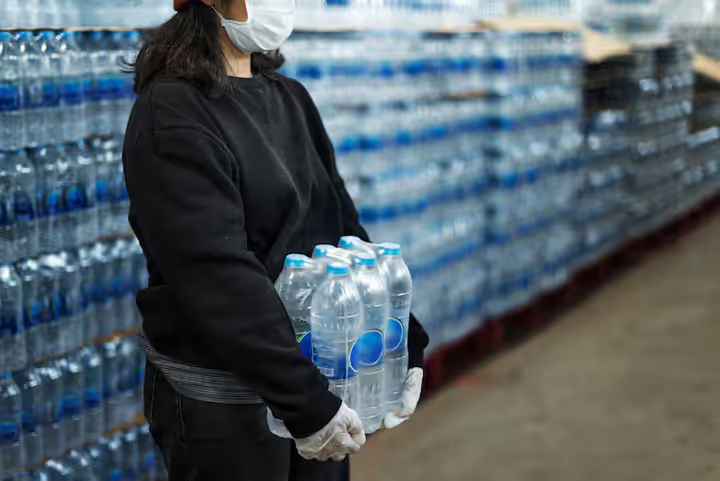
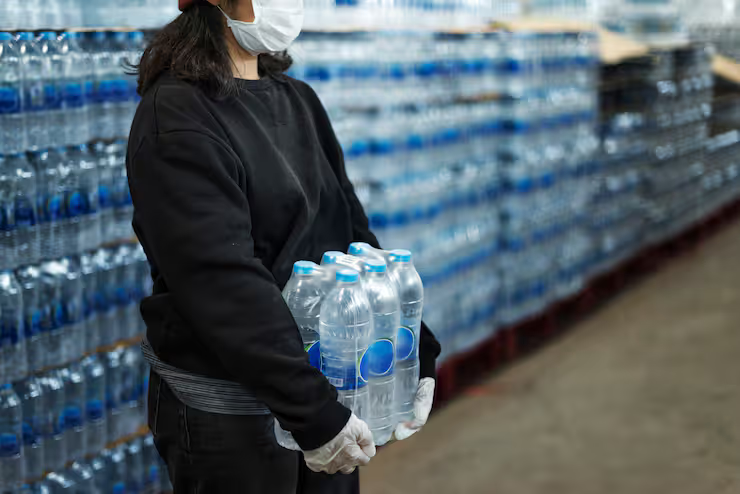
Water bottling plants are industrial facilities designed for the purification, treatment, packaging, and quality validation of drinking water for mass distribution. These plants exist to bridge the gap between natural water sources and consistent access to safe hydration for growing populations.
Urban expansion, groundwater contamination, industrial waste, and climate variability have increased dependence on treated packaged water. Bottling plants apply multiple purification technologies to ensure that water complies with established drinking safety benchmarks before reaching consumers.
These facilities typically process water obtained from:
-
Borewells and groundwater aquifers
-
Surface water bodies
-
Municipal treated water
-
Natural mineral sources
Once collected, water undergoes a multi-layer purification cycle involving filtration, reverse osmosis, disinfection, and mineral stabilization before it is sealed into regulated containers.
Why Water Bottling Plants Matter Today
The packaged drinking water industry plays a critical role in public health protection, emergency preparedness, and infrastructure reliability. In many regions, household water pipelines face fluctuating quality due to aging distribution systems and pollution exposure.
Key areas impacted by water bottling plants include:
-
Urban residential communities
-
Healthcare facilities
-
Educational institutions
-
Disaster relief operations
-
Remote geographic locations
From a health perspective, these plants directly help reduce the spread of waterborne illnesses such as cholera, dysentery, and typhoid. The controlled treatment environment offers a consistent level of microbiological safety when compared to untreated sources.
From an environmental management standpoint, modern facilities increasingly adopt:
-
Water recycling systems
-
Energy-efficient purification technologies
-
Digital contamination detection tools
-
Smart quality monitoring frameworks
This creates a balance between growing hydration demand and sustainability benchmarks.
Bottled Water Processing Stages at a Glance
| Stage | Purpose | Key Technology Used |
|---|---|---|
| Raw Water Intake | Source collection | Submersible pumps |
| Pre-Filtration | Sediment removal | Sand & carbon filters |
| RO Treatment | Dissolved solids removal | High-pressure membranes |
| UV & Ozonation | Microbial neutralization | UV lamps & ozone injectors |
| Mineral Adjustment | Taste & nutrient balance | Dosing systems |
| Packaging Line | Container sealing | Automated filling machines |
Recent Industry Updates and Emerging Trends (2024–2025)
Over the past year, the water bottling sector has moved rapidly toward automation, data-based quality tracking, and sustainability engineering.
By mid-2024, several industrial water quality authorities introduced AI-based contaminant detection tools for real-time monitoring inside packaging lines. These systems analyze turbidity, mineral composition, and biological risks within seconds, reducing batch-level risk exposure.
In late 2024, regulatory agencies began integrating blockchain-based traceability into packaged drinking water audits. This new framework allows full supply chain documentation from source extraction to packaging timestamp validation.
In early 2025, significant industry-wide focus has shifted toward:
-
Biodegradable bottle materials
-
Lightweight polymer engineering
-
Smart leak-detection valves
-
Digital water tax compliance reporting
Another important trend includes decentralized micro-bottling plants capable of rapid deployment in remote areas during natural disasters. These modular facilities allow rapid water stabilization and local packaging without centralized transport dependency.
Government Laws, Rules, and Regulatory Oversight
Water bottling plants operate under strict regulatory control due to their direct impact on public health. Regulatory authorities mandate safety standards across every stage of processing.
Key regulatory areas typically cover:
-
Source water testing
-
Processing plant hygiene
-
Packaging material safety
-
Storage and transport conditions
-
Label transparency
In India, bottled water facilities fall under national food safety regulations administered by statutory authorities. Every manufacturing unit must operate with validated laboratory testing protocols and documented purification parameters.
Common regulatory requirements include:
-
Routine microbial analysis
-
Heavy metal contamination limits
-
Total dissolved solids (TDS) thresholds
-
Equipment sanitation compliance reports
-
Batch-level traceability systems
Violation of these regulations may trigger production suspension, quality recall notices, and legal audits.
Standard Water Quality Parameters
| Parameter | Permissible Range | Purpose |
|---|---|---|
| pH Level | 6.5 – 8.5 | Acid-alkaline balance |
| TDS | ≤ 500 mg/L | Mineral concentration |
| Total Coliform | 0 per 100 ml | Bacterial safety |
| Arsenic | ≤ 0.01 mg/L | Toxicity prevention |
| Fluoride | ≤ 1.0 mg/L | Dental exposure control |
Tools, Technologies, and Digital Resources
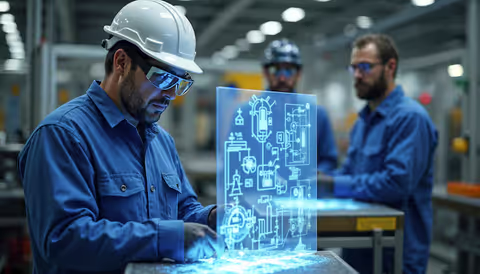
Modern water bottling plants depend heavily on advanced engineering systems and digital control platforms. These tools enhance operational precision, quality consistency, and regulatory compliance.
Key Industrial Tools and Systems
-
Reverse Osmosis (RO) Skid Units
-
Multi-Grade Pressure Filters
-
Ultraviolet Disinfection Chambers
-
Ozone Injection Systems
-
Automated Bottle Rinsers
-
PLC-Based Filling Controllers
Digital Monitoring and Analytics
-
Online TDS analyzers
-
Turbidity sensors
-
Cloud-based quality dashboards
-
Predictive maintenance software
-
Batch-wise contamination trackers
Informational and Research Resources
-
Government water safety portals
-
Environmental compliance registries
-
Industrial hygiene certification bodies
-
Water treatment knowledge repositories
-
Laboratory accreditation directories
These resources provide updated operational benchmarks, chemical exposure limits, and quality validation frameworks.
Operational Challenges in Bottled Water Processing
Despite technological progress, water bottling plants still face complex technical and environmental constraints. Groundwater depletion remains one of the most discussed sustainability challenges. Over-extraction can reduce aquifer stability and alter regional hydro-balance.
Other challenges include:
-
Seasonal fluctuation in source water quality
-
Rising microplastic contamination risks
-
Equipment membrane fouling
-
Power-consumption intensity
-
Transport-related carbon emissions
Plants responding to these challenges increasingly adopt closed-loop recycling, solar-assisted purification units, and biodegradable container alternatives.
Frequently Asked Questions (FAQs)
Is bottled water safer than regular tap water?
Bottled water from certified plants undergoes multiple filtration and disinfection stages that reduce microbial and chemical contamination. Safety depends on adherence to regulatory benchmarks and routine testing protocols.
What is the difference between packaged drinking water and mineral water?
Packaged drinking water is purified and may have adjusted minerals, while mineral water originates from naturally mineral-rich sources and retains its original mineral composition.
How long does bottled water remain safe for consumption?
Shelf life depends on packaging materials, storage conditions, and exposure to heat or sunlight. Regulatory labels specify the recommended consumption period.
What contaminants are usually removed during processing?
Purification targets suspended solids, bacteria, viruses, heavy metals, fluoride, pesticides, and excess dissolved salts.
How is quality verified inside bottling facilities?
Quality assurance involves in-house laboratories, third-party testing agencies, continuous sensor monitoring, and documented batch validation procedures.
Key Differences Between Natural and Processed Water
| Feature | Natural Source Water | Bottled Processed Water |
|---|---|---|
| Purification Control | Limited | Multi-stage verified |
| Microbial Risk | Variable | Highly controlled |
| Mineral Uniformity | Irregular | Stabilized |
| Regulatory Oversight | Minimal | Strict audit framework |
| Shelf Life | Short | Regulated storage life |
The Expanding Role of Automation and Smart Control
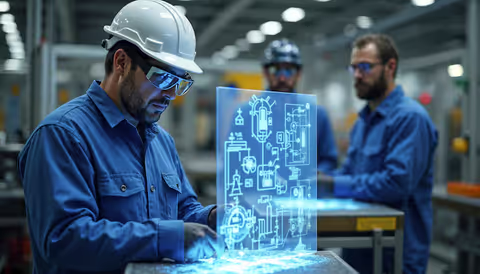
Industry 4.0 technologies are transforming water bottling plants into intelligent manufacturing environments. AI-driven predictive maintenance reduces downtime by identifying system inefficiencies before failures occur.
Smart sensors now offer:
-
Automatic contamination alerts
-
Mineral dosing precision
-
Bottle leakage detection
-
Production cycle optimization
Robotics also play a growing role in palletizing, packaging, and sorting operations, reducing manual exposure to repetitive industrial motion risks.
Conclusion
Water bottling plants have become a strategic component of modern hydration infrastructure. With rising population density, climate instability, and urban demand, these facilities play a vital role in ensuring consistent access to treated drinking water.
Technological advancements in filtration, automation, and digital monitoring continue to enhance safety precision. At the same time, regulatory oversight ensures that public health standards remain protected.
Looking forward, sustainability-driven innovations and decentralized micro-bottling systems are expected to reshape how treated water is processed and distributed. As awareness around water quality continues to grow, the educational and infrastructural relevance of water bottling plants will remain firmly embedded in global public health strategy.