Tower Cranes Overview Detailed Explanation, Knowledge, and Practical Insights
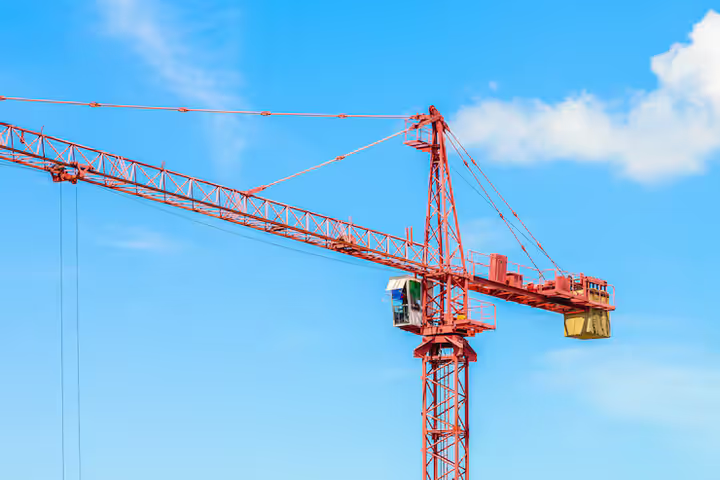
Tower cranes are tall, fixed construction machines designed to lift and move heavy materials vertically and horizontally across large building sites. They are most commonly seen in urban skylines, where high-rise buildings, bridges, power plants, and industrial facilities are under development.
The origin of tower cranes is closely tied to rapid urbanization and the need to build upward rather than outward. As land in cities became limited and structures grew taller, traditional mobile lifting equipment was no longer sufficient. Tower cranes emerged to provide high lifting capacity, wide reach, and precise load control at significant heights.
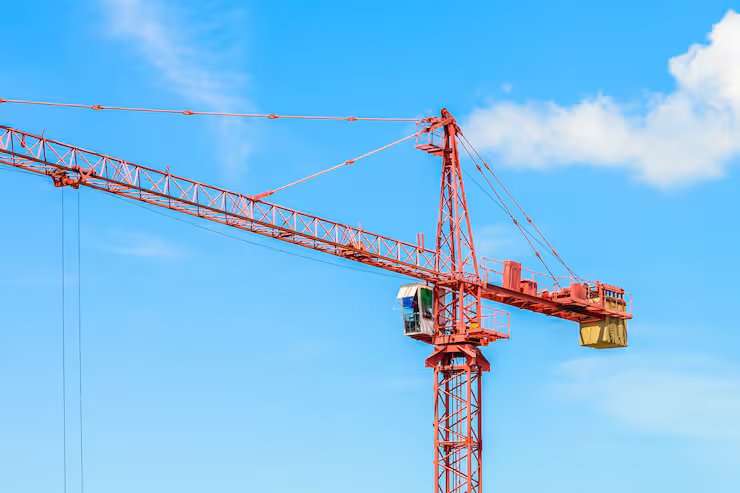
Modern tower cranes are engineered systems made up of a mast, slewing unit, jib, counter-jib, hoist mechanism, and control systems. Their modular design allows them to grow in height as construction progresses, making them uniquely suited for long-term infrastructure and commercial projects.
From an engineering standpoint, tower cranes represent a combination of structural mechanics, material science, and automation. Their continued development reflects the construction industry’s push toward efficiency, safety, and scalability.Importance: Why Tower Cranes Matter Today
Tower cranes play a critical role in today’s construction ecosystem, especially in fast-growing economies and dense metropolitan regions. Their importance goes beyond lifting heavy loads.
Key reasons tower cranes matter
-
Enable vertical construction of high-rise buildings
-
Support large-scale infrastructure such as metro systems, airports, and industrial plants
-
Improve material handling efficiency on complex sites
-
Reduce reliance on multiple smaller lifting systems
-
Enhance precision and control in high-risk lifting operations
Tower cranes directly affect a wide range of stakeholders, including civil engineers, project planners, safety managers, urban developers, and regulatory authorities. Without them, modern skyline development would be slower, riskier, and far less efficient.
They also help solve several persistent construction challenges:
-
Limited ground space on urban sites
-
Need for heavy lifting at extreme heights
-
Coordination of material flow in multi-storey projects
-
Minimizing structural congestion during construction phases
In regions experiencing rapid infrastructure growth, tower cranes are not optional tools they are foundational assets that support economic development and urban planning.Recent Updates: Trends and Developments in the Past Year
Over the past year, tower crane technology and operational practices have continued to evolve, driven by safety requirements, digitalization, and sustainability goals.
Technology and automation trends (2025)
-
Increased adoption of smart crane systems with load monitoring sensors
-
Integration of anti-collision technology using real-time positioning
-
Enhanced operator assistance features, including semi-automated slewing
-
Remote diagnostics for predictive maintenance and performance tracking
Safety and compliance updates
-
Greater emphasis on wind-speed monitoring and automatic cut-off systems
-
Improved cabin ergonomics to reduce operator fatigue
-
Wider use of data logging for incident analysis and compliance audits
Sustainability and efficiency
-
Energy-efficient electric drive systems gaining wider acceptance
-
Optimized crane configurations to reduce idle time and power usage
-
Lifecycle-focused design emphasizing durability and recyclability
Industry reports published during 2024–2025 highlight that digital crane management platforms are becoming standard on large projects. These systems allow project teams to analyze lift cycles, improve scheduling, and enhance overall site productivity.
Laws and Policies: Regulatory Influence on Tower Cranes
Tower cranes are heavily regulated due to their size, load capacity, and potential safety risks. In most countries, including India, their use is governed by a combination of national standards, local construction rules, and occupational safety regulations.
Common regulatory focus areas
-
Structural stability and foundation design approval
-
Load rating certification and periodic inspection
-
Operator qualification and competency standards
-
Site safety planning and emergency procedures
-
Wind, weather, and operational limit enforcement
In India, tower crane operations are influenced by regulations under:
-
Building and Other Construction Workers (BOCW) safety provisions
-
State-level construction safety rules
-
Bureau of Indian Standards (BIS) codes related to lifting appliances
-
Local municipal permissions for crane erection and dismantling
Government infrastructure programs and smart city initiatives indirectly impact tower crane usage by increasing demand for compliant, high-capacity lifting solutions. Regulatory oversight continues to tighten, with greater accountability placed on developers and project managers to ensure safe crane operation throughout the project lifecycle.
Tools and Resources: Practical Aids for Tower Crane Knowledge
A wide range of professional tools and digital resources support planning, analysis, and safe operation of tower cranes.
Engineering and planning tools
-
Crane configuration and reach calculators
-
Load chart interpretation software
-
Wind load and stability analysis tools
Digital platforms and references
-
Construction project management systems with crane scheduling modules
-
Safety compliance documentation templates
-
BIM integration tools for crane positioning and clash detection
Learning and reference materials
-
Manufacturer technical manuals and specification guides
-
Industry safety handbooks and best-practice documents
-
Online knowledge bases focused on heavy lifting and construction equipment
These tools help engineers and planners make informed decisions, reduce operational risks, and align crane usage with project timelines.
Visual Data: Typical Tower Crane Parameters
| Parameter | Typical Range |
|---|---|
| Maximum lifting capacity | 6–25 tonnes |
| Maximum hook height | 40–300 meters |
| Jib length | 30–80 meters |
| Slewing angle | 360 degrees |
| Power system | Electric |
Indicative lift distribution by height
-
Lower floors: Higher load frequency
-
Mid-levels: Balanced lifting cycles
-
Upper levels: Precision lifting with reduced loads
This distribution highlights how crane usage evolves as a structure rises.
FAQs: Common Questions About Tower Cranes
What makes tower cranes different from mobile cranes?
Tower cranes are fixed or semi-fixed systems designed for long-term use at height, whereas mobile cranes are designed for short-term lifting and relocation.
How do tower cranes grow taller during construction?
They use a climbing system that inserts additional mast sections, allowing the crane to increase height as the building progresses.
Are tower cranes suitable for all construction sites?
They are best suited for medium to large projects with vertical development. Smaller or highly constrained sites may require alternative lifting solutions.
What are the main safety risks associated with tower cranes?
Key risks include wind overload, improper load handling, foundation instability, and insufficient operator training.
How is load capacity determined?
Load capacity depends on crane design, jib length, radius, and height, all defined in manufacturer load charts and engineering calculations.
Conclusion: Practical Insights and Future Outlook
Tower cranes are indispensable to modern construction, enabling efficient, safe, and scalable development in urban and industrial environments. Their importance continues to grow as cities expand vertically and infrastructure projects become more complex.
Recent advancements in automation, monitoring, and energy efficiency are reshaping how tower cranes are planned and operated. At the same time, evolving regulations emphasize safety, accountability, and technical compliance, pushing the industry toward higher standards.
For engineers, planners, and construction stakeholders, understanding tower cranes is no longer optional knowledge. It is a core competency that directly influences project success, safety outcomes, and long-term structural integrity. As construction technology advances, tower cranes will remain a central pillar of the built environment.