Oil Filling Machines Guide: Industrial Automation Insights, Facts & Practical Knowledge
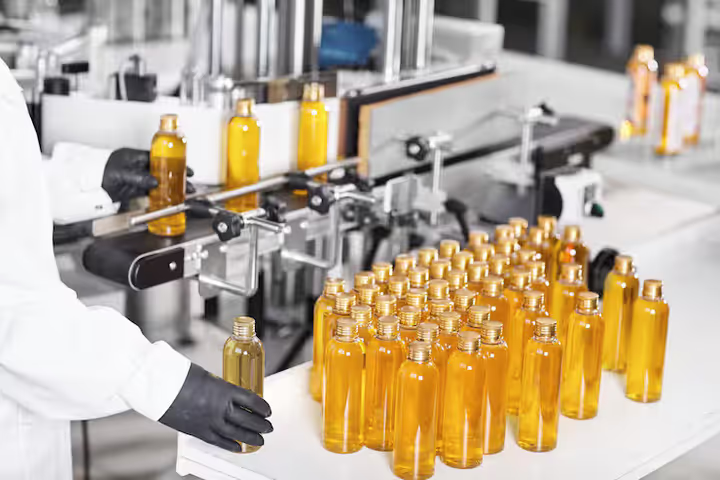
Oil filling machines are automated or semi-automated systems designed to measure, dispense, and package various types of oils into containers such as bottles, cans, jars, or industrial drums. These machines are widely used in industries including edible oil processing, lubricants, cosmetics, pharmaceuticals, and specialty chemical packaging.
The need for these machines emerged from industrial packaging automation, where accuracy, consistency, hygiene, and efficiency became essential for large-scale production. Manual filling methods often created inconsistencies in quantity, hygiene risks, and operational delays. Modern oil filling equipment addresses these challenges through precise measurement technologies like volumetric piston fillers, servo-driven filling systems, and flow-meter controlled liquid dispensing.
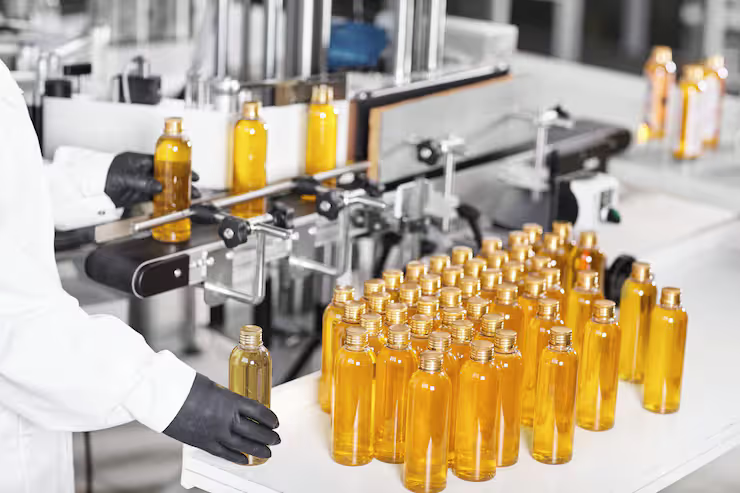
Key operational principles often include:
-
Controlled liquid flow through calibrated nozzles
-
Automated container detection systems
-
Programmable logic control (PLC) integration
-
Adjustable filling speed and volume accuracy
-
Spill prevention and anti-drip mechanisms
Such automation contributes to standardized packaging output while supporting industrial productivity goals.
Why Oil Filling Machines Matter in Today’s Industrial Landscape
Industrial packaging efficiency has become a significant factor in global manufacturing competitiveness. Oil filling machines contribute directly to streamlined production cycles, quality control consistency, and reduced material waste.
Industries benefiting from these systems include:
-
Food processing and edible oil packaging
-
Automotive lubricants and industrial oils
-
Pharmaceutical and cosmetic oil products
-
Chemical processing sectors
Major operational advantages include:
-
Consistent filling accuracy that supports product standardization
-
Improved hygiene through minimal human contact
-
Faster throughput supporting high-volume packaging
-
Integration with labeling, capping, and sealing automation
Below is a simplified comparison of manual vs automated filling approaches:
| Feature | Manual Filling | Automated Oil Filling |
|---|---|---|
| Filling Accuracy | Variable | Highly consistent |
| Production Speed | Limited | High throughput |
| Hygiene Control | Moderate | Advanced sanitation options |
| Automation Integration | Minimal | Full production line compatibility |
| Data Monitoring | Rare | Digital process tracking |
Recent Developments and Emerging Trends (2025–2026)
Recent technological developments highlight how industrial automation continues evolving. Over the past year, several trends have shaped oil filling machine design and implementation.
Smart automation integration has expanded significantly. Many modern systems now include IoT-enabled sensors that allow real-time monitoring of filling accuracy, machine health, and production efficiency. These systems support predictive maintenance strategies.
Another trend involves servo-motor driven filling mechanisms. Introduced increasingly during 2025, these systems improve precision while reducing mechanical wear compared with traditional pneumatic mechanisms.
Sustainability considerations have also influenced equipment design. Manufacturers increasingly incorporate energy-efficient motors, recyclable packaging compatibility, and reduced lubricant consumption technologies.
Key developments noted in industry reports during 2025 include:
-
Increased adoption of Industry 4.0 compatible filling equipment
-
Enhanced hygiene standards in food-grade oil packaging
-
Growth in flexible container handling technologies
-
Advanced touchscreen HMI controls for operational visibility
A simplified technology evolution overview:
| Period | Key Development |
|---|---|
| Early Automation Era | Basic volumetric fillers |
| Digital Integration Phase | PLC and electronic controls |
| Industry 4.0 Adoption | IoT monitoring and data analytics |
| Current Phase (2025–2026) | Energy efficiency and smart automation |
Regulatory Considerations and Policy Influence
Oil filling equipment often operates within regulated manufacturing environments. Regulatory compliance helps maintain product safety, environmental protection, and operational transparency.
Common regulatory areas include:
-
Food safety standards such as hygiene certifications
-
Environmental compliance for waste oil handling
-
Industrial safety norms related to automated machinery
-
Packaging labeling accuracy regulations
In India, for example:
-
Food oil packaging often aligns with FSSAI (Food Safety and Standards Authority of India) standards.
-
Industrial lubricant packaging may follow BIS quality benchmarks.
-
Environmental compliance may involve pollution control board guidelines.
Globally, organizations such as ISO provide internationally recognized quality and safety standards influencing filling machine design.
Typical compliance considerations include:
-
Accurate volume labeling standards
-
Worker safety requirements for automated equipment
-
Sanitary design specifications for edible oils
-
Environmental emission control protocols
Understanding regulatory frameworks ensures smoother operational continuity and compliance readiness.
Useful Tools, Digital Resources, and Industry References
Several digital tools and technical resources assist manufacturers, engineers, and researchers working with oil filling machines.
Commonly used resources include:
-
Industrial automation simulation software for production planning
-
Filling accuracy calculators used in packaging design
-
Preventive maintenance scheduling platforms
-
PLC programming reference libraries
-
Industrial packaging efficiency analytics dashboards
Helpful knowledge resources:
-
Engineering research journals on liquid filling automation
-
Industry webinars discussing packaging innovations
-
Technical manuals from automation equipment manufacturers
-
Industrial safety compliance guidelines
These resources help maintain operational efficiency, improve machine longevity, and enhance packaging consistency.
Frequently Asked Questions About Oil Filling Machines
What types of oils can filling machines handle?
Oil filling machines typically accommodate edible oils, lubricants, essential oils, cosmetic oils, and certain industrial liquid chemicals depending on material compatibility.
How accurate are automated oil filling systems?
Modern volumetric and flow-meter based systems can achieve very high precision when properly calibrated and maintained.
What maintenance considerations are common?
Routine calibration, nozzle cleaning, lubrication checks, sensor inspections, and software updates are typical maintenance practices.
Are these machines compatible with different container sizes?
Many systems feature adjustable settings allowing multiple container formats, depending on machine configuration.
Is automation necessary for small-scale production?
Automation benefits vary by production scale. Some operations adopt semi-automatic systems before transitioning to fully automated solutions.
Conclusion
Oil filling machines represent a significant advancement in industrial packaging automation. They address critical operational challenges such as filling accuracy, hygiene control, production efficiency, and process consistency. Their relevance continues to grow as industries prioritize automation, sustainability, digital monitoring, and regulatory compliance.
Recent developments including smart automation integration, energy-efficient technologies, and improved hygiene standards demonstrate ongoing innovation in this field. Regulatory frameworks and technical standards further shape machine design and operational best practices.