Industrial Air Purifiers An Explore Guide to Basics, Working Principles, and Key Information
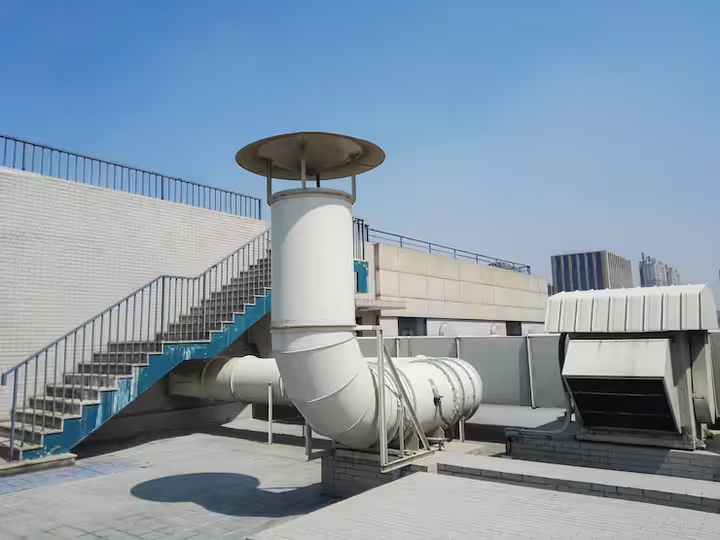
Industrial air purifiers are advanced air quality control systems designed to remove airborne contaminants from large-scale indoor environments. These environments include manufacturing plants, warehouses, laboratories, food processing units, pharmaceutical facilities, and heavy industrial workshops.
Unlike residential air cleaners, industrial-grade air purification systems are built to handle high air volumes, complex pollutant mixtures, and continuous operation. They exist because industrial activities generate dust, fumes, smoke, volatile organic compounds, microorganisms, and fine particulate matter that standard ventilation systems cannot fully control.
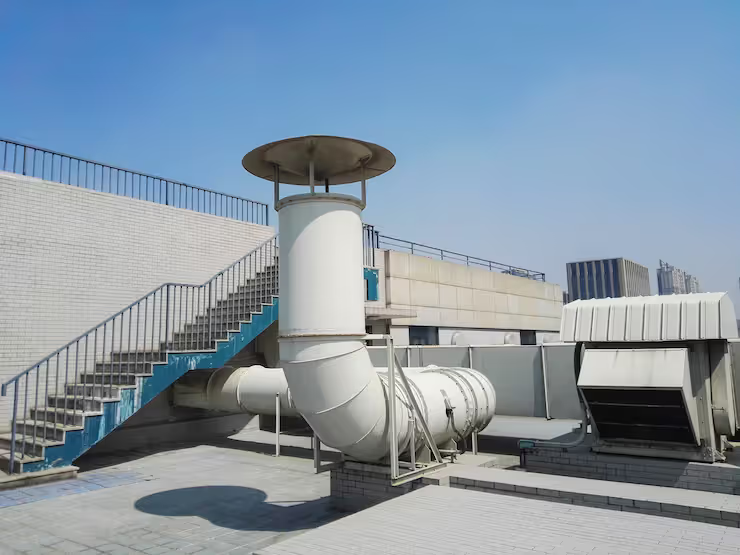
Poor indoor air quality in industrial settings can affect machinery performance, product integrity, and human health. Industrial air purifiers were developed to bridge the gap between basic ventilation and the need for precise air contamination control, ensuring cleaner air circulation within demanding operational environments.
These systems typically integrate mechanical filtration, chemical adsorption, electrostatic separation, or advanced oxidation methods. Their core objective is not comfort alone, but consistent air quality stabilization aligned with industrial safety and environmental standards.
Why Industrial Air Purification Matters Today
Industrial air purification has become increasingly important due to rising industrialization, stricter environmental expectations, and heightened awareness of occupational health. Fine particulate exposure and airborne chemical residues are now recognized as long-term risk factors for workers across multiple sectors.
Industries that benefit most from industrial air purifiers include:
-
Manufacturing and metal processing
-
Automotive and aerospace facilities
-
Pharmaceutical and biotechnology plants
-
Food and beverage production units
-
Electronics and semiconductor fabrication
Key challenges addressed by industrial air purifiers include:
-
Accumulation of PM2.5 and PM10 particles
-
Oil mist and welding fumes
-
Chemical vapors and solvent emissions
-
Bacterial and fungal contamination
-
Odor buildup in enclosed facilities
From a productivity standpoint, cleaner air reduces equipment fouling, improves sensor accuracy, and minimizes downtime caused by contamination-related failures. For employees, improved air quality supports respiratory health, reduces fatigue, and enhances overall workplace conditions.
As sustainability goals gain traction, industrial air purifiers also support environmental responsibility by reducing uncontrolled airborne emissions inside facilities before they interact with external ventilation flows.
Recent Developments and Industry Trends
Over the past year, industrial air purification technology has seen notable advancements driven by digital monitoring, energy optimization, and stricter air quality benchmarks.
Smart Monitoring Integration (2024–2025)
Modern industrial air purifiers increasingly incorporate IoT-enabled sensors that continuously track particulate concentration, airflow efficiency, and filter saturation levels. Real-time dashboards allow facility managers to make data-driven air quality adjustments.
High-Efficiency Filtration Materials
Recent innovations include enhanced HEPA and ULPA media capable of capturing ultrafine particles below 0.1 microns with lower pressure drops. This improves filtration efficiency while maintaining airflow stability.
Energy-Conscious System Design
Manufacturers are focusing on variable-speed fans, optimized airflow paths, and low-resistance filters to reduce energy intensity per cubic meter of purified air.
Hybrid Purification Technologies
Systems combining mechanical filtration with activated carbon adsorption or electrostatic precipitation are becoming more common, addressing both particulate and gaseous contaminants simultaneously.
Predictive Maintenance Models
Data analytics models introduced in late 2024 enable predictive filter replacement schedules, reducing unplanned shutdowns and extending system lifespan.
Regulatory and Policy Influence on Industrial Air Purification
Industrial air purifiers are directly influenced by occupational safety laws, environmental protection regulations, and industry-specific compliance frameworks. These rules differ by country but share common objectives: worker protection and emission control.
In many regions, regulations focus on:
-
Permissible exposure limits for airborne particulates
-
Indoor air quality thresholds for industrial workplaces
-
Control of hazardous airborne substances
-
Documentation and reporting of air quality data
Industrial facilities are often required to maintain air quality within defined limits under occupational safety regulations. Environmental agencies also regulate airborne emissions generated indoors when they interact with exhaust systems.
Government-backed programs promoting cleaner production methods indirectly support the adoption of industrial air purification technologies. Compliance-driven audits and inspections have increased the emphasis on documented air quality management strategies rather than reactive mitigation.
Failure to align with regulatory expectations can lead to operational restrictions, reputational impact, or mandatory process modifications, making air purification a core component of industrial compliance planning.
Practical Tools and Resources for Industrial Air Quality Management
Effective industrial air purification relies on accurate assessment, system planning, and ongoing performance evaluation. Several tools and resources support these processes.
Air Quality Measurement Instruments
-
Particulate counters for PM2.5 and PM10
-
Gas detectors for VOCs and fumes
-
Differential pressure gauges for filter monitoring
Digital Planning Resources
-
Airflow calculation spreadsheets
-
Cleanroom classification reference charts
-
Ventilation efficiency assessment templates
Data Management Platforms
-
Centralized air quality dashboards
-
Filter lifecycle tracking software
-
Maintenance scheduling systems
Reference Frameworks
-
Occupational exposure limit tables
-
Indoor air quality guidelines for industrial spaces
-
Environmental reporting templates
These tools help organizations maintain consistency, document compliance, and optimize purifier performance over time without relying on assumptions.
Common Questions About Industrial Air Purifiers
What pollutants do industrial air purifiers remove?
Industrial air purifiers are designed to remove particulate matter, dust, smoke, fumes, oil mist, microorganisms, and chemical vapors depending on the filtration and treatment technologies used.
How do industrial air purifiers differ from ventilation systems?
Ventilation systems exchange indoor and outdoor air, while industrial air purifiers actively clean indoor air by capturing or neutralizing contaminants without relying solely on air exchange.
Are industrial air purifiers suitable for continuous operation?
Yes. Industrial-grade systems are engineered for long operational cycles, often functioning continuously in high-demand environments with minimal performance degradation.
Do industrial air purifiers support energy efficiency goals?
Modern systems emphasize optimized airflow, low-resistance filters, and adaptive fan controls, contributing to more efficient air management compared to uncontrolled ventilation.
How is purifier performance evaluated?
Performance is typically assessed using airflow rates, filtration efficiency percentages, pressure drop measurements, and real-time air quality data collected from sensors.
Working Principles Explained with a Visual Overview
| Stage | Process Description | Contaminants Addressed |
|---|---|---|
| Pre-Filtration | Captures large dust particles | Coarse dust, fibers |
| Fine Filtration | High-efficiency particle capture | PM2.5, PM10 |
| Chemical Adsorption | Activated media traps gases | VOCs, odors |
| Air Circulation | Clean air redistributed | Stabilized air quality |
Key Takeaways and Final Thoughts
Industrial air purifiers play a crucial role in modern industrial environments by addressing complex air quality challenges that basic ventilation cannot resolve. Their purpose extends beyond comfort, supporting occupational health, equipment protection, and regulatory alignment.
Advancements in smart monitoring, filtration materials, and predictive maintenance have transformed industrial air purification into a data-driven discipline. As regulations continue to evolve and industries prioritize sustainability, air quality control systems are becoming integral to long-term operational resilience.
By understanding how industrial air purifiers work, why they matter, and how they align with regulatory frameworks, organizations can make informed decisions that support cleaner, safer, and more efficient industrial environments.